
First Prosperity
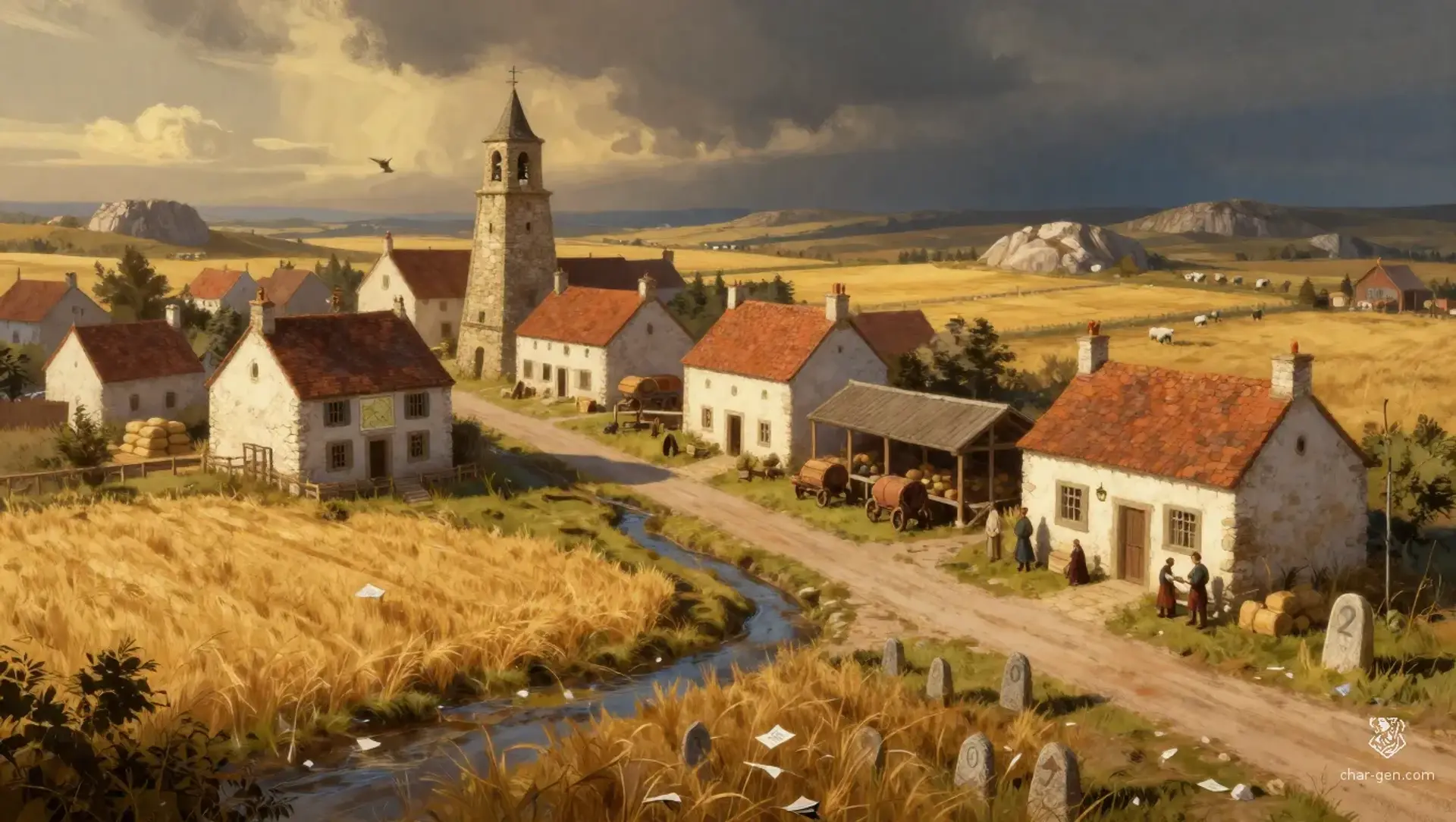
First Prosperity is a plains village built where two dependable roads cross a shallow seasonal stream. Its fields are broad, dark, and unusually easy to plow, which made the site valuable long before the cottages appeared. The village survives on grain, sheep, wagon repair, and hired labor. Its true danger is not raiders or monsters, but a legal fiction: nearly every field rests on a falsified survey.
First Prosperity
A wheat village where every field has two owners and every neighbor keeps a copy of the map.
“First Prosperity looks calm from the road: wheat stubble, whitewashed cottages, and a bell tower leaning slightly east. Inside, every conversation bends toward boundary stones, missing ledgers, and whose grandfather truly cleared which field. People are neighborly because they must be, but nobody lends a cart without writing down the favor. At dusk, laborers gather outside the record house to watch officials carry papers in and out.”
Gallery
Connections
Geography
Culture
The village praises endurance more than honesty. A person who survives a bad bargain may be admired, while someone who exposes a profitable lie is called dangerous. Written promises matter intensely, yet most families keep private copies because they assume official records can be altered. Hospitality is sincere until land, debt, or inheritance enters the conversation.
First Prosperity favors practical art: painted cart panels, carved boundary stakes, and songs that remember old field names. Traveling performers are paid in meals and small silver pieces, but local audiences demand songs about lawsuits, unpaid debts, and foolish officials. Courtship often begins during communal threshing. A person who cannot recite three generations of tenancy history is treated kindly, but never trusted with a loan.
History
Government
A surviving military map contradicts the village register and places nearly one-third of the cultivated land under county ownership. The county assessor arrives in twelve days, before the grain fair, and intends to collect arrears from whoever appears on the older map.
The Eighth Acre Company has begun buying desperate families out of their leases. Several households are accepting food advances that quietly convert disputed fields into company property.
Economy
Good timber is scarce, and the village has almost no spare draft animals after two years of poor breeding. Paper is also tightly rationed because every family wants copies of contracts and maps.
Defenses
A rotating watch of farmers, carters, and retired soldiers who serve three nights each season. They are loyal to their neighbors rather than the council, which makes them difficult to command when official orders seem connected to land fraud.
Law & Order
- crime Level
- Moderate, with forgery, intimidation, debt fraud, and boundary vandalism more common than theft or assault.
- enforcement
- The reeve relies on the Ninth Watch and summons county riders only for serious violence. The Measure Office investigates written disputes, giving the accused little protection when the disputed evidence is held by the investigators themselves.
- typical Punishment
- Fines in silver pieces, seizure of livestock, compulsory ditch labor, or temporary loss of market privileges. Forgery can mean public confinement in the record house until a county magistrate arrives.
Calendar of Events
Turn First Prosperity into a sheet
A high-res, share-ready sheet you can post or print.