
Wrenford
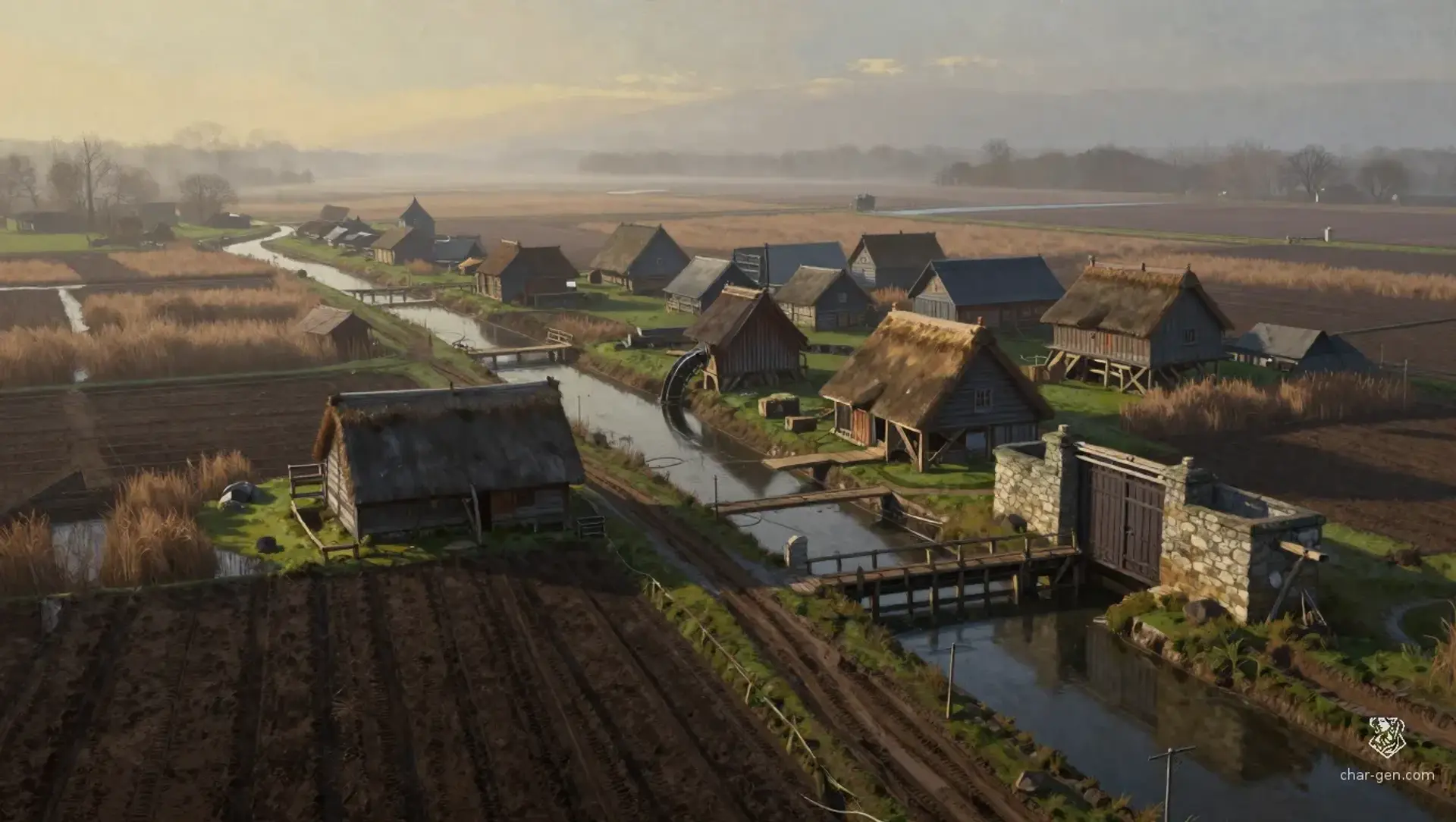
Wrenford is a breadbasket village in a river valley of black soil, old canals, and wagon roads that feed the royal market two days east. The settlement exists because a crown charter after the border war granted veterans and tenants reclaimed floodplain land, then paid for ditches, locks, and a mill. Its wealth comes from grain, wool, seed stock, cider, and tolls, but the village now sits on a hidden water-right dispute that makes every harvest feel borrowed.
Wrenford
- Population
- 430
- Rule
- Reeve Tomas Vale
- Wealth
- Modest
- Defence
- Moderate
Overview
Wrenford is a breadbasket village in a river valley of black soil, old canals, and wagon roads that feed the royal market two days east. The settlement exists because a crown charter after the border war granted veterans and tenants reclaimed floodplain land, then paid for ditches, locks, and a mill. Its wealth comes from grain, wool, seed stock, cider, and tolls, but the village now sits on a hidden water-right dispute that makes every harvest feel borrowed.
Atmosphere
Mud on the wagon ruts, clean grain in the air, and old suspicion under every polite greeting. Wrenford feels busy at harvest and half-abandoned in winter, with canal banks patched by hand and field names spoken like family histories. People work hard, count everything, and keep an eye on the sluice house. Outsiders are welcome if they pay, but no one here forgets who controls the water.
Culture
The Hearth Mother, The River Saint, The Field King
Humans, Halflings, Dwarves
Economy
Cereal farming, Sheep grazing, Milling, Cider pressing, Canal tolls
Wheat and rye, Seed grain, Wool bales, Hard cider, Salted pork
Iron tools, Lamp oil, Salt, Pitch, Fine cloth
Geography
Ways in and out
Places to see
- The Old GranaryThe oldest part of the village, sealed most nights and watched by the shrine keeper. People swear the floorboards sweat when the water table rises.
- The South SluiceA narrow lockhouse of brick and oak where the south sluice is controlled. Its iron chain is newer than the rest of the village by decades.
- The Market DikesRaised stone ledges for drying grain and wool. Bargains made here matter more than bargains shouted in the square.
- The Reed FlatsA half-wild strip of reeds, sinkholes, and old footings where smugglers, wolves, and bad memories all travel more easily than honest people.
Power
3 factionsGovernment
Laws
Trouble
- Blight, accusation, and water control are converging on the reeve's desk.The east fields are failing in patches, and the village is beginning to whisper that the soil is cursed. Tomas knows the real cause is political, not magical, but he has not yet admitted that the sluice locks are being left shut to favor the higher landholders.Involves
Reeve Tomas Vale, Lady Alda Bracken, Jory Fen
- Delayed taxes could expose the village's false accounting.A tax clerk from the royal market was due three days ago and never arrived. Tomas fears either bandits or a ledger audit, because the village books do not match the grain in storage unless certain seed stocks are counted twice.Involves
Reeve Tomas Vale, Tessa Holt, Bess Kettle
- The village is one bad night away from open unrest.The canal watch is split between obeying the reeve and answering tenant anger after a series of missing sheep and a flooded lower lane. Tomas can command fines, but not loyalty, and he knows one public mistake could turn the whole village against him.Involves
Reeve Tomas Vale, Sister Mara Heth, The Charter Watch
Factions
- The Charter KeepersPolitical blocA loose circle of landowners and reeve loyalists who believe order matters more than fairness. They keep the sluice house locked, collect tolls carefully, and talk about sacrifice while their own fields stay dry.GoalsHold the canal gates shut until the crown buyer arrives, protect the manor stores, and preserve their control over water and toll income.Allies
House Bracken, The Charter Watch
RivalsThe Tenants' League, The Reed Men
- The Tenants' LeagueCommoner allianceTenant farmers, crofters, and mill laborers who are tired of paying for a shortage they did not cause. They want open sluices, honest measures, and the right to keep enough seed to plant next year.GoalsForce a public reading of the water charter, reopen the south sluice, and stop seed grain from being skimmed into the manor ledgers.Allies
Sister Mara Heth, Fen's Mill and Measure
RivalsThe Charter Keepers, House Bracken
- The Reed MenSmugglers' networkWagoners, peddlers, and toll-runners who move goods through the village and know every hidden track through the reeds. They claim they are only practical people, but they make a living from broken rules.GoalsKeep the dark market open, reduce the king's toll bite, and protect the old reed channels that bypass the lockhouse.Allies
Bess Kettle, Tessa Holt
RivalsThe Charter Keepers, The Charter Watch
Defences
- Low earth berms around the granaries
- A bell tower for flood and fire alarm
- A lockhouse gate at the south canal
- Heavy barn doors reinforced with iron straps
Law and order
People and places
11 entriesRoyal reeveReeve Tomas Vale Human Male
A tidy, tired reeve who keeps his sleeves clean even when the road is mud. He carries himself like a man who believes paperwork can outlast anger.
LandholderLady Alda Bracken Human Female
A landed widow in a weather-dark cloak, with ringed fingers and the blunt manners of someone used to being obeyed.
Miller and seed dealerJory Fen Human Male
A flour-dusted miller with quick eyes and one blackened fingernail from constant tallying. He talks softly, but never forgets a number.
Shrine keeper and hedge-wise womanSister Mara Heth Human Female
A village shrine keeper with mud on her hem, a copper charm at her throat, and the weathered face of someone who sleeps badly for good reasons.
Wagonmaster and toll runnerTessa Holt Human Female
A road-weathered wagonmaster with a patched coat, bright gloves, and the sort of smile that makes honest people suspicious.
TavernkeeperBess Kettle Human Female
A tavernkeeper who wears one boot with a thicker sole after an old flood, and never sits with her back to the door.
Mill shopFen's Mill and Measure Kept by Jory Fen
A practical mill shop where grain is ground, seed is sorted, and every sack is weighed twice. Jory Fen is kind to honest customers and merciless to anyone who tries to shave the measure.
TavernThe Cooper's Rest Kept by Bess Kettle
Bess Kettle keeps a clean room, a loud hearth, and a corner table reserved for people who arrive muddy, frightened, and willing to talk. She profits from the tavern, but what she wants most is for the village to stop lying to itself before the water breaks the banks for real.
TavernThe Cooper's Rest Kept by Bess Kettle
The main room smells of cider, wet wool, and woodsmoke. The back table is where disputes are settled before they become law, and where everyone pretends not to hear the lies that keep the village running.
Mill shopFen's Mill and Measure Run by Jory Fen
A tall timber mill with a counting room, seed bins, and a locked side door that opens onto the toll road. The building is the village's true heartbeat, because every bushel passes through its scales before it goes anywhere else.
TavernThe Cooper's Rest Run by Bess Kettle
A low-ceilinged tavern built from old canal timber, with a drying rack for boots by the door and a back room used for bargaining after dark. It serves cider, stew, and the village's most useful rumors.
Events
Lately
- Three sheep vanished from the south pastures in one night.The tenants blame wolves, but the tracks end at the canal bank where carts do not officially go.
- A patch of barley turned pale and brittle as if burned by frost in midsummer.The reeve's men called it a soil sickness, but the pattern follows the canal water line.
- Two nights of strange lights flickered in the reed beds behind the old granary.Smugglers, spirits, or both are now part of every tavern conversation.
- A royal grain clerk failed to arrive on market day.Without his seal, the village books remain unofficial, which suits some people and terrifies others.
Calendar
- Spring ThawOpening of the GatesThe first flood checks the canal banks and decides which families can seed their lower fields. Everyone claims it is a blessing, though the same parcels always drown or stay dry in ways that favor the manor lands.The twist · GM only
- High SummerMarket WeekWagon roads fill with royal buyers, wool factors, and seed brokers. The village fair runs beside the millpond, with pig judging, cider tastings, and quiet arguments over tolls and shortages.The twist · GM only
- Late AutumnCounting of the StoresThe granaries are sealed and watched while the tenants settle debts in grain, labor, and promises. This is when tempers run shortest and the old quarrels over water rights become dangerous.The twist · GM only
History
Wrenford began as a royal reclamation settlement and has spent decades learning to survive by obeying the charter in public while bending it in private. The official story says floods, rats, and bad weather caused the village's troubles. The lived truth is that water, grain, and law have all been used as tools by the same few hands.
- Founding charter, 61 years agoThe Drainage GrantAfter the border war ended, the crown granted this valley to discharged soldiers, tenant families, and one charter mill. Royal engineers cut the first canals and raised the roadbed so wagons could reach the market in any season.
- 23 years agoThe Great FloodA spring flood took the lower lanes and three barns, but the official report blamed a late thaw. Locals remember the sluice house was kept shut too long while the manor fields stayed dry.
- 7 years agoThe Reed DrowningThe old tax clerk who checked the grain stores was found in the reed beds with his boots full of canal mud. The reeve called it bandit work, though no bandit ever took his seal ring or his tally stick.
- Last winterThe Short MeasureLast winter's seed stores came up short, and the missing measure was blamed on rats, damp, and poor record keeping. The missing grain actually fed a private chain of favors between the manor, the mill, and a wagon line that never paid toll.
Secrets
3 secrets · 5 rumours- Secret 1 · GM only
- Secret 2 · GM only
- Secret 3 · GM only
Rumours
Plot hooks
4- 1The Dry FurrowThe tenant league asks the party to inspect the blighted east fields and determine whether the soil is cursed. The real task is to prove who has been keeping the sluice shut, but if the party opens the wrong gate at the wrong hour, they may flood three farms and make enemies for life.
Investigation · Starts with Sister Mara Heth · Reward: Seed grain, local guides, and the gratitude of the tenant families
- 2The Lost SealBess Kettle offers a room and asks the party to find the missing royal messenger rumored to be in the reed beds. The complication is that the messenger is alive, drunk, and carrying copies of the grain tallies that could ruin half the village.
Rescue · Starts with Bess Kettle · Reward: Free lodging, ale, and one useful secret from the tavern floor
- 3The Honest WagonTessa Holt hires the party to escort a wagon of seed grain to the royal market before the road floods again. The hidden problem is that the wagon includes both legal seed and an illegal side load meant to settle a debt with smugglers at the canal crossing.
Escort · Starts with Tessa Holt · Reward: Coin, road favors, and access to the market route
- 4The Light in the GranaryReeve Tomas Vale quietly asks the party to clear out the old granary because strange lights have been seen there after dark. Inside, they will find more than rats or ghosts: someone is using the sealed lower chambers to hide records, grain, and perhaps a body.
Delving · Starts with Reeve Tomas Vale · Reward: Official writs, reduced tolls, and a small purse of silver
Media
0 imagesNo images yet.
Turn Wrenford into a sheet
A high-res, share-ready sheet you can post or print.