
Kharis-Din
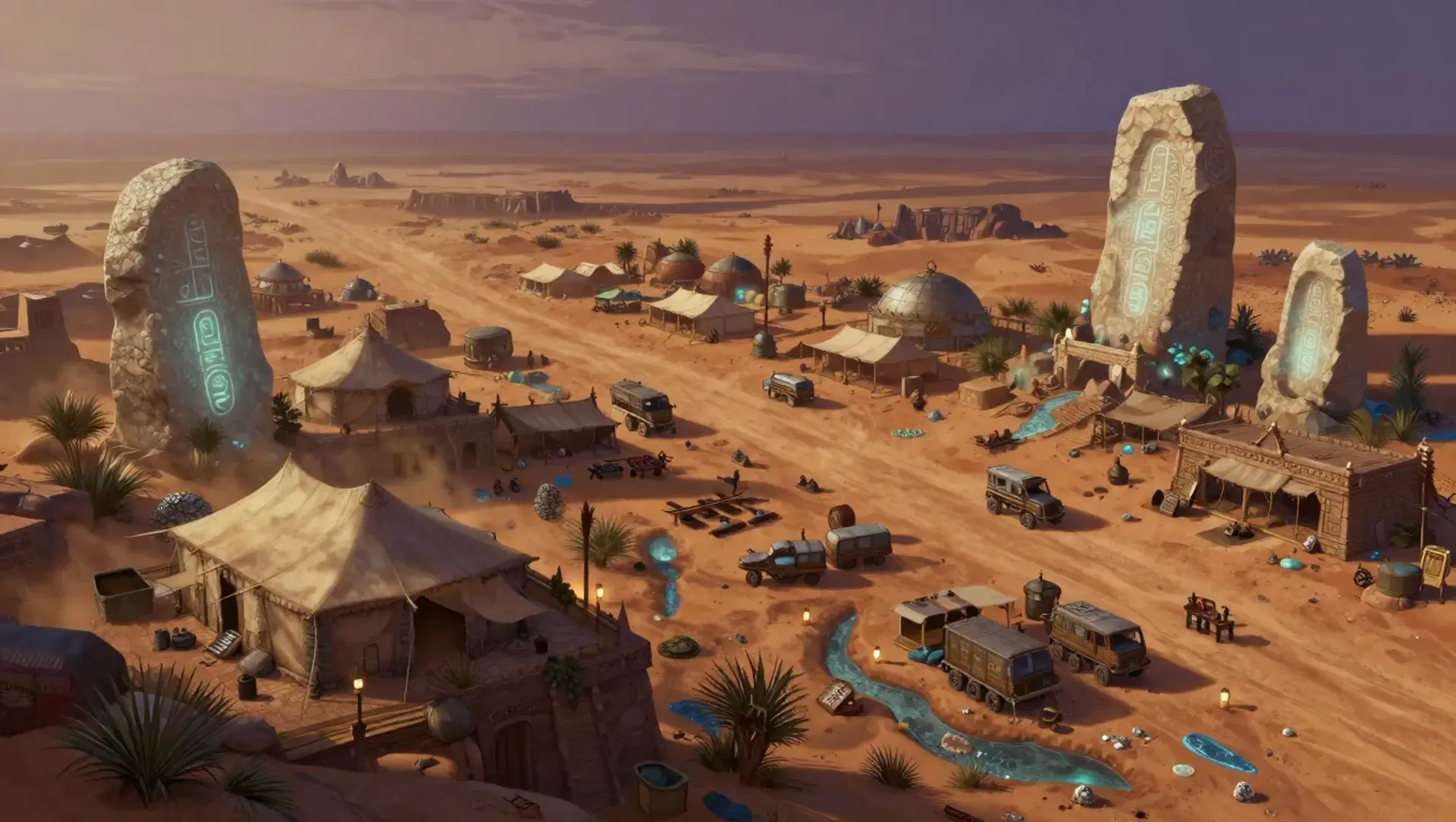
Kharis-Din is a hard-used transit hub built beside the ancient Gild-Way stones, where the road’s protection reaches far enough to make a settlement possible. Four hundred and fifty residents live among heavy tents, stone sheds, cistern walls, and repair yards. The town survives by selling water, repairs, shelter, and trustworthy directions. Its defining truth is simple and dangerous: the ward-stones do not merely protect Kharis-Din, they are quietly choosing which caravans may pass safely.
Kharis-Din
Where every traveler buys water, but the road decides who gets to leave.
“Kharis-Din smells of hot stone, cumin, lamp oil, and the sharp mineral tang of elemental dust. Canvas awnings snap above crowded lanes while caravan bells, hammer blows, and shouted prices mingle beneath the constant hiss of wind over gravel. Travelers come for water and warded sleep, yet everyone watches the Gild-Way stones. Their pale runes sometimes brighten at dusk, and the locals always stop talking when they do.”
Gallery
Connections
Geography
Culture
People here respect preparation more than bravery. A traveler who checks harnesses, pays water debts, and names their destination earns trust quickly. Waste is treated as a moral failure, especially wasted water or wasted labor. Kharis-Din’s residents are hospitable within limits, but every kindness is measured against the next caravan’s needs. The settlement believes survival is communal, while profit remains intensely personal.
Kharis-Din favors practical art. Painted caravan boards, hammered copper chimes, dyed tent panels, and carved stone seals mark family reputations. Evening entertainment centers on route songs, competitive repair work, and story circles where merchants trade embellished accounts of elemental beasts. Air genasi performers use controlled gusts to animate ribbons above the markets, while earth genasi stonecarvers create memorial markers for travelers who vanished beyond the last safe well.
History
Government
The aquifer level has fallen sharply, though no leak has been found. Mara Venn is concealing the decline while Jalen Marr demands an open inspection. If the truth becomes public, three caravans will be stranded and the settlement may riot over water.
The Gild-Way stones have begun refusing safe passage to certain caravans, including one carrying medicine. Mara Venn wants the travelers turned away, while Nessa Vale insists the stones are reacting to a buried magical disturbance.
Economy
Water is the constant scarcity. The cistern is reliable but not abundant, and a single damaged intake pipe could reduce Kharis-Din to emergency rationing within three days. Skilled armorers, healers, and spellcasters are also limited, making repairs and magical services expensive during caravan season.
Defenses
The Cistern Watch is a rotating force of caravan guards and local wardens trained to defend water, repair gates, and repel raiders. They are better at escort duty than open battle, but know every lane and rooftop in Kharis-Din.
Law & Order
- crime Level
- Moderate. Theft, fraud, and water crimes are common, while murder is rare but politically explosive. Smuggling is widespread enough that respectable merchants often profit from it indirectly.
- enforcement
- The Cistern Watch handles arrests, escorts, and public order. Mara Venn’s clerks investigate financial disputes, and caravan families frequently conduct their own private justice. The watch is competent but divided by contract loyalties.
- typical Punishment
- Fines, confiscation of caravan animals or tools, restitution, public branding for serious water crimes, and exile into the Barrens. Exile is usually a death sentence unless another caravan accepts responsibility for the offender.
Calendar of Events
Turn Kharis-Din into a sheet
A high-res, share-ready sheet you can post or print.