Skip to content
Create
Kareth - AI-generated fantasy Settlement

Kareth

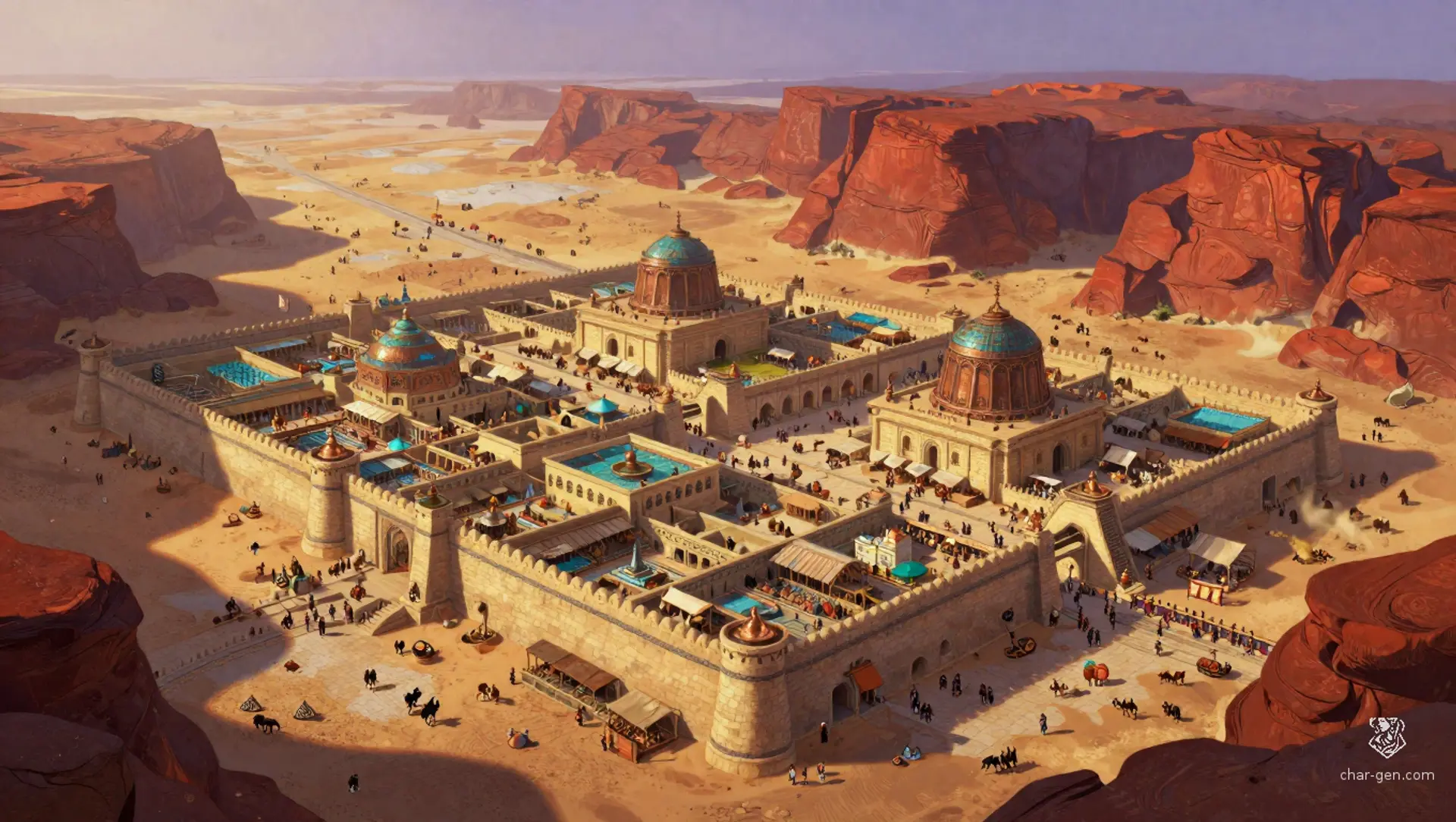
Kareth is a desert city of 18,000 people, clustered around three ancient cisterns sunk into a natural basin of red stone. Its wealth comes from controlling the safest caravan route between the salt flats and the eastern riverlands. Broad shade streets connect markets, bathhouses, workshops, and government courts. Every public decision eventually returns to the same question: who receives water, how much, and whose name authorizes it?

City

Kareth

A wealthy caravan city where every public promise is measured in cups of water.

TypeCity
PopulationApproximately 18,000 permanent residents, with another 1,000 to 2,000 caravan travelers, laborers, and refugees present during the busiest months. Humans form the majority, but dwarves dominate engineering and metalwork, halflings run many food and courier businesses, and dragonborn are prominent in the city guard. Social class follows water access more than ancestry.
WealthKareth is wealthy in trade but unevenly so. Merchant houses possess private storage and shaded compounds, while laborers and refugees live near the outer wall and depend on daily public allotments.
GovernmentMerchant oligarchy constrained by sacred water law
ReadinessKareth is prepared for raiders but poorly prepared for internal unrest. The watch drills against mounted attacks every month, yet has no reliable plan for a cistern riot, a magical breach, or mass refusal to obey ration laws.
Kareth is a desert city of 18,000 people, clustered around three ancient cisterns sunk into a natural basin of red stone. Its wealth comes from controlling the safest caravan route between the salt flats and the eastern riverlands. Broad shade streets connect markets, bathhouses, workshops, and government courts. Every public decision eventually returns to the same question: who receives water, how much, and whose name authorizes it?

Kareth is a crowded desert city built around three deep cisterns, all shaded by old stone vaults. Dust coats every windowsill, while painted water marks show which households received their allotment that day. The city feels prosperous at first glance, with tiled courtyards, spice markets, and busy caravan yards. Underneath, everyone watches everyone else at the taps, because a missed ration can become a death sentence within a week.

Gallery

No images yet. Click to add.

Connections

Geography

RegionThe city stands in the Red Basin, between western salt flats and the eastern caravan road leading toward the riverlands.
ClimateKareth has brutally hot days, cold nights, and brief seasonal dust storms. Rain comes rarely and violently, often flooding dry channels before vanishing into the cracked ground.
TerrainLow red cliffs shelter the basin on three sides. Beneath the streets lies a maze of old mining tunnels, sealed wells, collapsed shrines, and channels cut by an unknown earlier civilization.
Travel Links
The eastern road reaches the riverlands in twelve days by caravan.A northern salt road leads to the mining camps and takes six days.A dangerous southern trail reaches scattered oasis villages in four days.

Culture

The city's strongest virtue is restraint. Waste is treated as a moral failure, while generosity is praised only when it does not endanger one's household. Kareth respects people who endure discomfort without complaint, but this virtue has curdled into suspicion. A person who asks too many questions about water is assumed to be planning theft, rebellion, or both.

Races
HumansDwarvesHalflingsDragonborn
Religions
Shrines to the Sun FatherThe Keepers of the DeepHousehold ancestor worship
Arts & Entertainment

Kareth favors practical art. Mosaics display family water histories, musicians perform beneath awnings, and storytellers compete to make old droughts sound heroic. Popular plays mock wealthy merchants who waste water, though the best playwrights are quietly paid by those same merchants. Children play a counting game called Three Cisterns, in which players trade painted stones until one child controls every source.

History

Government

LeaderFirst Measure Hessa Vale, a careful, soft-spoken magistrate who cannot make a decision without consulting three different ledgers. Her flaw is not cruelty but paralysis. She knows the system is failing and fears that any honest reform will trigger panic before a replacement can be built.
Merchant oligarchy constrained by sacred water law
Key Laws
All public water belongs to the city, not to private landowners.Water theft is punished by seizure of property and temporary branding of the offender's ration token.No well may be opened without approval from the Hall of Measures.Officials must have their names entered into the water ledger before taking office.
Problems
A visible water shortage is being hidden behind forged ration figures.

The Red Cistern is losing water faster than the other two, and the Hall of Measures has ordered officials to conceal the decline until the Binding of Measures. If discovered, food riots and attacks on merchant compounds are likely.

The safest long-term solution may destroy the district that needs it most.

The Dredgers have found evidence of a buried Fourth Cistern beneath the poor quarter. Opening it may save Kareth, but the vault's pressure could collapse homes and release something sealed with the original waterworks.

Economy

Industries
Caravan tradeCistern maintenanceGlassmakingTextile dyeingWater brokerage
Scarcity

Fresh water is always scarce. Grain becomes dangerously limited during failed caravan seasons, while timber and quality iron are expensive because both must travel across the desert under guard.

Wealth LevelKareth is wealthy in trade but unevenly so. Merchant houses possess private storage and shaded compounds, while laborers and refugees live near the outer wall and depend on daily public allotments.
Exports
Dyed desert clothSalted datesGlasswareWorked copperCaravan protection contracts
Imports
GrainTimberLamp oilMedicinal herbsIron tools

Defenses

ReadinessKareth is prepared for raiders but poorly prepared for internal unrest. The watch drills against mounted attacks every month, yet has no reliable plan for a cistern riot, a magical breach, or mass refusal to obey ration laws.
Fortifications
The outer wall is built from pale saltstone and reinforced with iron bands.Three gatehouses contain sealed water rooms and can close the city within minutes.The cistern vaults are protected by old stone guardians that respond to the water ledger.
The Measure Guard(Approximately 240 guards, including 36 mounted patrol soldiers and 12 cistern wardens)

The city watch combines armored gate troops, mounted sand patrols, and trained wardens assigned to the cisterns. Their equipment is well maintained, but their loyalty depends heavily on regular water allotments and the continued authority of the water ledger.

Law & Order

crime Level
Moderate, rising sharply around ration days and caravan arrivals. Water theft, document forgery, and smuggling are common, while violent crime remains concentrated in the outer districts.
enforcement
The Measure Guard patrols markets and cisterns, while Hall examiners inspect ration tablets. Wealthy households often settle charges through fines or favors. Poor offenders face public punishment and loss of water access.
typical Punishment
Minor theft brings confiscation and several days of labor in the cistern vaults. Serious theft leads to branding, property seizure, and exile into the salt flats. Magical tampering with the ledger is punished by permanent imprisonment below the Hall.

Calendar of Events

Visual sheet

Turn Kareth into a sheet

A high-res, share-ready sheet you can post or print.