Skip to content
CreatePricing
Four Mile - AI-generated fantasy Settlement

Four Mile

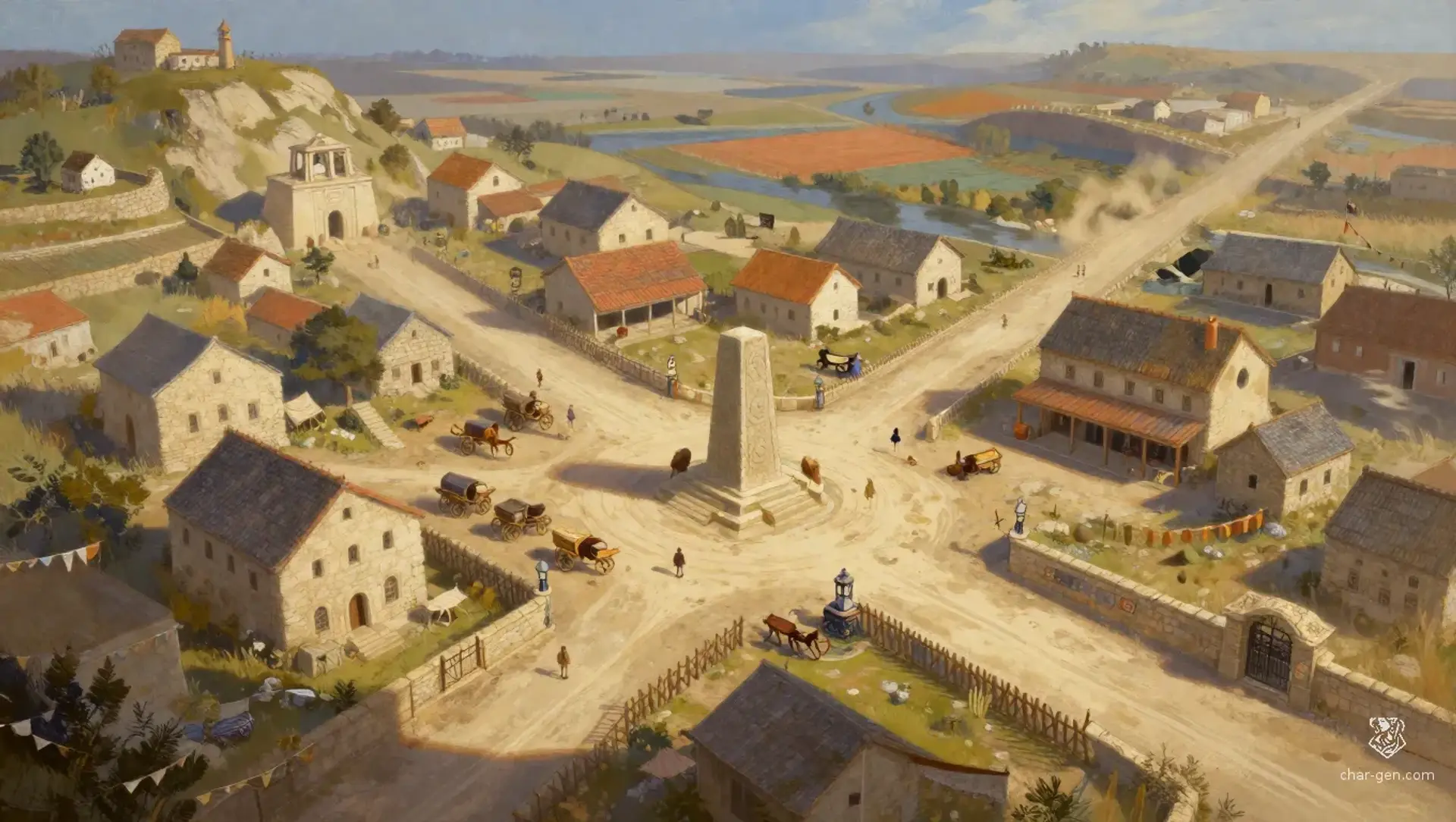
The town stands where four dependable roads meet above a shallow limestone shelf. A spring rises beneath the market square, while nearby fields occupy old river terraces that drain well after storms. The crossroads grew important because wagons can change teams here without entering marshland or climbing the western escarpment. Travelers stop for water, repairs, and permits. Locals prosper by controlling the pause between one journey and the next.

Town

Four Mile

Four roads meet at the spring, and every one of them has a price.

TypeTown
PopulationApproximately 1,850 permanent residents, swelling to nearly 3,000 during the summer caravan season. Humans form the majority, with strong dwarf, halfling, orc, and gnome communities. Most families have one member involved in roads, stables, records, or trade. The town's population is unusually mobile, and many residents maintain a second household or seasonal camp along one of the four routes.
WealthComfortable for a crossroads town. Merchants and officials are visibly prosperous, while laborers, farmers, and small shopkeepers live securely but remain vulnerable to a single bad season or damaged wagon.
GovernmentChartered town governed by a route council, with practical authority concentrated in the route ledger
ReadinessThe watch is competent but divided. Half the guards answer to the town leader, while the rest are paid by merchant interests and follow written orders from the route office. In an emergency, every household must provide one able worker for barricade duty. The arrangement works against bandits, but it would collapse quickly if the two authorities issued contradictory commands.
The town stands where four dependable roads meet above a shallow limestone shelf. A spring rises beneath the market square, while nearby fields occupy old river terraces that drain well after storms. The crossroads grew important because wagons can change teams here without entering marshland or climbing the western escarpment. Travelers stop for water, repairs, and permits. Locals prosper by controlling the pause between one journey and the next.

Every arrival is watched, measured, and quietly priced. Wagons crowd the market square beneath strings of faded route markers, while locals speak warmly to travelers whose names they expect to see again. The town feels prosperous at first glance, but every door has a second lock and every innkeeper keeps a private tally. People here are not afraid of strangers. They are afraid of what strangers may make official.

Gallery

No images yet. Click to add.

Connections

Geography

RegionThe Inner Marches, between settled farmland to the south and sparsely governed uplands to the north.
ClimateTemperate and windy, with wet springs, bright dry summers, and sudden winter freezes that split paving stones. Dust is a constant feature from late summer through early autumn.
TerrainA limestone rise above four converging roads, bordered by old farm terraces, low scrub hills, and a spring-fed ravine. The eastern road crosses a narrow causeway built over seasonal floodwater.
Travel Links
South road to the grain villages and river barges, two days by wagonNorth road through the uplands toward mining camps, four days by horseWest road to the provincial capital, six days with fresh teamsEast road toward the frontier forts, three days if the causeway remains open

Culture

The local virtue is useful reliability. A person who keeps a promise, repairs what they break, and pays a debt earns more respect than someone rich, devout, or brave. Privacy is treated as a courtesy rather than a right. Locals believe every secret eventually becomes someone else's burden, so they prefer secrets with clear owners, clear prices, and clear escape routes.

Races
HumansDwarvesHalflingsOrcsGnomes
Religions
Erastil, honored by farmers and road familiesAbadar, favored by merchants and magistratesDesna, quietly respected by couriers and travelers
Arts & Entertainment

Public entertainment is practical and competitive. Cartwrights decorate wheels with painted sayings, drovers sing route songs whose verses change with recent scandals, and children stage mock trials of travelers who failed to pay a toll. The most respected performers are reciters who can memorize an entire contract after hearing it once. Outsiders often mistake the town's dry humor for suspicion, but locals consider mockery a form of welcome.

History

Government

LeaderProvost Hareth Pell, a former toll clerk whose patient manners conceal a crippling fear of public disorder. He never makes an oral promise and constantly rearranges loose objects into straight lines. Hareth wants to keep the town solvent long enough to retire with his name intact. He fears that exposing the route ledger will cause merchants, wardens, and angry locals to fight in the streets.
Chartered town governed by a route council, with practical authority concentrated in the route ledger
Key Laws
Every caravan must register its cargo and intended destination before departure.No road may be closed without three written notices, unless the route council declares an emergency.Weapons may be carried openly by licensed travelers, but drawn steel inside the market square is punishable by seizure and a fine.Any person sheltering a fugitive forfeits access to town wells for one month.Disputes involving contracts must be heard before sunset on the day they are filed.
Problems
A vital road is being sacrificed for private profit.

The eastern causeway is failing, but the Lantern Office has diverted repair funds to a road that benefits its largest clients. Hareth must choose between admitting the fraud or allowing a collapse that could strand hundreds of travelers.

The town's legal authority is being rewritten from inside the archive.

Someone is altering the route ledger at night, changing which roads count as legal. Hareth suspects Nessa but cannot confront her without revealing that he has never possessed the complete document himself.

A reform protest is close to becoming an insurrection.

The Free Mile League plans a public toll refusal during The Turning of the Board. Hareth believes the protest will become a riot, while Mother Sive knows several families intend to burn the route office.

Economy

Industries
Caravan servicesCartwrightingHorse breedingToll administrationContract copying
Scarcity

Good timber is scarce. The surrounding farms have been heavily harvested for wagon repairs and charcoal, so straight boards and seasoned beams command unreasonable prices. The shortage has also made repairs slower, encouraged salvage, and increased resentment toward the route office, which reserves the best timber for official barricades.

Wealth LevelComfortable for a crossroads town. Merchants and officials are visibly prosperous, while laborers, farmers, and small shopkeepers live securely but remain vulnerable to a single bad season or damaged wagon.
Exports
Road horsesWagon partsSalted river fishDried fruitStamped travel permits
Imports
Iron barsGrain during poor harvestsLamp oilFine clothHealing supplies

Defenses

ReadinessThe watch is competent but divided. Half the guards answer to the town leader, while the rest are paid by merchant interests and follow written orders from the route office. In an emergency, every household must provide one able worker for barricade duty. The arrangement works against bandits, but it would collapse quickly if the two authorities issued contradictory commands.
Fortifications
A waist-high stone wall surrounds the market district, with iron gates closing at sunset.Four watch platforms overlook the roads, each fitted with a signal bell and covered brazier.The town keeps removable timber barricades disguised as merchant stalls.A buried chain can be raised across the eastern road to stop wagons.
The Wardens(Thirty-six wardens, twelve auxiliaries, and eight trained outriders)

The road wardens are mounted patrol officers, toll collectors, investigators, and emergency soldiers. They know every mile within a day's ride and maintain coded marks on trees, culverts, and standing stones. Their authority depends on the route ledger, a document few have seen in full. Most wardens are practical professionals. A small inner circle knowingly protects the town's illegal founding arrangement.

Law & Order

crime Level
Moderate, with little street violence but frequent forgery, smuggling, sabotage, and contract fraud. Most crimes involve travel rights or cargo records.
enforcement
The Wardens investigate public crimes, while the route office handles commercial disputes. Wealthy merchants can delay proceedings through paperwork, but crimes against travelers are pursued aggressively because the town's reputation depends on appearing safe.
typical Punishment
Fines are preferred, usually paid in silver pieces or labor repairing roads. Repeat offenders lose access to the town wells and markets. Serious violence brings imprisonment in the old toll cellar, confiscation of equipment, or forced service with a road patrol.

Calendar of Events

Visual sheet

Turn Four Mile into a sheet

A high-res, share-ready sheet you can post or print.