
Brackenclear
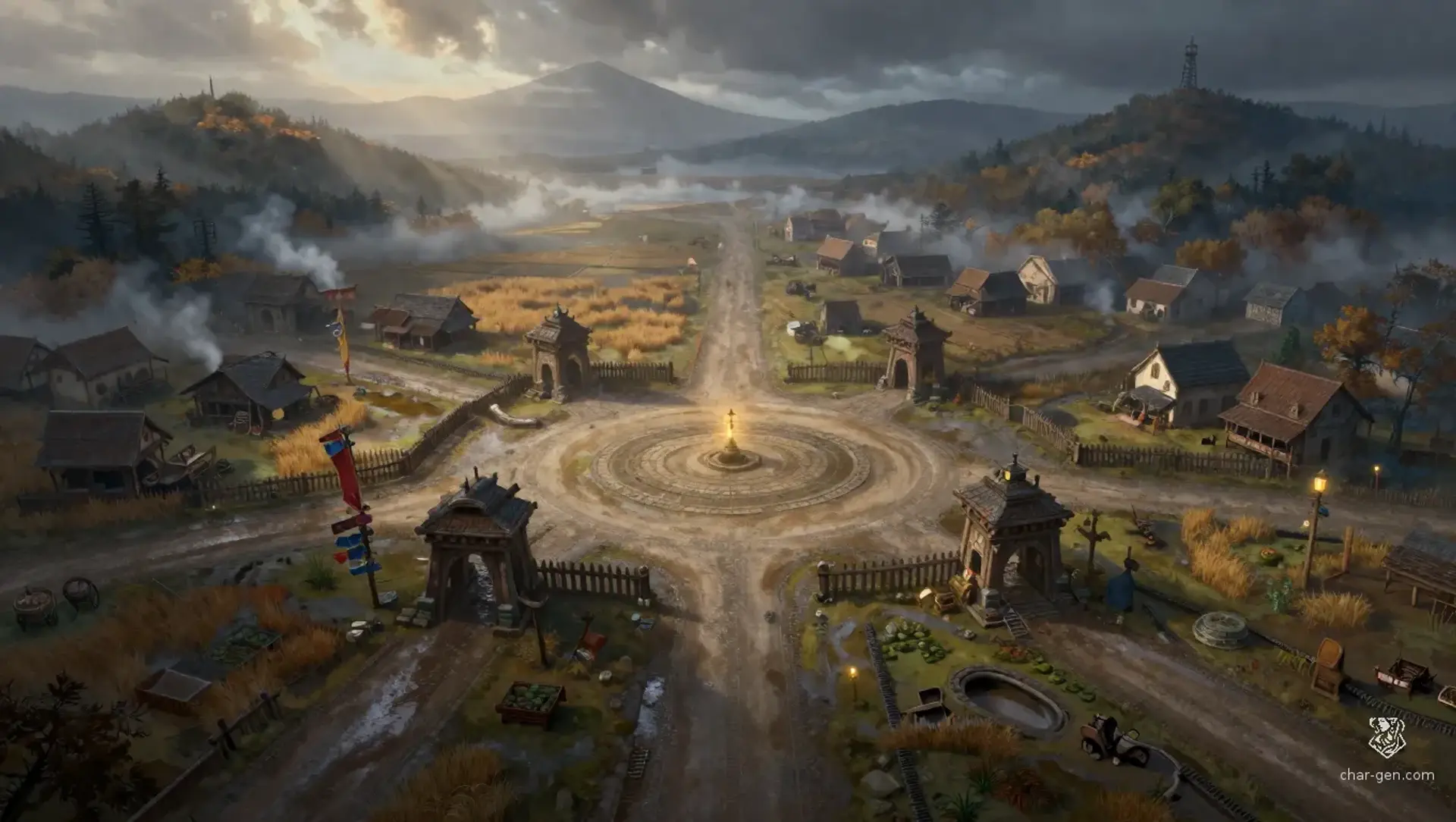
Brackenclear is a muddy, prosperous crossroads town built where four old roads meet atop buried survey stones from a vanished empire. The town’s defining truth is that the stones shift during the night, subtly changing which road counts as public, private, taxable, or even part of the town. The magistrate’s route ledger is therefore more powerful than any deed. Whoever controls its ink can redirect wealth, borders, and blame.
Brackenclear
Four roads meet here, but the town cannot agree which four they are.
“Every road into Brackenclear arrives under a different toll banner, and none of them can be trusted to remain true until dawn. Teamsters nail scraps of colored cloth to the crossroads posts so they can find yesterday’s route again. The town smells of wet leather, lamp oil, and cut reed. People speak cheerfully about lost travelers, then lower their voices when anyone asks who owns the road.”
Gallery
Connections
Geography
Culture
The town believes that hospitality is a debt, not a virtue. A stranded traveler receives water, directions, and a place near the fire, then owes a favor that may be collected years later. Brackenclear distrusts grand promises and fixed loyalties. Residents admire anyone who can admit being lost, but they despise people who pretend a bad road was chosen deliberately.
Brackenclear favors practical performance. Road ballads are sung in taverns, but verses change whenever a new route becomes fashionable. Children stage mock trials in which one player is accused of moving a boundary stone. Traveling puppeteers are paid in meals and introductions rather than coin. The most respected craft is sign painting, since a well-made marker can save a caravan days of travel and a fortune in spoiled goods.
History
Government
A road changed position three nights ago, placing a profitable warehouse outside the town’s legal boundary and cutting a tenant hamlet off from its water ditch. Both sides have armed supporters, and the magistrate’s ledger gives different answers depending on which copy is read.
The Fixed Road Council is secretly preparing to drain the central culvert and anchor the survey stones with iron braces. The work could stabilize the roads, but it may also collapse the oldest neighborhoods and destroy evidence of who first altered the ledger.
Economy
Reliable building stone is scarce, and good paper is treated almost like a luxury. The greatest shortage is trustworthy information. A guide who knows which roads held their position overnight can charge more than a blacksmith, while a forged route notice may ruin a farmer before anyone discovers the lie.
Defenses
The Crossroad Wardens began as hired escorts for surveyors and now serve as town watch, road crew, and legal witnesses. Their authority depends on the route ledger held by the magistrate. They are competent in ambushes and crowd control but badly divided over whether altered roads are a civic danger or a useful shield.
Law & Order
- crime Level
- Moderate, with document fraud, toll evasion, caravan theft, and boundary intimidation more common than murder. Violence usually follows disputes over maps or access to water.
- enforcement
- The Crossroad Wardens patrol gates, inspect route notices, and serve as witnesses in property disputes. Their legal authority is broad but inconsistently applied. A well-connected caravan owner may avoid arrest for smuggling, while a farmer caught moving a marker can lose a season’s harvest.
- typical Punishment
- Fines in silver pieces or gold pieces, confiscation of wagons, public labor repairing roads, and temporary denial of access to the market. Serious fraud brings branding of the guilty person’s route mark onto a public post, which often destroys their livelihood.
Calendar of Events
Turn Brackenclear into a sheet
A high-res, share-ready sheet you can post or print.