
Saxicola montivagus
Keldren are small, sure-footed highlanders who measure wealth in reliable shelter, useful skill, and promises kept.
At a glance
Darkvision Accustomed to lanternlit galleries, many Keldren can see in dim light as if it were bright light and in darkness as if it were dim light, though colors fade to gray. If your rules system assigns a range, 60 ft. is a suitable standard.
Languages Keldren, Trade Tongue
Height 3 ft. 8 in. to 4 ft. 6 in.
Weight 95 to 155 lb.
Lifespan 140 to 180 years
At the table
Keldren have keen sight in low light. They can make out shapes and movement in darkness, though color and fine detail become difficult to distinguish.
Years on narrow paths give Keldren a dependable sense of balance. Ordinary loose scree, uneven stone, and steep trails seldom slow them as much as they do travelers unused to mountain ground.
Keldren are practiced at reading the signs of rockfall, poor footing, and sudden weather. When a journey turns dangerous, they can often identify a safer route or a place to shelter.
Keldren learn to endure cold nights and long days of physical work. They recover their composure quickly after exertion and are difficult to discourage from a necessary task.
Keldren, Trade Tongue
Keldren often develop sturdy bodies and practical judgment through life in steep, demanding terrain. These are cultural and biological tendencies, not fixed bonuses; adapt any ability adjustments to the rules your table uses.
Pale eyes, quiet steps, and an exceptional feel for enclosed spaces and subtle changes in airflow.
Deepdelvers make their homes in extensive galleries and sheltered caverns. They excel at underground navigation, ventilation, and the patient work of finding safe passages through old stone.
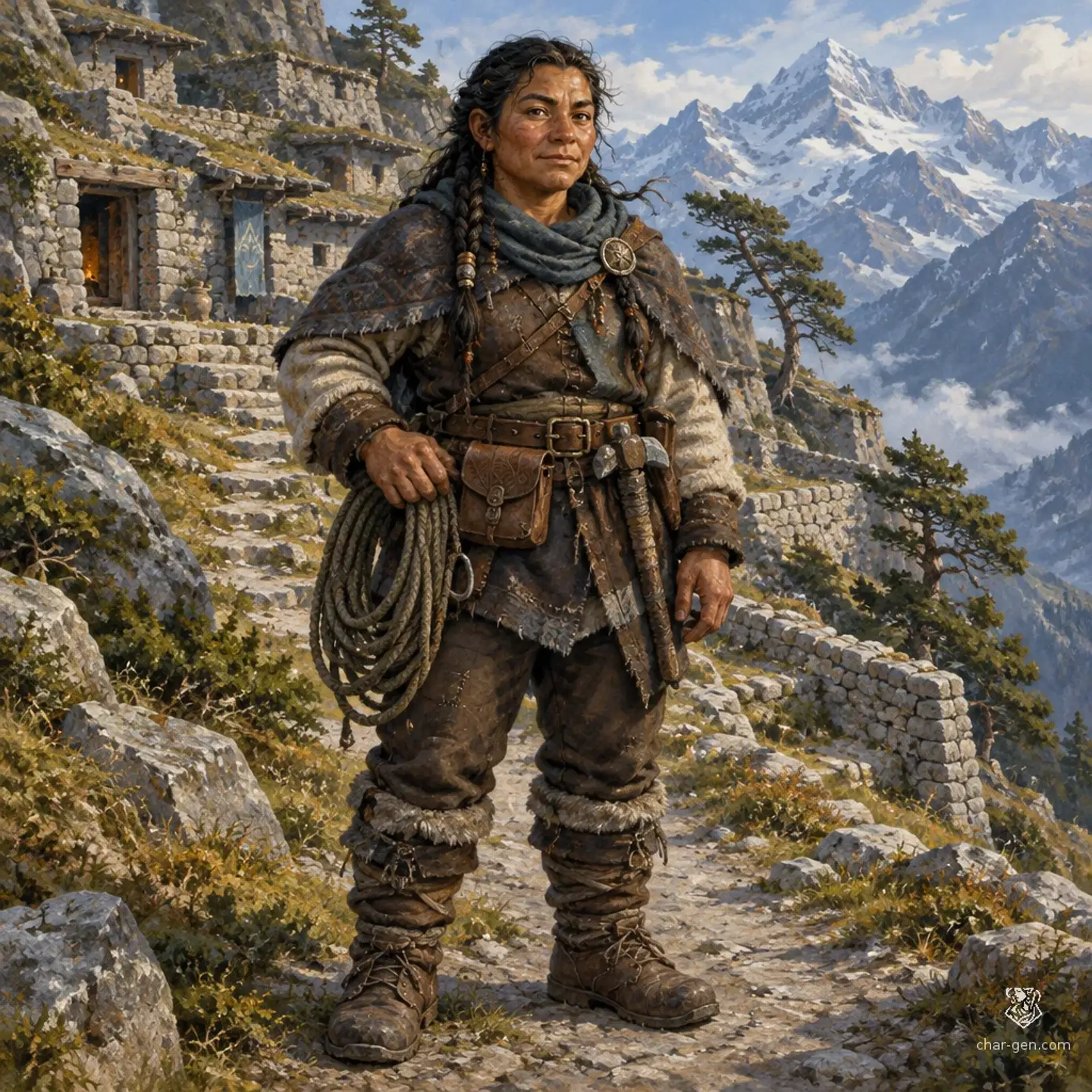
Keldren are small, sure-footed highlanders who measure wealth in reliable shelter, useful skill, and promises kept. They carve homes into mountain shelves and build their lives around the difficult art of getting people safely from one valley to another. A Keldren adventurer may be a scout, artisan, mediator, or runaway apprentice, but rarely travels without a plan for the weather and a spare length of cord.
Keldren are compact humanoids with broad torsos, sturdy limbs, and hands shaped by climbing, quarrying, and fine craft.
Their skin ranges from tawny brown to cool umber, often weathered by highland wind; hair tends toward dark brown, black, russet, or iron gray. Thick hair and dense body warmth help them endure cold, while keen balance and an instinctive sense of footing serve them on narrow trails. Many wear practical braids, carved beads, or small metal fasteners that mark family and trade.
Mountainous
Children learn trail sense, household crafts, and the names of nearby peaks through stories and supervised journeys.
An adult is expected to choose a craft, service, or wandering apprenticeship and begin keeping promises in their own name.
Elders often become living archives of routes, agreements, and hard-won lessons. Many remain active well into old age.
Keldren culture values useful knowledge, patient craftsmanship, and mutual reliance in dangerous country.
Most communities are organized around households, work crews, and councils that settle disputes over water, grazing, quarrying, and travel rights. A person may earn respect through skilled work, clear judgment, or an ability to keep a difficult route open. Tradition matters, but it is usually treated as accumulated experience rather than unquestionable law. Keldren who leave home are expected to learn from other customs and bring back something of lasting value, whether a new technique, a story, or a repaired alliance.
Keldren traditions honor the powers of stone, weather, hearth, and the ancestors who first marked safe paths through the highlands.
Some communities keep small shrines at springs and trail junctions; others favor personal offerings made before a difficult journey. Their customs prize fairness and responsibility, but individuals vary widely in faith and outlook. A Keldren may be cautious or daring, devout or skeptical, so long as their choices fit their own sense of obligation.
Keldren tend to judge neighbors by whether they keep agreements and care for shared roads, springs, and shelters.
They trade readily with lowland communities but can find fast-changing fashions and vague promises unsettling. Their hospitality is generous, though guests are expected to respect local hazards and leave a place in sound condition. Keldren friendships often begin with shared work and deepen through dependable acts rather than declarations.
Keldren communities cluster on high shelves, in deep valleys, and along old quarry roads.
Their buildings are low against the wind, with thick stone walls, steep roofs, and entrances positioned to catch morning light while shedding snow. Many settlements combine surface homes with terraced storehouses and carefully vented halls cut into the rock. Rather than treating a mountain as a thing to conquer, Keldren builders seek stable seams, reliable water, and routes that remain passable through winter.
No images yet.
A high-res, share-ready sheet you can post or print.