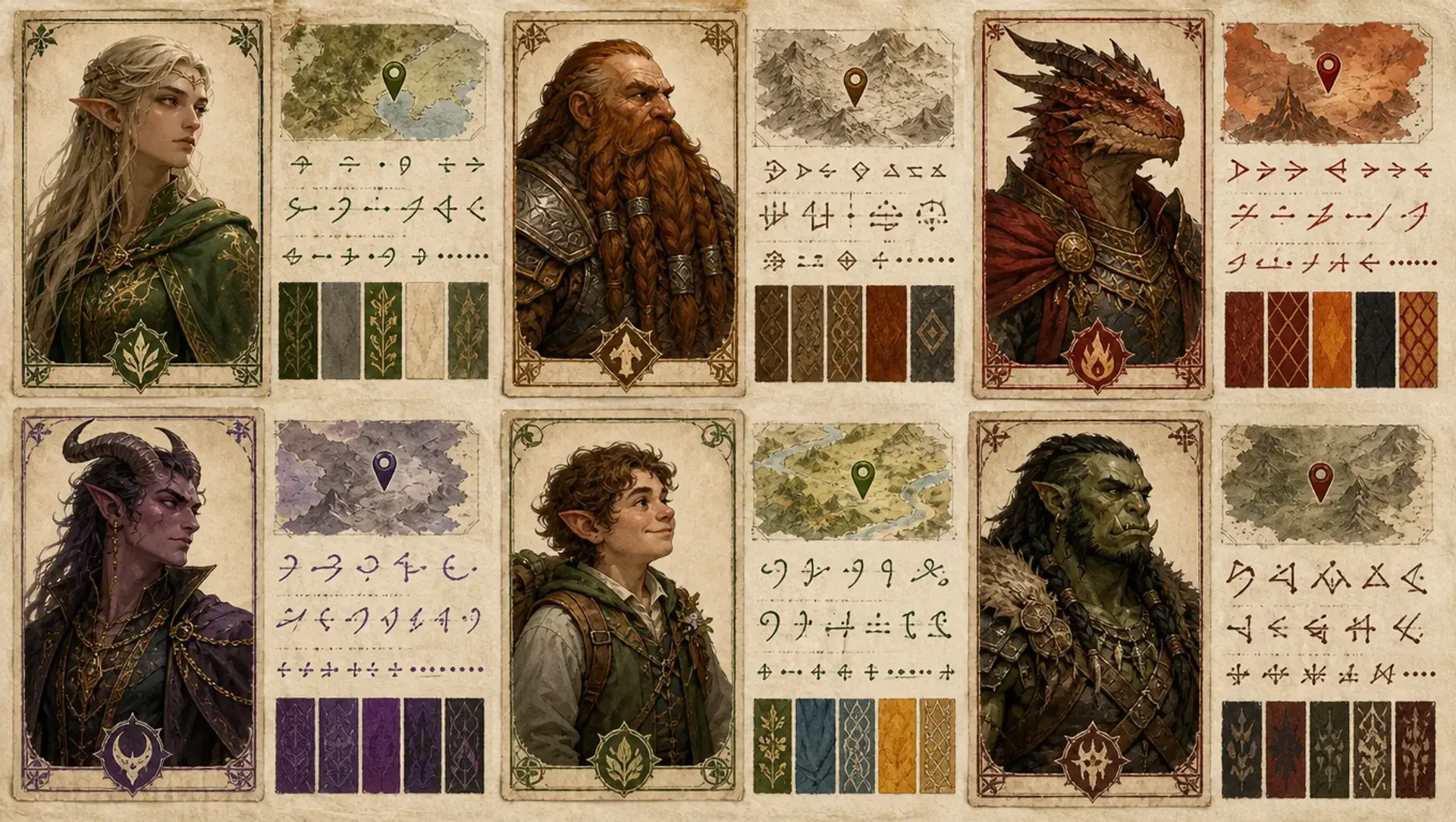
Generate fantasy species and ancestries with culture, biology, traits, subspecies, and naming traditions. Compatible with D&D 5E (2014/2024), Pathfinder 2E, and system-agnostic fantasy.
Each species reads like an author wrote it — biology, society, mythology, and naming conventions, not a stat block.
02
Player-Ready Traits
2024-PHB-style ability flavor in prose, named species traits, languages and proficiencies you can paste straight onto a sheet.
03
Worldbuilding Hub
Link a species to settlements, regions, factions, and famous member NPCs — the entire world graph reaches outward from here.
How to Use the Fantasy Species Generator
Treat biology, culture and game mechanics as related but separate choices. A species becomes more believable when no single tradition is presented as universal.
01Describe physical adaptations through the environment that shaped them.
02Create multiple cultures, communities or points of view.
03Make playable traits useful without dictating personality.
Fantasy Species Generator Questions
Does this generator support 2024 D&D rules?
Yes. The default framing is the 2024 PHB. Ability score flavor is described in prose without locked +2/+1 increases, and traits are presented as proficiency grants and descriptive features rather than copied SRD text.
Can I use it for Pathfinder 2E?
Yes. Selecting Pathfinder 2E switches the terminology to ancestry/heritage and presents subspecies as heritages within the ancestry.
Will it copy WotC species names like Drow or Tiefling?
No. The generator deliberately avoids trademarked names and produces homebrew analogs (for example, 'Sunmarked Folk' instead of 'Aasimar'). The structure feels familiar, but the names and identity are original.
Does the species link to my characters and NPCs?
Yes. Every species saves to the World Codex. From the species page you can make or link an NPC for each famous member, make a member of the people from the Make one card, and make a homeland region, a settlement and a faction for them. Characters, NPCs, monsters, and settlements can also adopt it as their ancestry through a link added by hand with Add link, so the relationship graph keeps cultural ties consistent across your campaign.
Can I generate subspecies or regional variants?
Yes. Each species comes with subspecies variants out of the box, listed in its Lineages section (Pathfinder 2E presents them as heritages within the ancestry), useful for regional cultures, subraces, or hybrid lineages within the same ancestry. To ask for a particular variant, describe it in the Additional Details box before you generate.
Can it make a random species?
Yes. Leave the Quick Description box empty for a fully random species, and leave Creature Type, Size and Habitat on Surprise me so the generator picks them. To steer it instead, describe the people in one line, such as stone-counting kobold-kin who live in flooded mines, or set any of those fields.
What can I set before I generate a species?
A quick description, a game system (D&D 5E (2024) by default; also D&D 5E (2014), Pathfinder 2E or Generic Fantasy), a creature type (Humanoid, Fey, Giant, Construct, Aberrant or Beast-folk), a size (Small, Medium or Variable), a habitat (Mountainous, Forest, Aquatic, Underground, Plains, Urban or Otherworldly), an inspiration archetype such as bird-folk, a power level (Standard PC by default; also Powerful (Monstrous) or Subtle (Mundane)) and an optional box for extra details such as taboos or naming conventions.
Does it generate names for the species?
Yes. The Names and playing one section lists feminine, masculine and neutral first names and family names for the people, with personality traits, ideals, bonds and flaws for playing one. The At the table panel rolls a full name or an adventure hook, and the Make one card turns a rolled member into an NPC. For names without a species, use the Name Generator at char-gen.com/name-generator.
The CharGen Species Generator is an AI tool that creates fantasy species and ancestries for tabletop RPG worldbuilding in about 30 seconds. Each generated species includes a thematic name and optional Latin-style binomial subtitle, creature type (Humanoid, Fey, Giant, Construct, Aberrant, Beast-folk), size and speed, lifespan and age categories, habitat and rarity, physical description and culture, language list, mechanical traits in 2024 D&D framing (no locked ability score increases: proficiencies and resistances described in prose), subspecies variants, masculine/feminine/neutral names plus surnames, and roleplay and adventure hooks.
Unlike static homebrew templates, every species links into the World Codex: from its page you can make or link an NPC for each famous member and make a homeland region, a settlement and a faction for the people, and characters, NPCs, monsters and settlements can be linked to it by hand, so the relationship graph keeps cultural ties consistent across sessions. The prompt avoids trademarked species names, so the names and identity are original rather than borrowed from official books. Outputs save to the World Codex, export to PDF and Obsidian markdown, and can be shared as public pages; a shared species page is marked noindex unless it is on CharGen's index allow-list, so search engines can crawl it but leave it out of their results. Free to start: text generation costs no gold and has no daily limit on any plan, as the Pricing page at char-gen.com/pricing states; editing by hand is free too, and Plus and above add Change with AI and campaign context in every generator.
Compare alternatives
Compare generation depth, editing controls and how each tool fits into campaign prep. These field reports are based on current public features and hands-on testing.
How CharGen's species generator compares to character and worldbuilding tools.