
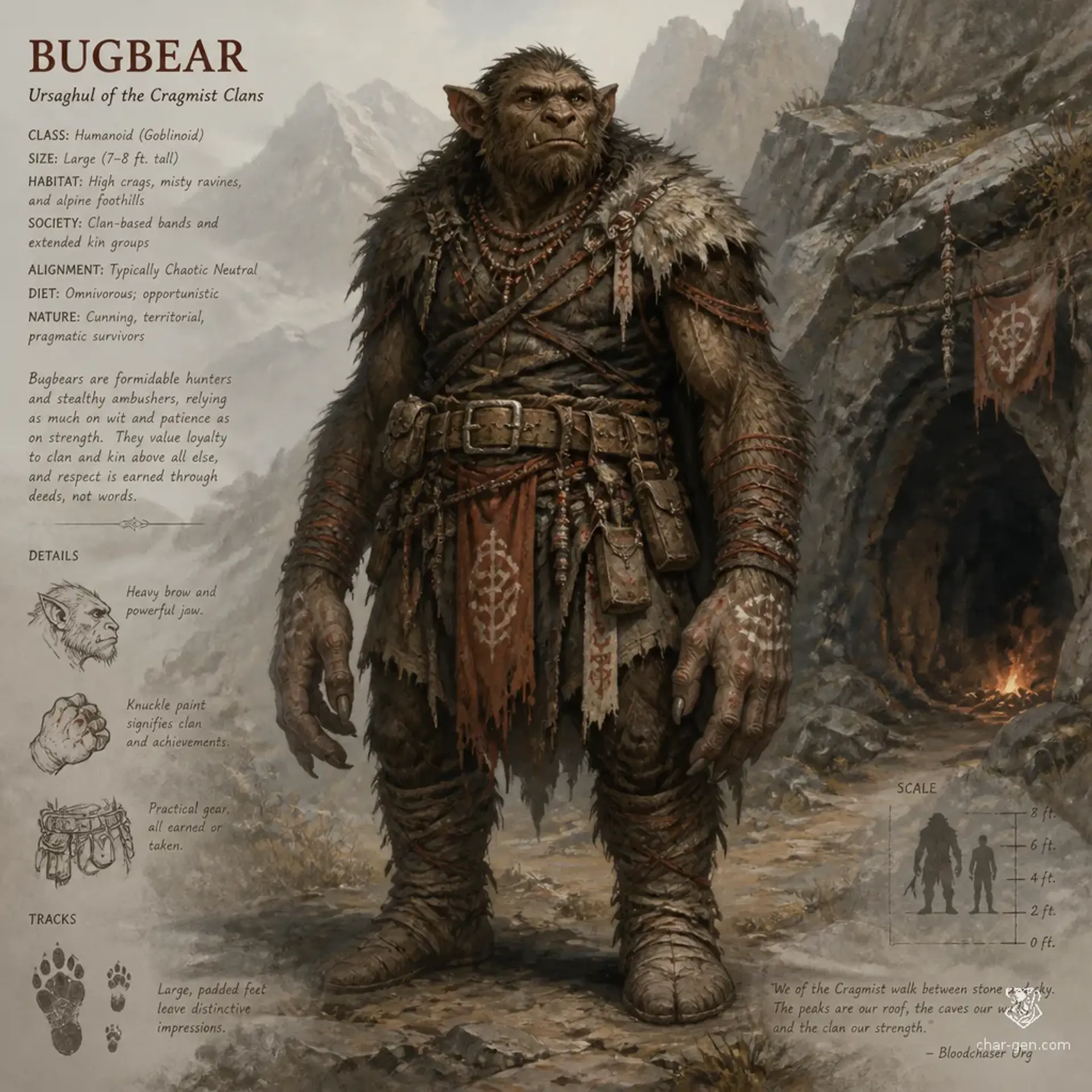
Bugbears are towering, long-limbed mountain folk who can vanish in the shadow of a boulder and appear behind a sentry without stirring a pebble. Some are patient guardians, some are cunning raiders, and many are simply trying to decide what sort of person their strength will make them. Their shaggy appearance and fearsome reputation conceal a people of sharp observation, intense loyalty, and deeply practical humor.
Bugbears are large, broad-shouldered humanoids with long arms, powerful hands, heavy brows, and slightly pointed ears. Their limbs are unusually extended, giving them a loose, loping gait that can become startlingly quiet when they choose. Thick fur covers the body, usually in shades of brown, reddish umber, black, grey, or snow white. Their faces are expressive beneath the fur, though strangers often mistake their stillness for hostility. A bugbear's apparent clumsiness is deceptive. They can fold themselves into cramped hiding places, balance on narrow ledges, and cross rough ground with remarkable silence. Most wear layered hides, wool, belts, and soft-soled boots, with clan colors shown through cords, beads, painted knuckles, or strips of dyed cloth.
Bugbear society is organized around flexible households and traveling clans rather than permanent ranks. A household may include blood relatives, adopted outsiders, old rivals, and people who simply survived the same winter. Status comes from usefulness and trust. Hunters, pathfinders, healers, smiths, storytellers, and negotiators all hold authority in their spheres. Young bugbears are encouraged to master stealth not merely for ambush, but for observing without disturbing, escaping danger, and finding routes others overlook. Hospitality is practical and guarded. Guests receive warmth and food, but hosts expect them to help with a chore, share news, or explain their intentions. Public arguments are often settled through contests of endurance, tracking, wrestling, or storytelling.
Bugbear spirituality centers on ancestors, mountain spirits, fire, hunger, and the unseen paths between danger and safety. Many clans honor a watchful spirit associated with their homeland, leaving offerings of salt, marrow, bright thread, or the first portion of a successful hunt. Bugbears have no fixed moral alignment. Some become compassionate wardens, while others embrace predation and intimidation. Their culture prizes loyalty, preparedness, and self-determination, but each community debates whether those virtues are best expressed through protection, independence, or control.
Bugbear homes are built into ravines, caves, abandoned fortifications, and narrow shelves beneath overhanging stone. Their architecture favors concealment over grandeur: low entrances, false walls, covered bridges, hidden storage pits, and lookout niches positioned to watch a trail without exposing the watcher. Settlements are often arranged in layers, with sleeping chambers and food stores deep inside, workshops near defensible passages, and communal gathering spaces concealed behind curtains of hide or woven mountain grass.
Bugbears are often treated as threats before they have spoken a word, particularly in lowland settlements familiar with stories of raiders and kidnappers. They respond to prejudice in different ways. Some cultivate fear as a useful shield, while others become careful diplomats, guides, mercenaries, or protectors. They respect disciplined martial peoples, clever traders, and anyone who keeps a promise under pressure. They are wary of goblin-kin societies that demand obedience, though they may share old customs and family ties with them. Among humans, dwarves, and elf-like peoples, bugbears are frequently valued as scouts and mountain guides once their reliability has been proven.
A high-res, share-ready sheet you can post or print.