Djinnari reach physical maturity by 20 but are culturally considered adults at 50. They live significantly longer than humans, often reaching between 450 and 600 years of age.
Darkvision
60 ft.
Habitat
Arid deserts, sandstone canyons, and bustling oasis cities.
Elf-kin
Desert-dweller
Magic-blooded
SizeMedium
Speed30 ft.
LifespanDjinnari reach physical maturity by 20 but are culturally considered adults at 50. They live significantly longer than humans, often reaching between 450 and 600 years of age.
Creature TypeHumanoid
Darkvision60 ft.
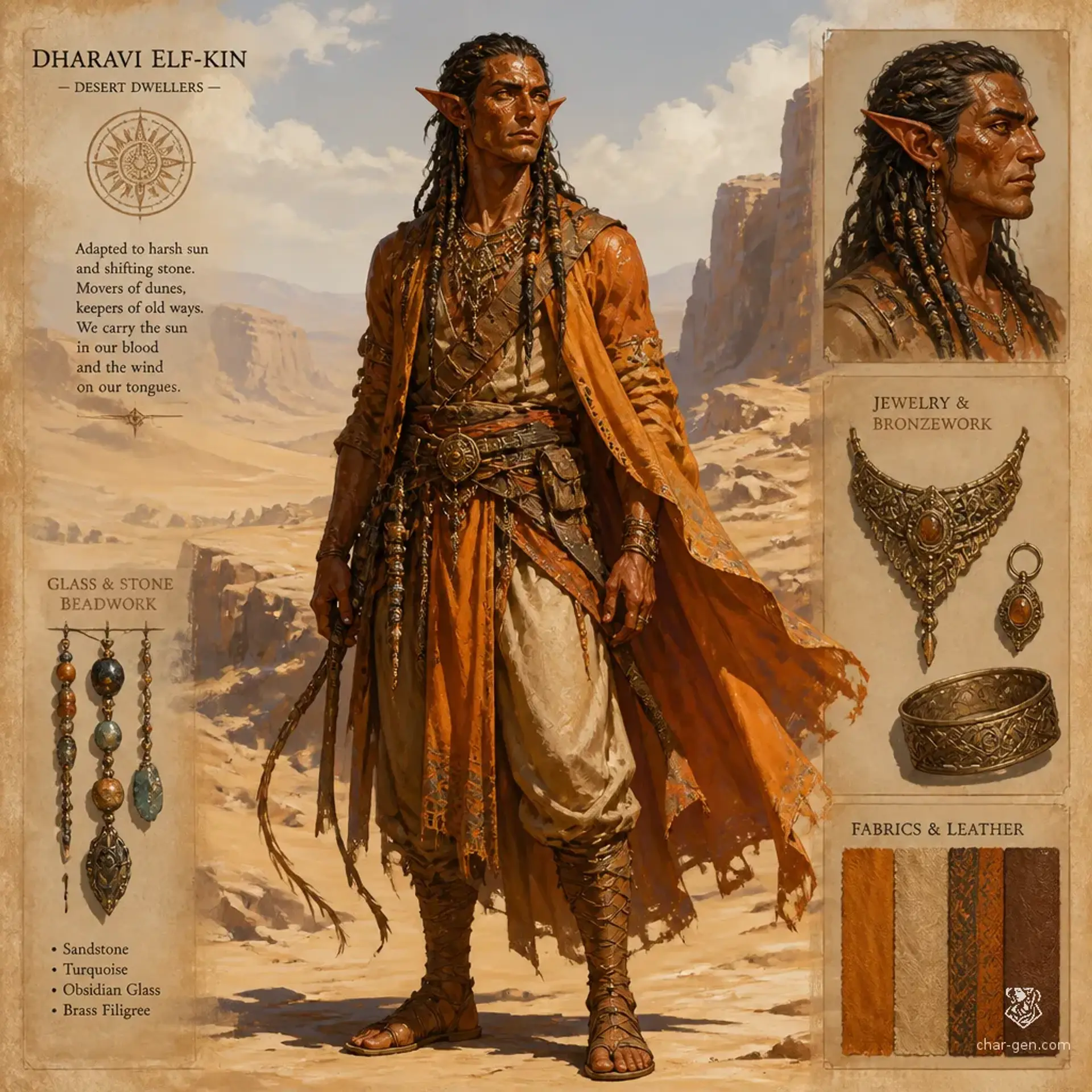
Carrying the ancient grace of their elven forebears into the scorching heat of the dunes, the Djinnari are masters of the shifting sands. They are a people of fierce independence and innate magical talent, possessing skin the color of sun-bleached terracotta and eyes that reflect the shimmering horizons of Marquet. Whether as nomadic hunters or urban scholars, they navigate the world with a fluid grace and a soul as free as the desert wind.
Physical Description
The Djinnari are lean and athletic, possessing the slender frames and pointed ears of their elven ancestors. Their most striking feature is their skin, which has evolved over centuries to match the various hues of the desert: shades of deep tan, burnt orange, and even a vibrant, dusty red. Their hair is often coarse and dark, frequently braided with beads of sandstone or glass. Their eyes tend toward amber, gold, or obsidian, capable of narrowing to slits to protect against the relentless glare of the sun.
Society & Culture
Djinnari culture is built upon the pillars of freedom and merit. Most live in tribes where leadership is earned through survival skills or magical prowess rather than lineage. They are famous for their oral histories, which are often sung or performed by bards. While many remain in the desert as master trackers and druidic protectors, there is no stigma attached to leaving the tribe. Many Djinnari find themselves drawn to urban centers, where they often excel as mercenary scouts, glass-workers, or arcane consultants.
Religion & Alignment
The Djinnari generally lean toward Neutral alignments, valuing personal freedom and the natural balance of the desert. They rarely worship distant gods, preferring to venerate the spirits of the wind, the sun, and the rare, life-giving water. Their spiritual leaders are often Druids or Sorcerers who interpret the patterns of the dunes as messages from the land itself.
Homelands & Architecture
In the open desert, they reside in portable, silk-covered pavilions designed to catch the breeze. In more permanent settlements like the canyon cities of Marquet, they carve elaborate dwellings directly into the sandstone cliffs. These structures feature wind-chimneys for natural cooling and communal plazas where history is shared through song.
Relationships With Other Peoples
They view other elf-like peoples as distant, somewhat stiff cousins who have forgotten the wild pulse of the world. They respect humans for their ambition but often find them too frantic. To a Djinnari, a bond is a choice rather than an obligation, making them loyal but brutally honest companions.
Visual sheet
Turn Djinnari into a sheet
A high-res, share-ready sheet you can post or print.