Medium or Small, chosen when you select this species
Common
Humanoid
Humanoid·Medium or Small, chosen when you select this species
Fleetfoot
*Velocipes ludens*
Speed
30 ft., climb 20 ft.
Lifespan
Fleetfoot mature at about 16 and commonly live 80 to 100 years. Their reflexes remain keen late in life, though endurance and recovery gradually diminish.
Darkvision
60 ft.
Habitat
Open grasslands, river valleys, coastal plains, dense urban districts, and any settled region with room for a pitch, court, or public field.
humanoid
athletic
communal
competitive
mobile
soccer-inspired
SizeMedium or Small, chosen when you select this species
Speed30 ft., climb 20 ft.
LifespanFleetfoot mature at about 16 and commonly live 80 to 100 years. Their reflexes remain keen late in life, though endurance and recovery gradually diminish.
Creature TypeHumanoid
Darkvision60 ft.
Fleetfoot are the living pulse of the open field, quick-footed wanderers who turn competition into ritual, friendship, diplomacy, and sometimes war. They can read a crowded street like a tactical diagram, find the one unguarded path through a battlefield, and make a stranger feel like part of the team within minutes. To a Fleetfoot, every journey has a formation, every crisis has a passing lane, and every victory means more when shared.
Physical Description
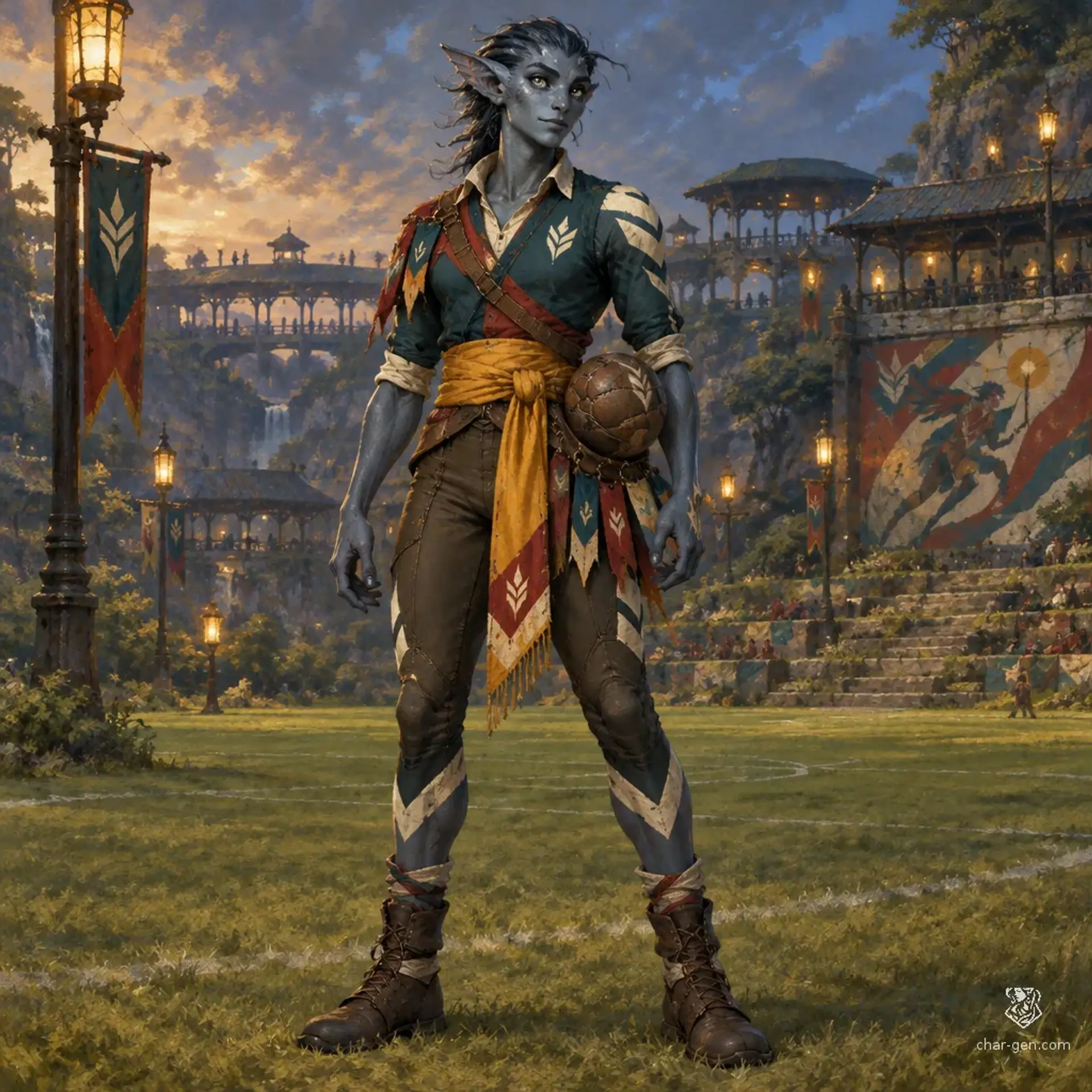
Fleetfoot are compact, long-limbed humanoids built for acceleration, balance, and sudden changes of direction. Their feet are broad and flexible, with toughened soles and unusually sensitive toes. Most have large, expressive eyes, swept-back ears, and hair that grows in dense ridges or soft, wind-tossed curls. Their skin ranges from clay red, ocher, and umber to olive, slate, and deep blue-black. Irregular bands, spots, or chevrons often appear along the legs and shoulders, and many families regard these markings as signs of ancestral playing styles. Fleetfoot dress in layered shirts, fitted trousers, bright sashes, and carefully maintained boots or foot-wraps. Club colors are worn with pride and can communicate allegiance, profession, mourning, or marital status.
Society & Culture
Fleetfoot society is organized around clubs, leagues, and neighborhood teams. Membership is more than recreation. A club may provide schooling, apprenticeships, medical care, housing, and political representation. Children learn coordination through games, while adults settle disputes through formal matches, witnessed challenges, or carefully negotiated rematches. Coaches are respected as educators and community leaders, referees as keepers of impartial memory, and goalkeepers as symbols of patience and sacrifice. Professional players may become celebrities, folk heroes, spies, or political figures. The highest cultural virtue is not victory alone, but making the decisive play that allows someone else to succeed.
Religion & Alignment
Fleetfoot spirituality centers on motion, witness, and the unseen rhythm connecting individual effort to communal fortune. Many honor a pantheon of patron figures associated with the first touch, the saving stop, the fair whistle, the long road, and the final goal. Their temples often double as training grounds and public courts. Fleetfoot cultures value cooperation and personal responsibility, so many lean toward lawful or good alignments, though ambitious competitors, tricksters, and fiercely independent drifters are common.
Homelands & Architecture
Fleetfoot settlements grow around communal pitches called heartsfields. Their architecture favors broad courtyards, covered walkways, tiered terraces, and walls painted with the colors of local clubs. Homes often include narrow practice lanes, roof gardens for agility drills, and trophy alcoves where families preserve medals, pennants, worn boots, and signed balls. In larger cities, heartsfields serve as marketplaces, theaters, debate halls, and emergency gathering grounds.
Relationships With Other Peoples
Fleetfoot are sociable without being universally trusting. They form intense bonds with teammates, coaches, clubmates, and rivals, often treating a worthy opponent with more respect than a complacent ally. They are welcome in many cities because their clubs organize festivals, charity matches, and public works, but their passionate rivalries can also inflame old political divisions. Fleetfoot adventurers often become scouts, couriers, entertainers, diplomats, soldiers, or wandering coaches.
Visual sheet
Turn Fleetfoot into a sheet
A high-res, share-ready sheet you can post or print.