Typically 70 to 100 years. Prolonged exposure to the dream world can shorten a life, preserve it unnaturally, or cause the individual to disappear into a persistent shared vision.
Darkvision
60 ft.
Habitat
Old human settlements built near places of prolonged magical sleep, haunted battlefields, moonlit marshes, isolated monasteries, and cities where generations have shared the same recurring dream.
human-kin
dream-touched
psychic
mystic
nocturnal
oracle
haunted
SizeMedium
Speed30 ft.
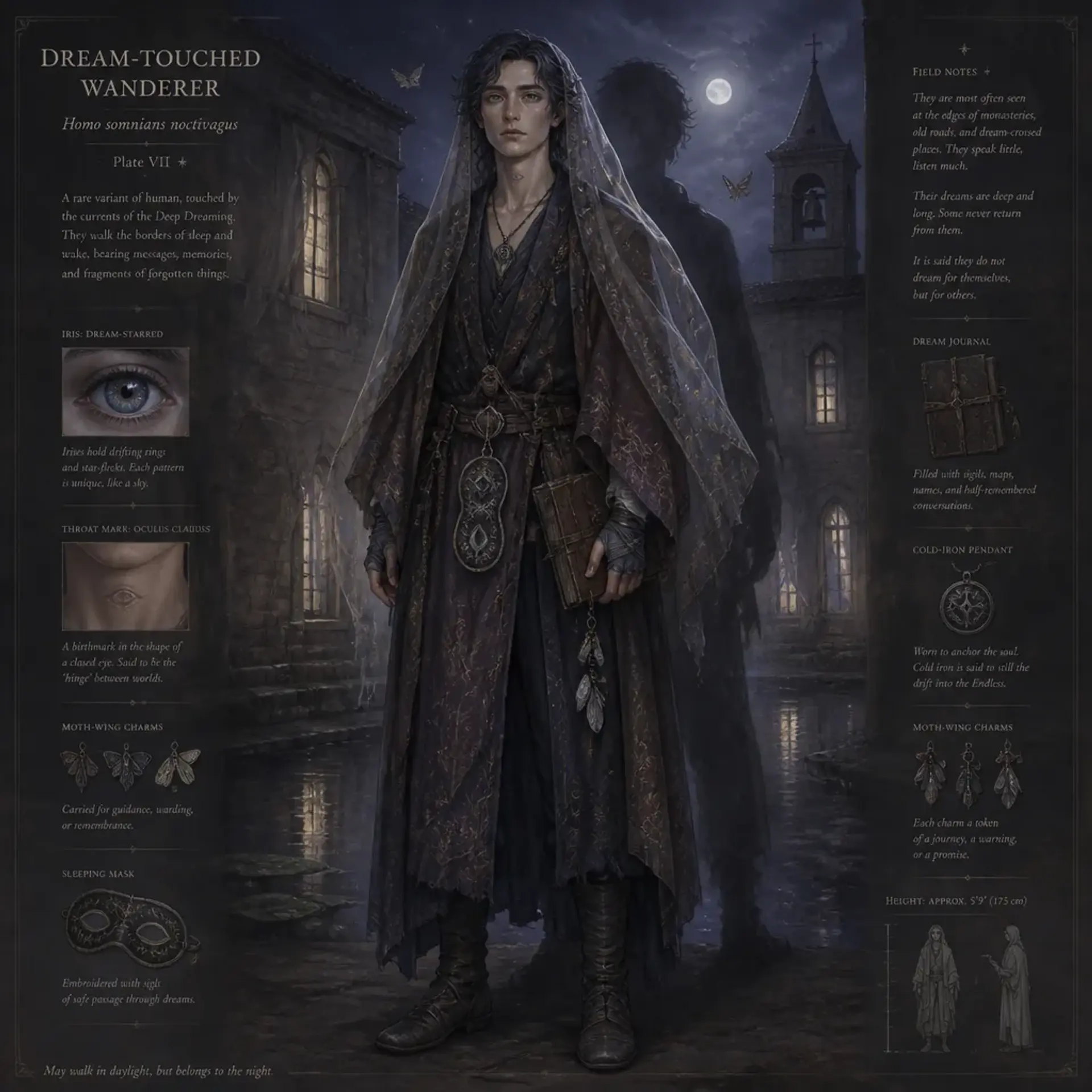
LifespanTypically 70 to 100 years. Prolonged exposure to the dream world can shorten a life, preserve it unnaturally, or cause the individual to disappear into a persistent shared vision.
Creature TypeHumanoid
Darkvision60 ft.
Mourningveil Humans are ordinary people shaped by extraordinary sleep. Their ancestors endured years beneath a supernatural dream, and some fragment of that impossible realm remains in the blood. They walk through the waking world with human faces and human needs, yet nightmares recognize them, forgotten places call to them, and the boundary between memory and prophecy is never entirely secure. A Mourningveil character may be a reluctant oracle, a survivor of a haunted village, a dream-thief seeking redemption, or simply someone determined to live an ordinary life in a world that keeps appearing in their sleep.
Physical Description
Mourningveil Humans are physically human, but prolonged dream exposure leaves distinctive traces. Their skin may carry a faint pearlescent cast, their irises may contain drifting rings or star-like flecks, and their shadows sometimes lag a heartbeat behind their movements. Hair often grows in unusually soft textures or muted colors, including smoke gray, moon white, deep brown, and black with a blue sheen. Their voices may carry a slight echo when they are frightened or speaking of the dream world. Many bear birthmarks resembling closed eyes, veils, moths, or branching cracks. During sleep, their expressions can change rapidly as though several people are dreaming through them.
Society & Culture
Mourningveil culture is built around the ethics of sleep. Consent is sacred, dream invasion is a profound crime, and waking someone abruptly is considered a serious breach of trust unless danger demands it. Families maintain dream journals across generations, treating recurring images as inherited folklore. Children are taught grounding rituals such as counting physical objects, naming five sounds, or holding cold iron. Communities appoint night-watchers to guard sleepers from both physical threats and hostile dream entities. Storytelling, mourning, and governance frequently overlap, with public decisions sometimes preceded by a night of communal dreaming. Their greatest social divide lies between those who believe dreams reveal hidden reality and those who believe dreams merely reveal the dreamer.
Religion & Alignment
Mourningveil Humans rarely share one religion. Some honor gods of death, dreams, knowledge, or thresholds, while others distrust divine explanations and treat dreams as a natural phenomenon made strange by magic. Their funeral rites are unusually elaborate, including the retelling of the deceased’s most important dreams and the destruction of a personal sleeping mask. They tend slightly toward thoughtful, compassionate alignments, but prolonged exposure to nightmares can produce severe pragmatists, fatalists, or secretive visionaries.
Homelands & Architecture
Mourningveil communities favor enclosed courtyards, low ceilings, quiet bell towers, and rooms designed for safe observation during sleep. Windows are often narrow and covered with gauze, mirrored glass, or painted shutters. Their oldest settlements include communal sleeping halls where trusted dream-wardens keep watch and record the visions of the inhabitants. Architecture tends to blur practical and symbolic function, with doors shaped like eyes, staircases that spiral around empty shafts, and bridges built over still black water.
Relationships With Other Peoples
Mourningveil Humans are welcomed in some communities as healers, interpreters, and guardians against supernatural intrusion. Elsewhere, they are feared as sleepwalkers, spies, or bearers of contagious nightmares. Other humans often regard them as unsettling cousins rather than a separate people. Elven cultures may respect their symbolic traditions, while dwarven communities commonly distrust their imprecision and reliance on visions. They are often drawn to mystics, artists, investigators, and anyone whose life has been shaped by loss. Their closest friendships tend to be built on practical trust, especially among companions willing to ask whether a memory truly happened.
Visual sheet
Turn Mourningveil Human into a sheet
A high-res, share-ready sheet you can post or print.