
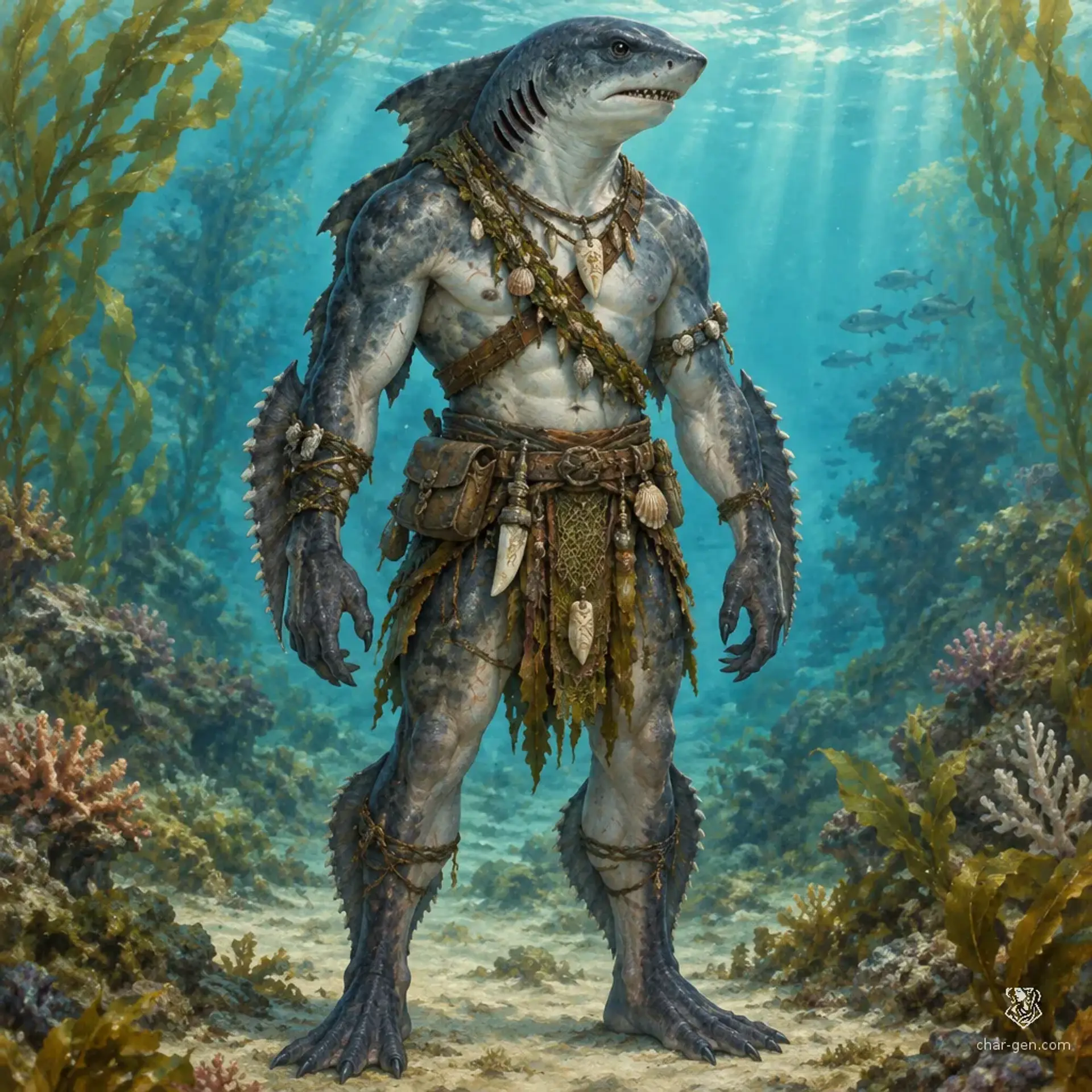
Selachanthropus vorax
A raithe can cross a flooded tunnel in seconds, read the tremor of a wounded creature in the water, and make a dangerous ally when the hunt turns against the party.
At a glance
Darkvision 60 ft.
Languages Common, Raithe
Height 5 ft. 6 in. to 7 ft.
Weight 150 to 300 lb.
Lifespan 90 to 120 years, adult at 18
At the table
You can breathe air and water. You also have a swimming speed of 30 feet.
Your bite is a natural weapon. When you make an unarmed strike, you can use your bite to deal piercing damage instead of the normal damage. You can use Strength or Dexterity for the attack and damage rolls.
You have darkvision with a range of 60 feet. In dim light, you see as if it were bright light, and in darkness as if it were dim light. You discern colors in darkness only as shades of gray.
You have proficiency in the Perception skill.
Common, Raithe
Raithe often cultivate strength and keen awareness in their unforgiving waters. These are tendencies, not limits: assign your character's ability score increases as you wish.
Broad, saw-edged fins and mottled gray skin suited to broken reefs and rocky shallows.
Reef raithe are agile hunters and skilled defenders of narrow passages. Their bands often maintain close ties with coastal settlements, trading knowledge of tides and safe channels.
A raithe can cross a flooded tunnel in seconds, read the tremor of a wounded creature in the water, and make a dangerous ally when the hunt turns against the party. Their culture prizes nerve and decisive action, but its oldest lesson is that an uncontrolled hunter endangers the whole band. A raithe adventurer may be a fierce protector, a restless exile, or a negotiator determined to prove that a predator can choose what not to devour.
Raithe are powerfully built humanoids with streamlined torsos, tapered faces, and rows of replaceable teeth.
Their skin ranges from slate gray and blue-green to sand-brown, often countershaded with pale bellies and broken patterns that blur their outlines in water. Fins may ridge the forearms, calves, or back, and their dark eyes are adapted to dim depths. Each raithe's gill slits, scars, and fin shape are distinctive. Their reputation for ferocity is not entirely undeserved, but it describes a hunting style, not a lack of thought or feeling.
Aquatic, especially warm reefs, kelp forests, deep channels, and sheltered coastal caves.
Young raithe learn currents, hunting discipline, and the customs that keep a close-knit hunting band alive.
Most raithe reach adulthood in their late teens and are expected to choose a band, a trade, or a life beyond the reef.
Elders may live for more than a century. Their scar patterns and remembered routes give them influence, though not automatic obedience.
Raithe commonly live in hunting bands linked by kinship, adoption, and mutual obligation.
Each band depends on more than hunters: healers, current-readers, craftspeople, and storytellers all have standing. Young raithe learn to control their appetite for the chase, since a careless attack can spoil a hunt or draw danger to the whole community. Scar patterns and carved tooth tokens can record journeys, debts, and acts of service. Many raithe are comfortable with fierce competition, but challenges have customs and boundaries; a fight that harms bystanders is a disgrace.
Raithe traditions honor the sea as a force that gives without promising safety.
Some revere ancestral hunters, currents, or great sea creatures as spirits; others follow gods of storms, protection, or the natural world. Their reputation for viciousness comes from a willingness to meet danger head-on, not a shared moral code. A raithe may be kind, cruel, disciplined, or reckless, according to their own choices.
Raithe judge others by their actions under pressure more than by ancestry or rank.
Coastal folk may fear them as raiders, while raithe bands remember generations of nets, poisoned waters, and broken treaties. Trust often begins through practical cooperation: sharing food, keeping watch, or defending a vulnerable place. Their sharp teeth and direct manner can unsettle companions, but many raithe are patient listeners who simply dislike disguising a disagreement as politeness.
Raithe communities favor reefs with several exits and a clear view of approaching currents.
Their homes are grown, shaped, or assembled from coral, shell, stone, and salvaged timber, with broad chambers for communal gatherings and narrow passages that can be defended. Surface-dwelling raithe adapt by settling near harbors, freshwater springs, or flooded caverns.
No images yet.
A high-res, share-ready sheet you can post or print.