
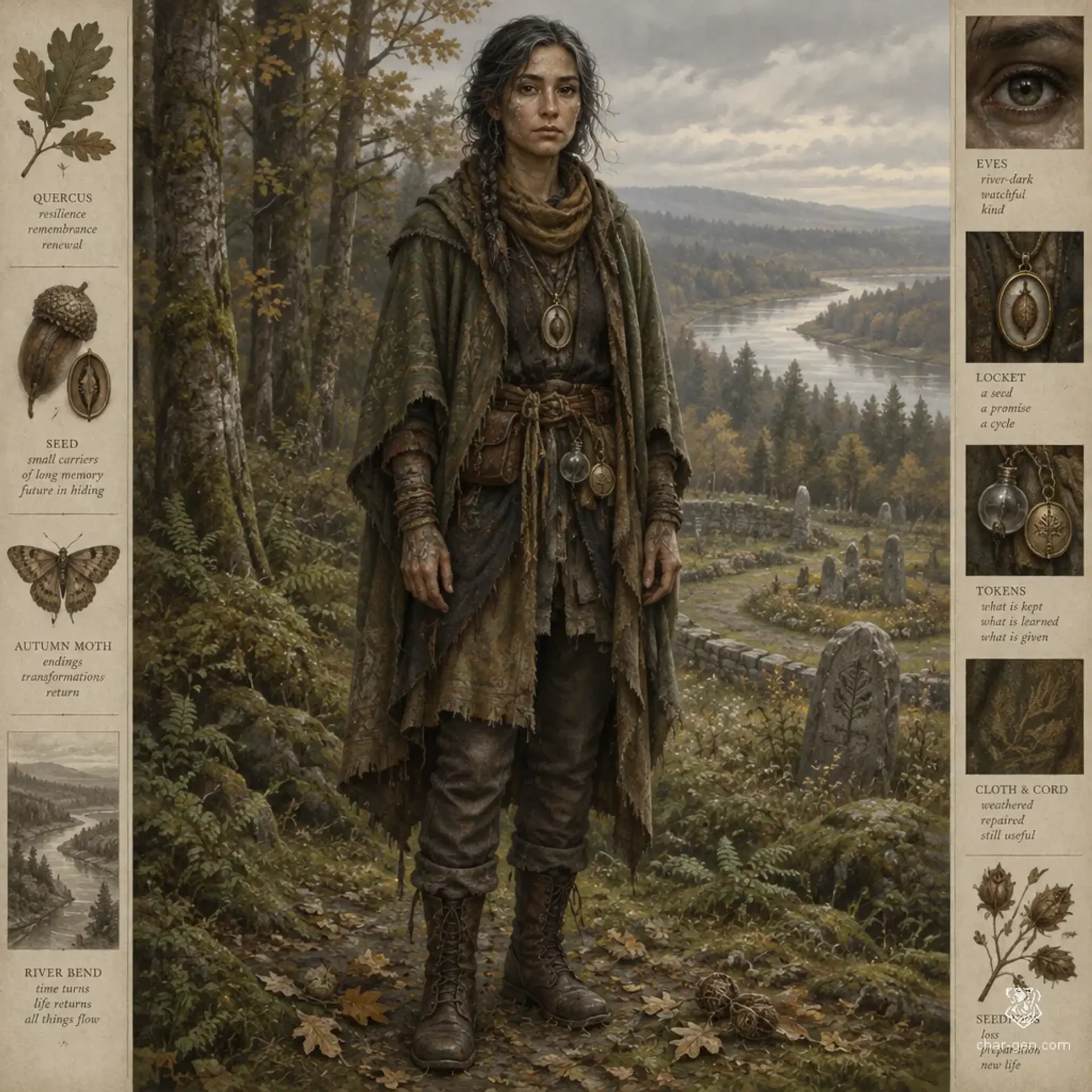
Homo liminalis
Vesperkin are a people shaped by the idea behind the Death card: not extinction, but the necessary passage from one state into another.
At a glance
Darkvision 60 ft.
Languages Common, One other language of your choice, often a language used by ancestors, mourners, or neighbors
Resistances Necrotic
Height 5 ft. 2 in. to 6 ft. 4 in.
Weight 110 to 220 lb.
Lifespan 90 to 120 years
At the table
You can see in dim light within 60 feet of yourself as if it were bright light, and in darkness as if it were dim light. You discern colors in darkness only as shades of gray.
You have resistance to necrotic damage.
When you or a creature you can see within 30 feet of you is reduced to 0 Hit Points but not killed outright, you can take a Reaction to let that creature drop to 1 Hit Point instead. Once you use this trait, you can't use it again until you finish a Long Rest.
You know the Spare the Dying cantrip. Wisdom, Intelligence, or Charisma is your spellcasting ability for it; choose the ability when you select this species.
You gain proficiency in one of the following skills of your choice: Insight, Medicine, or Nature.
Necrotic
These people often cultivate Constitution and Wisdom, but those are tendencies of tradition rather than destiny. Choose ability score increases according to your table's character creation rules.
Their skin often bears pale, barklike markings, and their eyes catch even faint light.
Raised in woodland sanctuaries and old grave groves, Briar Vesperkin tend living memorial gardens and believe that remembrance should be allowed to change as people do.
Vesperkin are a people shaped by the idea behind the Death card: not extinction, but the necessary passage from one state into another. They are keenly alive, attentive to grief and endings, and often found where a community must decide what to preserve and what to let go. A Vesperkin adventurer may be a healer, witness, gravedigger, reformer, or simply someone whose own life has turned a page they did not expect.
Vesperkin are living humanoids with a remarkable stillness in their bearing.
Their complexions range from warm brown and rose to ash-pale, deep umber, or muted olive; faint mottling may resemble autumn leaves, old bruises, or lichen. Their eyes often have dark rings around bright irises, and their hair can silver early or grow in streaks of unusual color. Many wear tokens of cycles and passage: a knotted cord, a seed in a locket, or a scrap of cloth from a former home. They breathe, bleed, eat, and sleep as other humanoids do.
Old forests, river deltas, grave gardens, quiet villages, hospice houses, and settlements built around places of historical loss or renewal.
A child learns the names of the dead and is taught that endings deserve care, not fear.
An adult takes part in a passage rite, choosing a craft or service by which they will help others through change.
An elder becomes a keeper of histories, tending the boundary between what a community remembers and what it must release.
Vesperkin communities value witness: the act of being present when a person, custom, or place changes.
They mark births, departures, reconciliations, and deaths with distinct ceremonies, and often appoint listeners to preserve accounts without judging them. Their culture does not treat grief as weakness or change as inherently good. Instead, they ask who bears its cost and what can grow afterward. Young Vesperkin are encouraged to leave home for a time, then decide whether returning is part of their path.
Vesperkin traditions honor deities and spirits of thresholds, seasons, healing, memory, and peaceful death.
Their rites vary widely: one household may plant a tree for every lost member, while another records names in a book that is eventually returned to the earth. They tend toward compassionate or pragmatic outlooks, but no alignment is expected; some become fiercely attached to order, while others see disruption as the only path to renewal.
Many people find Vesperkin comforting in a crisis and unsettling at a celebration, mistaking their calm for indifference.
Vesperkin generally regard other peoples as fellow travelers through change, though they may challenge customs that demand silence around grief or preserve power by denying the past. They respect those who can honor tradition without treating it as unchangeable.
Their homes often stand where one landscape gives way to another: forest edges, river bends, or the ruins of a former settlement.
Buildings favor courtyards, open galleries, and gardens where compost and new growth are visible. A threshold is rarely sealed without a small marker acknowledging what has ended there.
No images yet.
A high-res, share-ready sheet you can post or print.