Medium or Small, chosen when you select this species
Common
Humanoid
Humanoid·Medium or Small, chosen when you select this species
Ironwave-Born
Ferravox viator
Speed
30 ft.
Lifespan
Ironwave-born adults mature around age 18 and commonly live 80 to 95 years. Elders who spend their lives in settled watchtowns sometimes reach 110.
Darkvision
60 ft.
Habitat
The Ironwave Corridor, especially its storm-battered trade roads, blackstone ravines, abandoned rail cuts, salt marshes, and fortified bridge towns.
corridor native
storm-touched
road culture
craft tradition
watchkeepers
humanoid
common ancestry
SizeMedium or Small, chosen when you select this species
Speed30 ft.
LifespanIronwave-born adults mature around age 18 and commonly live 80 to 95 years. Elders who spend their lives in settled watchtowns sometimes reach 110.
Creature TypeHumanoid
Darkvision60 ft.
When the sky turns green and the road begins to hum, the Ironwave-born do not ask whether the storm is coming. They ask which shelter still has room, which bridge can bear the weight, and who has been left behind. Born to the great passage between distant powers, they are guides, smiths, scouts, bell-keepers, and stubborn witnesses, carrying the corridor's memory in their bones.
Physical Description
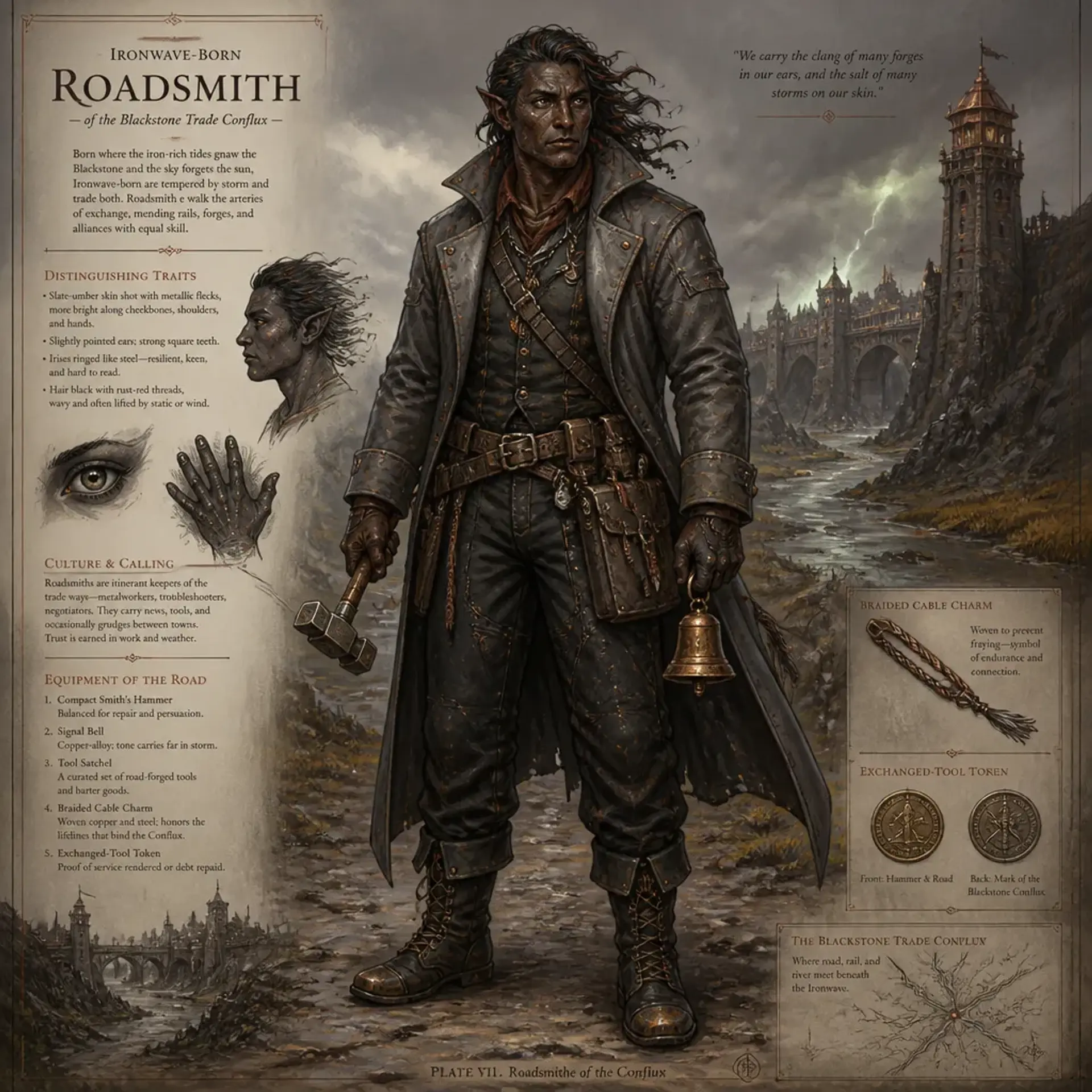
Ironwave-born people are broad-shouldered and rangy, shaped by steep roads, heavy tools, and long travel. Their skin ranges from warm brown and umber to slate, ocher, and weathered rose. Fine metallic flecks often appear along the cheekbones, shoulders, or backs of the hands, becoming brighter when the bearer is frightened or excited. Hair is commonly black, rust-red, ash-blond, or deep blue-gray, and it tends to develop a natural wave that responds to humidity and static. Their eyes have ringed irises, like ripples in oil or grooves in forged steel. Many have slightly pointed ears and strong, square teeth, giving them a familiar goblin-kin or dwarf-like cast without belonging wholly to either tradition.
Society & Culture
Ironwave-born society is organized around route-clans, craft houses, convoy circles, and watch fraternities rather than hereditary nobility. Children grow up hearing that survival is a collective craft. Every adult is expected to know at least one useful skill, one emergency signal, and one story about a past disaster. Status comes from reliability, not wealth. A person who repairs a public stair may be remembered more fondly than a person who funds a grand monument. Their celebrations feature communal meals, competitive problem solving, bell music, road dances, and the ceremonial exchange of tools. Silence also has cultural meaning. A long pause before an answer may indicate careful respect rather than hesitation.
Religion & Alignment
Their faith centers on the Three Bearings: the Hearth that shelters, the Road that connects, and the Storm that tests. Some treat these as gods, others as sacred principles, and many honor local saints who maintained a bridge or warned a village. Ironwave-born ethics favor practical mercy, communal responsibility, and keeping one's word. They are often good or neutral, though a rigid devotion to order can make some suspicious of outsiders and unforgiving toward those who break custom.
Homelands & Architecture
Ironwave-born settlements cling to the usable edges of the region. Their buildings combine dark stone, riveted timber, hammered copper, and flexible cablework, with roofs pitched to shed ash, sleet, and blown grit. Most homes contain a listening wall, a thin section of metal or stone designed to carry vibrations from the road. Public architecture is deliberately redundant: bridges have alternate footpaths, watchtowers have hand bells, and granaries are built in pairs on opposite sides of a settlement.
Relationships With Other Peoples
Ironwave-born communities are accustomed to strangers, since every generation depends on travelers, refugees, merchants, and guides. They are often valued as dependable intermediaries between settled peoples and remote clans. Their hospitality is sincere but structured, with clear rules about food, shelter, debts, and weapons. They are wary of imperial agents, treasure hunters, and anyone who treats the corridor as an empty space between destinations. Among themselves, disputes are frequently settled by the presentation of witnesses, repaired objects, or completed obligations rather than by passionate argument.
Visual sheet
Turn Ironwave-Born into a sheet
A high-res, share-ready sheet you can post or print.