Medium or Small, chosen when you gain this species
Uncommon
Humanoid
Humanoid·Medium or Small, chosen when you gain this species
Demigod
Homo numinis
Speed
30 ft.
Lifespan
Demigods mature at roughly the same rate as humans, reaching adulthood between 16 and 20 years, but many live for 150 to 300 years. Exceptional individuals may survive far longer, especially if their divine heritage is actively nurtured.
Habitat
Demigods can thrive anywhere, but they are especially common near ancient temples, heroic battlefields, sacred rivers, royal courts, remote monasteries, and places where the mortal world presses close to the divine.
demigod
divine heritage
humanoid
mythic
radiant
heroic
versatile
SizeMedium or Small, chosen when you gain this species
Speed30 ft.
LifespanDemigods mature at roughly the same rate as humans, reaching adulthood between 16 and 20 years, but many live for 150 to 300 years. Exceptional individuals may survive far longer, especially if their divine heritage is actively nurtured.
Creature TypeHumanoid
You were born with one foot in the mortal world and one beneath the gaze of the heavens. Your blood remembers ancient vows, your dreams contain places no map records, and strangers sometimes recognize you before you know their names. Yet divinity does not make you invulnerable. You can still be betrayed, frightened, hungry, lonely, and wrong. The question is not whether you are destined for greatness, but whether you will define greatness for yourself before someone else does it in your name.
Physical Description
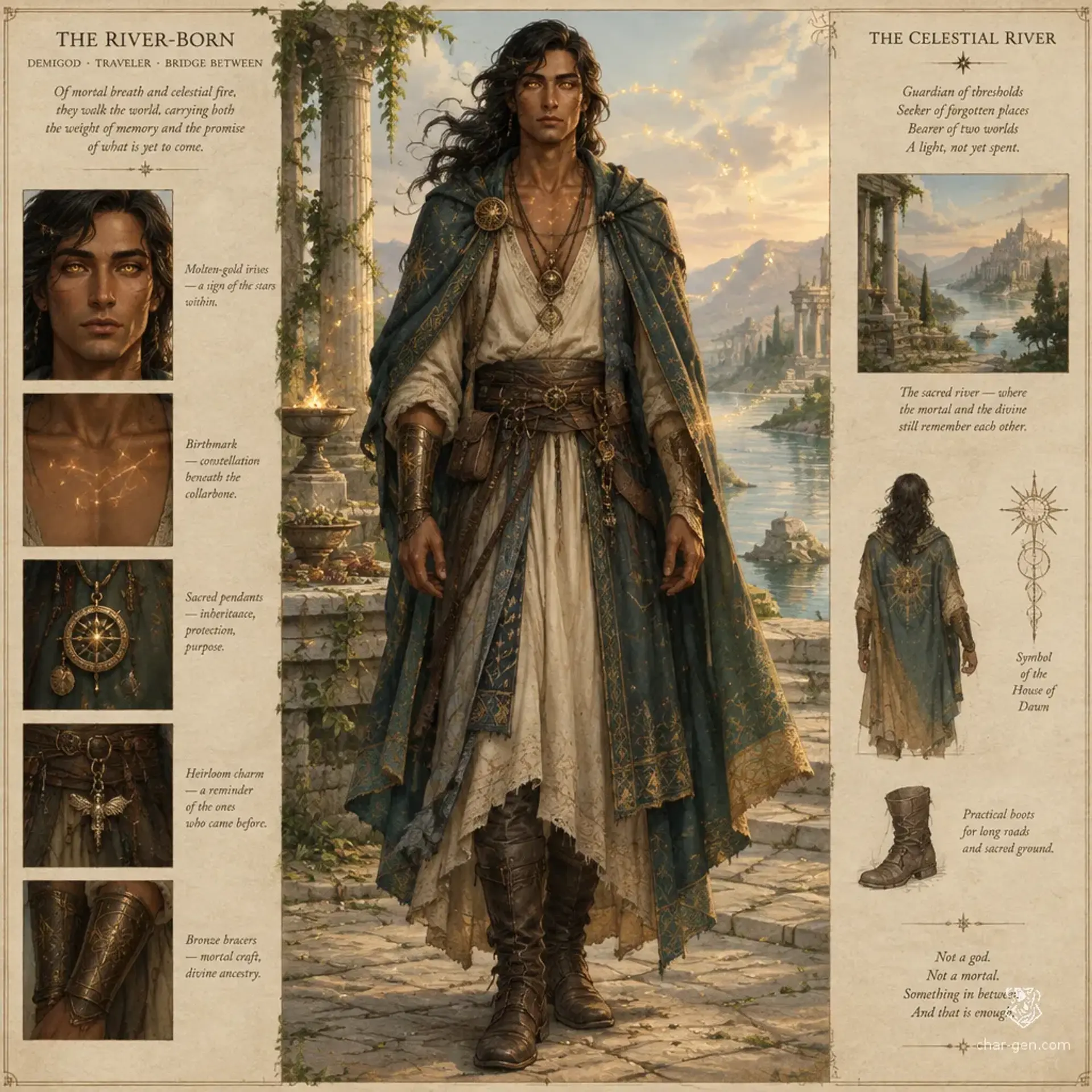
Demigods appear broadly humanoid, but each bears some sign that ordinary ancestry cannot fully explain. One may have irises like molten gold, hair that moves in windless air, a birthmark shaped like a constellation, a voice that carries unnaturally far, or skin that briefly gleams beneath moonlight. Their features often combine the familiar with the symbolic. A demigod descended from a storm power might have silver scars and a scent of rain, while one touched by an underworld patron could cast a shadow that seems a moment too long. These signs are usually subtle in daily life and become vivid when the demigod experiences strong emotion or uses divine power.
Society & Culture
Demigod culture is defined less by shared customs than by shared tension. Every demigod must decide how openly to display their heritage, how much authority to grant their divine parent, and what obligations their birth creates. Some join secret bloodline societies that preserve genealogies, rites, and relics. Others deliberately marry into ordinary communities to prevent divine traits from becoming a ruling caste. Festivals often reenact the first deeds of a lineage, though the most respected demigods are those who add a new chapter rather than merely imitate an ancestor. Hospitality is especially important among demigods, since an unexpected visitor may be a messenger, a disguised deity, or a child seeking shelter from a jealous power.
Religion & Alignment
A demigod may follow the faith of their divine parent, reject it, reinterpret it, or devote themselves to an entirely different power. Some consider themselves living evidence of a god's will, while others see their heritage as an accident or burden. Their alignments vary widely. Demigods drawn to order may become protectors of law and tradition, while those who prize freedom may oppose temples, crowns, and prophecies alike.
Homelands & Architecture
Demigods have no single homeland. Their communities often gather around a shrine, a dynasty, a heroic cult, or a mortal family that has guarded a divine legacy for generations. Their architecture favors thresholds and symbolic height: open courtyards, rooftop observatories, pillar-lined halls, bridges over running water, and doors marked with stories rather than locks. Even humble demigod homes commonly preserve a small altar, an heirloom, or a place where visitors may leave offerings.
Relationships With Other Peoples
Demigods are welcomed, feared, envied, or worshiped according to the reputation of their divine lineage. Some mortal communities treat them as honored guardians, while others regard them as walking omens whose presence invites disaster. Religious institutions may seek to recruit them, control them, or disprove their claims. Demigods often form intense friendships with ordinary people because such relationships offer relief from prophecy and expectation. They may also feel an uneasy kinship with other supernatural peoples, recognizing in them the same struggle between inherited nature and chosen identity.
Visual sheet
Turn Demigod into a sheet
A high-res, share-ready sheet you can post or print.