They mature around age 16 and commonly live 70 to 90 years, with exceptional elders reaching a century.
Habitat
Warm coastal seas, coral shelves, mangrove channels, volcanic shallows, and submerged cities built around clear water and strong natural light.
aquatic
amphibious
magic-sight
mantis-shrimp-inspired
perception
raptorial-claw
sensory-overload
SizeMedium
Speed30 ft.; Swim 30 ft.
LifespanThey mature around age 16 and commonly live 70 to 90 years, with exceptional elders reaching a century.
Creature TypeHumanoid
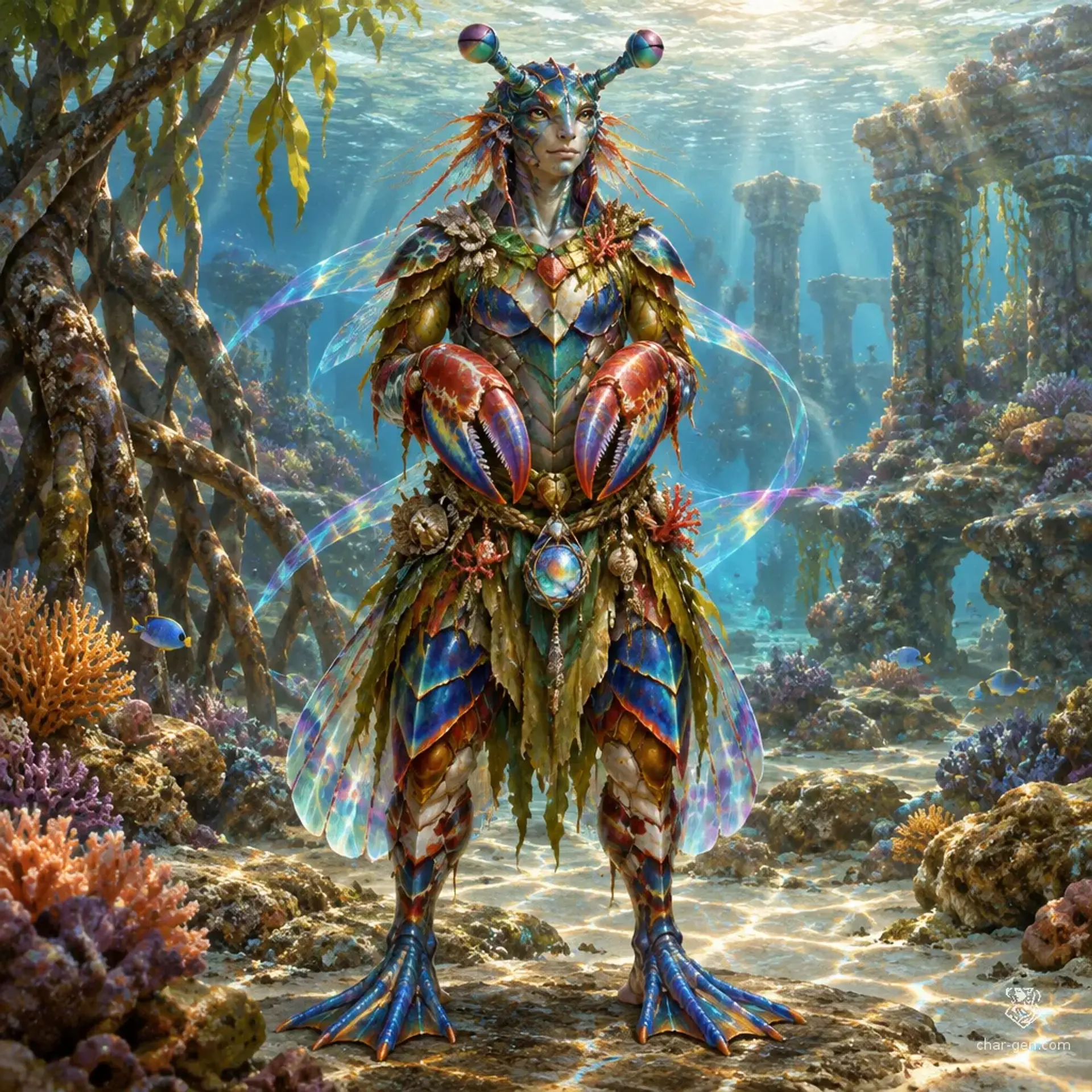
A Prismclaw adventurer sees the world in more colors than most minds can imagine. Their jewel-bright shell is not decoration but biography, their stalked eyes watch different truths at once, and their folded claws can turn a sudden opening into a thunderous impact. They are explorers, negotiators, artisans, and warriors, not curiosities or monsters. What they notice is extraordinary, but what they believe about what they notice is still a matter of character.
Physical Description
Prismclaws are amphibious humanoids with compact, muscular bodies protected by overlapping plates of vivid shell. Their colors range from electric blue and emerald to scarlet, gold, violet, and pearlescent white, often arranged in intricate bands that shift subtly with mood, health, and social intent. Two independently moving eyes rise on flexible stalks above the brow, allowing them to focus on separate objects or scan an entire room at once. Their forearms terminate in folded raptorial claws, each held close to the body until released in a sudden, explosive strike. These limbs are powerful but not massive, and the shell offers protection without the weight or coverage of a full suit of armor. They breathe air and water, possess webbed hands and feet, and swim with surprising speed through twisting currents.
Society & Culture
Prismclaw culture is shaped by visual communication. Shell flashes, eye direction, limb posture, and reflected light can convey nuance that spoken language cannot, though these signals vary between communities. Young Prismclaws are taught controlled striking, swimming, sensory discipline, and the difference between detecting magic and interpreting it. Their artists work in stained shell, living coral, polished stone, and suspended droplets of oil that reveal shifting colors. Many communities hold night festivals in which magical lights are permitted, but strict customs govern intensity and duration so that celebration does not become physical distress. Status may come from navigation, craftsmanship, diplomacy, scholarship, defense, or the ability to preserve a community's history.
Religion & Alignment
Their faiths commonly honor currents, color, ancestral reefs, sea-born storms, and the idea that reality has layers hidden beneath appearances. Some worship personified lenses of truth, while others follow local spirits or philosophical traditions centered on observation and balance. Prismclaws are found across the moral spectrum. Communal cultures often lean toward cooperative ideals, but individual members may be compassionate wanderers, calculating scholars, daring raiders, or stern guardians.
Homelands & Architecture
Their settlements cling to reefs, sea caves, mangrove roots, and the pillars of drowned monuments. Homes are built from shell, glazed stone, coral, and flexible woven kelp, with broad chambers that provide clear sightlines and controlled lighting. Important buildings contain colored shutters, mirrored pools, and rotating screens used to communicate through changes in polarization and reflected light. Communities often maintain darkened sanctuaries where residents can recover from sensory overload.
Relationships With Other Peoples
Prismclaws are fully individualistic, and no single reef culture defines them all. Some coastal societies prize communal duty and elaborate visual etiquette, while others celebrate solitary scholarship, piracy, performance, or trade. They often find land-dwellers visually impoverished but intellectually fascinating, and many become patient interpreters of hidden dangers in places where magic has been used carelessly. Their reputation for sudden violence comes from the speed of their claws, though most Prismclaws consider restraint a mark of maturity. They form close friendships with people who respect their sensory needs and do not treat their unusual vision as a divination service.
Visual sheet
Turn Prismclaw into a sheet
A high-res, share-ready sheet you can post or print.