By Nikita Vorontsovtested 28 Apr 2026updated 17 Oct 2026prices as of July 2026; CharGen prices re-checked 17 October 2026
Leonardo AI has been my second-favourite AI art tool for two years running. Strong fantasy-tuned models, real free tier, friendlier than Midjourney. The catch is that everything around the image still lives elsewhere. Here are the six tools I tested in March and April 2026 for fantasy character art and TTRPG prep.
The test: I ran each tool through the same dock-city campaign prep block during March and April 2026. Sixteen NPC briefs, four recurring-character recaps, eight token exports.
| CharGenWinner | MidjourneyRecommended | Flux (Black Forest Labs)Recommended | Stable Diffusion (self-hosted)With caveats | NightCafeNiche fit | GPT Image 2 (ChatGPT)Niche fit | |
|---|---|---|---|---|---|---|
| Free tier worth using | · | · | free if you have the GPU | 5 daily credits | · | |
| Web UI (no Discord required) | Discord origin | |||||
| Fantasy-tuned models built in | general models | general models | via community models | via Flux and SD | · | |
| Multiple AI models in one UI | · | Flux variants | any community model | · | ||
| Character sheet builder | · | · | · | · | · | |
| VTT token export | · | · | · | · | · | |
| 3D model file export | · | · | · | · | · | |
| Recurring character consistency | via SREF codes | via prompt save | via custom LoRAs | · | via dialogue | |
| Top-end raw image quality | via Flux + Gemini | with right model + LoRA | · | · | ||
| Entry paid tier (per month) | £8 billed annually, £9.99 monthly | $10 | Per-image | Free or ~$0.30/hr cloud | $5.99 | $20 (ChatGPT Plus) |
If you have been using Leonardo for D&D character art, the switch to CharGen takes about ten minutes. Open the NPC Generator, paste the same role plus visual anchors you would normally drop into a Leonardo prompt (height, armour family, weapon type, lighting), and let it draft three takes across two or three models. Promote your favourite, click into Token Maker for a VTT-ready crop, and the matching character sheet sits beside the portrait. Your existing Leonardo library still has value as reference. You do not need to abandon what you have already generated.
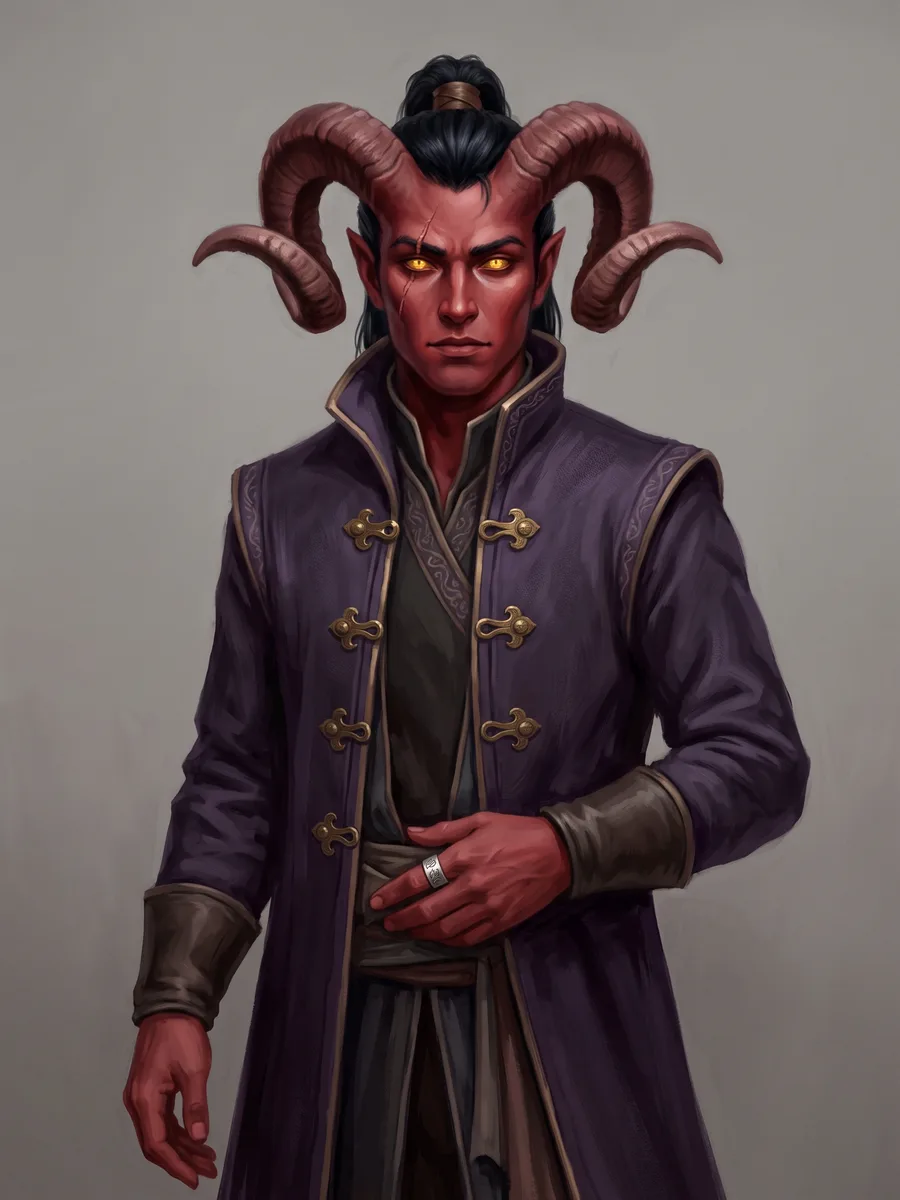
What I use weekly. CharGen produces a portrait, builds a usable character sheet from the same prompt, generates a VTT-ready token, exports a 3D model file, and ties the whole loop back to a session note. Multiple image models live under one UI (Flux, Gemini, Nano Banana, others), so I pick the right model per job. The free tier covers most casual prep. The trade against Leonardo is creative spread on a single prompt for raw ideation, where Leonardo sometimes still edges out.
Midjourney still produces the prettiest single-image output of anything in this list at the top end. The trade is the Discord-first workflow and the paid-only tier. There is no free option to test. For showcase pieces, hero illustrations, or one-off villain reveals where image quality is the only thing that matters, Midjourney is the right tool. For weekly DM prep, the Discord context-switch and lack of campaign tooling slow me down.
Flux is the newest serious challenger at the top end. The team at Black Forest Labs built Stable Diffusion and now run Flux as a paid hosted service alongside open-weights releases. The line has moved on since I first tested it: FLUX.2 is the current generation (Pro, Max, Flex, and the smaller Klein variants), with megapixel-based pricing that replaced the old flat per-image quotes. Image quality, especially text rendering and complex scene composition, is genuinely strong. Available through partner platforms (CharGen, Replicate, fal.ai) or direct via BFL's own Playground. For DMs who want top-end quality without the Midjourney Discord workflow, Flux models are the cleanest swap. BFL also just announced FLUX 3, a multimodal image/video/audio model, but that is an early-access release aimed at video and robotics work, not a replacement for FLUX.2 on stills yet.
If you have the hardware and the patience, a local Stable Diffusion install (Automatic1111, ComfyUI, Forge) gives you the most control of any tool in this list. Run any community model, train your own LoRAs for recurring NPC consistency, hit it with prompts at zero per-image cost. The trade is real. Setup, model curation, and prompt engineering all live on your shoulders.
NightCafe is the friendliest landing for someone trying AI image generation for the first time. Multiple model engines under one daily-credit budget (Stable Diffusion, Flux, DALL-E variants), plus a built-in social feed that surfaces what other people prompted. Output is solid for casual character art. It loses to Leonardo, CharGen, and Midjourney on raw quality at the top end.
OpenAI retired DALL-E 3 on 12 May 2026 and replaced it in ChatGPT with GPT Image 2, so this entry has changed since I first tested this lineup. GPT Image 2 sits inside ChatGPT, which is where most people already are, and the text rendering is a real step up over DALL-E 3's era, close to native 2K resolution with a 4K beta rolling out. Strong prompt adherence and the conversational interface still let you iterate on a portrait through dialogue. The trade is style range. It has a recognisable look that bends toward illustration over painterly fantasy. For one-shot character art it is fine. For a coherent campaign visual style, you will fight the model more than I want to.
Overchat AI is a browser-based image generator that puts several models (GPT Image 2.5, Nano Banana, Seedream, Flux, Qwen) behind one prompt box, with a style picker and five aspect ratios. I have not run it through the prep block that the tested picks went through, so this entry comes from its own site as of November 2026 and gives no verdict on output quality. On paper it suits a first ideation pass: describe a tiefling rogue or a mist-covered dungeon, then compare how different models read the same prompt. It makes images only. Its site shows no character sheet, VTT token, or campaign record around them.
| Tool | Free | Entry plan | Notes |
|---|---|---|---|
| CharGen | Yes, limited daily credits, no card required | £8/mo (Plus, billed annually; £9.99/mo monthly) | Plus, Elite, Ultimate tiers scale credits (900, 2,000 and 4,500 gold a month) and unlock premium models; batch operations are Ultimate only. UK pricing in GBP. |
| Midjourney | No | $10/mo (Basic) | Basic, Standard, Pro, Mega tiers scale fast hours and stealth mode. No free tier. |
| Flux (Black Forest Labs) | No standalone free tier | ~$0.03 per image (FLUX.2 Pro) | Megapixel-based pricing via BFL's own Playground or partner platforms (CharGen, Replicate, fal.ai). Per-image rather than subscription. |
| Stable Diffusion (self-hosted) | Free if you have a capable GPU | ~$0.30/hr (cloud GPU) | RunPod or Vast.ai cloud hosting if you do not own a GPU. No subscription, you pay for runtime. |
| NightCafe | 5 daily credits | $5.99/mo (AI Beginner) | Cheapest entry tier of the lineup. Caps stack quickly on a busy week. |
| GPT Image 2 (ChatGPT) | No standalone free tier | $20/mo (ChatGPT Plus) | Bundled with ChatGPT Plus (image generation runs on GPT Image 2, which replaced DALL-E 3 in May 2026), or pay-per-image via the OpenAI API. |
CharGen is the best free Leonardo AI alternative for D&D specifically. The free tier covers casual prep with no card required, portraits include sheet and token output, and multiple AI models are accessible from one UI. For pure free image generation without D&D extras, NightCafe's free 5 daily credits is the next best fit, with Stable Diffusion ahead of both if you have the GPU.
Yes if you value the creative spread on a single prompt and the fantasy-tuned models. Leonardo's Phoenix and RPG v5 models still produce strong fantasy output, and the free 150 daily tokens are generous. Most working DMs use one of the alternatives as the primary workflow and keep Leonardo in rotation for ideation passes when they want spread on a single concept.
Midjourney still leads the top end at single-image quality. FLUX.2 Pro is genuinely close and runs without Discord. CharGen's premium models (Flux, Gemini, Nano Banana) are very close on portraits and stronger on TTRPG-specific use cases. Self-hosted Stable Diffusion with the right community model and LoRA can match or exceed any of them for a specific style at zero per-image cost.
CharGen is the only tool in the lineup with built-in D&D-specific generators (NPCs, settlements, factions, regions) that link the image to the entity record. Leonardo, Midjourney, Flux, Stable Diffusion, NightCafe, and GPT Image 2 all produce strong fantasy art but treat the image as a standalone output. You pair them with separate sheet builders, token tools, and campaign managers.
Self-hosted Stable Diffusion with a custom LoRA gives the most precise visual lock. CharGen ties the portrait to a recurring entity record, so visual changes after story beats save back to the same NPC card. Midjourney's SREF codes help mid-batch consistency. Leonardo's prompt save and GPT Image 2's dialogue iteration are partial solutions.
Each platform has its own terms. Leonardo, Midjourney, Flux, Stable Diffusion, NightCafe, CharGen, and GPT Image 2 all require you to read the current terms before publishing. Model licensing changes regularly. The answer in 2026 is not the answer it was in 2024. Check each tool's terms before commercial use.
I ran each tool through the same dock-city campaign prep block during March and April 2026. Sixteen NPC briefs, four recurring-character recaps, eight token exports. Same role-first prompt template across every tool. Times measured wall-clock, not optimistic. Pricing snapshots taken from each platform's official pricing page on 28 April 2026. Stable Diffusion testing was done on a local Automatic1111 install with a 12GB VRAM GPU. Facts and pricing re-verified against each platform's live site on 29 July 2026; OpenAI retired DALL-E 3 in that window, so the ChatGPT entry now covers its replacement, GPT Image 2, instead.
