By Nikita Vorontsovtested 28 Apr 2026updated 17 Oct 2026prices as of August 2026; CharGen prices re-checked 17 October 2026
Midjourney is the prettiest output in the room when you have the time and money to chase it. For weekly D&D prep, the Discord wall, the paid-only tier, and the lack of campaign tooling slow me down. Here are the five tools I run for character portraits, NPC casts, and battlemap concepts when I want speed over showcase.
The test: I ran each tool through the same dock-city campaign prep block during March and April 2026. Sixteen NPC briefs, four recurring-character recaps, eight token exports.
| CharGenWinner | Leonardo AIRecommended | Stable Diffusion (self-hosted)With caveats | NightCafeNiche fit | GPT Image 2 (ChatGPT)Niche fit | |
|---|---|---|---|---|---|
| Free tier worth using | free if you have the GPU | 5 daily credits | · | ||
| Web UI (no Discord required) | |||||
| Fantasy-tuned models built in | via community models | via Flux and SD | · | ||
| Multiple AI models in one UI | Leonardo's own models | any community model | · | ||
| Character sheet builder | · | · | · | · | |
| VTT token export | · | · | · | · | |
| 3D model file export | · | · | · | · | |
| NPC, settlement, lore tools | · | · | · | · | |
| Recurring character consistency | manual prompt save | via custom LoRAs | · | via dialogue | |
| Setup difficulty | Sign in | Sign in | Manual install | Sign in | ChatGPT Plus |
| Entry paid tier (per month) | £8 billed annually, £9.99 monthly | $12 | Free or ~$0.20/hr cloud | $5.99 | $20 (ChatGPT Plus) |
If you have been using Midjourney for D&D character art, the switch to CharGen takes about ten minutes. Open the NPC Generator, paste the same role plus visual anchors you would normally drop into a Midjourney prompt (height, armour family, weapon type, lighting), and let it draft three takes across two or three models. Promote your favourite, click into Token Maker for a VTT-ready crop, and the matching character sheet sits beside the portrait. Your existing Midjourney library still has value as reference. Nothing here forces you to abandon what you have already generated.
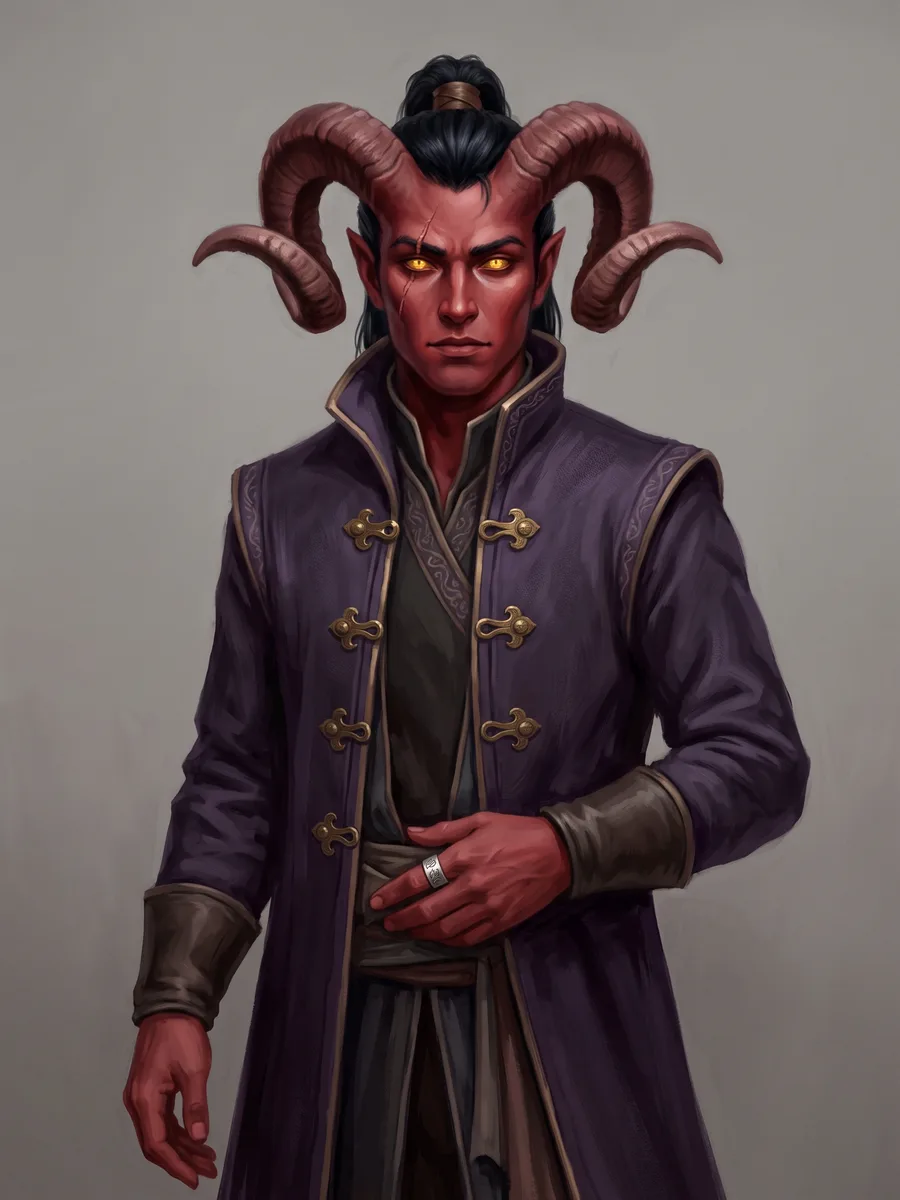
What I run weekly. CharGen produces a portrait, builds a usable character sheet from the same prompt, generates a VTT-ready token, and now exports a 3D model file. The whole loop ties to a session note. Multiple image models live under one UI (Flux, Gemini, Nano Banana, others), so I can pick the right model per job without leaving the page. Free tier covers most casual prep. The trade against Midjourney is raw image showcase quality at the very top end. CharGen's premium models are very close, not always quite there.
Leonardo is the closest thing to a direct Midjourney competitor in raw output, with a friendlier UI and a real free tier. The fantasy-tuned models (Phoenix, RPG v5) hold armour and lighting well. I keep it in rotation for ideation when I want five very different takes on a single archetype. The catch is that everything around the image, sheets, tokens, recap linkage, sits outside Leonardo, so you pair it with two or three other tools.
If you have the hardware and the patience, a local Stable Diffusion install (Automatic1111, ComfyUI, Forge) gives you the most control of any tool in this list. Run any community model, train your own LoRAs, hit it with prompts at zero per-image cost. The trade is real. Setup, model curation, and prompt engineering all live on your shoulders. I run a local install for one specialised use case (consistent recurring NPCs trained as a LoRA) and keep CharGen for everything else.
NightCafe is the friendliest landing for someone who has never used an AI image tool. Multiple model engines under one daily-credit budget, plus a built-in social feed that surfaces what other people prompted. Output is fine for casual character art and concept work. It loses to CharGen, Leonardo, and Midjourney on raw quality at the top end, and there is no D&D-specific tooling around the image.
OpenAI retired DALL-E 3 on 12 May 2026 and replaced it in ChatGPT with GPT Image 2, so this entry has changed since I first tested this lineup. GPT Image 2 sits inside ChatGPT, which is where most people already are, and text rendering is a real step up over DALL-E 3's era, near-native resolution with clean baked-in labels and titles. Strong prompt adherence and the conversational interface still let you iterate on a portrait through dialogue. The trade is style range. It has a recognisable look that bends toward illustration over painterly fantasy. For one-shot character art it is fine. For a coherent campaign visual style, you will fight the model more than I want to.
| Tool | Free | Entry plan | Notes |
|---|---|---|---|
| CharGen | Yes, limited daily credits, no card required | £8/mo (Plus, billed annually; £9.99/mo monthly) | Plus, Elite, Ultimate tiers scale credits (900, 2,000 and 4,500 gold a month) and unlock premium models; batch operations are Ultimate only. UK pricing in GBP. |
| Leonardo AI | 150 daily tokens (free tier) | $12/mo (Apprentice) | Apprentice, Artisan, Maestro tiers. Token cost varies by model and resolution. |
| Stable Diffusion (self-hosted) | Free if you have a capable GPU | ~$0.20/hr (cloud GPU) | RunPod or Vast.ai cloud hosting if you do not own a GPU. No subscription, you pay only for runtime. |
| NightCafe | 5 daily credits | $5.99/mo (AI Beginner) | Cheapest entry tier of the lineup, but caps stack quickly on a busy week. |
| GPT Image 2 (ChatGPT) | No standalone free tier | $20/mo (ChatGPT Plus) | Bundled with ChatGPT Plus (image generation runs on GPT Image 2, which replaced DALL-E 3 in May 2026), or pay-per-image via the OpenAI API. |
CharGen is the best free Midjourney alternative for most DMs. The free tier covers casual prep, portraits arrive in under thirty seconds, and the same workspace generates character sheets, VTT tokens, and 3D model files. If you want a Midjourney-style image-only tool without D&D extras, Leonardo AI's free 150 daily tokens is the next best fit.
Yes if you want top-end showcase quality and you do not mind the Discord workflow. Midjourney still produces the prettiest single-image output of anything in this list at the top end. The alternatives compete on different jobs, faster ideation, friendlier UI, free tiers, or campaign tooling that lives around the image. Most working DMs pick one of the alternatives for weekly prep and pay for Midjourney only when raw showcase quality matters.
Leonardo's Phoenix and RPG v5 models come close at the top end. Stable Diffusion with a strong community model and a tuned LoRA can match or exceed Midjourney for a specific style at zero per-image cost, with the trade of setup work. CharGen's premium models (Flux, Gemini) are close on portraits and very strong on TTRPG-specific use cases. NightCafe and GPT Image 2 sit a tier below at top-end quality.
Yes if you find Discord-based generation slow. CharGen, Leonardo, NightCafe, GPT Image 2, and a self-hosted Stable Diffusion all run as web apps or local apps. None of them require Discord. Midjourney's web UI improved through 2025 and 2026, but the Discord workflow is still its origin point.
CharGen and a self-hosted Stable Diffusion install (with a custom LoRA per recurring NPC) are the two strongest options. CharGen ties the portrait to a recurring entity record, so visual changes after story beats save back to the same NPC card. Stable Diffusion plus a LoRA gives the most precise visual lock at the cost of training and setup time.
Each platform has its own terms, and they change. Midjourney, GPT Image 2, Leonardo, NightCafe, CharGen, and Stable Diffusion all require you to read the current terms before publishing or selling content generated with them. Model licensing changes regularly. The answer in 2026 is not the answer it was in 2024. Check each tool's terms before commercial use.
I ran each tool through the same dock-city campaign prep block during March and April 2026. Sixteen NPC briefs, four recurring-character recaps, eight token exports. Same role-first prompt template across every tool. Times measured wall-clock, not optimistic. Pricing snapshots taken from each platform's official pricing page on 28 April 2026. Stable Diffusion testing was done on a local Automatic1111 install with a 12GB VRAM GPU, plus a brief test on a RunPod cloud instance. Facts and pricing re-verified against each platform's live site on 3 August 2026; OpenAI retired DALL-E 3 in that window, so the ChatGPT entry now covers its replacement, GPT Image 2, instead.
