Stop Deepwell from Owning the Hearing
Stop Deepwell from Owning the Hearing
Read Aloud
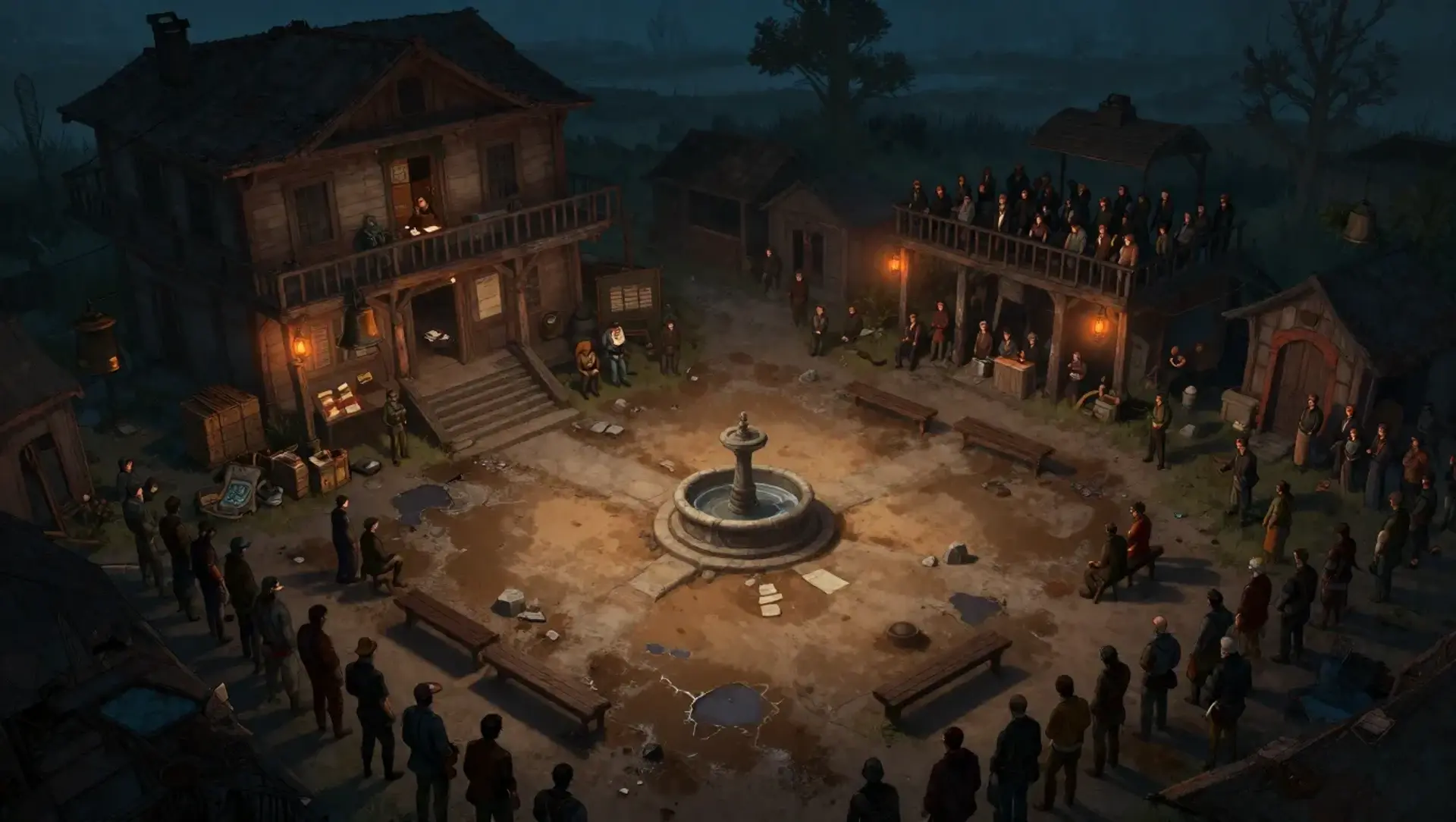
The company bell stops ringing, but the crowd does not settle. In the square, a clerk holds up stamped papers while two uniformed officers guard the office steps. Someone on the saloon balcony shouts, "Let them speak, then let the camp decide."
The Scene
NEUTRALPUBLIC HEARINGBase DC 16Stakes The hearing decides whether the camp keeps its homes and water, whether Deepwell's records survive, and whether the party can continue The Price of Deep Water without fighting the people they came to help.
30 to 45 minutes
Kesh Varz wants to end the hearing without admitting fault, keep the camp working, and deliver the party's names to Deepwell's regional office if they cannot be bought or discredited.
The party can expose forged pumping records, protect the witnesses from company retaliation, or prove that Deepwell's legal authority does not cover the deaths tied to the lower shaft.
- Ask the miners to compare the company ledger with their own shift marks.
- Put a witness under party protection before questioning them.
- Use the saloon balcony to address the whole camp instead of arguing with the officials.
- Offer a binding promise to stop the pumps while the evidence is examined.
- Point out that the regional order names a different shaft than the one at issue.
- Cross-examine the legal agent on who signed each document.
- Separate the witnesses and ask for the same timeline twice.
- Invite a resident to read the company notice aloud.
- Demand that the officers explain why they are guarding paperwork instead of the injured miners.
- Force a public choice: preserve Deepwell's contract or preserve the camp's water supply.
- A calm, specific accusation earns Kesh's respect but not his agreement.
- A threat against a witness makes the crowd recoil and gives the officers legal cover.
- Protecting a resident from company pressure turns one failure into a success if the party does so publicly.
- Citing the contract's exact language unsettles Kesh; he dislikes being corrected in front of the camp.
- Offering compensation to the families makes the crowd listen, but Kesh demands the offer be recorded.