
The Jolenite Gang
In its first decade, the Jolenites were mainly guards and guides, taking food, shelter, or coin in exchange for escorting travelers through dangerous country. Their first major triumph came when they led several stranded caravans through a pass after a local lord's soldiers abandoned the road. The rescued merchants paid generously, and word spread that the Jolenites were dangerous but dependable. The gang's watershed moment came during the Winter of Split Axles. A new ruler declared the Jolenite tolls illegal and sent soldiers to seize the wagons. The gang's then-leader negotiated safe passage for the soldiers' families, then used the resulting confusion to evacuate the wagons and the families together. The soldiers were disgraced, the ruler lost leverage, and the Jolenites became known as people who could turn a threat into a bargain. They also began keeping written records of every debt and promise, a practice that made their extortion more systematic. Over the next two decades, they expanded from escort work into smuggling, protection, and coercive toll collection. A famine made them popular in some villages after they delivered grain past blockades, but they charged those same villages steep fees for later protection. A disastrous feud with the Ash Hounds cost them wagons, members, and a winter's supply of food. The gang survived by relying on local informants and making its collectors more disciplined. Today the Jolenites are a medium-sized traveling organization with enough reach to influence several routes, but not enough power to enforce every promise. Their old tradition of protecting travelers now coexists with a predatory toll system. Members argue over which side is the real Jolenite inheritance.
The Jolenite Gang
- Type
- Traveling criminal gang…
- Size
- 98 members
- Reach
- Regional along the roads…
- Base
- No permanent settlement. The gang's seasonal circuits often bring its wagons to the market towns along the old northern road.
Overview
In its first decade, the Jolenites were mainly guards and guides, taking food, shelter, or coin in exchange for escorting travelers through dangerous country. Their first major triumph came when they led several stranded caravans through a pass after a local lord's soldiers abandoned the road. The rescued merchants paid generously, and word spread that the Jolenites were dangerous but dependable. The gang's watershed moment came during the Winter of Split Axles. A new ruler declared the Jolenite tolls illegal and sent soldiers to seize the wagons. The gang's then-leader negotiated safe passage for the soldiers' families, then used the resulting confusion to evacuate the wagons and the families together. The soldiers were disgraced, the ruler lost leverage, and the Jolenites became known as people who could turn a threat into a bargain. They also began keeping written records of every debt and promise, a practice that made their extortion more systematic. Over the next two decades, they expanded from escort work into smuggling, protection, and coercive toll collection. A famine made them popular in some villages after they delivered grain past blockades, but they charged those same villages steep fees for later protection. A disastrous feud with the Ash Hounds cost them wagons, members, and a winter's supply of food. The gang survived by relying on local informants and making its collectors more disciplined. Today the Jolenites are a medium-sized traveling organization with enough reach to influence several routes, but not enough power to enforce every promise. Their old tradition of protecting travelers now coexists with a predatory toll system. Members argue over which side is the real Jolenite inheritance.
How it began
The Jolenites began as a chain of displaced families and hired guards traveling together after a border war scattered them from their homeland. Their name came from the homeland's old word for a spring wagon, though the local roads were far rougher than the name suggested. On their first winter in the region, a toll keeper seized their food carts for unpaid road fees. The keeper's armed men then abandoned them on a pass during a blizzard. The survivors reached a village with almost nothing left and swore that no traveler under their wheels would ever be left helpless on a road again. Their promise had a hard edge from the beginning: help would be remembered, and debts would be collected.
How to know them
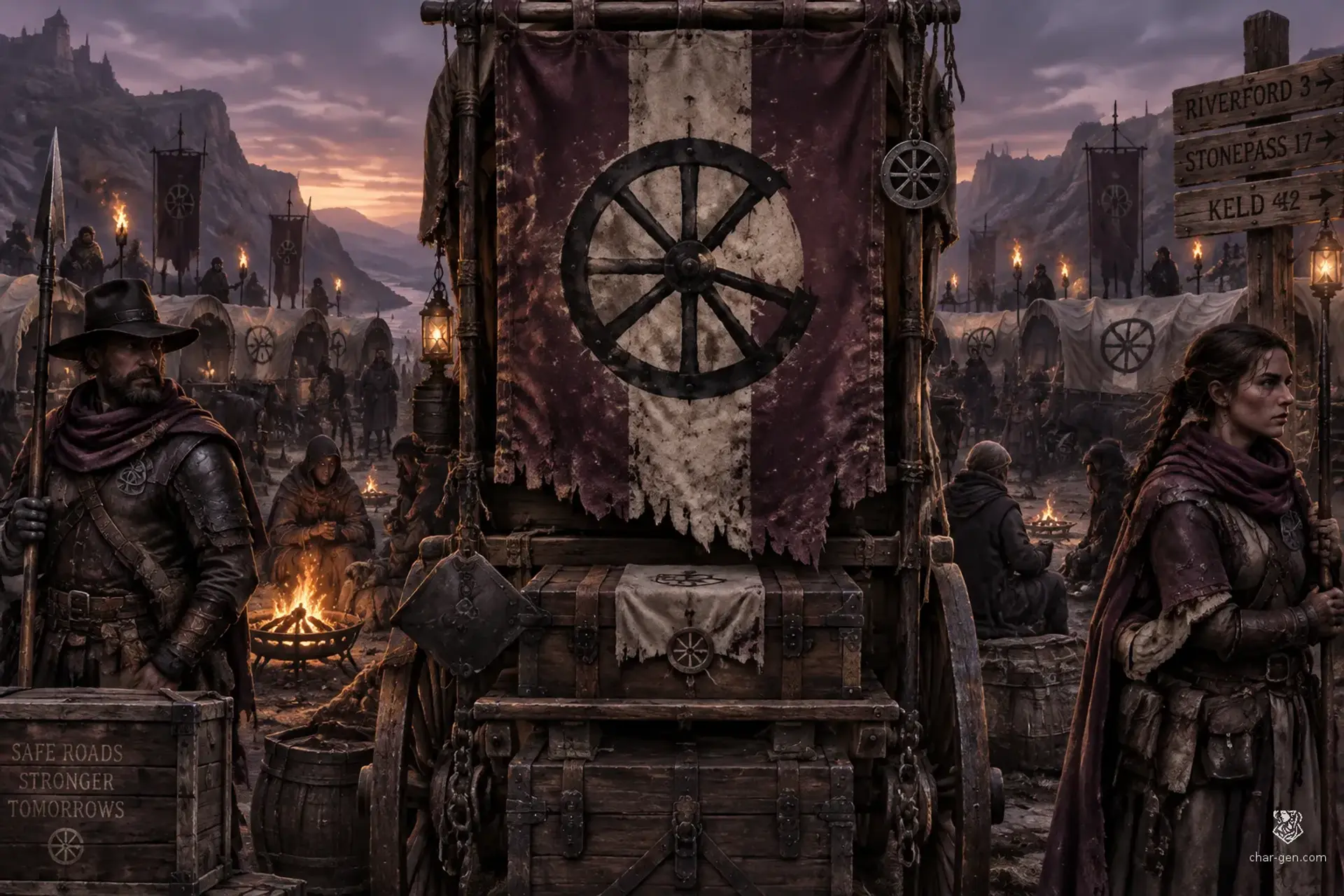
Dried-plum purple, Dusty cream, Iron black
- A missing-spoke wheel painted on wagon doors
- Cream road stripes on plum-colored cloth
- Small iron tokens stamped with a wheel gap, used as proof of a negotiated toll
Standing
What they say they want
What they are doing now
Where it leads
A network of protected roads and safe camps where the Jolenites decide who travels, what is owed, and which promises must be kept. Whether that vision becomes a legitimate service, a private kingdom, or a more efficient racket is fiercely disputed.
How others see them
To some travelers, the Jolenites are brutal but dependable: pay the stated toll and they will get you through. To many settled people, they are extortionists who dress robbery up as road law. Their reputation for honoring bargains makes them feared, respected, and frequently invited to negotiate disputes that no one else can settle.
People
5 ranks
Road-Mother
Controlled, watchful, and capable of sudden warmth. Ketta prefers bargains to threats but makes threats sound like settled facts. She dislikes being treated as a symbol of the gang's past.
- Road-Mother1 member
The elected leader sets the circuit, negotiates major arrangements, and decides when a debt is too dangerous to collect. The title is traditional and does not require the holder to be a woman.
- Wheel Council6 members
Senior wagon captains, record keepers, and route scouts. They advise the Road-Mother, divide territory, settle disputes, and can call a vote to remove the leader.
- Spoke Captains18 members
Each commands a wagon crew or small patrol, collects agreed tolls, and is accountable for violence committed by their people.
- Road Hands42 members
Drivers, guards, scouts, cooks, negotiators, smugglers, and skilled workers. Most adult members belong to this tier.
- Underwheel31 members
New members, dependents learning the trade, and people working off debts. They have few privileges, but the gang claims they are protected by its code.
Other key members
- Saresh Keeper of the road ledger and a member of the Wheel Council
- Bruk Spoke Captain and leader of the hardline faction
- Thessa of the Upper Road Route scout and potential successor
How they are organised
- A prospective member must travel at least one full circuit with a wagon crew and accept the crew's rules.
- New members must contribute a useful skill, labor, or a service agreed upon by their Spoke Captain.
- Members must not abandon a traveling dependent in danger without making a genuine effort to secure their safety.
- A member may leave, but must settle any personal debt or negotiate a fair transfer of responsibility first.
Relations
8 factionsThe caravan masters buy advance warning of road closures and raider activity. The arrangement is useful, uneasy, and dependent on the gang keeping its tolls predictable.
Operations
What they do
How they do it
Services for hire
- Wagon GuardA negotiated toll, usually coin or a valuable serviceAn escort through a route the gang currently controls or patrols.
- Quiet PassageA favor, information, or a share of the goodsDiscreet transport of people or cargo past a checkpoint or hostile border.
- Wheelwright's WorkA modest fee, with the price rising for urgencyRepairs to ordinary wagons, harness, and road gear, subject to available materials.
- Road SettlementA future obligation recorded in the ledgerMediation over a travel debt, disputed toll, or broken agreement. The gang's ruling is not law, but ignoring it may have consequences.
What they can do
What they have
Where they are weak
Territory
Headquarters
No permanent settlement. The gang's seasonal circuits often bring its wagons to the market towns along the old northern road.The Jolenites have no fixed headquarters. Their moving center is a ring of wagons arranged around a cooking fire, with the lead wagon facing the next day's road. At least one wagon is always awake, and the camp is laid out to become a defensive barricade in minutes. Their meeting place is wherever the wagons stop, though senior members keep a covered chest of records and seals in the central cart.
Lands they hold
Outposts
- The Last TurnA sheltered bend where two trade routes meetA seasonal repair stop and message exchange. Its name began as a warning to drivers about a blind turn and became a reminder that no route is guaranteed.
- Old JolaA dry ravine beyond a busy market townA concealed water and grain cache named after a settlement in the founders' homeland. The name is slightly wrong for the local landscape, but the founders kept it.
- The Wheel's DueA riverside pasture used during summer crossingsA temporary camp where collectors settle accounts and caravan leaders can negotiate passage before reaching the river.
Secrets
Plot hooks
6 hooks- 1A Name in the LedgerPersonalReward: A cleared debt, useful information, or a wary Jolenite contactA player character discovers that a Jolenite collector has recorded an unpaid debt under their name. It may be a genuine mistake, a forged claim, or an obligation inherited through family. The gang offers several ways to settle it, none of them simple.
- 2Seed Grain DueLocalReward: Local allies, supplies, or a route through the regionA village that once welcomed the Jolenites asks the party to stop a collection crew from taking the winter seed grain. The crew insists the village broke a protection agreement first. Both sides have evidence, and the village's survival depends on resolving the claim.
- 3The False SpokeRegionalReward: Payment, safe passage, or leverage in the gang's internal politicsCounterfeit toll tokens are causing travelers to pay twice and turning villages against the gang. Ketta wants the forger found quietly. Bruk wants a public punishment. The actual culprit may be an outsider trying to provoke a crackdown.
- 4The Page That RemembersCampaign-scaleReward: A major secret, a political alliance, or control over a consequential recordSaresh hires the party to recover a missing ledger page before it reaches the Crown Mile. The page might expose the gang's founding secret, but it also contains proof that a powerful local official made a dangerous promise to displaced families.
- 5Out from Under the WheelPersonal to localReward: A grateful contact, a new enemy, or a chance to influence the gang's customsA young Underwheel member begs the party to help them leave the gang without putting their wagon family at risk. Ketta might allow the departure, but Bruk considers it an invitation for others to flee their obligations.
- 6The Toll WarRegionalReward: A shift in regional power, political favor, or a safer road networkThe Crown Mile is preparing a coordinated campaign to seize the main roads. The Jolenites offer the party a bargain: help expose the magistrates' private abuses and the gang will withdraw from one village's route. The evidence also reveals crimes committed by the Jolenites themselves.
Work they offer
What gets in the way
Rumours
Media
0 imagesNo images yet.
Turn The Jolenite Gang into a sheet
A high-res, share-ready sheet you can post or print.