
The Lantern Hospices
For its first decades, the Hospices were a handful of informal winter refuges. Their keepers learned to move patients between kitchens, bathhouses, and ferry sheds whenever a landlord or official grew suspicious. Their first major triumph came during the Sallow Winter, when the houses kept hundreds of fever patients fed and watched through a citywide supply failure. That success made them visible, and visibility brought both donations and scrutiny. The watershed moment came twenty-six years ago during the Vigil, a wave of violent illnesses and disappearances that left night streets unsafe. The Choir of the Open Vein offered remedies and armed escorts. The Hospices accepted, and together they kept several shelters open when authorities withdrew. The agreement saved lives but included an obligation to offer every Vigil patient an invitation to join the Choir. Some patients welcomed the invitation; others felt trapped by it. The argument split two houses and nearly ended the partnership. Since then, the network has grown into a quiet chain of seven permanent houses and many temporary beds. It has won trust by treating people whom other institutions turn away, but its survival depends on discretion, favors, and a supply agreement it cannot easily replace. The old lamp signal remains in use, now passed from rooftop to rooftop when a house must empty before dawn.
The Lantern Hospices
- Type
- Mutual-aid medical network
- Size
- 84 members
- Reach
- Moderate in poor districts…
- Base
- A crowded riverward district in a large trade city
Overview
For its first decades, the Hospices were a handful of informal winter refuges. Their keepers learned to move patients between kitchens, bathhouses, and ferry sheds whenever a landlord or official grew suspicious. Their first major triumph came during the Sallow Winter, when the houses kept hundreds of fever patients fed and watched through a citywide supply failure. That success made them visible, and visibility brought both donations and scrutiny. The watershed moment came twenty-six years ago during the Vigil, a wave of violent illnesses and disappearances that left night streets unsafe. The Choir of the Open Vein offered remedies and armed escorts. The Hospices accepted, and together they kept several shelters open when authorities withdrew. The agreement saved lives but included an obligation to offer every Vigil patient an invitation to join the Choir. Some patients welcomed the invitation; others felt trapped by it. The argument split two houses and nearly ended the partnership. Since then, the network has grown into a quiet chain of seven permanent houses and many temporary beds. It has won trust by treating people whom other institutions turn away, but its survival depends on discretion, favors, and a supply agreement it cannot easily replace. The old lamp signal remains in use, now passed from rooftop to rooftop when a house must empty before dawn.
How it began
The first hospice began when three night porters and a fever nurse refused to leave a locked ward during a winter quarantine. They used a shuttered lamp as a signal so families could find the side door without drawing the attention of the authorities. Their first ledger recorded no names, only needs: broth, clean sheets, a watcher, a safe bed. The original keepers disagreed over whether they were establishing a refuge or a place to die with dignity. They never resolved the argument, and both ideas remain in the faction's customs.
How to know them
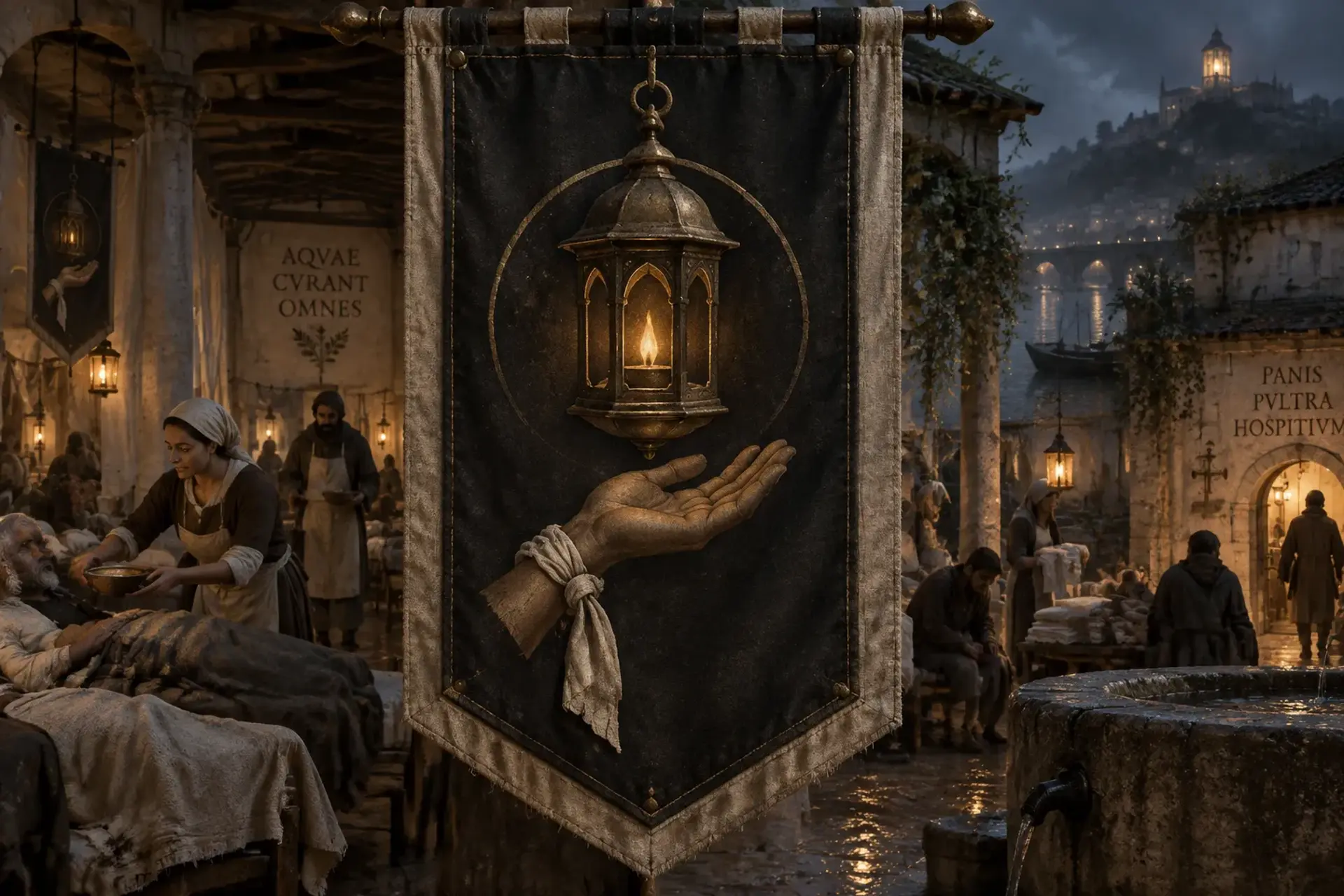
Lampblack, Dull brass, Unbleached linen
- A shuttered brass lamp
- An open, empty hand
- A pale linen strip knotted once at the wrist
Standing
What they say they want
What they are doing now
Where it leads
A durable network of refuge and medical care where a person's need for help never requires a vow, confession, or payment they cannot afford. The faction's more ambitious keepers imagine a recognized system of night clinics; its most cautious members want only to survive without becoming an institution that can be captured.
How others see them
Among the poor and night workers, the Hospices are known as the people who will open a door after the respectable institutions have closed theirs. Officials see them as secretive and difficult to regulate. Some religious communities praise their mercy; others distrust their refusal to demand a confession or pledge before giving care.
People
5 ranks
Night Steward
Measured, compassionate, and quietly stubborn. He asks questions until people hear the contradictions in their own arguments. He can mistake patience for a solution when the crisis needs a public stand.
- Night Steward1 member
Coordinates emergencies across the network, settles disputes between houses, and can authorize a dangerous evacuation. The Steward is elected by the house keepers for a three-year term.
- Lampkeepers7 members
Run established hospices, maintain local trust, and decide which patients can safely be admitted. Each controls a small reserve of supplies and may refuse a central order if it would expose patients.
- Road Hands18 members
Carry medicines and messages, arrange transport, and locate temporary shelter. Many are former porters, boat workers, or people once treated by the network.
- Ward Companions46 members
Provide bedside care, food, washing, translation, and company. They are the largest group and the most trusted by patients.
- Candle Friends12 members
Unsworn donors, cooks, laundresses, clerks, and neighbors who help without entering the network's inner councils.
Other key members
- Shesh of the Long Wash Senior Lampkeeper and keeper of the informal patient archive
- Kett Road Hand and likely successor to the Night Steward
- Suthra Ward Companion and former fever nurse
How they are organised
- Show reliability in a real act of care, transport, or protection. A declaration of faith or political allegiance is not required.
- Accept the rule that a patient's identity and treatment cannot be discussed outside the house without consent, except to prevent an immediate threat.
- Agree not to use a patient's dependence to recruit, collect debts, or obtain testimony.
- New members serve a season as Candle Friends or supervised Ward Companions before being entrusted with routes or records.
Relations
8 factionsPractical allies. The Choir supplies blood-based remedies, trained healers, and armed escorts; the Hospices shelter exhausted Choir hunters and treat their wounded. Their compact requires every Vigil patient to be offered a conversion invitation, a condition many hospice keepers resent.
Operations
What they do
How they do it
Services for hire
- Night shelterA modest donation if the visitor can afford it; otherwise labor, food, or nothingA clean bed, a warm meal, and someone to keep watch. Admission depends on space and immediate danger, not public standing.
- Ward carePayment in coin, supplies, or a favor agreed in advance; waived in emergenciesBasic wound care, fever monitoring, nursing, and help finding a more specialized practitioner.
- Quiet passageA credible reason and a willingness to follow safety instructionsA discreet transfer between houses, arranged through trusted carriers. The Hospices do not promise that every destination is safe.
- Keeper's counselAn introduction from a trusted member or a demonstrated act of serviceA private meeting with a Lampkeeper to discuss the Choir compact, missing patients, or urgent local threats.
What they can do
What they have
Where they are weak
Territory
Headquarters
A crowded riverward district in a large trade cityThere is no single headquarters. The network's closest thing to one is a low, limewashed former bathhouse with a covered courtyard, a rain cistern, and a lamp room where dispatches are sorted. Its public entrance serves as an ordinary soup kitchen. A second entrance, disguised as a blocked drain passage, leads to a small infirmary and a room for private meetings. The Hospices call the building the Long Wash, a shortened local description of its former purpose.
Lands they hold
Outposts
- The Bent StepsA ferry landing two districts upriverA meal room and temporary waiting place for patients arriving by water. Its name is the locals' shortened description of the crooked stone steps at the landing.
- Ash and WaterA disused washhouse near the old marketA contested house formed when a funeral kitchen and a bathhouse shelter merged after the Vigil. The keepers still disagree over whether it is primarily a hospice or a place for the dead.
Secrets
Plot hooks
4 hooks- 1The Name in the MarginPersonalReward: A trustworthy contact, access to discreet care, and a troubling piece of the Vigil's historyA character treated during the Vigil is recognized by a Ward Companion, who asks them to retrieve a sealed register before an inspection. The register may contain the character's own name, or evidence that their illness was deliberately caused.
- 2A Bed Without a VowLocalReward: Medicine, shelter, and a chance to influence the terms of the allianceA Choir hunter arrives exhausted and wounded at a hospice, followed by a patient who refuses the conversion invitation. The keeper asks the party to protect both of them until a safe transfer can be arranged, while Choir members demand that the compact be honored immediately.
- 3The Cart That Took No RoadRegionalReward: A broad network of safe beds and evidence against a predatory concernThe Pale Cart Company has abducted a patient it claims to be recovering for a paying family. The patient may be a fugitive, an heir, or a witness. The Hospices ask the party to find them without exposing the location of the other houses.
- 4The Quiet Return of the VigilCampaign-scaleReward: The truth about the Vigil, lasting political influence, and possible enemies in both civic and religious institutionsFever appears in several shelters at once, and the usual remedy seems to worsen it. The party must trace a contaminated medicine shipment while deciding whether to reveal the Hospices' hidden testimony to the public.
Work they offer
What gets in the way
Rumours
Media
0 imagesNo images yet.
Turn The Lantern Hospices into a sheet
A high-res, share-ready sheet you can post or print.