
The Fabric Gang
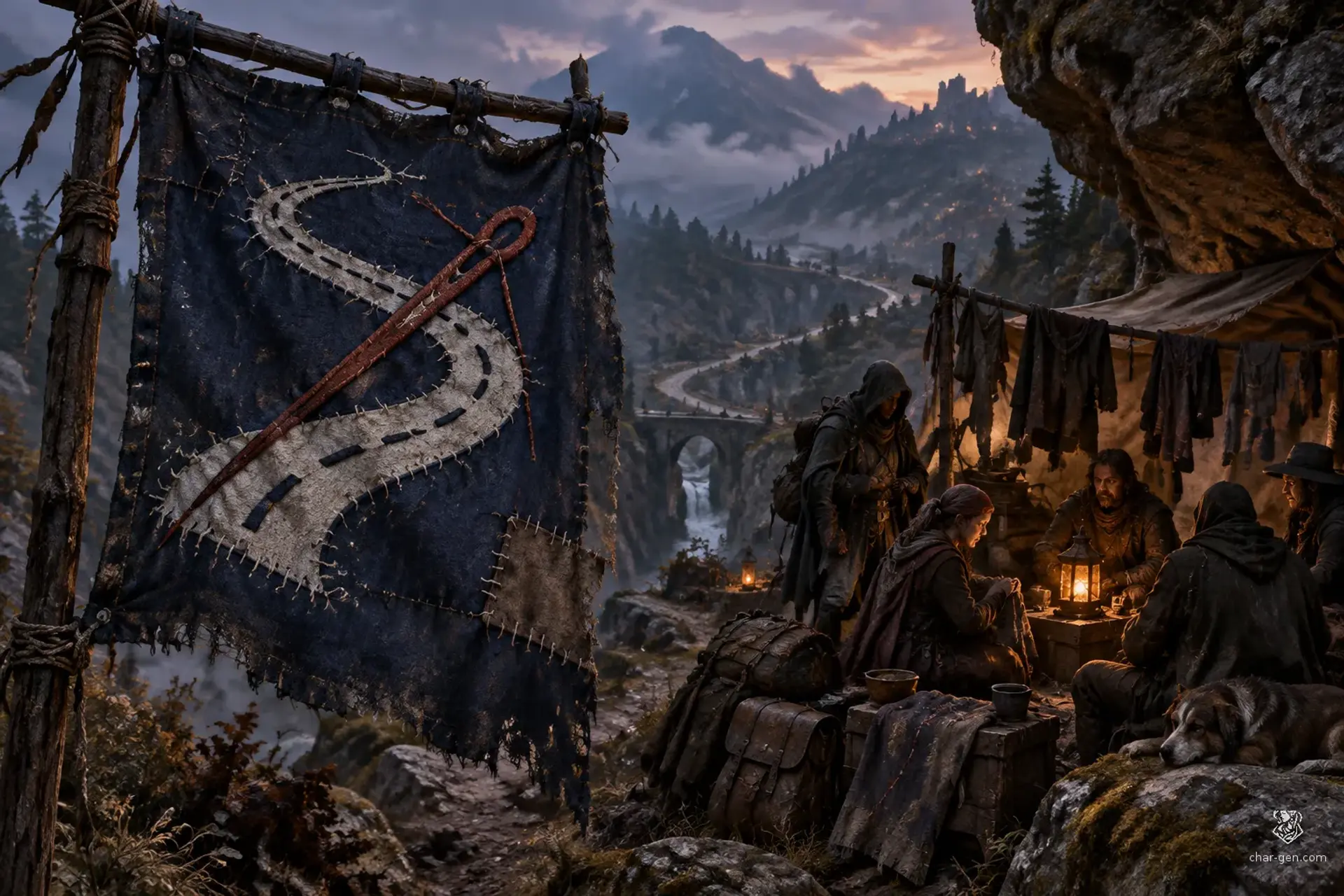
For its first twelve years, the group worked as an itinerant repair crew and sometimes hired itself out as caravan guards. They learned roads, schedules, and the small habits that reveal who is lying about a cargo. The first major change came after the wagon seizure that created the gang’s outlaw reputation. For years afterward, they robbed tax wagons and merchant coaches, insisting that they took only what could be spared. In practice, their definition of spare varied with hunger and opportunity. Eleven years ago, a crackdown drove the gang into the old eastern road country. At a narrow pass, a pursuit force caught them between a rockfall and a flooded stream. Joe ordered the stolen food and money thrown to a trapped group of travelers so they could climb free. The gang lost its horses and most of its supplies, but the travelers later gave false descriptions to the authorities and helped the outlaws escape. The event became known within the gang as the Long Stitch: a reminder that survival sometimes depended on binding strangers to them rather than simply taking from them. After the Long Stitch, the gang adopted its current name and its patchwork emblem. It also began imposing a rule that jobs harming children, healers, or people with no meaningful choice were forbidden. Members disagree over whether this was a moral awakening or a practical way to earn local shelter. In the years since, they have robbed toll chests, smuggled fugitives, and fought rival outlaws. Their most recent setback was the disappearance of a ledger containing safe-house locations and the names of people who have accepted their money.
The Fabric Gang
- Type
- Outlaw band
- Size
- 35 members
- Reach
- A serious local threat and…
- Base
- A ravine above the old eastern road, several hours from the nearest market settlement.
Overview
For its first twelve years, the group worked as an itinerant repair crew and sometimes hired itself out as caravan guards. They learned roads, schedules, and the small habits that reveal who is lying about a cargo. The first major change came after the wagon seizure that created the gang’s outlaw reputation. For years afterward, they robbed tax wagons and merchant coaches, insisting that they took only what could be spared. In practice, their definition of spare varied with hunger and opportunity. Eleven years ago, a crackdown drove the gang into the old eastern road country. At a narrow pass, a pursuit force caught them between a rockfall and a flooded stream. Joe ordered the stolen food and money thrown to a trapped group of travelers so they could climb free. The gang lost its horses and most of its supplies, but the travelers later gave false descriptions to the authorities and helped the outlaws escape. The event became known within the gang as the Long Stitch: a reminder that survival sometimes depended on binding strangers to them rather than simply taking from them. After the Long Stitch, the gang adopted its current name and its patchwork emblem. It also began imposing a rule that jobs harming children, healers, or people with no meaningful choice were forbidden. Members disagree over whether this was a moral awakening or a practical way to earn local shelter. In the years since, they have robbed toll chests, smuggled fugitives, and fought rival outlaws. Their most recent setback was the disappearance of a ledger containing safe-house locations and the names of people who have accepted their money.
How it began
The Fabric Gang began as a traveling repair crew and a handful of discharged guards who shared a wagon, a meal pot, and too many unpaid debts. Cotton Eye Joe was already known along the road for his unnerving stare and his habit of noticing which travelers were carrying more than they admitted. After a local lord’s tax collectors seized the crew’s wagon over a disputed toll, Joe led the others in taking it back. They also opened the wagon’s locked chest and found the collectors’ records of bribes and confiscations. The crew distributed much of the money to people whose property had been seized, then fled before dawn. When the authorities called them bandits, the name stuck more readily than their old trade.
How to know them
Indigo, Faded cream, Rust red
- A rust-red needle crossed with a narrow road
- A square of indigo or cream cloth, usually sewn into a coat lining
- A loose thread tied around a travel token to mark a message as urgent
Standing
What they say they want
What they are doing now
Where it leads
Joe hopes the gang can eventually trade its outlaw life for a negotiated pardon and safe passage for those who want to leave. Ivan imagines a lasting network of protection, information, and profitable crime. Other members simply want to survive the next pursuit. None of these visions has won a clear majority.
How others see them
To some travelers, the Fabric Gang are dangerous thieves with a talent for vanishing. To some poor communities, they are proof that the powerful can be made to answer for their actions. Merchants mostly regard them as a costly risk, while officials portray them as a coordinated threat to public order.
People
4 ranks
The Eye
Patient, observant, and harder to provoke than his reputation suggests. Joe dislikes cruelty but is willing to frighten, deceive, or injure people if he believes it prevents greater harm.
- The Eye1 member
Cotton Eye Joe sets broad priorities, arbitrates serious disputes, and decides when a job is too dangerous. His authority depends on keeping the gang alive, not on any formal election.
- The Hem5 members
The best-known members advise Joe, lead crews, and carry his decisions to the road. They can challenge a plan, but a challenge must be made in front of witnesses.
- Cutters8 members
Experienced robbers, scouts, drivers, and lookouts who plan jobs and supervise newer members.
- Loose Threads21 members
Newer recruits, temporary hands, informants, and dependents who travel with the gang. They have limited access to stores and secrets.
Other key members
- Ivan Cashmere Knees Second voice and planner of profitable jobs
- Old Nylon Nose Scout, route keeper, and keeper of safe-house traditions
- Linen Hair Gunther Disguise maker and wagon specialist
- Ted Silk Elbow Crew captain and enforcer of the Long Stitch rule
- John Woollen Heart Messenger, mediator, and connection to local communities
How they are organised
- A recruit must have a credible reason to risk the gang’s enemies learning their name.
- A recruit must spend one night on watch with a veteran and explain why they did not run.
- New members swear to the Long Stitch rule: no deliberate harm to children or helpless captives, and no selling a fellow member to escape ordinary punishment.
- No one is required to sew the emblem, but anyone who does is expected to stand by the gang’s decisions in public.
Relations
7 factionsA few caravan masters quietly pay the gang to make rival routes look dangerous. They value the Fabric Gang’s discretion, but would deny the arrangement if questioned.
Operations
What they do
How they do it
Services for hire
- Road guidanceA negotiated fee, useful information, or a favor owedThe gang can guide travelers along minor roads and identify patrol patterns. Their information may be stale or deliberately incomplete if the client seems dangerous.
- Quiet passageA share of goods or a future favorThe gang can move a person or small parcel past ordinary checkpoints using back roads and disguises. They cannot guarantee safety from a determined search.
- Roadside reliefFood, medicine, or information in returnThe gang can sometimes arrange basic supplies for people stranded on the road. Availability depends on the season and current shortages.
What they can do
What they have
Where they are weak
Territory
Headquarters
A ravine above the old eastern road, several hours from the nearest market settlement.The gang has no permanent fortress. Its main refuge is a disused cloth-drying shed tucked into a ravine above a little-used road. It contains sleeping pallets, a concealed cellar, spare clothes, a crude infirmary, and several exits known only to trusted members. The shed is sometimes empty for weeks at a time.
Lands they hold
Outposts
- The Ravine shedA disused cloth-drying shed above the old eastern roadMain refuge, temporary infirmary, and place for council meetings
- The east-road cacheA concealed hollow near a seasonal streamEmergency food, clothing, and travel supplies
- The broken markerA ruined roadside mile markerMeeting point for messengers and a place to leave warnings
Secrets
Plot hooks
4 hooks- 1The Threadbare HeirloomLow to moderate; investigation, negotiation, or a quiet theftReward: A safe road, local information, or a favor from a gang memberA recruit begs the party to find a stolen family keepsake before Ivan sells it with the rest of a recent haul. Returning it could earn the party an audience with Joe, but the item may contain a clue the gang does not want found.
- 2A Price for ShelterModerate; social pressure, legal trouble, and possible pursuitReward: Community support, a contact among the outlaws, or evidence against an officialA roadside family is accused of feeding the gang. The party finds that the family accepted money for medicine, but the bailiffs are using the accusation to seize their home. The party can protect the family, expose the gang’s role, or bargain for their safety.
- 3The Ledger of Loose ThreadsModerate to high; a race against rival agents and a difficult moral choiceReward: Payment, leverage, or a chance to reshape the gang’s futureThe missing ledger resurfaces in the hands of a traveling fence. Several factions want it, and the ledger’s entries could expose both the gang and the official secretly protecting it. Joe asks the party to retrieve it without reading it.
- 4The Last Wagon ThroughHigh; a time-sensitive campaign choice with consequences for civiliansReward: An alliance, a regional reputation, or influence over the gang’s next courseThe gang plans to rob a supply wagon carrying food to a besieged settlement. Ivan argues that the cargo belongs to corrupt collectors; John warns that the settlement will starve without it. The party must discover what is truly in the wagon and decide who should get it.
Work they offer
What gets in the way
Rumours
Media
0 imagesNo images yet.
Turn The Fabric Gang into a sheet
A high-res, share-ready sheet you can post or print.