Skip to content
CreatePricing
Silt-Strand Crawler - AI-generated fantasy Monster

Silt-Strand Crawler

Farmers named the animal for its low shell, which appears to be a ribbon of silt sliding against the current. Silt Guild workers value its grazing, though a crowded feeding bed can provoke a sharp defensive response.

Medium beast · CR 1/2 (100 XP); low threat, though its steam can punish clustered creatures. · Common

Silt-Strand Crawler

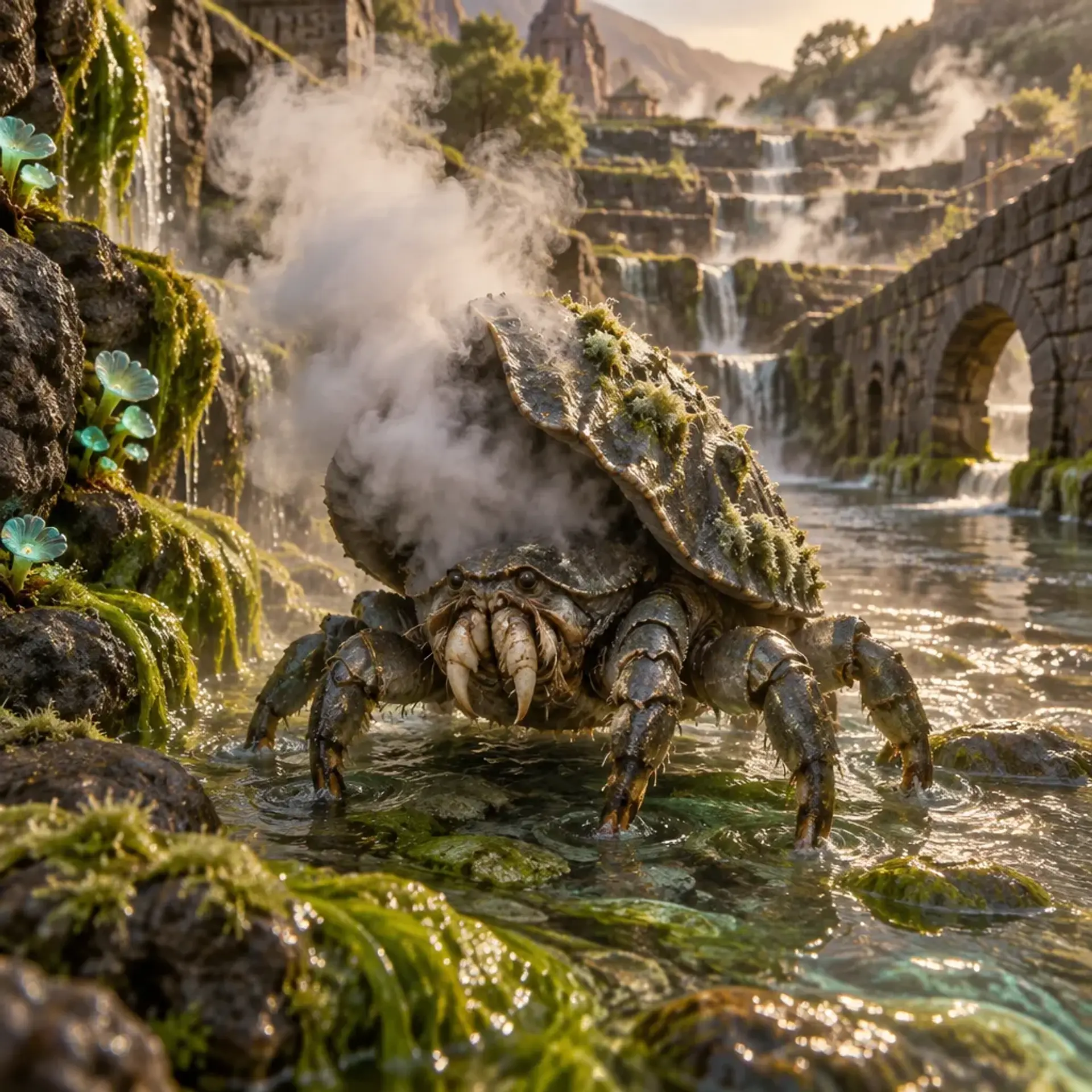
A small channel-grazing beast whose scraping mouthparts help keep Silt Guild waterways clear, but whose defensive steam can startle careless visitors.
AC15
HP27/27
CR1/2 (100 XP); low threat, though its steam can punish clustered creatures.
Init
STR
DEX
CON
INT
WIS
CHA
ConditionsNone

Combat

AC 15 · HP 27 · CR 1/2 (100 XP); low threat, though its steam can punish clustered creatures.

Silt-Strand Crawler

Medium beast (none), unaligned
Armor Class15
Hit Points27 (5d8 + 5)
Speed
Walking 20 ft.,
Swimming 20 ft.
STR
DEX
CON
INT
WIS
CHA
Weaknesses
It is reluctant to leave its feeding bed if a clear retreat route remains available.
Its vent is limited-use and its steam lasts only until the start of its next turn.
Senses
Darkvision 30 ft.,
Passive Perception 11
Challenge1/2 (100 XP); low threat, though its steam can punish clustered creatures.
Initiative+0 (10)
Proficiency Bonus+2
Amphibious. The crawler can breathe air and water.
Thick Carapace. The crawler has Advantage on saving throws against being knocked Prone.

Actions

Shell-Clack. Melee Attack Roll: +4, reach 5 ft. Hit: 4 () Bludgeoning damage.
False-Silt Vent. The crawler vents scalding steam in a 10-foot Cone. Each creature in the area must make a Dexterity saving throw, taking 7 () Fire damage on a failed save or half as much damage on a success. The steam lightly obscures the area until the start of the crawler's next turn. The crawler can use this action again after finishing a Short or Long Rest, or after spending 10 minutes in a thermal spring.

Reactions

Shell-Huddle. Trigger: A creature the crawler can see enters a space within 5 feet of it while the crawler is on or adjacent to its feeding bed. Response: The crawler raises its shell and moves up to 5 feet without provoking Opportunity Attacks. This movement does not protect it from the triggering creature's attack.
Role
Territorial defensive grazer and minor environmental hazard
Built for
Any; intended as a minor hazard or social obstacle, not a serious combat threat.

Notes for the game master

Amphibious: The crawler can breathe air and water.
Thick Carapace: The crawler has Advantage on saving throws against being knocked Prone.
False-Silt Vent recharges after a Short or Long Rest, or after 10 minutes in a thermal spring.
The crawler leaves at 6 Hit Points or fewer unless cornered or guarding a clutch.

Tactics

  1. Opening

    It raises its shell and clicks its mouthparts when a creature crowds its feeding bed. It does not attack merely because a creature passes nearby.

  2. Mid-fight

    If the intruder presses after the warning display, it uses False-Silt Vent, then seeks a route away rather than pursuing.

  3. End of the fight

    If reduced to 6 Hit Points or fewer, it withdraws toward open water and abandons the feeding bed unless cornered or guarding a clutch.

  4. Retreat

    It does not chase creatures that withdraw. It retreats when badly hurt unless cornered or guarding eggs.

How it fights

It warns before using its defensive vent, giving creatures a chance to retreat.
It uses Shell-Huddle to reposition away from an intruder crowding its feeding bed.
It does not chase a retreating creature.

Who it attacks first

A creature that crowds its feeding bed.
A creature that blocks its route to open water.
If guarding a clutch, an intruder approaching the clutch.

Works well with

Channel workers can use its grazing to keep water moving, while repairs near a feeding bed risk provoking it.
Blocked channels may draw crawlers into contact with farms, gates, and maintenance crews.

How to beat it

Spread out before approaching so fewer creatures are caught in the steam cone.
Use reach or ranged attacks to avoid crowding its feeding bed.
Back away after its warning display; it will not pursue a withdrawing creature.

Ways to avoid a fight

Offer algae or thermal lichen while leaving a clear retreat route. A patient handler may encourage it to clear a channel over several hours.
Give it room to retreat, then guide it toward a blocked section of channel with food placed beyond the obstruction.

Ecology

A low, broad shell the color of wet slate glides above the channel bed, its ridges furred with thermal lichen. Pale mouthparts rasp at algae, clicking softly beneath the hiss of warm water; when threatened, the shell lifts and a white plume of steam spills out.

Behavior

Plac id while grazing, the crawler raises its shell and clicks its mouthparts when crowded. If the intruder continues to press, it vents hot steam. It does not pursue a creature that backs away.

How it lives

Silt-Strand Crawlers graze on algae, glowing fungus, and thermal lichen. Their scraping mouthparts help prevent channels from choking with growth. They are adapted to warm water and can leave the water to move along damp banks.

Lair

A shallow feeding bed among channel stones, algae, and thermal lichen, usually near a warm spring or a sheltered bend in a watercourse.

Habitat
Warm-water channels, spring-fed terraces, and volcanic irrigation works in the Ashen Shelf, especially around Silt-Strand Haven.

Signs that it is near

Cleanly scraped patches on algae-covered channel stones.
A low ribbon of disturbed silt moving against the current.
Small clicks beneath the hiss of warm water.
Glowing fungus and thermal lichen grazed close to the stone.

Tags

beast,
aquatic,
channel-maintenance,
Silt-Strand Haven,
thermal spring

Lore

Farmers named the animal for its low shell, which appears to be a ribbon of silt sliding against the current. Silt Guild workers value its grazing, though a crowded feeding bed can provoke a sharp defensive response.

What drives it

Feed undisturbed, maintain access to its warm-water grazing bed, and protect a clutch when present.

After the fight

If left undisturbed, the crawler returns to grazing and slowly scrapes algae from the channel. Its shell may be valuable to a craftworker, but Silt Guild custom discourages harvesting one from a living animal.

Variants

Thermal-Spring Grazer: A local name for crawlers often seen near hot springs; its game statistics are unchanged.
Clutch Guardian: A crawler guarding eggs retreats only if it is no longer cornered and the clutch is no longer threatened; its game statistics are unchanged.

Hooks

Plot hooks

A channel-maintenance crawler has vanished from a terrace in Silt-Strand Haven, and algae is beginning to choke the water.
A merchant accuses a Guild steward of using crawlers to damage a rival's gates, though the animals may simply be responding to blocked channels.
A breeding bed lies beside a spring scheduled for urgent repairs, forcing workers to choose between water access and protecting the clutch.

How to use it

A defensive animal encounter beside a working irrigation channel.
An environmental complication during a tense crossing of a narrow waterway.
A peaceful creature whose feeding bed must be protected during repairs or negotiations.

Treasure

A harvested shell can be sold to a craftworker, though Silt Guild custom discourages taking shells from living crawlers.

Media

0 images

No images yet.

Visual sheet

Turn Silt-Strand Crawler into a sheet

A high-res, share-ready sheet you can post or print.