Ruy Abaroa
Ruy Abaroa
At the table
Voice
A dry, carrying voice shaped by years of speaking over rain, carts, and crowded hearings. His breath catches slightly after climbing stairs, but his words remain crisp and deliberate. In private, his voice gains a rough warmth when he tells old village stories.
He speaks in strict, well-formed sentences, drawing on years of reading testimony aloud and making rulings in crowded rooms. His vocabulary is plain but precise, and he often repeats a claim in cleaner language before answering it. The name Ruy is spoken with a brief, rough initial and an open final vowel. When angered, his words become more exact and his consonants strike harder; he does not soften or lower his voice.
Speech patterns
How to play them
Ruy listens without interruption, asks what outcome the visitor wants, then establishes what can and cannot be done under local law. He respects candor more than charm. A visitor who brings evidence, accepts responsibility, or protects ordinary people can win his help. Threats made in public earn a formal warning; threats against his household end the meeting immediately.
Goal
Resolve the grain shortage and boundary disputes without allowing the village to fracture into rival camps, then prepare a successor he can trust.
Motivation
He believes a community survives when its rules protect the vulnerable, but he is haunted by the times he has used those same rules to postpone an unbearable choice.
Appearance
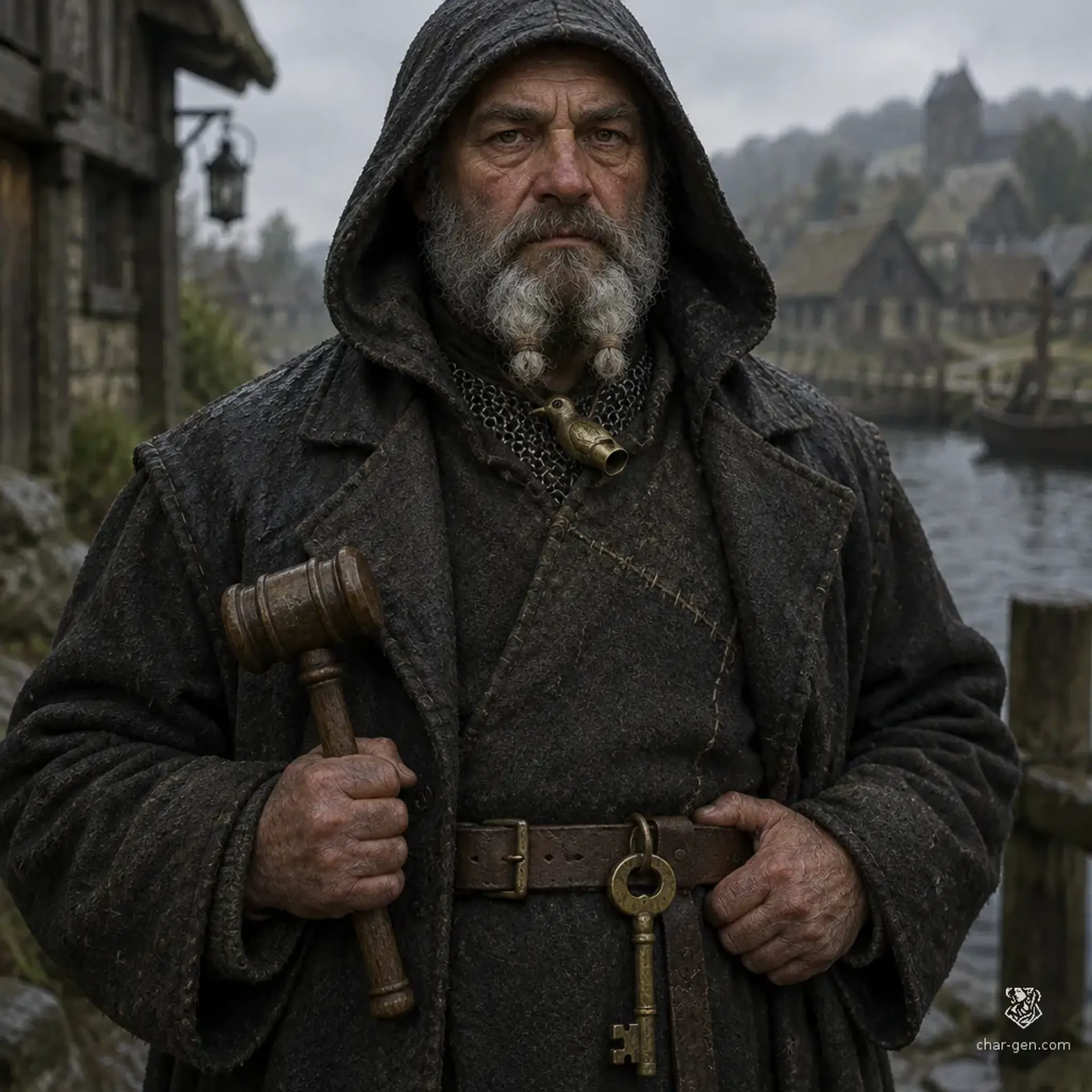
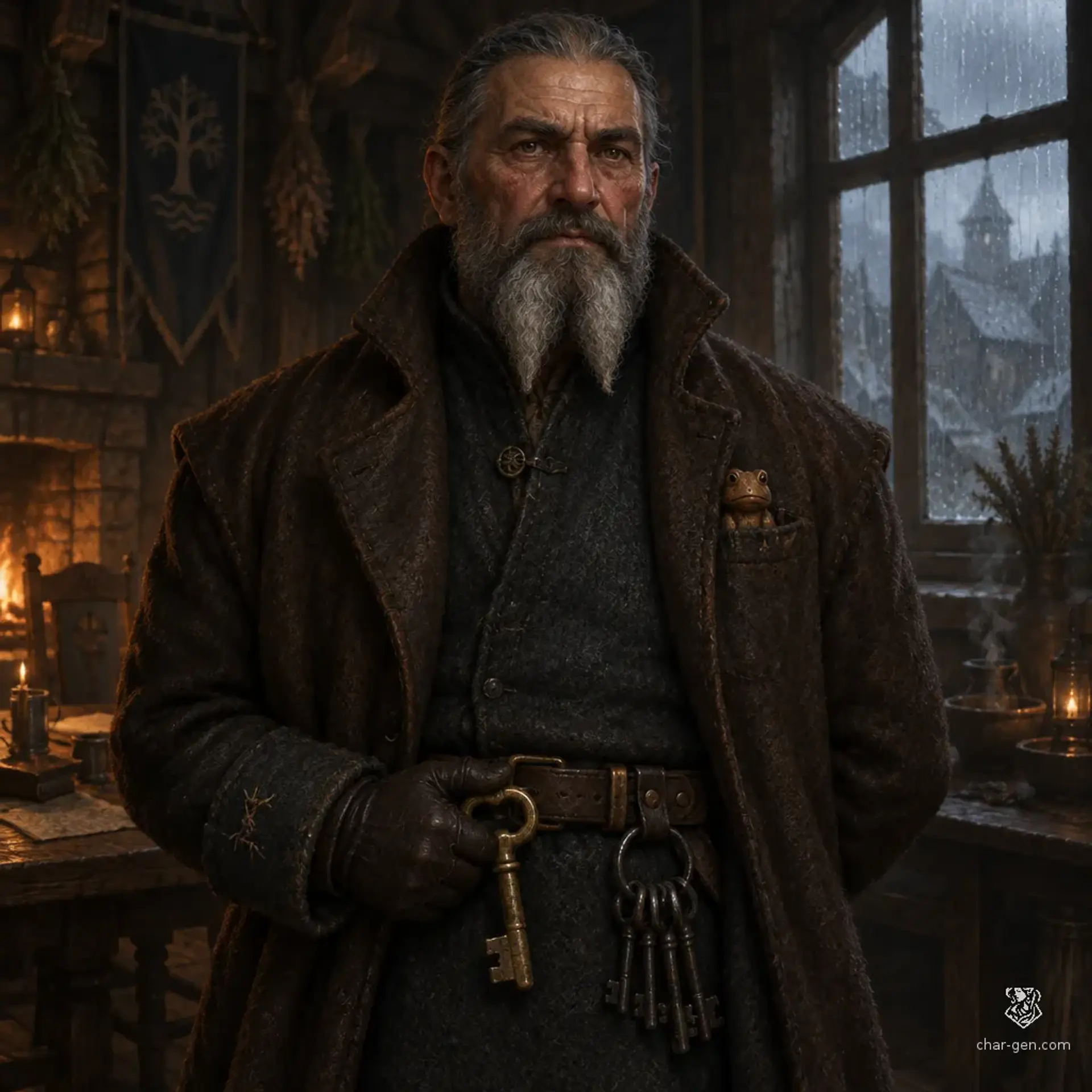
Ruy is an authoritative, sharp-eyed elderly man whose presence seems to organize a room before he speaks. His thick iron-gray beard is combed into two blunt, practical points, and his stern face is lined deeply around the mouth from years of refusing to soften a decision. He moves with the measured, economical pace of someone accustomed to being watched. His dark wool tunic is finely made but visibly mended at one cuff, while his heavy coat smells of rain-damp wool, woodsmoke, and the sharp medicinal herbs he keeps in its pockets. He knows about the herbs, but not that the smoke clings to him. A heavy brass key hangs from his belt; its bow is polished by his thumb, while one tooth is worn nearly flat from decades of use. Unexpectedly for a stern magistrate, he carries a tiny carved wooden frog in his breast pocket, a toy he made for his late daughter.
Clothing
A well-made charcoal wool tunic, a heavy dark-brown coat with a high collar, lined gloves, weatherproof boots, and a plain belt carrying a large brass key and a ring of smaller iron keys.
Body language
He stands squarely, hands folded behind his back, and turns his whole body toward whoever is speaking. When a matter becomes personal, his thumb rubs the worn tooth of his key. He does not fidget; instead, he becomes very still, as if giving the other person room to reconsider.
- Height
- 5 feet 9 inches
- Build
- Broad through the shoulders, thick-waisted, and sturdy despite his age, with the settled strength of a man who spent decades carrying sacks and walking wet roads.
- Eyes
- Dark hazel, alert and steady
- Hair
- Iron gray, with white at the temples
- Skin
- Weathered olive with ruddy cheeks and a pale band at the throat where his collar usually covers the skin
- Age
- Seventy-one
- Gender
- Male
- Size
- Medium
Distinguishing features
Personality
12 traits and drivesRuy is strict about procedure but compassionate toward people who have been cornered by circumstance. In a public hearing he is controlled, exact, and difficult to sway; in private he tells dry stories and quietly makes sure the least powerful person gets home safely. When calm, he invites disagreement. When afraid, he hides behind legal language and becomes stubborn. He can show unexpected tenderness to children, then turn abruptly formal if he notices anyone watching.
- Alignment
- Lawful neutral
Quirks
Habits
Traits · 3
Flaws · 3
Fears · 3
Wants and needs · 3
Combat
AC 15 · HP 27 · 30 ft.Ruy avoids a fight if a clear order or a negotiated retreat can end it. If attacked, he holds a doorway or narrow street, uses Call the Line to keep an ally from being pinned, and fights defensively with his longsword. He protects civilians first and will surrender rather than pursue a fleeing enemy into danger.
Ruy Abaroa
Actions
Reactions
Services they sell
Rewards they can give
Equipment
- Longsword (weapon)A well-kept, plain longsword worn at his hip. Its hilt is darkened by age, not ornament.
- Granary key (key)A large brass key to the old council granary. One tooth is worn nearly flat from long use.
- Headman's coat (clothing)A heavy wool coat with interior pockets for a herb pouch, folded orders, and the hidden frog carving.
- Council shield (armor)A plain shield kept in the council hall for emergencies; it bears the village mark, a frog beside a reed.
- Ione's frog (keepsake)A tiny hand-carved frog made by Ruy for his daughter when she was small.
Possessions
Background
Ruy Abaroa was born to a family of tenant farmers and learned the village's laws by listening outside the council hall while bringing his mother her midday meal. He became a clerk, then a mediator, and finally headman when the old magistrate died during a winter flood. Years ago, a grain store caught fire during a dispute over rationing. Ruy had to choose between opening the store against the owner's orders or preserving the law that protected private holdings. He broke the lock and fed the village. The people remember the choice as courage; the owner remembers it as theft. Ruy's daughter, Ione, later died in a fever season after he sent her away to a safer household, a decision he still cannot forgive himself for. He keeps her frog carving close and has never told anyone it was hers. His current trouble is a succession of boundary disputes and missing grain that may be connected to the same landowner he defied. His wife, Tavia, urges him to let younger hands take over, while his former clerk, Beren, now speaks for the landowners and knows where Ruy's old decisions are buried.
Role in the story
A stern local authority who can grant the party lawful access, impose consequences, or become a crucial ally. His personal history makes him a potential source of hard-earned wisdom, but the concealed ration record could undermine his standing if exposed.
“He became a clerk, then a mediator, and finally headman when the old magistrate died during a winter flood.”
- Faction
- Headman of the village council; trusted by many local households, opposed by several landowners.
Known connections
Media
0 imagesNo images yet.
Turn Ruy Abaroa into a sheet
A high-res, share-ready sheet you can post or print.