William Hirst
William Hirst
At the table
Voice
His voice is light and slightly breathy, with a careful, effortful start to unfamiliar words. When he is excited, his pace quickens and the ends of his phrases tumble together; when anxious, he may stop speaking and point instead. His speech reflects a young child still learning how to make himself understood, not a lack of thought or feeling.
He forms words carefully and often pauses between them, especially with strangers or under pressure. Familiar subjects bring out longer, more eager bursts of speech. His phrasing reflects a child's concrete attention: he is more likely to say that a beetle has a shiny back than to describe it as beautiful.
Speech patterns
How to play them
Address William directly, use simple questions, and give him time to answer. Let him choose between clear options rather than speaking about him as though he were absent. A patient companion can earn his trust by taking interest in what he notices, without turning every interaction into a lesson.
Goal
To be allowed to grow at his own pace and to remain close to both of his parents.
Motivation
To find security in the familiar and to be loved without having to prove that he will make a suitable heir.
Appearance
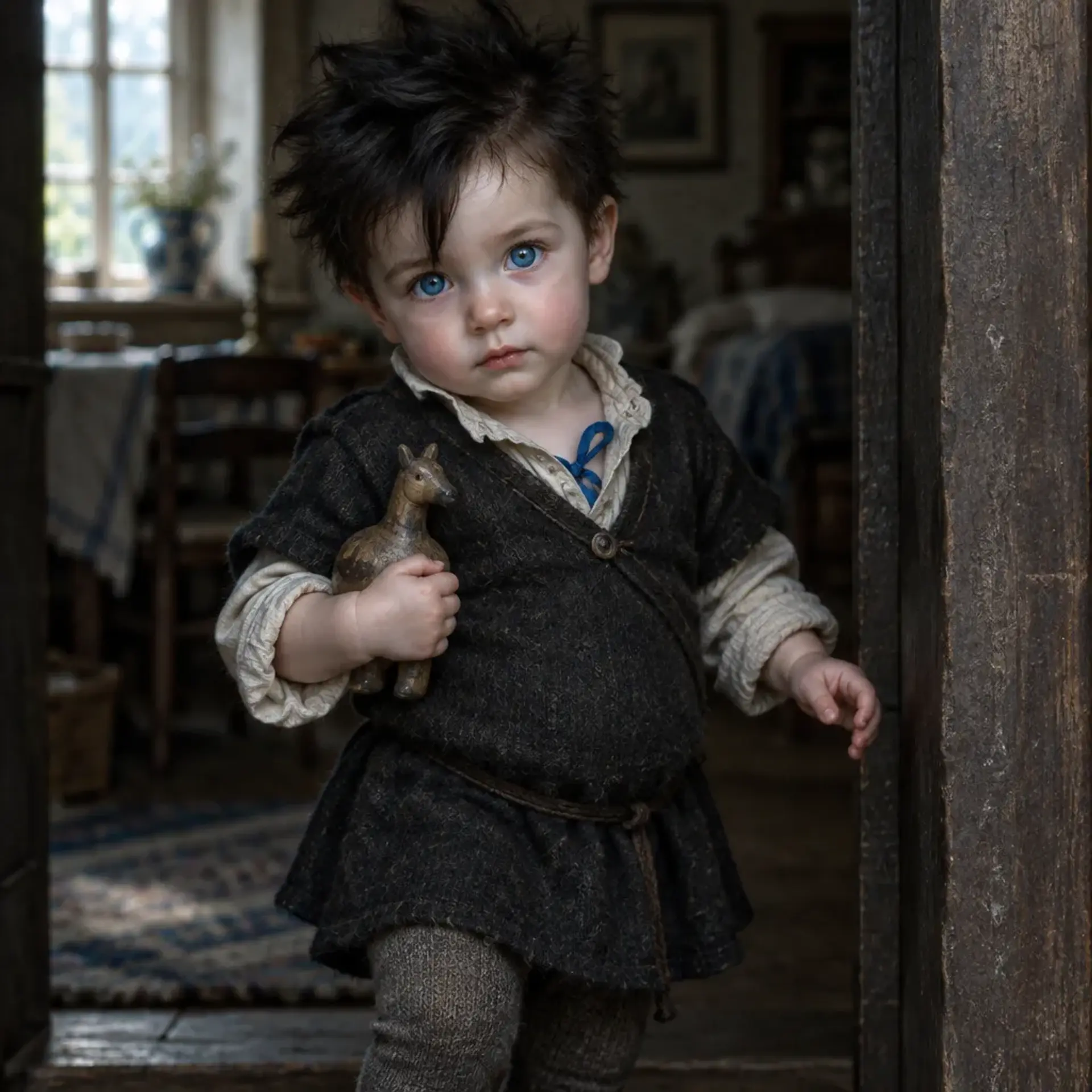
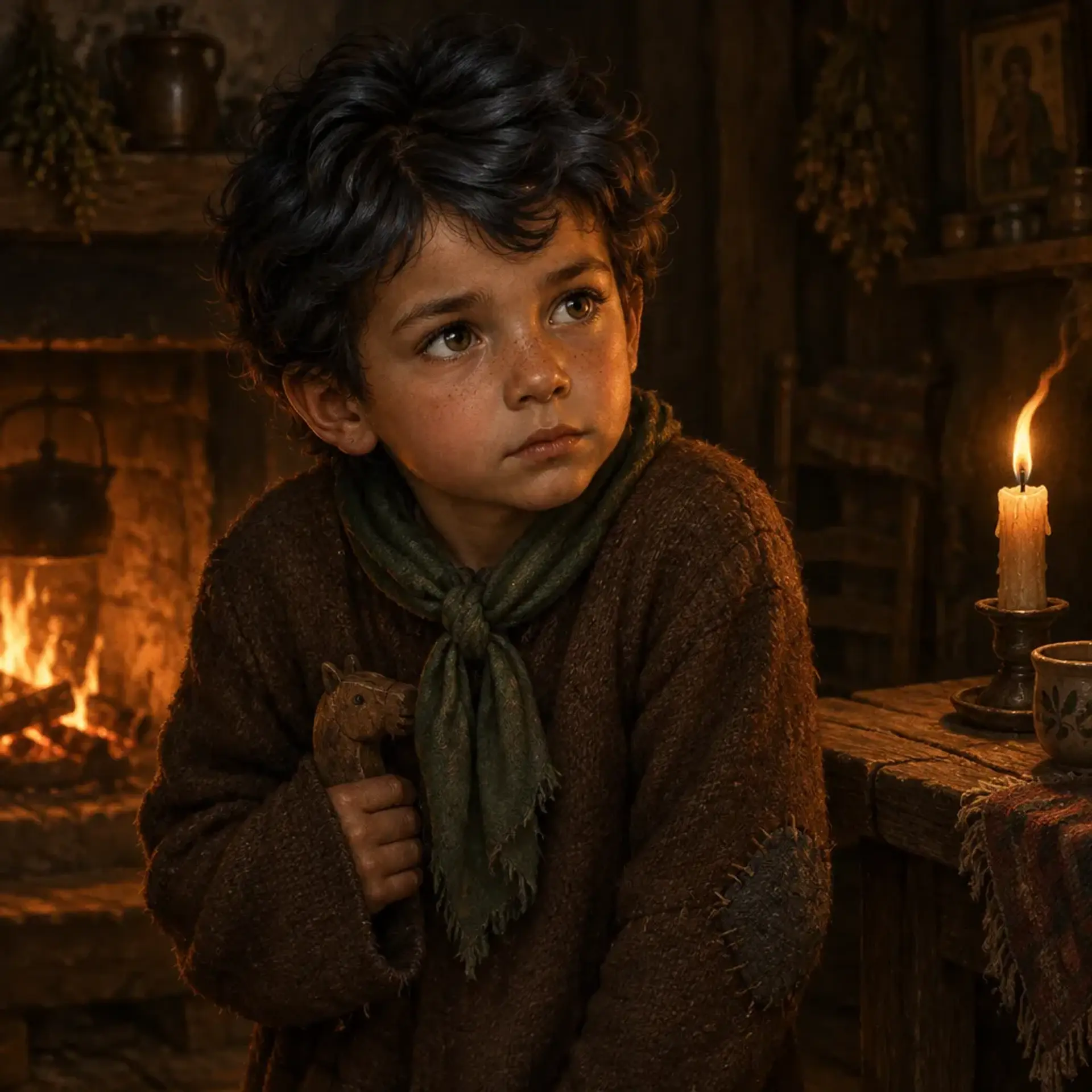
A very pale, slight boy with a watchful, solemn face and a fall of dense black hair that sticks up at the crown no matter how often it is combed. His vivid blue eyes, inherited from Oswin, seem startlingly bright against his colorless skin. He stands with his weight gathered over the balls of his feet, as though ready to follow whoever has earned his trust. When he laughs, his small jaw opens wide and shows a gap where a front tooth has recently fallen out. He moves carefully, pausing to study thresholds and faces before crossing a room. For a child expected to inherit a household, he has an unexpected fondness for muddying his hems by crouching to inspect beetles and worms.
Clothing
A carefully mended wool tunic, a soft undershirt, sturdy trousers, and boots a little too large for him. Mary keeps his clothes clean; he often manages to acquire a smear of earth at the knees anyway.
Body language
He keeps his elbows close and his chin slightly tucked in crowded rooms, but leans forward with his whole body when something catches his interest. While waiting, he rocks subtly from heel to toe and often settles on the balls of his feet. His fingers worry a loose thread at his cuff when adults discuss him.
- Height
- Approximately 3 feet 10 inches
- Build
- Small and slight for his age, with narrow shoulders and a soft, child-rounded face.
- Eyes
- Bright burning blue
- Hair
- Dense black
- Skin
- Very pale
- Age
- 7 years old
- Gender
- Boy
- Size
- Small
Distinguishing features
Personality
12 traits and drivesWilliam is cautious with strangers but intensely curious about small, concrete things. He may seem withdrawn when adults press him to perform, yet becomes animated and persistent when he can show someone a beetle, a pattern in the floor, or a familiar toy. He wants his parents' approval, but resists being hurried, often by going quiet rather than openly refusing.
- Alignment
- Neutral good
Quirks
Habits
Traits · 3
Flaws · 3
Fears · 3
Wants and needs · 3
Combat
AC 10 · HP 3 · 20 feetWilliam is not a combatant. He tries to hide behind a trusted adult, get out of reach, or call for his parents. If cornered, he may shove or strike blindly, then flee.
William Hirst
Actions
Reactions
Rewards they can give
Equipment
- Everyday clothes (clothing)Mended wool clothing and oversized boots suitable for household life, not armor.
- Wooden horse (keepsake)A smooth wooden horse Mary gave him; he rubs its worn nose with his thumb when anxious.
Possessions
Background
Mary Hirst's labor was long, exhausting, and frightening. When William was born with black hair and Oswin's burning blue eyes, Oswin took him in both hands with a care so grave that the midwife later remembered it more clearly than the storm outside. William was named for Oswin's family, but the village soon called him Black William, or Blackby, for his hair. He has been slower than other children to speak, read faces, and master lessons expected of an heir. His maternal grandparents and his uncles Edmund and Huge fear that he may not be able to inherit or manage the Hirst household; their worry comes out in very different ways, from anxious instruction to whispered contingency plans. Mary tries to protect William without making him feel watched, while Oswin's solemn tenderness can make every stumble feel like a test. William's own world is smaller and more vivid: he knows the sound of his mother's steps, the shape of his father's hands, and which garden stones shelter beetles. His current problem is that the adults have begun discussing his future as if he were not in the room.
Role in the story
A child at the center of a family's anxiety over inheritance and worth. William is not a puzzle to solve or a diagnosis to assign; his needs, fears, observations, and relationships can shape the household's choices and reveal how its adults treat the vulnerable.
“William was named for Oswin's family, but the village soon called him Black William, or Blackby, for his hair.”
- Faction
- The Hirst household by birth; no independent faction or political allegiance.
Known connections
Media
0 imagesNo images yet.
Turn William Hirst into a sheet
A high-res, share-ready sheet you can post or print.