
Unnamed pantheon
Unnamed pantheon
Invoke a god
Kethra
The First Measure
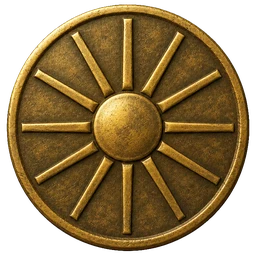
Symbol A straight plumb line suspended within a square.
Holy day The First Measure
- Keep the boundary you have sworn to keep.
- Build so that strangers and descendants may rely on your work.
- Let judgment follow evidence, not favor.
The gods
6Kethra
The First Measure
Greater · Lawful Neutral
law · boundaries · oaths · architecture; Kethra’s measured order is tested by Tavros’s upheavals and recorded by Ilyet
Patient, exacting, and unmoved by pleas for exception. Kethra respects Ilyet’s impartiality and regards Tavros as a necessary but dangerous force.
Faith
- Keep the boundary you have sworn to keep.
- Build so that strangers and descendants may rely on your work.
- Let judgment follow evidence, not favor.
Holy dayThe First Measure, observed at the spring equinox by renewing public boundaries and civic oaths.
Holy textThe Tablets of the First Measure
RitesMark a threshold with a chalk square before a new undertaking. · Speak important vows while holding a length of bronze chain. · At funerals, name the duties the deceased fulfilled.
Valuessteadfastness · fair process · craft
Look
SymbolA straight plumb line suspended within a square.
- bronze
- ivory
Animalstortoise · crane
AppearanceA severe figure in a bronze mask, carrying a plumb line that hangs perfectly straight even in a storm.
Followers
WhoJudges, architects, magistrates, masons, and those who keep treaties.
BeliefsFollowers believe that order is a shelter mortals must maintain, not a gift that can be taken for granted. They accept that Tavros will sometimes break what Kethra builds, but insist that every renewal must be made with care.
The faith
How it began
Before time had a measure, Kethra drew a boundary across the formless dark.
Oruvian crossed it, giving distance a road; Zhumela warmed the first hearth; Tavros stirred the stillness into seasons. Ilyet gave endings their weight, and Qadim recognized a pattern among the new stars. The gods disagree about which of them truly came first.
The heavens
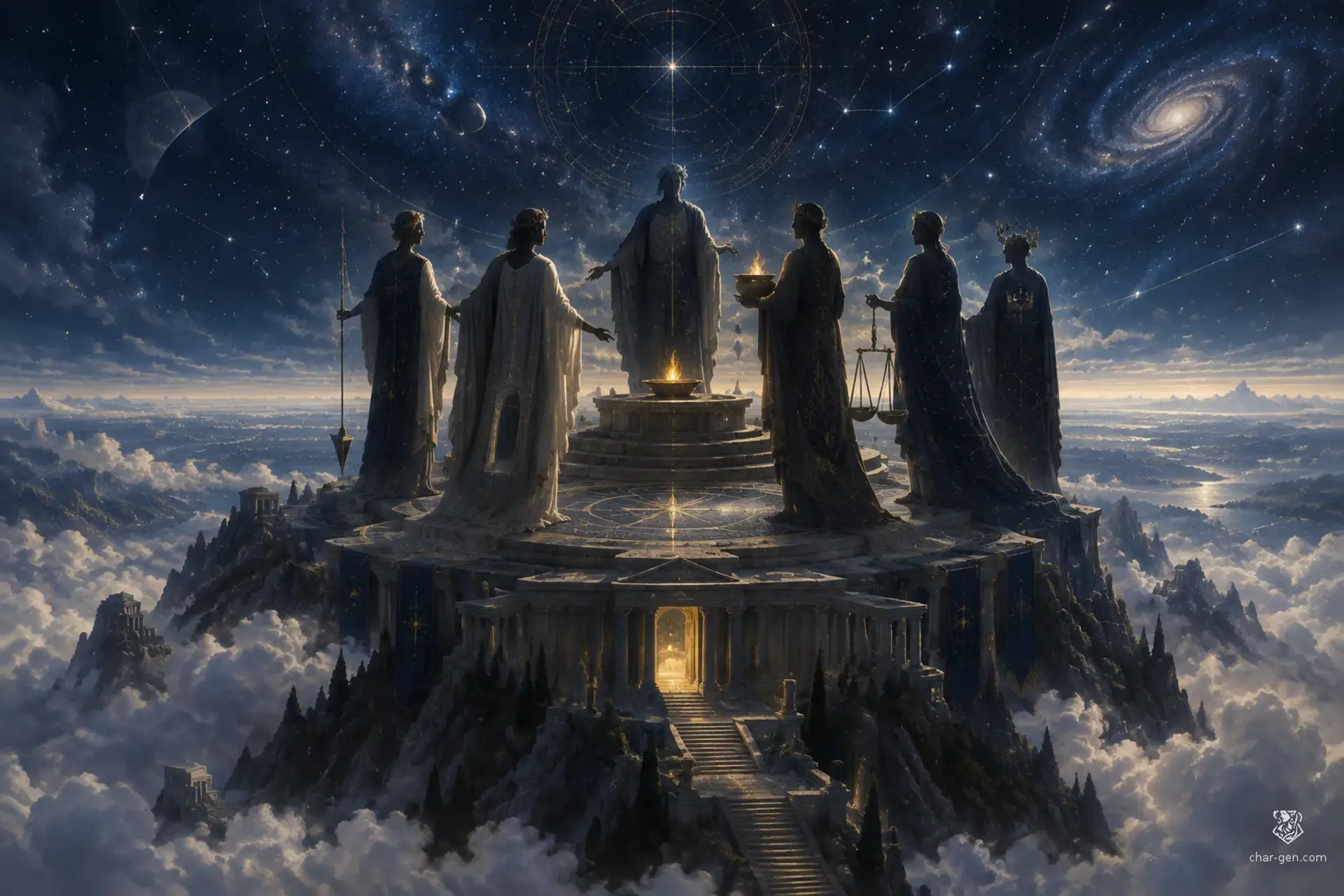
The heavens are a great, distant court surrounding the mortal world.
Kethra set its first boundaries; Oruvian opened the roads between its realms; Zhumela kindled life in the spaces between them. Ilyet keeps the measure of every soul, Tavros turns the seasons and fortunes, and Qadim reads the immense pattern that holds all six in orbit.
Gods and mortals
The gods rarely intervene directly.
Their temples are civic institutions, roadside shelters, family shrines, observatories, and funerary courts. Clergy interpret omens and mediate disputes, but no single priesthood speaks for all six.
After death
The dead cross the Pale Meridian, a quiet river beyond the stars.
There, Ilyet weighs the shape of a life, while Oruvian opens the road onward. The virtuous may dwell in distant, distinct halls; others return as unnamed sparks to the turning of the world. No priest can promise a soul’s destination.
What people say, what is true
Players may hear
For the GM
Plot hooks
Conflicts
The wars
Kethra demands fixed boundaries, while Tavros breaks them in the name of change.
Oruvian’s merciful passage for the dead troubles Zhumela, who would keep every memory close. Ilyet’s judgments are challenged by Qadim, who insists that fate is a pattern too vast for any court to understand.
| Kethra | Oruvian | Zhumela | Tavros | Ilyet | Qadim | |
|---|---|---|---|---|---|---|
| E | A | A | ||||
| A | A | E | ||||
| A | A | E | ||||
| E | A | A | ||||
| A | E | A | ||||
| A | E | E | A |
Order of heaven
Structure
The faith has no universal hierarchy.
Local councils of temple keepers maintain rites and settle practical disputes, while itinerant interpreters carry teachings between regions. Major sanctuaries usually honor several gods, though one deity’s clergy may lead a particular rite. The gods’ competing claims are preserved rather than reconciled.
Theme
Awe before an immense cosmos, balanced against intimate duties of care, judgment, change, and hospitality.
Tone
Distant and contemplative: divine signs are rare, ambiguous, and easily mistaken for natural events.
Mortals build their lives without expecting the gods to answer quickly.
Alignments
The six span lawful, neutral, and chaotic impulses, and good, neutral, and evil purposes.
Their disagreements are treated as part of the world’s order rather than a flaw to be resolved.
Media
0 imagesNo images yet.
Turn Unnamed pantheon into a sheet
A high-res, share-ready sheet you can post or print.