
Unnamed pantheon
Unnamed pantheon
Invoke a god
Asteron
The Far Law
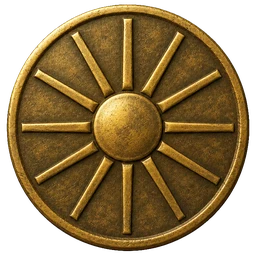
Symbol Seven stars set in a bronze circle, with one star at its center.
Holy day The Long Measure
- Keep your word even when the cost becomes clear.
- Study the pattern before acting.
- Do not mistake a quiet heaven for an empty one.
The gods
6Asteron
The Far Law
Greater · Lawful Good
Order of the heavens, whose courses Othyr records among the stars · Duty, shared with Keldan in the keeping of vows
Patient, exacting, and never hurried. Asteron values stability over comfort and rarely answers prayers with anything more than a sign in the heavens.
Faith
- Keep your word even when the cost becomes clear.
- Study the pattern before acting.
- Do not mistake a quiet heaven for an empty one.
Holy dayThe Long Measure, held at the winter solstice, when worshippers keep a night watch and renew their most enduring vows.
Holy textThe Tablets of the Fixed Sky, a collection of star charts and sayings attributed to the first astronomer-priests.
RitesMark a vow by naming the star beneath which it was made. · Observe a silent hour at dusk before important decisions. · Offer a bronze token at an open-air shrine.
Valuesduty · measure · continuity
Look
SymbolSeven stars set in a bronze circle, with one star at its center.
- bronze
- deep blue
Animalscrane · white bull
AppearanceA solemn, bronze-armored figure with a crown of seven fixed stars. Asteron's face is always shown in profile, as if listening to a far-off bell.
Followers
WhoAstronomers, judges, oathbound knights, and rulers who seek legitimacy through restraint.
BeliefsThe gods are real, but their attention is vast and impersonal. Asteron's followers believe a life well ordered leaves a trace in the heavens, even if no miracle follows.
The faith
How it began
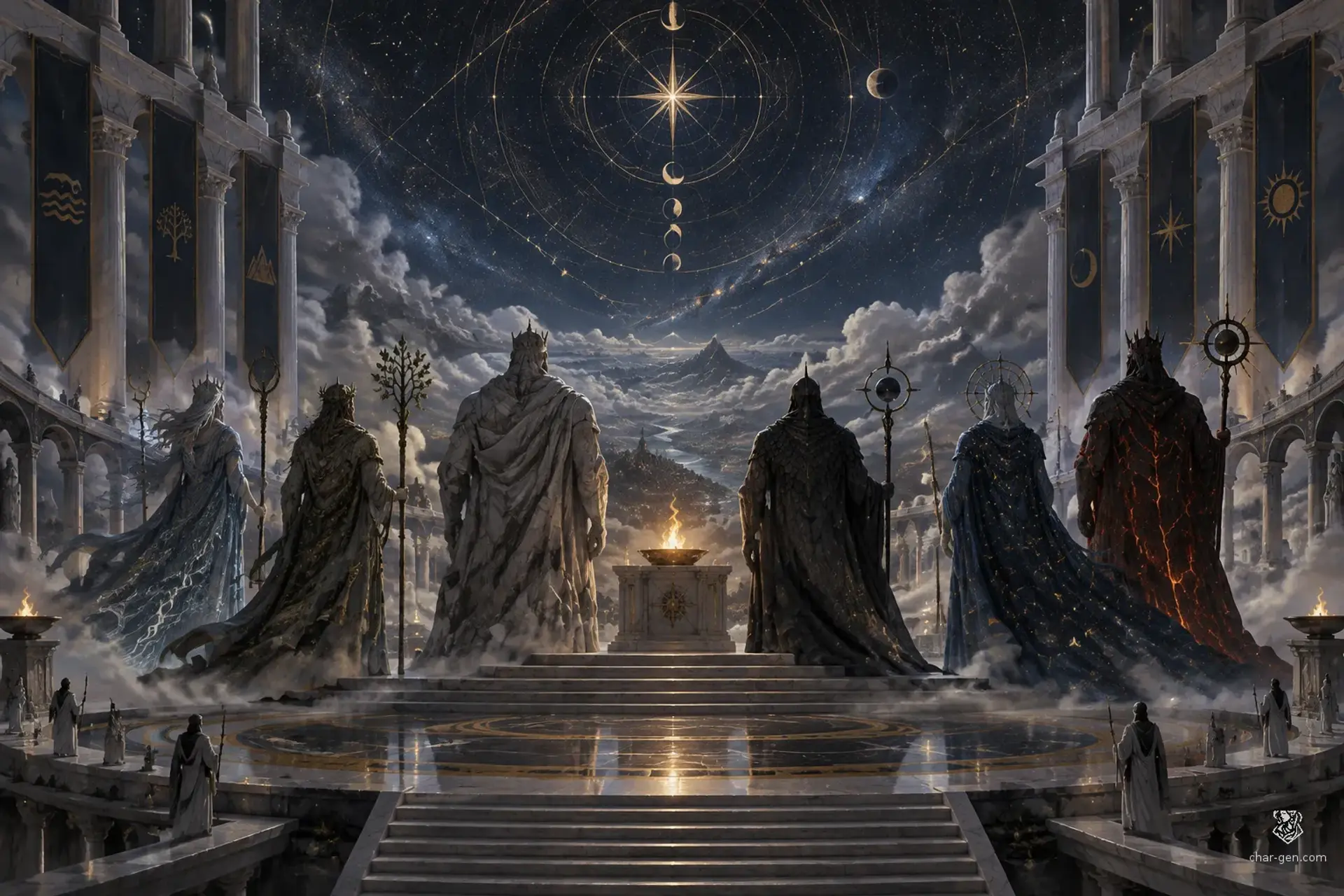
The oldest hymns say that the six gathered at the edge of a dark, unmeasured expanse and divided the duties needed to make a world endure.
Later traditions disagree over who arrived first. Asteron claims the first measure; Veyra says there was no first path until someone chose one.
The heavens
The world is a small island of warmth beneath the Vast Distance, a dark, ordered expanse whose stars are apertures into greater realms.
Asteron set the celestial courses; Veyra gave them the possibility of deviation. The earth rests upon the foundations guarded by Keldan, while Savael’s waters wind through both mortal lands and the afterlife. Brannoc’s distant fires kindle the transformations that keep creation from becoming still.
Gods and mortals
Worship is organized through local temples, roadside shrines, funerary houses, and guild altars rather than a single central church.
Communities commonly honor all six deities, but individuals and institutions favor one or two. Clerics serve as interpreters and custodians, not guaranteed conduits to divine power; political disputes between temples often reflect the gods' rival principles.
After death
The dead cross the Pale Distance, a silent sea beneath the stars.
At its far shore, each soul is weighed by Othyr against the measure of its life; Savael tends those who cannot yet let go, while Keldan guides the resolute onward. The worthy settle into distant constellations, not as active guardians but as faint lights remembered by the living. The gods do not promise reunion or personal intervention.
What people say, what is true
Players may hear
For the GM
Plot hooks
Conflicts
The wars
Asteron insists that the heavens follow an immutable course, while Veyra argues that mortal choices can alter even the farthest fate.
Othyr and Keldan dispute whether the dead should be judged by duty or by the consequences of their deeds. Savael shelters the grieving from such judgments, earning the suspicion of Othyr. Brannoc sometimes breaks the divine quiet with ruinous upheavals, which Asteron condemns as disorder and Veyra regards as necessary change.
| Asteron | Veyra | Othyr | Savael | Brannoc | Keldan | |
|---|---|---|---|---|---|---|
| E | A | E | A | |||
| E | E | A | A | |||
| A | E | E | A | |||
| A | E | E | A | |||
| E | A | AE | ||||
| A | E | A | E |
Order of heaven
Structure
The faith has no universal pontiff.
Each temple maintains its own rites, and councils of local priests convene when disputes affect several communities. A common tradition recognizes three paired concerns: Asteron and Veyra for order and possibility, Othyr and Savael for judgment and consolation, and Brannoc and Keldan for change and endurance. The pairings are teaching tools, not claims of harmony.
Theme
Human-scale devotion beneath an immense and indifferent cosmos: duty, choice, grief, change, and the fragile structures mortals build together.
Tone
Distant and contemplative.
The gods are acknowledged as real, but their purposes exceed mortal understanding. Worship offers language, custom, and community more readily than miracles or certainty.
Alignments
The six deities range from lawful good to chaotic evil, with neutral and opposed philosophies represented.
Their disagreements are considered part of the cosmic order, not a flaw to be resolved.
Media
0 imagesNo images yet.
Turn Unnamed pantheon into a sheet
A high-res, share-ready sheet you can post or print.