
Unnamed pantheon
Unnamed pantheon
Invoke a god
Aulun
The Measurer of the Vault
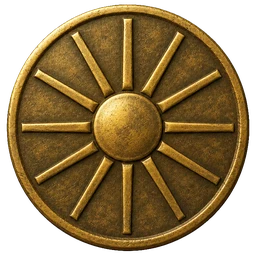
Symbol A level beam beneath a ring of nine points.
Holy day The First Equinox
- Give no force more room than it can safely bear.
- Keep promises in proportion to your power.
- Repair imbalance before celebrating advantage.
The gods
12Aulun
The Measurer of the Vault
Greater · Lawful Neutral
Cosmic balance, maintained beside Sesh's judgment · The foundations of the world, which Brum guards in the deep
Patient, impersonal, and difficult to surprise; Aulun regards even triumph as a temporary condition requiring correction.
Faith
- Give no force more room than it can safely bear.
- Keep promises in proportion to your power.
- Repair imbalance before celebrating advantage.
Holy dayThe First Equinox, observed in silence while households set equal weights of grain and salt.
Holy textThe Nine Measures, a set of disputed temple verses on proportion, obligation, and restraint.
RitesAt dawn, pour equal cups of water onto two stones. · Before major decisions, recite one obligation owed and one power held.
ValuesProportion · Restraint · Continuity
Look
SymbolA level beam beneath a ring of nine points.
- Bronze
- Pale blue
AnimalsTortoise · White crane
AppearanceA distant figure of pale stone and bronze, bearing a level beam whose two pans hold a star and a seed.
Followers
WhoJudges, architects, diplomats, and keepers of civic weights and measures.
BeliefsFollowers believe Aulun sustains the world without favoring any single life, and that a just order must be continually maintained rather than assumed.
The faith
How it began
In the oldest account, Aulun measured a place for the world in the Outside, while Brum raised its first foundations and Sesh marked the boundary beyond which life could not continue.
The other gods arrived to govern distinct necessities and disputes. Their temples teach that the assembly formed by function, not affection, and that the gods' present distance is part of the world's design.
The heavens
The world is a settled island in a vast, unlit expanse called the Outside.
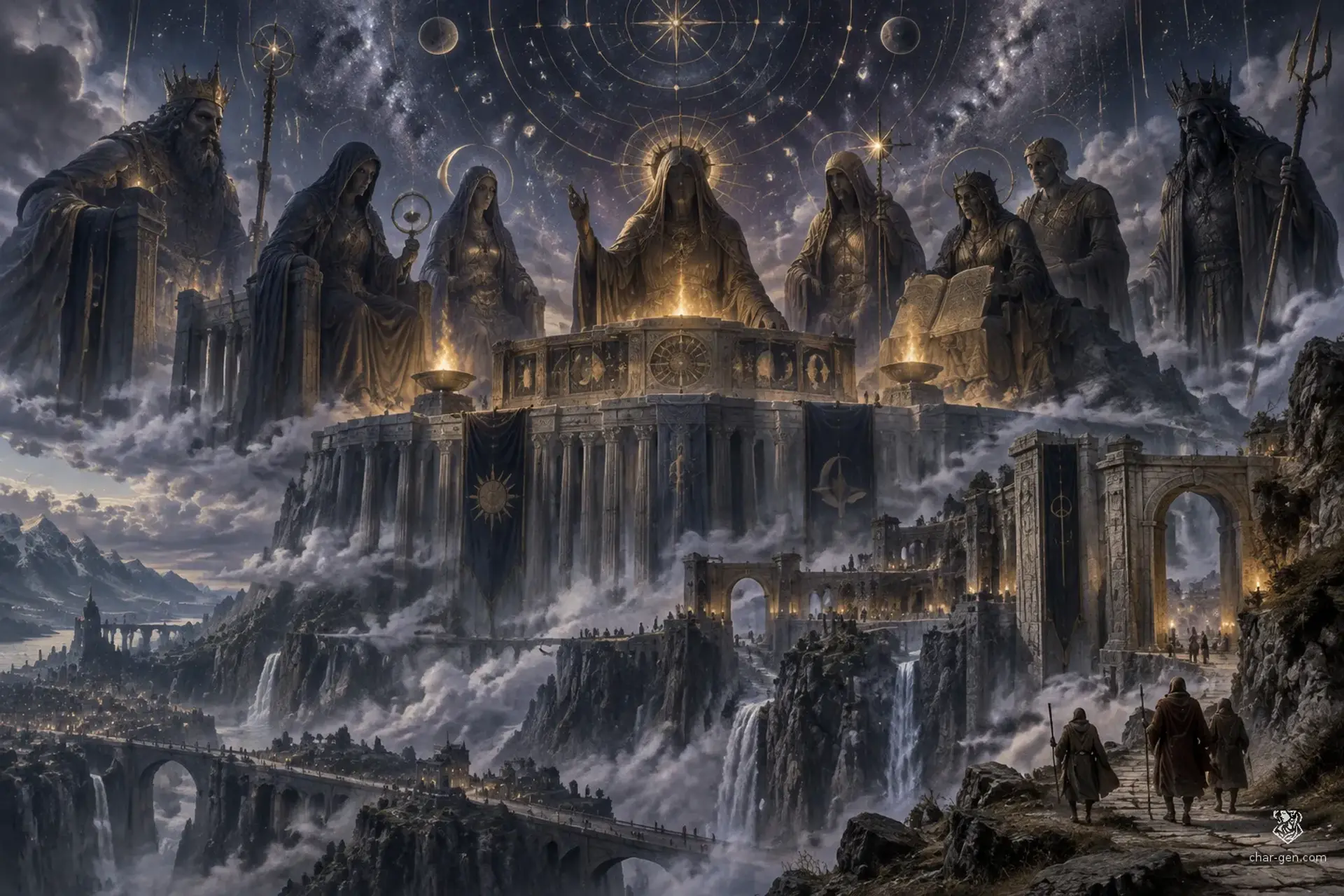
Aulun holds its foundations in balance; the heavens are a high, cold vault, and the underworld is a country beyond the western threshold. The gods shaped the world, then withdrew to their separate stations. Their signs reach mortals as eclipses, dreams, seasons, and rare disruptions of natural law, not as constant intervention.
Gods and mortals
The gods are remote patrons, not dependable quest-givers.
Their temples are civic institutions, roadside sanctuaries, archives, courts, and burial grounds. Clergy disagree over doctrine, and signs are rare enough to invite interpretation. Mortal choices matter because divine attention is limited and often ambiguous.
After death
The dead cross the dim River of Measure into the Hall of Uncounted Lamps, where Sesh weighs the shape of a life while Oruva keeps its memories from fading.
Most souls pass onward into quiet ancestral country; the exceptional are returned as omens, never as ordinary reincarnations. Kharvek's appointed guides sometimes lead the lost to the river, but none can compel Sesh's judgment.
What people say, what is true
Players may hear
For the GM
Plot hooks
Conflicts
The wars
Aulun's insistence that the world remain balanced frustrates Kharvek, who would remake it by force.
Zhalai and Brum dispute whether law should shelter the vulnerable or preserve the old order. Sesh guards the boundary of death against Qorzh's attempts to bargain with what has already been judged. Yeshara's revelations unsettle Galdun's careful secrecy, while Varka's storms repeatedly test Ilyor's fragile treaties.
| Aulun | Oruva | Kharvek | Zhalai | Brum | Varka | Galdun | Yeshara | Sesh | Qorzh | Dovren | Ilyor | |
|---|---|---|---|---|---|---|---|---|---|---|---|---|
| E | A | A | E | |||||||||
| A | A | E | A | |||||||||
| E | E | A | E | |||||||||
| A | E | A | E | A | ||||||||
| A | E | A | E | |||||||||
| A | E | E | A | |||||||||
| A | E | E | A | |||||||||
| A | E | E | A | |||||||||
| A | E | A | E | |||||||||
| E | A | A | E | |||||||||
| A | E | A | A | E | ||||||||
| E | A | A | E |
Order of heaven
Structure
The faith has no supreme pontiff.
Each temple maintains its own rites, while regional synods meet at equinoxes to settle calendars, public obligations, and disputes over shared sanctuaries. The Twelve Stations doctrine assigns each deity a distinct necessity, but admits that their powers overlap. Greater temples of Aulun and Sesh carry unusual authority in matters of measure and burial; local communities retain wide latitude in worship. Outsider Ilyor is acknowledged in some traditions and excluded in others.
Theme
A distant divine order leaves mortals responsible for the choices, institutions, and acts of care that shape their world.
Tone
Classical fantasy marked by solemn temples, old roads, distant gods, and rare, ambiguous signs.
Divine power is real but not reliably accessible; mortal history proceeds largely without direct intervention.
Alignments
Varied: the assembly includes principled guardians, merciful mediators, self-serving powers, and dangerous adversaries.
Its divisions are ethical and political rather than a simple war between good and evil.
Media
0 imagesNo images yet.
Turn Unnamed pantheon into a sheet
A high-res, share-ready sheet you can post or print.