
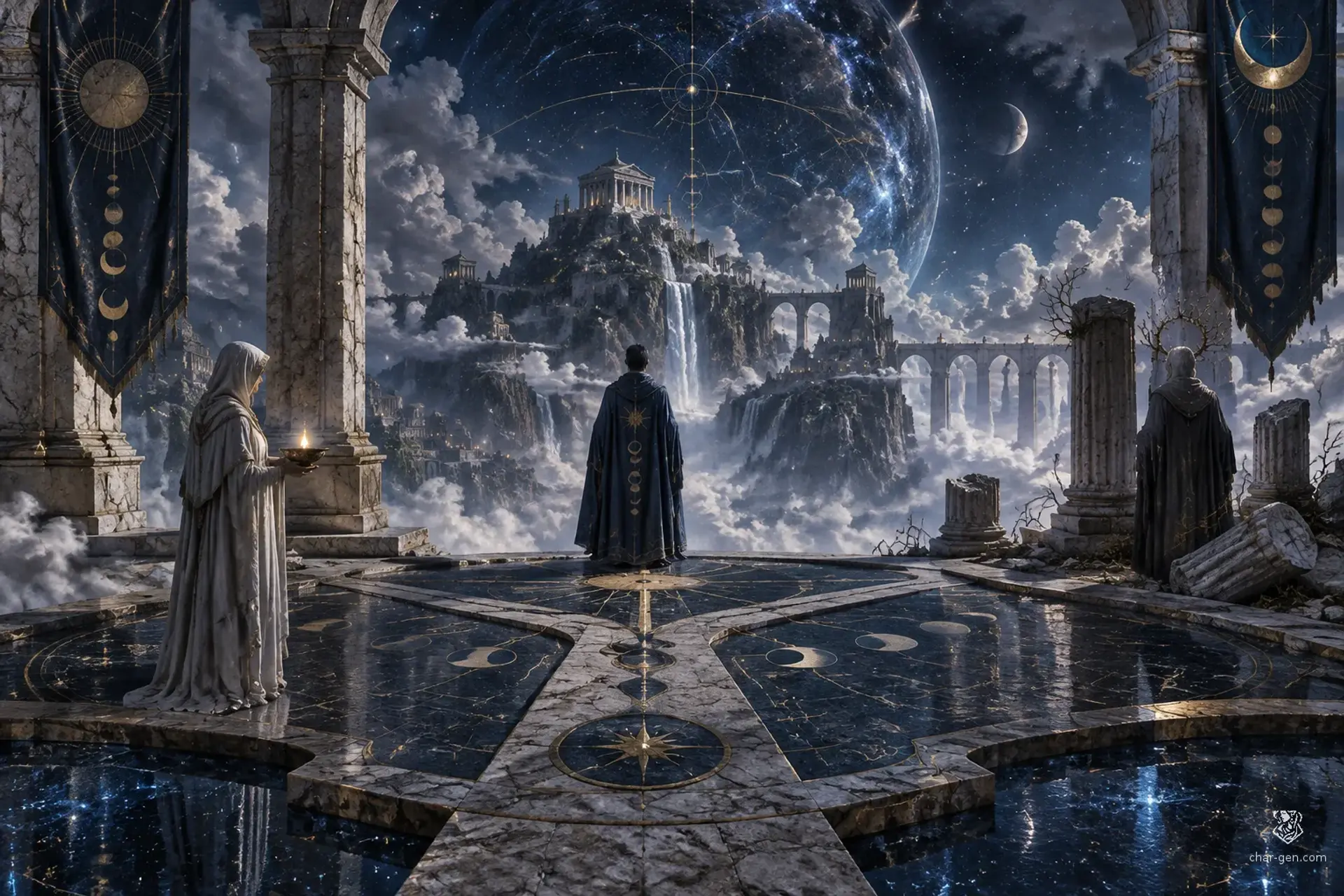
Solace Concord
Solace Concord
Invoke a god
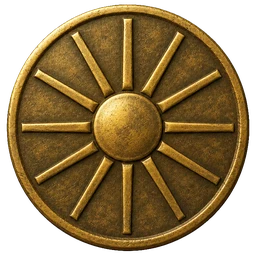
Sova
Keeper of the Open Hearth
Symbol A bronze lamp beneath an open lintel.
Holy day The Open Door
- Offer shelter before asking what a stranger deserves.
- Guard the vulnerable without claiming ownership of them.
- Keep a place for grief, but do not make grief a home.
The gods
3Sova
Keeper of the Open Hearth
Greater Deity · Lawful Good
Life and Peace, guarded by Sova and carried along Kett's roads
Patient, compassionate, and difficult to hurry. Sova offers shelter without promising that suffering will end, and is quietly stern with those who mistake comfort for control.
Faith
- Offer shelter before asking what a stranger deserves.
- Guard the vulnerable without claiming ownership of them.
- Keep a place for grief, but do not make grief a home.
Holy dayThe Open Door, observed on the first evening of winter, when households leave a lamp burning for travelers and the bereaved.
Holy textThe Lamp Verses, a collection of short teachings and disputed parables attributed to Sova's first keepers.
RitesLeave bread and water at a public threshold for an unknown guest. · Light a lamp for the dead and speak their name once, without demanding an answer. · Set aside one night each season when no traveler is turned away.
ValuesMercy · Hospitality · Steadfast care
Look
SymbolA bronze lamp beneath an open lintel.
- Ivory
- Blue
AnimalsDove · Tortoise
AppearanceA calm, ageless figure in a plain mantle, holding a small bronze lamp whose flame is visible even in daylight. Sova's face is often left indistinct in temple art, as if the god were looking past the viewer toward someone in need.
Followers
WhoHealers, household guardians, hospice workers, and those who maintain sanctuaries on dangerous roads.
BeliefsFollowers believe Sova's care is real but distant: a lamp may guide a lost traveler, yet the god will not spare anyone every hardship. They teach that Kett's passages can bring a person to safety, while Veyru's hard lessons must sometimes be faced rather than denied.
The faith
How it began
According to temple tradition, the Concord began when three strangers met beside a ruined waystation during a storm: one kept a lamp lit, one knew a road out, and one insisted the collapsing shelter must be abandoned.
The story names them Sova, Kett, and Veyru, though scholars dispute whether the meeting was literal or an allegory for the first human rites of shelter, travel, and burial.
The heavens
The world rests between the Hearth Above and the Unlit Deep.
The gods are not its makers but its distant custodians: Sova tends the boundary where life gathers, Kett keeps the passages that make change possible, and Veyru watches the spaces where old forms fall away. Stars are said to be windows in the heavens, though no one agrees who looks through them.
Gods and mortals
The Concord has no universal church or central authority.
Local temples cooperate to maintain hospices, road shrines, and burial grounds, but each tradition interprets the gods' balance differently. Most people honor all three at major transitions: Sova at birth or refuge, Kett at departures, and Veyru at funerals or the ending of a painful bond.
After death
The dead cross the Quiet Sea to the Hall of Unanswered Questions, where they are received by the servants of all three gods.
The worthy rest in a place shaped by their deepest need: shelter beneath Sova's lanterns, a place in Kett's unending procession, or silence in Veyru's gardens. No soul is compelled to choose immediately. The gods claim no certainty about what lies beyond the Hall; they promise only that no one arrives alone.
What people say, what is true
Players may hear
For the GM
Plot hooks
Conflicts
The wars
Sova insists that refuge must be kept open, while Veyru argues that even the kindest sanctuary can become a prison.
Kett carries away what both would preserve, and resents Sova's attempts to slow the passage. Their disputes rarely become open war; instead, signs fail, roads diverge, and mortals inherit the consequences.
| Sova | Kett | Veyru | |
|---|---|---|---|
| A | E | ||
| A | A | ||
| E | A |
Order of heaven
Structure
The Concord is a loose fellowship of local shrines, roadside hospices, and funerary houses rather than a unified hierarchy.
A town may have one priest serving all three traditions, while larger cities keep separate orders. Councils convene only when a shared matter arises, and their decisions bind no temple that did not consent.
Theme
Solace found not in certainty, but in the balance between refuge, passage, and release.
Tone
Distant and contemplative: the gods rarely intervene openly, and signs are subtle, disputed, and never a substitute for mortal choice.
Alignments
The Concord spans lawful good, neutral, and chaotic evil, balancing protection, change, and the dangerous freedom of release.
Media
0 imagesNo images yet.
Turn Solace Concord into a sheet
A high-res, share-ready sheet you can post or print.