
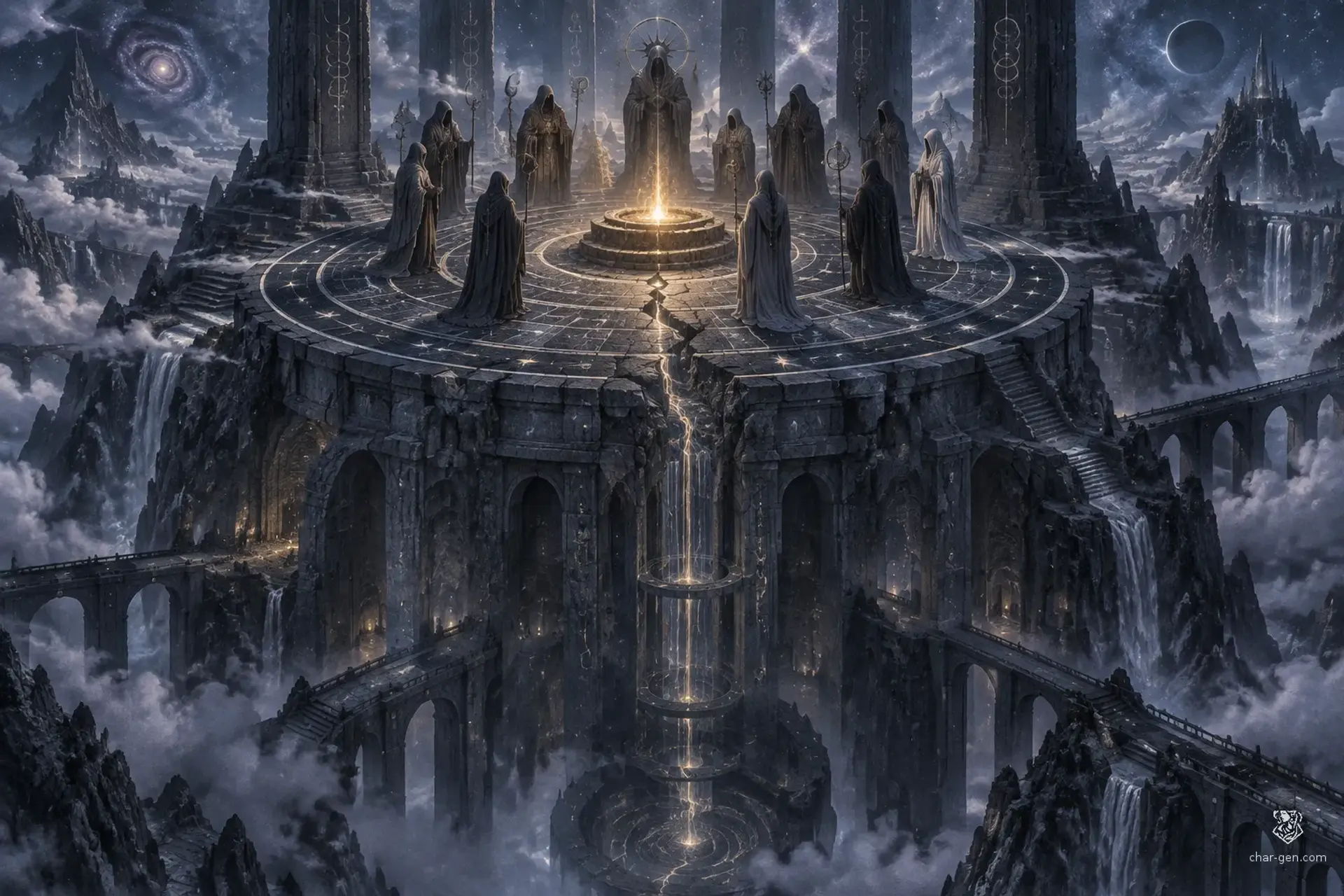
Chorus of the Deep-Song
Chorus of the Deep-Song
Invoke a god
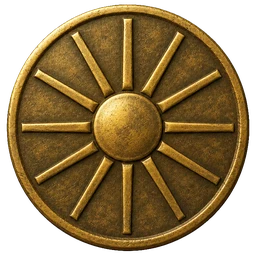
Kharvoss
The Keeper of Intervals
Symbol Three nested rings divided by a vertical fault-line.
Holy day The First Measure
- Measure before you alter.
- Keep records even when no one can read them.
- A silence is evidence, not emptiness.
The gods
10Kharvoss
The Keeper of Intervals
Greater Deity · Lawful Neutral
Knowledge, order, and stone-measure; Kharvoss records the harmonics that Ormbrun anchors in the deep foundations.
Patient, exacting, and remote; offers answers in measurements that may take generations to interpret.
Faith
- Measure before you alter.
- Keep records even when no one can read them.
- A silence is evidence, not emptiness.
Holy dayThe First Measure, observed at the winter solstice by listening in silence until the first stone settles.
Holy textThe Ledger of Resonances, a set of carved scales and intervals whose margins are intentionally left blank.
RitesTap a chisel three times before entering an unknown passage. · Copy one old measurement beside every new one. · Keep a minute of silence for a lost name.
Valuesprecision · memory · restraint
Look
SymbolThree nested rings divided by a vertical fault-line.
- slate
- silver
Animalsblind cavefish · stone owl
AppearanceA distant figure in a faceless helm, seated within a ring of suspended stone tablets; its outline is visible only where silver dust trembles.
Followers
WhoArchivists, surveyors, rune-smiths, and dwarven elders who preserve maps of vanished halls.
BeliefsFollowers believe that careful listening can prevent catastrophe, though they do not claim that any mortal can hear the whole Deep-Song.
The faith
How it began
Dwarven tradition says that the first ancestors heard a note beneath the oldest mountain and answered it with hammer blows.
The answer became the Deep-Song, and its harmonics gradually took names and faces as the Chorus. The faith does not claim that the dwarves created the gods; rather, its earliest singers learned to recognize powers already resonating through the world.
The heavens
The world is a vast instrument, and the mountains are its sounding body.
The Deep-Song is not a creator’s speech but the resonance of reality: pressure, memory, time, and buried possibility vibrating together. The ten deities are listeners and answers to distinct harmonics, not rulers standing above the world. The deepest notes pass beyond divine understanding; even Kharvoss, who keeps their measures, admits that the Song cannot be owned.
Gods and mortals
The Chorus is worshipped more as a distant assembly of powers than as a family of intimate patrons.
Dwarven communities commonly keep a shrine to several deities, with local emphasis shaped by occupation: miners favor Kharvoss and Ormbrun, craftsfolk Beldra and Istren, travelers Sildra, and the bereaved Veldra. Priests rarely claim to speak for a deity; they interpret patterns in stone, dreams, and inherited custom. Oaths, repairs, and communal works are more common offerings than gifts of wealth.
After death
The dead descend by remembered fault-lines into the Hushed Below, where each soul hears the mountain’s Deep-Song as a single, unfinished note.
Those who lived in balance are gathered by Ormbrun beneath the roots of the world and may rest within the stone. Others are carried by Veldra through echoing caverns until their voices fade or are taken up in a new strain. The faithful do not expect reunion with the living; they leave a final hum in the rock so descendants may know they were heard.
What people say, what is true
Players may hear
For the GM
Plot hooks
Conflicts
The wars
Kharvoss insists that the Deep-Song must be measured and preserved, while Dromekh breaks old measures to hear what lies beyond them.
Sildra argues that change is the mountain’s natural answer; Ormbrun fears that ungoverned change will loosen the world’s foundations. Veldra carries the echoes of the dead between them, though Namaru claims those echoes belong to the living. Istren and Beldra dispute whether craft should reveal the mountain’s voice or protect its silences. Tholven seeks the fault-lines that could unmake the assembly’s order, while Urdeth tends the endurance that keeps its oldest works standing.
| Kharvoss | Ormbrun | Dromekh | Beldra | Sildra | Veldra | Namaru | Istren | Urdeth | Tholven | |
|---|---|---|---|---|---|---|---|---|---|---|
| A | E | A | E | |||||||
| A | A | E | ||||||||
| E | A | A | E | |||||||
| A | A | E | E | |||||||
| A | A | E | ||||||||
| A | A | E | ||||||||
| E | A | A | ||||||||
| A | E | A | ||||||||
| A | A | E | E | |||||||
| E | E | E | A |
Order of heaven
Structure
The faith has no supreme pontiff.
Local circles of listeners, keepers, and craft-priests maintain shrines, records, and rites; councils convene only when a shared danger affects several settlements. Each deity has distinct orders, but worshippers often honor multiple members of the Chorus. Disagreements are settled through witness, debate, and practical tests rather than declarations of divine certainty. The most respected leaders are those who can say what they do not know.
Theme
The world is older than mortal understanding, and its divine voices are harmonics within the mountain rather than accessible rulers.
Faith is the patient practice of listening, making, remembering, and accepting that some truths remain beyond reach.
Tone
Distant and restrained: the gods rarely intervene plainly, their signs are ambiguous, and even their priests treat revelation as partial.
The sacred is immense, quiet, and woven into stone, labor, and the long memory of places.
Alignments
Varied: two lawful deities, three neutral deities, three chaotic deities, and two good-leaning deities; the assembly has no single moral consensus.
Media
0 imagesNo images yet.
Turn Chorus of the Deep-Song into a sheet
A high-res, share-ready sheet you can post or print.