
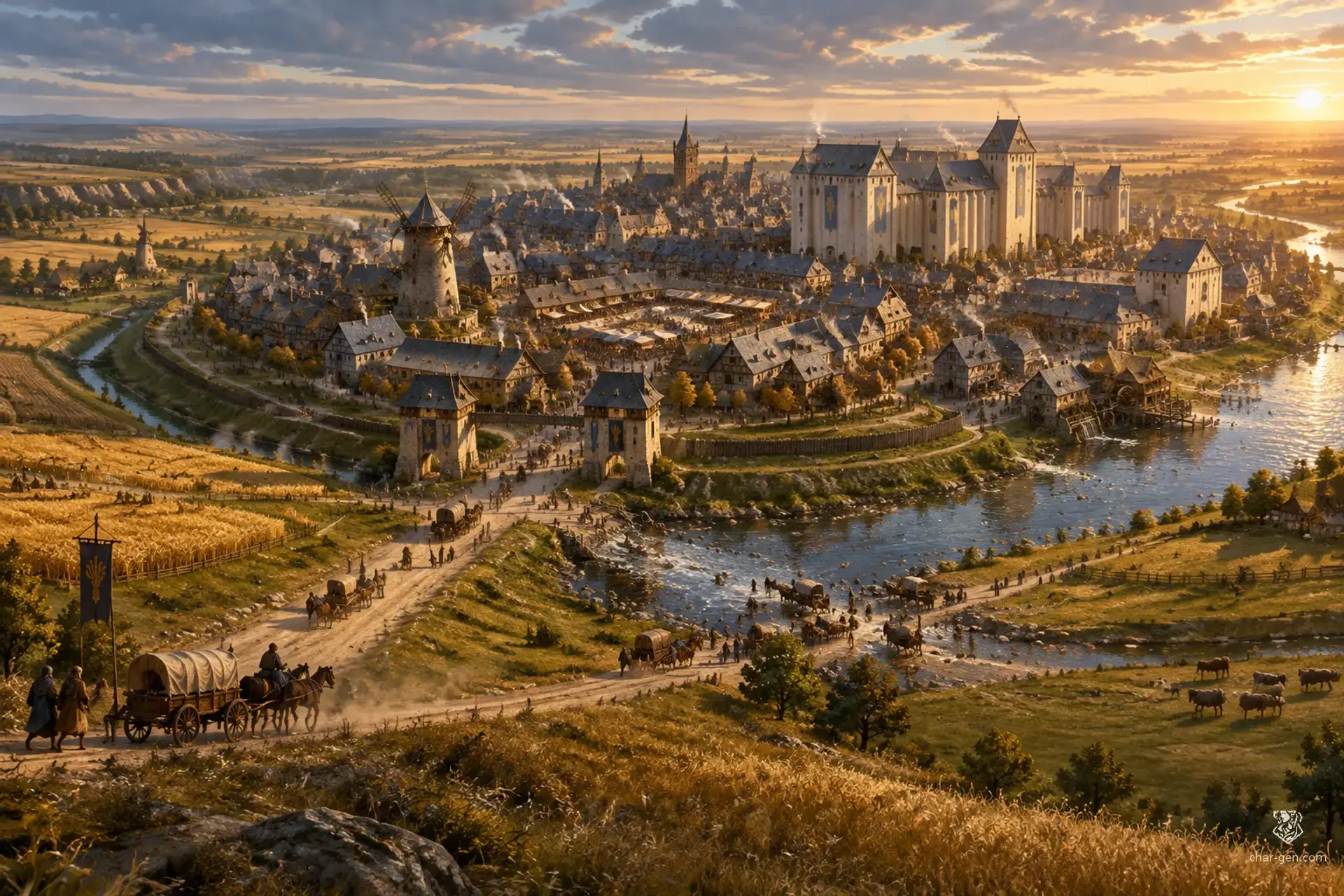
Greater Thorin
Greater Thorin stands on open plains where two dependable roads meet a shallow, fordable river. It began as a refuge for people driven out of a flood-struck settlement, then grew into a grain market and administrative center. Its most unusual civic rule is that no office may claim divine authority. The city is prosperous enough to feed itself in a good year, but drought, political suspicion, and the arrival of religious refugees test that confidence.
Greater Thorin
- Population
- 28,000
- Rule
- First Speaker Hadrik…
- Wealth
- Moderate
- Defence
- Civic Watch
Overview
Greater Thorin stands on open plains where two dependable roads meet a shallow, fordable river. It began as a refuge for people driven out of a flood-struck settlement, then grew into a grain market and administrative center. Its most unusual civic rule is that no office may claim divine authority. The city is prosperous enough to feed itself in a good year, but drought, political suspicion, and the arrival of religious refugees test that confidence.
Atmosphere
Greater Thorin is a city built on a wager: its founders believed people could govern themselves without divine permission, and the city has spent generations proving it. Public life is orderly, blunt, and suspicious of miracles. The tension shows in ordinary places: arguments over whose grain gets weighed first, quiet care for the sick, and a watchful state that records every unexplained healing. Visitors from theistic states are treated politely, then closely observed.
Culture
- No religion is endorsed by the state. Private worship is permitted under public-order laws.
Humans, Dwarves, Halflings, Elves
Economy
Grain storage and milling, Textile production, Road transport, Public recordkeeping
Wheat and rye, Milled flour, Wool cloth, Surveyors and civil clerks
- Iron tools
- Salt
- Fine timber
- Medicines and trained healers
Geography
Ways in and out
Places to see
- Ford MarkA wide crossing where wagon roads meet the river ford. The flood marks on the stone guideposts show how close the founding wards came to being washed away.
- Measure SquareA public square where ward representatives post petitions, ration notices, and corrections to official accounts. Arguments here are common, but the watch intervenes only when the crowd blocks the market lanes.
Power
3 factionsGovernment
Laws
Trouble
- The grain reserve is being withheld during a drought.A drought has cut expected harvests, and the Grain Compact is withholding reserve grain until the council agrees to its terms. The First Speaker refuses to seize stores without proof of hoarding, while ward kitchens are already reducing meals. If the reserve is opened by force, the city may lose the merchants who keep its roads supplied.Involves
Hadrik Sorn, Marta Keld, Bran Weller
- The city cannot agree whether a healer is helping people or building religious influence.A series of unlicensed healings has drawn the Measure Office's attention. Several patients say the cures came after prayers; others insist the healer used ordinary remedies. The city risks arresting a useful caregiver or allowing a religious group to establish authority through desperate people whom public clinics cannot reach.Involves
Olya Rusk, Iven Dask, Hadrik Sorn
Factions
- Measure OfficeState bureauThe Measure Office audits weights, public stores, and claims of supernatural intervention. Its clerks are respected for catching fraud and feared for treating private belief as a possible public danger.GoalsPrevent religious authorities from gaining civil power and expand inspections of imported relics and healings.Allies
Civic Council
RivalsOpen Hand
- Open HandMutual aid networkThe Open Hand is a loose network of healers, midwives, and residents who believe practical care matters more than the source of a cure. Some members are atheists; others secretly pray. They oppose state restrictions that leave sick people without help.GoalsPermit private religious healing and protect people who provide care without state approval.Allies
Ward grain committees
RivalsMeasure Office
- Grain CompactMerchants' associationThe Grain Compact binds warehouse owners and transporters to keep a reserve for bad harvests. It has prevented famine before, but its members also control prices and the timing of public relief.GoalsKeep the reserve under merchant control and prevent the council from requisitioning grain.Allies
Civic Watch reformers
RivalsWard grain committees
Defences
- A low earthwork and ditch ring the oldest wards, originally built against seasonal floods.
- The north and south roads have staffed gatehouses with inspection yards.
- Public granaries are built with firebreak lanes and stone lower floors.
Law and order
People and places
9 entriesGrain auditorMarta Keld Dwarf Female
She taps a small brass weight against her teeth while reading disputed accounts. Marta wants the reserve opened before the city reaches famine, but fears that a rushed seizure will destroy the grain system she has spent her life maintaining.
Midwife and healerOlya Rusk Human Female
She wears a strip of blue cloth around one wrist for every patient she has treated that week. Olya wants the city to license healers by demonstrated skill rather than belief, and fears a patient's death will be used to ban all unregistered care.
PhysicianIven Dask Halfling Male
He rubs chalk from his fingers whenever a conversation turns to miracles. Iven wants evidence-based care to remain publicly trusted, but fears that the city's suspicion will drive patients away from clinics and into the hands of anyone promising certainty.
Grain factorBran Weller Human Male
He keeps a harvest tally on the cuff of his coat and updates it in the middle of conversations. Bran wants the reserve protected from panic buying, but fears the council will seize it and leave merchants responsible for losses they did not cause.
Ward advocateNessa Varg Elf Female
She turns every document she reads upside down before signing it. Nessa wants a legal distinction between private belief and public coercion, and fears that the Measure Office will turn a temporary emergency rule into permanent control over people's homes.
Seed and farm supply shopLast Year's Seed Kept by Tova Grell
A narrow shop with seed jars arranged by harvest year. The owner keeps a public board of prices and refuses to sell seed grain to anyone who will not name the fields it is meant for.
Survey and instrument shopNorth Road Measures Kept by Viggo Seln
A cluttered instrument shop serving clerks, surveyors, and wagon masters. Its owner will repair a broken compass before selling a new one and asks customers where they are going before quoting a price.
TavernThe Low Roof Kept by Edda Marr
A low-ceilinged tavern near the wagon yards, loudest at shift change and quiet by midnight. The keeper reserves one table for travelers who cannot pay until their cargo is weighed, a practice that has made the place popular with teamsters and unpopular with some merchants.
Civic hallHigh Store Run by Sivra Pell
The council meets in a plain stone hall once used as a flood storehouse. Its public gallery stays open during most sessions, so residents can heckle, petition, and keep track of who leaves early.
Events
Lately
- The latest harvest estimate came in nearly a fifth below expectations.The council is debating emergency access to reserve grain while food prices rise.
- An unlicensed healer treated several patients during a clinic shortage.The Measure Office has opened an inquiry, and residents have begun taking sides.
- Eldorian traders arrived with religious attendants in their caravan.The city's officials have allowed the merchants to trade but barred the attendants from public healing.
Calendar
- First thaw, day 3Open MeasureThe city opens its grain measures for public inspection. Bakers, teamsters, and clerks can challenge a weighing before the whole market.The twist · GM only
- High summer, day 18Lantern WalkResidents carry lamps through the civic quarter in memory of the flood refugees who founded the first settlement here.The twist · GM only
- Harvest end, day 1Accounts DayThe city posts the coming year's tax rates and hears petitions from every ward. The meeting often lasts until dawn.The twist · GM only
History
Greater Thorin's founding story says refugees rejected divine rule after a flood and made a compact to govern themselves. The city's records support the refuge, but not the clean break from religion that later speakers claim. Its history is full of practical compromises, followed by official accounts that make those compromises sound like principles from the beginning.
- Founding yearsThe High Bank SettlementFlood refugees built a market on the high bank and promised that no priest or ruler would speak for them before the law. The first council's surviving minutes, however, were written years later.
- Two generations agoThe Fever WinterA fever swept the crowded wards. The council's official account says civic nurses saved the city; family ledgers show that several forbidden shrine-keepers treated patients before the nurses arrived.
- Sixty years agoThe Tariff RefusalThe city made a formal break with neighboring religious authorities after a dispute over taxes and the right to appoint local judges. The public account calls it a defense of reason; private letters describe a struggle over grain tariffs.
Secrets
3 secrets · 4 rumours- Secret 1 · GM only
- Secret 2 · GM only
- Secret 3 · GM only
Rumours
Plot hooks
3- 1The Short MeasureMarta Keld asks the party to accompany an audit of the reserve before the council votes. The missing grain is real, but the records suggest it was used to keep a poor ward alive after its committee broke the ration rules. Exposing the theft could save the city stores and condemn the people who saved their neighbors.
Investigation and political choice · Starts with Marta Keld · Reward: A formal city contract, access to the public grain stores, and a favor from a ward committee.
- 2A Cure Under OathOlya Rusk asks the party to speak for a healer facing a public inquiry. The healer has treated patients successfully, but has also promised that prayer will cure anyone who refuses the clinic's medicines. The party must determine whether the healer is sincere, reckless, or exploiting fear before the Measure Office makes an example of them.
Investigation and mediation · Starts with Olya Rusk · Reward: Medical supplies, a healer's aid, and protection from one local legal charge.
- 3The Founders' PageSivra Pell needs discreet help recovering a ledger page from a private archive before a council hearing. The page could show that the city's founders allowed religious aid during the flood. Its recovery may correct the public record, but it could also give Eldorian envoys grounds to demand influence over local care.
Infiltration and political dilemma · Starts with Sivra Pell · Reward: A civic favor and access to restricted historical records.
Media
0 imagesNo images yet.
Turn Greater Thorin into a sheet
A high-res, share-ready sheet you can post or print.