
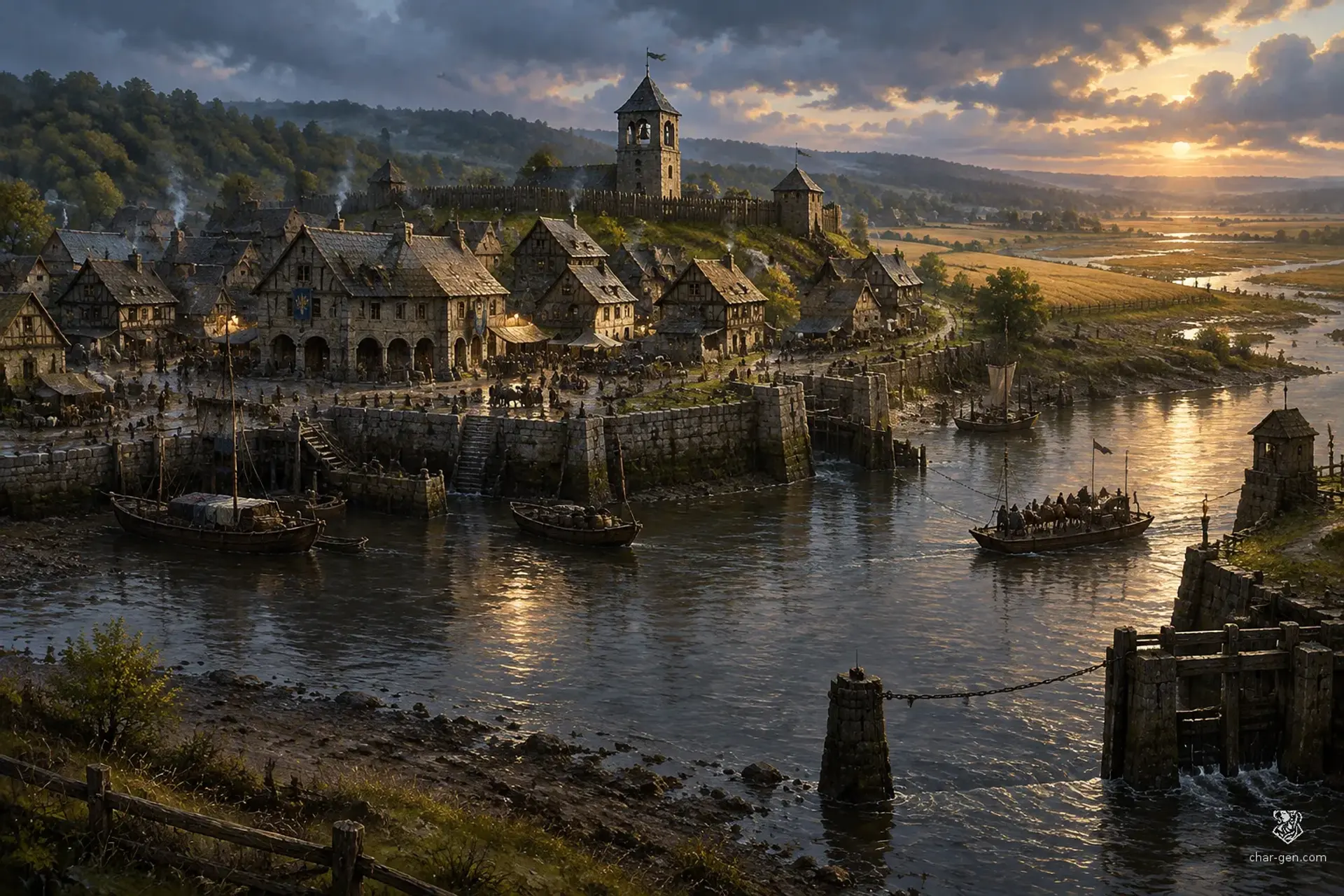
Latch
Latch stands where a shallow river narrows between firm banks, making it the last dependable crossing for miles in either direction. Ferries, grain barges, and drovers all stop here to wait on water levels or weather. The town’s old custom says the spring floodline allocates river rights, but the line is measured by people with interests of their own. Most residents know the rule is flawed; few agree on what should replace it.
Latch
- Population
- 1,100
- Rule
- Reeve Badrik Voss
- Wealth
- Modest
- Defence
- Low
Overview
Latch stands where a shallow river narrows between firm banks, making it the last dependable crossing for miles in either direction. Ferries, grain barges, and drovers all stop here to wait on water levels or weather. The town’s old custom says the spring floodline allocates river rights, but the line is measured by people with interests of their own. Most residents know the rule is flawed; few agree on what should replace it.
Atmosphere
Latch keeps its doors open to river traffic and its shutters closed against neighbors. Every spring, the flood leaves a dark stain on the quay; locals call it the river’s tally. By custom, the stain decides which households receive water rights and which lose them for a year. People watch the waterline as closely as they watch one another, and disputes are settled in low voices until the bell rings for council.
Culture
- Household ancestor rites
- The River Mother, honored at the quay
Humans, Dwarves, Halflings
Economy
Ferrying and barge handling, Grain milling, Fishing, Rope making
Milled grain, Ferry passage, River fish, Woven rope
Iron tools, Salt, Lamp oil, Fine cloth
Geography
Ways in and out
Places to see
- The Tally QuayA broad stone step beside the quay bears dark flood stains from many seasons. The newest mark is unusually straight and sits higher than the old records predict. Locals leave small river reeds there before a measurement, a habit said to keep witnesses honest.
- The High TrackA raised strip of gravel keeps the north road passable when the surrounding fields turn to mud. Travelers camp here while waiting for the ferry, and locals trade news before the market opens. A missing stretch of boundary stones has recently made the road’s toll limits a matter of dispute.
Power
2 factionsGovernment
Laws
Trouble
- The floodline has appeared where the records say it cannot be.The new floodline sits higher than any recorded mark, which would strip several small farms of their usual water rights. Badrik Voss has delayed the public measurement, while both factions prepare to force the issue.Involves
Badrik Voss, Amina, Cevran
- A dispute over river access threatens the winter grain supply.A barge has been held at the chain for three days after its crew refused a toll assessed by the Water Ledger. The cargo is grain meant for winter stores, and the watch fears that opening the chain without a council order will trigger a feud.Involves
Edda, Gunnar, Badrik Voss
Factions
- Water LedgerLandholders and civic clerksThe Water Ledger is a loose alliance of landholders and clerks who maintain the floodline records. Its members insist that a stable custom is better than a new fight every spring.GoalsKeep the floodline system in place and prevent independent review of past allocations.Allies
Quay Watch
RivalsOpen Measure
- Open MeasureCivic reform movementOpen Measure includes boat crews, small farmers, and residents who have lost water rights under disputed readings. They want the spring mark measured in public, with witnesses from outside Latch.GoalsReplace private allocation with a witnessed measurement and a permanent public record.Allies
Ferry crews
RivalsWater Ledger
Defences
- A timber palisade protects the landward market road.
- A chain across the ferry channel can halt small craft.
- A bell tower serves as a flood warning post.
Law and order
People and places
9 entriesFarmer and Open Measure speakerAmina Human Female
Amina tends a small farm above the lower fields and keeps a strip of blue cloth tied around her wrist. She wants enough water to keep her family’s grain alive through summer, and fears being driven off land her parents cleared. She has memorized the old flood marks and will challenge anyone who claims the latest one is ordinary.
ReeveBadrik Voss Human Male
Badrik keeps the council on schedule by tapping a wooden spoon against the table. He wants to preserve the authority of the reeve’s office and fears that any concession will leave the town leaderless during a crisis. He knows the new line is suspicious, but prefers delay to a public argument he cannot control.
Ferry captainCevran Halfling Male
Cevran leads several ferry crews and always wears a battered copper clasp from his first boat. He wants the river chain opened to all paying boats, without special council tolls, and fears that a closed crossing will leave his crew indebted to the landholders. He offers blunt advice freely, then becomes evasive when asked how much his own cargo is worth.
Midwife and informal witnessDorna Human Female
Dorna keeps a slim notebook of who receives water and when, marking each entry with a tiny river curl. She wants the public to see how allocations affect real households, and fears that exposure will make her a target for both factions. She never raises her voice; instead, she asks a question twice and waits for the second answer.
RopemakerHessa’s Rope Room Kept by Hessa
Hessa sells rope, netting, pegs, and repaired harness from a narrow shop that smells of tarred hemp. She turns away anyone who cannot explain what the rope is for, claiming a bad knot can cost a life. She wants enough customers to hire an apprentice from a family denied water rights, and fears the Water Ledger will punish her by withholding repair work.
General goodsMira’s Store Kept by Mira
Mira sells lamp oil, salt, needles, and travel goods from shelves built into an old ferry storehouse. She remembers what every household bought before a flood and asks pointed questions when someone suddenly needs extra oil. She wants to keep the market supplied without favoring either faction, but fears losing her lease if she refuses the Water Ledger’s requests.
TavernThe Last Post Kept by Edda
The tavern sits close enough to the landing that boat crews can hear the river chain from its door. Edda serves hot meals until the last ferry returns, then keeps one bench free for anyone stranded by weather. She wants to build a public kitchen for flood season and fears the council will seize the tavern’s stored grain during a shortage.
Civic archiveThe Markhouse Run by Gunnar
This squat timber hall stores the town’s water-right records, market debts, and ferry tolls. Its lower shelves are raised above the floor on stone blocks after a damp season spoiled several ledgers. Residents can request to inspect records, but a clerk must remain in the room, and Badrik Voss decides which disputed pages may be copied.
River worksLower Gate Run by Ivar
The old river gate controls a narrow irrigation channel that serves the lower fields. Its wooden wheel is scarred with names and tally marks from generations of repair crews. The gate is maintained by volunteers, but the Water Ledger faction treats its schedule as binding. Open Measure claims that no faction should control a channel used by the whole town.
Events
Lately
- A new floodline appeared on the quay after a night of steady rain.Several households may lose their usual water rights, and both factions are organizing witnesses.
- The river chain was raised against a grain barge.Winter stores are at risk, and the reeve is being pressed to choose between trade and the council’s toll order.
Calendar
- First clear day after the spring floodThe TallyThe council measures the high-water stain on the quay and assigns the year’s river rights. Families crowd the steps, carrying old claims and witnesses.The twist · GM only
- Midsummer evePost RaceBoat crews race from the upper bend to the ferry posts, then share bread and sour ale on the landing. The winning crew gets first choice of trading berths.The twist · GM only
- Last market day before winterThe Closing MarketHouseholds exchange stored grain, lamp oil, and winter labor promises. The exchange is public, but debts are whispered to the clerk afterward.The twist · GM only
History
Latch grew around its crossing, then turned a practical flood measure into a source of power. The Flood Compact was meant to prevent stronger households from taking all the water after a bad season. Over time, the council’s recordkeepers gained control of how the mark was read. The town still tells the compact as a story of shared sacrifice, though its oldest petition suggests that some families were shut out from the start.
- FoundingThe First CrossingThe first ferry families settled the raised bank after finding a shallow crossing that stayed passable through most seasons. Their descendants still claim priority at the landing.
- Three generations agoThe Flood CompactAfter a flood ruined several fields, households agreed to let the high-water stain guide water rights. The official account says every family consented; a surviving petition suggests the poorest families were not present.
- Twenty years agoThe Quay ShiftA flood tore away the old quay, and the council rebuilt it farther upriver. The official record says the waterline was copied faithfully, but the new position made two council families’ fields easier to irrigate.
Secrets
2 secrets · 4 rumours- Secret 1 · GM only
- Secret 2 · GM only
Rumours
Plot hooks
3- 1The Mark Above the MarkAmina asks the characters to stand witness when the floodline is measured. The mark lies above every known record, and the council wants the witnesses to endorse it before anyone can inspect the quay. The hidden complication is that the new line may be natural, but someone has moved the measuring post to make it appear higher.
Civic dispute · Starts with Amina · Reward: A season of free ferry passage and the gratitude of several farming households.
- 2Held at the ChainA barge crew offers the characters payment to persuade the reeve to open the river chain before winter stores run low. Their grain would help the town, but the hidden complication is that the cargo includes a sealed crate belonging to the Water Ledger, and its contents could discredit the faction or implicate the reeve.
Negotiation and investigation · Starts with Cevran · Reward: A share of the cargo’s sale, plus a trusted contact among the ferry crews.
- 3The Petition Nobody SawGunnar asks for help finding a missing petition from the Flood Compact. He believes it proves the founding families excluded poorer households from the agreement. The hidden complication is that the petition also names a family that still holds Open Measure’s support, and publishing it may fracture the reform movement.
Investigation · Starts with Gunnar · Reward: Access to the Markhouse records and a favor from the reeve.
Media
0 imagesNo images yet.
Turn Latch into a sheet
A high-res, share-ready sheet you can post or print.