
Last Turn
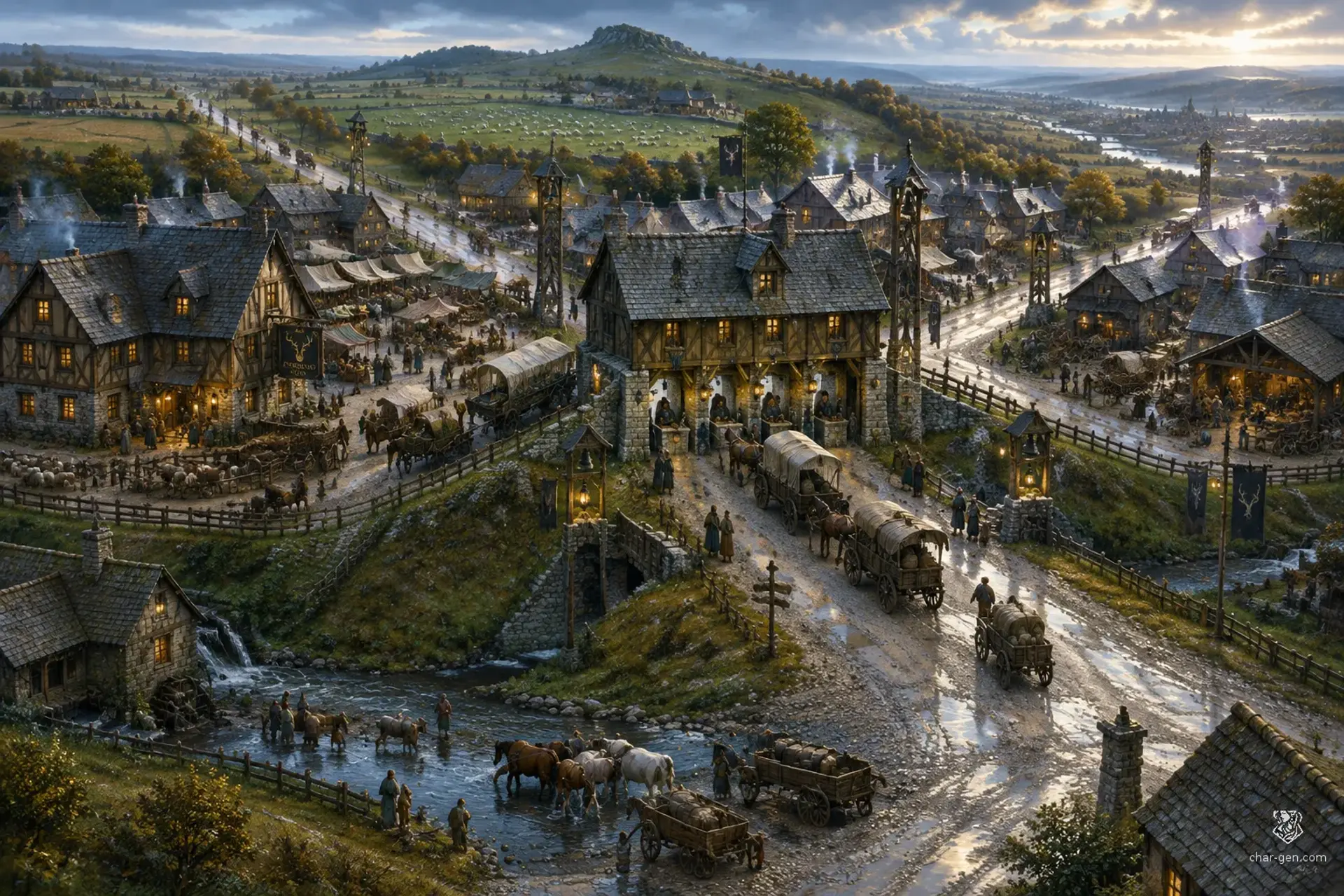
Last Turn grew where four workable roads meet on a dry rise above a seasonal stream. Wagons can water their teams below town, then climb to firm ground before the spring floods. Its tollhouse began as a place to weigh loads and collect road fees; its market followed, then inns and workshops. The crossroads still make the town prosperous, but each road brings a different set of merchants, grievances, and claims on the public purse.
Last Turn
- Population
- 1,700
- Rule
- Mayor Odran Pell
- Wealth
- Modest overall
- Defence
- The Gate Watch
Overview
Last Turn grew where four workable roads meet on a dry rise above a seasonal stream. Wagons can water their teams below town, then climb to firm ground before the spring floods. Its tollhouse began as a place to weigh loads and collect road fees; its market followed, then inns and workshops. The crossroads still make the town prosperous, but each road brings a different set of merchants, grievances, and claims on the public purse.
Atmosphere
Last Turn feels busy even when its roads are empty. Wagons queue at the four-way tollhouse, locals watch who pays and who passes, and every public argument eventually turns to the town charter. People are polite to strangers until they learn which road brought them. At midnight, shutters close early, not from fear of bandits but because the brass surveyor’s cap may change hands, and with it the power to stop the mayor.
Culture
The Hearth Mother, The Lantern Saint
Humans, Dwarves, Halflings
Economy
Toll collection, Wagon repair, Livestock trading, Caravan provisioning
Repaired wagon parts, Dried meat and cheese, Road maps and travel permits
Iron, Fine cloth, Salt, Grain in poor harvest years
Geography
Ways in and out
Places to see
- The CrossA gravel clearing where all four road surfaces meet. Old wheel ruts cut through the newer market stalls, and locals use the direction of the ruts to settle arguments about which road was repaired last.
- Low FordA shallow stream with stepping stones and a broad muddy bank. Wagons stop here to water animals before climbing to town, and the stones are often moved after spring floods.
- Old East SpanA half-collapsed stone bridge beside the newer east road. The town says it was abandoned after the flood, but its lower stones bear fresh tool marks and a mason's old work token is wedged between them.
Power
2 factionsGovernment
Laws
Trouble
- The cap's old veto has become an active source of authority.The charter gives the holder of the brass surveyor's cap a midnight veto over toll orders. Mayor Odran Pell says the clause is ceremonial, but someone has used the cap twice this month to halt collections. He wants the cap secured before the next council vote; the road wards demand to know who had it and why the ledgers were sealed.Involves
Odran Pell, Sela Vask, Borek
- The east road repair fund is missing, and the road may soon fail.A damaged culvert on the east road threatens to strand loaded wagons before the next rains. The council set aside repair money, but the account is short and the merchants insist they already paid the levy. Mayor Odran Pell wants the road repaired quietly, while Sela Vask suspects the missing funds were used to buy votes for the charter amendment.Involves
Odran Pell, Sela Vask, Yevan
Factions
- The Fixed RateMerchant coalitionA bloc of established merchants and two council clerks who favor a predictable toll schedule and a strong mayor. They claim that the town cannot bargain with caravans if authority can be challenged at any hour.GoalsKeep the mayor's office in control and amend the charter so the brass cap cannot halt toll collection.Allies
The Gate Watch
RivalsThe Open Road
- The Open RoadCivic movementCarters, small traders, and residents of the outer road wards who want the old charter respected. They meet at kitchen tables rather than in a formal hall, since several members fear being marked as troublemakers by the watch.GoalsPreserve the brass cap's veto and force the council to publish every toll agreement.Rivals
The Fixed Rate
Defences
- A timber tollhouse with a reinforced gate across the east road
- Four shallow ditches and earth banks protecting the market approaches
- A bell post at each road entrance
Law and order
People and places
9 entriesCaravan factorBorek Human Man
A human merchant who wears one clean glove and one road-stained glove. He wants the toll schedule made permanent before the next caravan season and fears that an open-ended veto will send trade elsewhere.
Carter and ward speakerYevan Halfling Woman
A halfling carter with a bright scarf tied around her wrist and a habit of tapping the nearest wheel while thinking. She wants the outer wards to have a real voice in toll decisions and fears that a public confrontation will cost her family its market license.
Sergeant of the Gate WatchMila Human Man
A human watch sergeant with a scarred knuckle and an old leather cap pulled low. He wants the road watch kept out of council politics and fears being ordered to arrest the person who lawfully holds the brass cap.
Sheep farmerOvela Human Woman
A human farmer with a missing front tooth and a habit of saving every seed sack. She wants the south road kept open for livestock and fears that the council will tax her pasture to cover the missing repair money.
WagonwrightRim and Peg Kept by Tomas
A narrow workshop with wagon rims hung from the rafters and a muddy apron permanently nailed by the door. Customers leave damaged wheels outside and return at dusk for an estimate. Its owner keeps a chalk board of work owed by the council, an informal record more accurate than the town's official accounts.
General provisionsSack and Salt Kept by Rasha
A low, crowded shop that smells of salt and wool. The shelves are stocked for travelers, but the owner keeps a small reserve of food behind the counter for families caught between harvests. She asks every buyer whether they are staying in town or passing through, and remembers the answer.
TavernThe Long Mile Kept by Jarek
A broad, smoky common room with benches carved by generations of bored travelers. The keeper posts road conditions beside the door and refuses to let arguments about tolls follow guests upstairs. People come for plain food, a dry bed, and the chance to hear which road is passable tomorrow.
Tollhouse and council officeThe Four Window House Run by Sela Vask
The tollhouse is the oldest public building in town, built from thick local stone with a narrow counting window facing each road. Its central room holds the council's sealed charter and the old road ledgers. The watch keeps the doors, but the clerks control the keys, a division that has prevented one faction from claiming the building outright.
Wayside shrineThe Mile Shrine Run by Durnik
A plain stone shrine stands where the four roads can all be seen from its doorway. Travelers leave a pinch of salt or a button for safe passage. Its keeper offers water and a quiet place to sit, but will not bless a journey until the traveler says where they intend to go and why.
Events
Lately
- A midnight order stopped toll collection on the south road for one night.The mayor called it a prank, but farmers now question whether the charter cap is in use.
- The east road culvert began to sink after heavy rain.Carters are rerouting through the market, crowding the town and straining relations with residents.
- A copy of the toll accounts vanished from the council office.Sela Vask has been accused of negligence, while the factions argue over who benefits from the missing book.
Calendar
- First thawMarker DayThe road crews inspect mile markers and repair the worst ruts. Carters may petition for toll relief, though the council rarely grants it before hearing the merchants.The twist · GM only
- Midsummer eveFour TablesThe four road wards share food in the market, and each elects a speaker for the coming year. The speeches usually concern tolls, drainage, and whose carts damaged the common road.The twist · GM only
- Last harvest marketOpen GateFarmers and drovers trade the season's surplus beneath the tollhouse bell. The mayor traditionally waives the fee for the first loaded cart, a gesture that has become a measure of public trust.The twist · GM only
History
Last Turn's official story is that four wards founded a fair common toll and gave the cap veto to protect them from outsiders. In practice, the charter has always been a compromise among people who distrusted one another. The town survived floods, bad harvests, and wealthy attempts to buy its roads, but the old safeguards now let a single unseen hand disrupt the mayor's orders.
- FoundingThe Four Roads CompactThe first tollhouse was built after three neighboring villages agreed to maintain the gravel rise together. The original account says the agreement was unanimous, though no signatures from the southern ward survive.
- Early charter yearsThe Cap's ClauseA caravan master tried to buy the toll rights outright. The council rejected him and adopted the brass cap clause, giving its bearer a veto over toll orders. The official record calls it a safeguard against outside rule; a surviving letter suggests the cap was added to settle a bitter dispute between the founders.
- Twenty years agoThe Bridge That Paid TwiceA flood destroyed the east road's old bridge, but the town's accounts claim the council paid for a replacement. In truth, the bridge was rebuilt through unpaid labor from the outer wards, whose names were left out of the memorial.
Secrets
2 secrets · 4 rumours- Secret 1 · GM only
- Secret 2 · GM only
Rumours
Plot hooks
3- 1Receipts in Two HandsYevan asks the party to escort a group of outer-ward residents to a public hearing, bringing duplicate toll receipts as evidence. The hidden complication is that the receipts prove the tolls were collected twice, but also show the residents signed a false cargo declaration to avoid a separate levy. The council can punish the witnesses even if their larger claim is true.
Civic dispute · Starts with Yevan · Reward: A signed travel exemption, a modest purse, and the support of the outer road wards
- 2The Midnight VetoSela Vask hires the party to find the missing brass cap before the next midnight. She believes it is hidden somewhere in town, but the complication is that the cap's current holder is using its veto to block a secret order to close the east road. That closure would prevent a merchant convoy from reaching the town, but it would also keep a disputed shipment out of the council's hands.
Investigation · Starts with Sela Vask · Reward: Access to the charter records and a favor from the tollhouse clerk
- 3The Culvert AccountOdran Pell asks the party to recover the missing road fund before the culvert collapses. He claims a thief took the money, but the complication is that he authorized an advance to keep the watch paid during a fall in toll revenue and never recorded it. Exposing the truth may save the road but cost the town its mayor during the crisis.
Investigation and negotiation · Starts with Odran Pell · Reward: A legal writ to travel without tolls for one month and a share of the recovered funds
Media
0 imagesNo images yet.
Turn Last Turn into a sheet
A high-res, share-ready sheet you can post or print.