
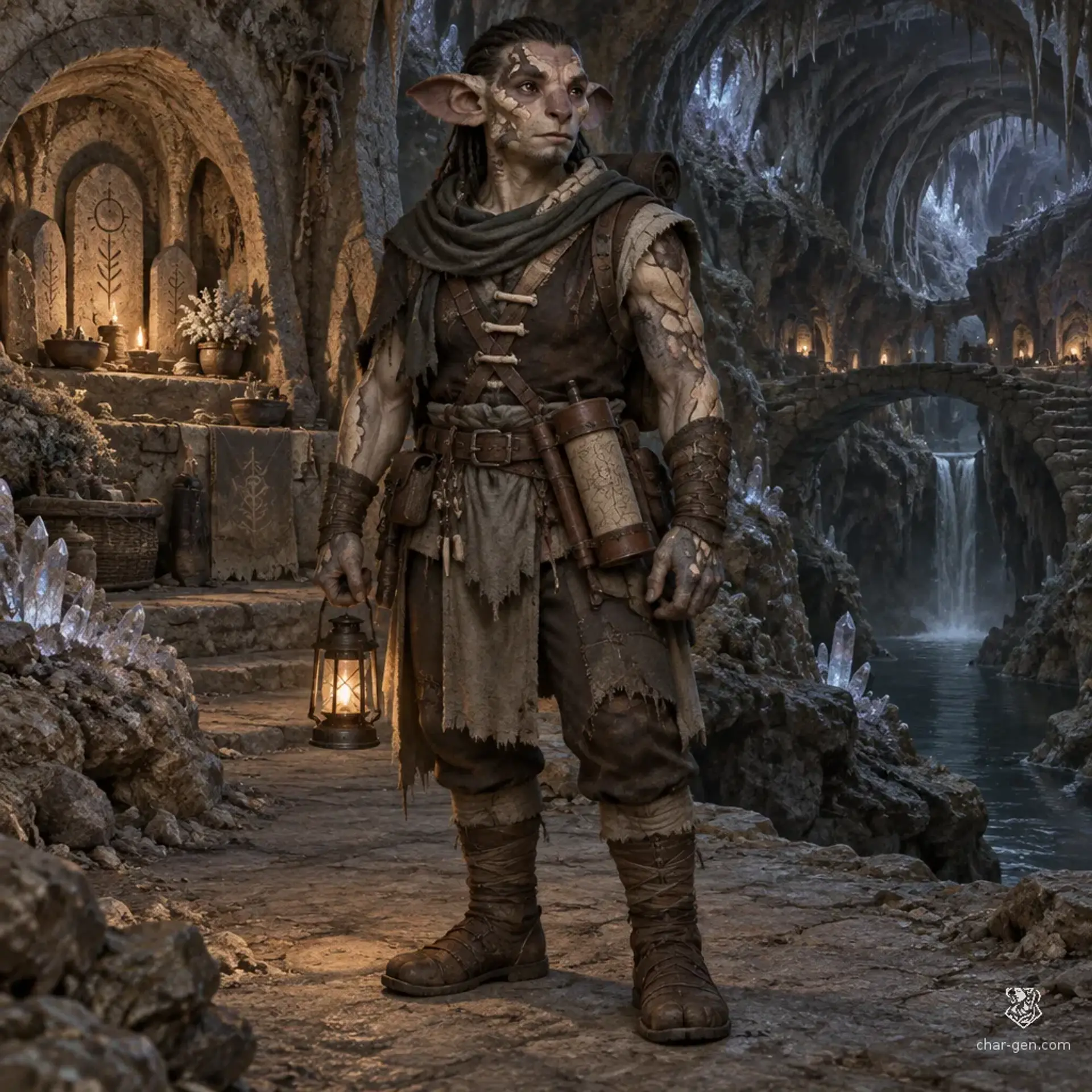
Osteotheria subterranea
Beneath the roads and kingdoms of the surface, the Ossari have spent generations learning which stones can be trusted.
At a glance
Darkvision 60 ft.
Languages Common, Deep Speech
Height Small folk are commonly 3 to 4 feet tall; Medium folk range from 4 to 7 feet.
Weight Small folk usually weigh 45 to 90 pounds; Medium folk commonly weigh 90 to 260 pounds, depending on build and bone density.
Lifespan 90 to 120 years, adult at 16
At the table
Your size is Small or Medium, chosen when you select this species.
Your walking speed is 30 feet.
You have Darkvision with a range of 60 feet.
When you make an Unarmed Strike, you can deal bludgeoning or slashing damage equal to plus your Strength modifier, rather than the normal damage. You choose the damage type each time.
When you or a creature you can see within 5 feet of you takes damage, you can use your Reaction to reduce that damage by an amount equal to plus your Proficiency Bonus. You can use this trait a number of times equal to your Proficiency Bonus, and you regain all expended uses when you finish a Long Rest.
You have proficiency in one of the following skills of your choice: History, Insight, or Survival.
Common, Deep Speech
These people tend toward Constitution and Wisdom, shaped by hard lives in the deep places, but players assign ability score increases as they wish.
Their plates are pale and fine-grained, and their faces tend toward short muzzles and large, sensitive ears.
Chalkvein Ossari favor echoing limestone caverns and are known for oral histories, careful route-making, and a light touch in fragile tunnels.
Beneath the roads and kingdoms of the surface, the Ossari have spent generations learning which stones can be trusted. Their bodies carry visible traces of bone, their homes preserve the names of the dead, and their maps are treated as promises to those who follow. An Ossari adventurer might be a tunnel scout, a keeper of family memory, or simply someone who has decided the safest path is no longer the most important one.
Ossari are living beast-folk whose bodies bear conspicuously dense bone.
Their features vary widely: some have blunt muzzles, broad ears, or small patches of fur, while others have smooth skin and pronounced brow ridges. Pale, dark, or mineral-streaked plates show through at the shoulders, forearms, spine, and cheeks. These are not exposed skeletons but living structures, warm to the touch and renewed as the body grows. Their hands and feet are broad, their joints flexible, and their eyes adapted to the dim. Individuals may be small and nimble or tall and heavily built.
Underground caverns, buried ruins, deep ravines, and settlements near mineral springs or fossil beds.
Young bones are pliant, and children learn to navigate tunnels by touch and echo before they can read.
Most are considered adults once they have completed a first descent into an unmarked cavern and returned with a useful account.
Age thickens the outer bone and slows the joints. Elders are valued as living records of routes, kinship, and past catastrophes.
Ossari culture is organized around kin-groups, shared routes, and the preservation of useful knowledge.
A person’s standing often comes from what they have taught, repaired, or safely carried through danger. Their dead are remembered with names, stories, and practical records, not just monuments. Travelers are expected to leave a route safer or better marked than they found it. Arguments are common, but hiding a hazard from the people who must cross it is considered a grave betrayal.
Many Ossari honor the memory of ancestors without worshiping them, treating remembrance as a duty and a source of counsel.
Others revere powers associated with stone, burial, endurance, or safe passage. Their communities make room for many moral outlooks, though mutual obligation and honest warning are widely respected.
Ossari tend to judge outsiders by whether they keep their word and respect the dead, rather than by custom or appearance.
They often form strong ties with miners, scouts, healers, and archivists. Their careful habits can be mistaken for suspicion, while their direct warnings may sound blunt to people accustomed to softer phrasing.
Their settlements are built around stable caverns, not carved into every available wall.
Homes use ribbed stone supports, low arches, and galleries that carry sound between shared chambers. Ancestral bones are placed in carefully tended niches, while public halls feature maps, route markers, and communal hearths. Surface homes often preserve these customs in small alcoves and sturdy, arched doorways.
No images yet.
A high-res, share-ready sheet you can post or print.