
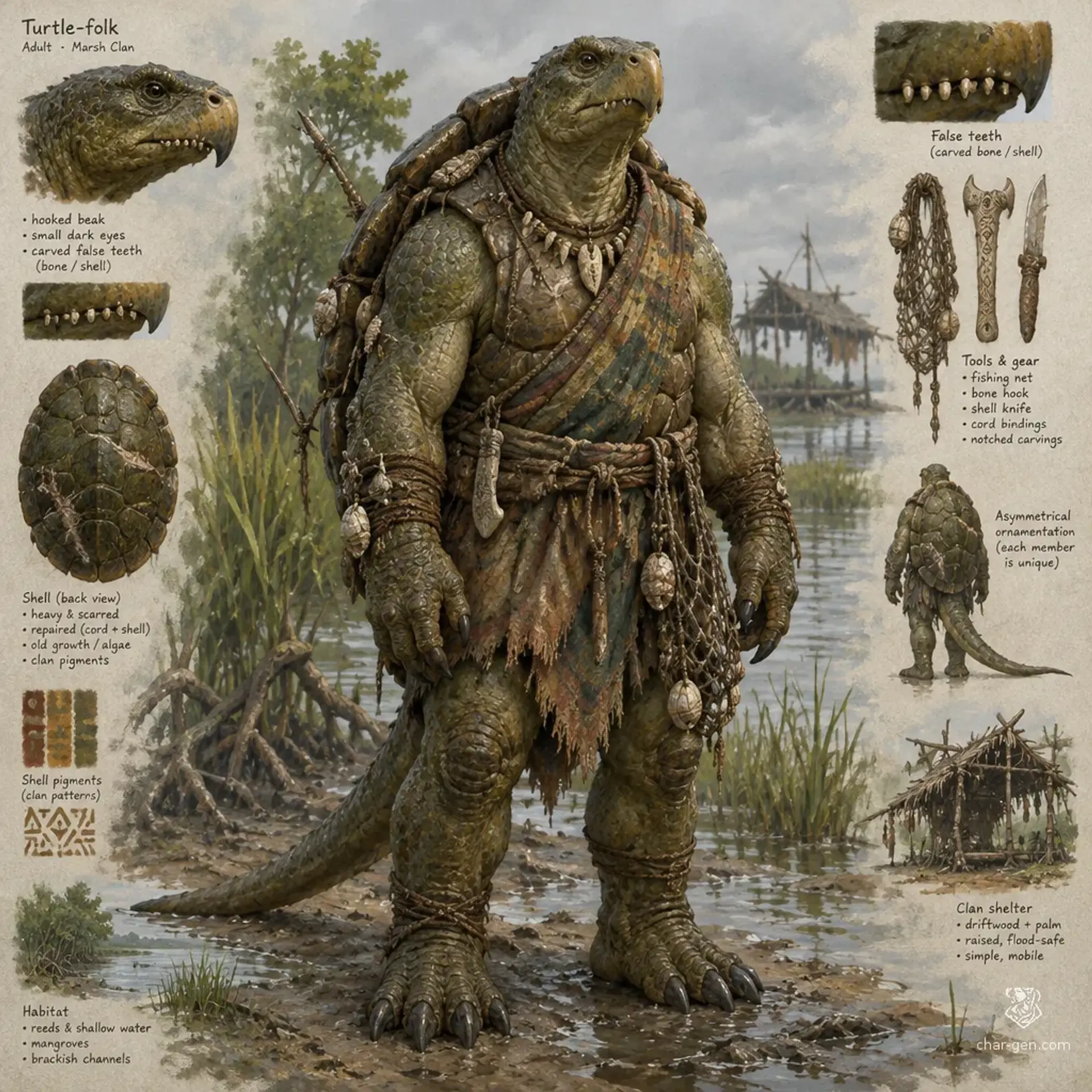
Chelonax mordax
A Rashtusk at the water's edge may look like a brute with a shell, a hooked beak, and a grin of carved false teeth.
At a glance
Darkvision 60 ft.
Languages Common, Rashtusk
Height 5 to 6 feet
Weight 180 to 300 pounds
Lifespan 70 to 90 years, adult at 15
At the table
You have a swimming speed of 30 feet.
You can hold your breath for up to 15 minutes. This does not let you breathe underwater.
Your shell offers natural protection. While you are not wearing armor, your base Armor Class is 13 plus your Dexterity modifier. You can use a shield and gain this benefit.
Your hooked beak and powerful jaw are natural weapons. When you hit with an unarmed strike, you can deal piercing damage equal to plus your Strength modifier instead of the normal damage. The carved false teeth worn by many Rashtusk are ornamental and do not change this attack.
Common, Rashtusk
Rashtusk tend toward Constitution and Strength, though players assign ability score increases as they wish.
Their shells tend toward dark green and brown, and many carry scars from territorial fights.
Marsh clans favor shallow, tangled wetlands where they can hide beneath reeds and strike from murky water. They are often fishers, ambushers, and keepers of secluded nesting grounds.
A Rashtusk at the water's edge may look like a brute with a shell, a hooked beak, and a grin of carved false teeth. Many are as dangerous as they look, raised in clans where favors are tallied, weakness invites exploitation, and a threat is a form of negotiation. Yet a Rashtusk adventurer may be an exile, a paid scout, a reluctant guardian, or simply someone who has learned that survival sometimes depends on making allies rather than enemies.
Rashtusk are broad, muscular turtle-folk with heavy shells, thick limbs, clawed hands, and long tails that trail behind them in water or balance them on slick banks.
Their faces are blunt and strongly animalistic, with a hooked beak and small, dark eyes. Many fit little false teeth carved from shed beak material into grooves along the beak's edge. These pieces are not functional teeth, but clan marks, tokens of intimidation, or reminders of victories and debts. Shells range from muddy olive to dark brown, often scarred, patched, and decorated with pigments, cord, or notched carvings.
Aquatic: rivers, marshes, estuaries, mangrove channels, and warm coastal shallows.
Young Rashtusk are sturdy swimmers who learn clan customs by watching adults and practicing with scraps of shell and bone.
By adolescence, a Rashtusk is expected to earn a place in the community through a successful hunt, raid, or feat of endurance.
Adults are considered fully responsible for their bargains, grudges, and contributions to the clan.
Elders are respected for their memories and feared for the grudges they have kept alive. Their shells often display generations of repairs.
Rashtusk society is organized around extended clans and small, shifting alliances.
Leadership usually belongs to whoever can provide food, win disputes, and keep rivals cautious. Some communities survive through fishing and trade; others rely on tolls, raiding, or protection rackets along waterways. Bargains are spoken aloud before witnesses, and a broken agreement can outlast the person who made it. Carved false teeth may commemorate a victory, a dead relative, or a debt that remains unpaid. Despite their rough reputation, Rashtusk craftspeople carefully maintain nets, boats, shell repairs, and toothwork.
Most Rashtusk communities are neutral evil or chaotic evil, shaped by harsh competition, clan feuds, and customs that reward cunning and force.
This is a strong cultural tendency, not a rule of nature: some individuals are neutral, good, or simply uninterested in moral labels. Their spiritual practices commonly honor river spirits, ancestral dead, and dangerous predators, with offerings placed where currents meet. Many clans treat a carved tooth as a record of obligation, not merely decoration.
Rashtusk often approach unfamiliar peoples with suspicion, testing boundaries before offering trust.
Their blunt speech and transactional customs can make them seem cruel, and many clans do raid, extort, or enslave outsiders. Still, individuals vary: some become dependable companions once a bargain is clear, while others reject clan violence and seek a different life. Rashtusk measure respect less by courtesy than by whether someone keeps their word under pressure.
Rashtusk settlements favor sheltered coves, reed-choked river bends, and submerged caves with dry ledges above the high-water mark.
Their structures are squat and practical, built from driftwood, packed clay, stone, and scavenged hull planks. Narrow underwater passages frustrate larger intruders, while broad communal platforms make it easy to haul nets, repair shells, and gather around a cooking fire. Clan stores are kept in waterproof pits or guarded chambers, often marked with strings of carved teeth.
No images yet.
A high-res, share-ready sheet you can post or print.