
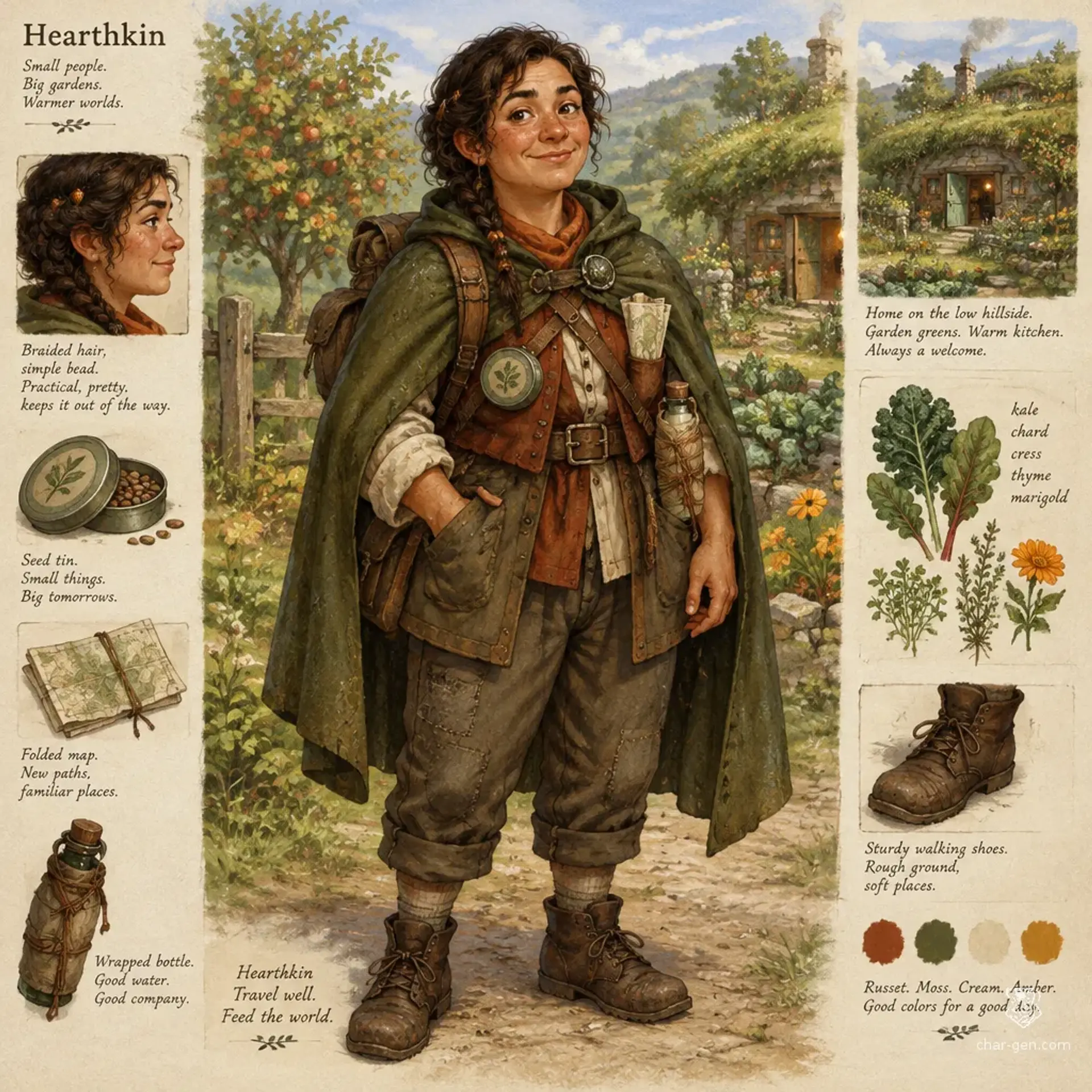
Hominis focularis*, the hearth-dwelling folk
Hearthkin know that the world is large, dangerous, and occasionally in need of a good meal.
At a glance
Languages Common, One other language chosen with the DM, often a regional tongue or a language learned through trade
Height 2 ft. 10 in. to 3 ft. 6 in.
Weight 35 to 55 lb.
Lifespan 140 to 180 years, adult at 20
At the table
When you roll a 1 on a d20 Test, you can reroll the die. You must use the new roll. Once you use this trait, you cannot use it again until you finish a Long Rest.
You have Advantage on saving throws you make to avoid or end the Frightened condition.
You can move through the space of any creature that is larger than you, but you cannot end your move there. Moving this way does not let you ignore difficult terrain or other effects that restrict movement.
You can take the Hide action while you are obscured by a creature at least one size larger than you, or by an object that provides suitable cover.
Hearthkin often develop patience, practical judgment, and a keen sense of their surroundings, tending toward Constitution and Wisdom. Players assign ability score increases as they wish, such as +2 to one ability and +1 to another, or +1 to three different abilities.
They are adept at finding a safe route through overgrown paths and uneven ground.
Brambleway hearthkin come from hedgerows, orchard lanes, and wooded settlements. They are often guides, gatherers, and messengers who know how to travel without drawing attention.
Hearthkin know that the world is large, dangerous, and occasionally in need of a good meal. They build homes that welcome guests, remember favors longer than most people remember names, and meet trouble with practical courage. A hearthkin adventurer might leave home for treasure or glory, but is just as likely to be following a lost recipe, settling an old promise, or making sure no one has to face the road alone.
Hearthkin are small, sturdy people with quick hands, compact builds, and faces that often reveal their amusement before they speak.
Their features and complexions vary widely between regions and families. Hair is commonly worn in practical braids, curls, or tied-back styles, often decorated with a bead or keepsake. Their clothes favor layered fabrics, deep pockets, weatherproof capes, and shoes made for long walks. Many have an instinctive ease in close quarters and move through a crowded room without seeming to disturb it.
Cultivated valleys, river roads, market towns, orchard country, and welcoming neighborhoods in larger settlements
A child is considered under the care of the whole household, not just their parents. They learn practical skills by watching and helping.
A young adult is expected to manage their own work and obligations, though family advice remains freely available, whether requested or not.
Most hearthkin enjoy long, active lives. Elders often remain involved in community affairs, gardens, and family disputes.
Hearthkin culture centers on the household, understood broadly enough to include friends, neighbors, and anyone who has shared a table in difficult times.
Hospitality is a serious custom: guests receive food and a place to rest, while hosts expect honest conduct in return. Hearthkin are skilled at preserving, repairing, and making do, but their attachment to home does not make them stay-at-homes. Many travel as traders, cooks, couriers, gardeners, and storytellers, carrying familiar customs wherever they settle.
Hearthkin traditions commonly honor household guardians, harvest powers, local ancestors, and deities of travel or hospitality.
Their worship is often practical and communal, expressed through shared meals, seasonal offerings, and care for the dead. Many favor compassionate or orderly ways of life, though individuals range across every outlook.
Hearthkin are valued as hosts, mediators, guides, and neighbors who remember what a community needs.
Their friendliness is genuine, but not naïve: they keep careful track of promises and notice when generosity is being exploited. Some larger folk mistake their small stature for timidity, a misunderstanding hearthkin may patiently correct or quietly use to their advantage.
Hearthkin homes favor comfort and clever use of space.
In the countryside, homes are often built into low hillsides or clustered around shared kitchens, smokehouses, and gardens. In cities, they adapt basements, courtyards, and ground-floor rooms into bright, communal quarters. Doors, benches, and work surfaces are made for hearthkin proportions, but guest rooms are almost always included.
No images yet.
A high-res, share-ready sheet you can post or print.