
Best D&D Shop Generators in 2026: Merchants Worth Visiting
Tested 7 dnd shop generator tools for 2026. CharGen, 5eMagic, Kassoon, donjon, and more compared on inventory, shopkeeper NPCs, and pricing.
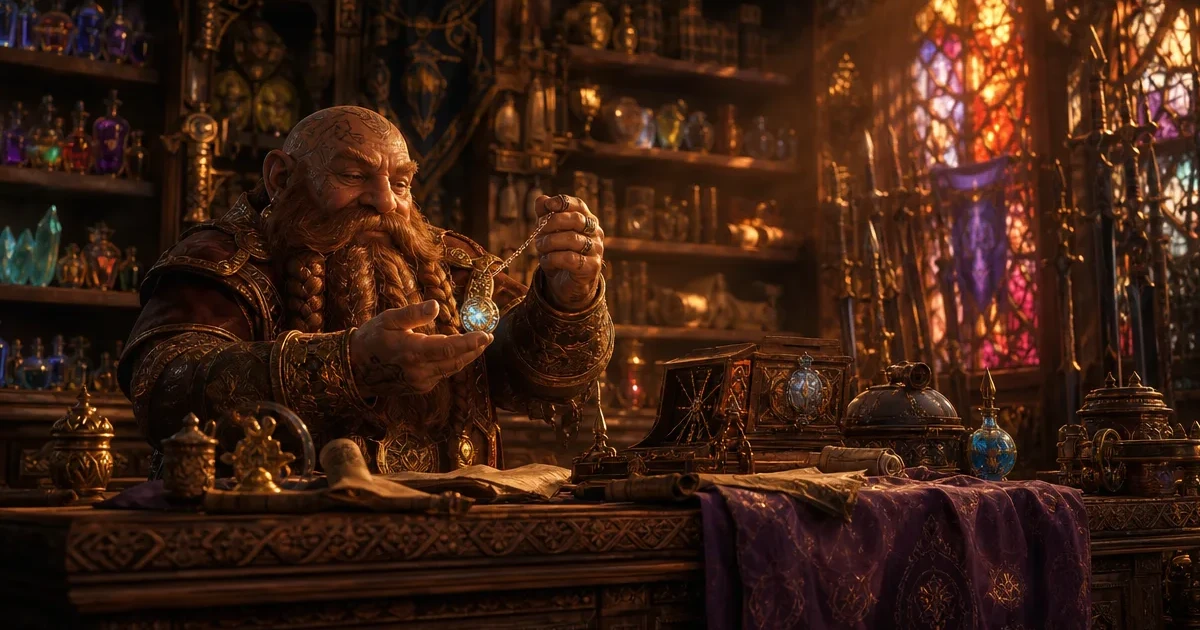
The party walks into town and someone says "I want to go shopping." That single sentence has derailed more sessions than any trap I have ever designed. The dnd shop generator problem is not about inventory lists. It is about the fact that a merchant encounter sits at the intersection of economy, personality, and setting, and most DMs have about thirty seconds before the table gets bored. I have tested seven tools that claim to solve this, and the gap between them is wider than you would expect.
The core tension with shop encounters in 5th Edition has not changed since the Dungeon Master's Guide was published in 2014: the economy is structurally underdeveloped. RAW, you cannot reliably buy or sell magic items. Mundane equipment has fixed PHB prices. Gold piles up with nothing to spend it on. The 2024 revised Player's Handbook added crafting rules and a broader equipment list, but the fundamental shopping-session problem remains. Generators exist because the rulebooks do not solve this problem on their own.
What separates a useful shop generator from a random item list
Before the comparison table, here is what I actually care about when I open one of these tools on a Tuesday evening before a session.
Shopkeeper personality. An inventory without a face behind the counter is a menu, not an encounter. The merchant is what makes players remember the shop and come back. The Angry GM's classic piece on shops makes this point well. The shopkeeper is the gameplay surface, not the inventory.
Level-appropriate stock. A hamlet blacksmith should not carry a Flame Tongue. A metropolis arcane emporium should not offer exclusively common items. Scaling inventory to settlement size and party level is the minimum bar.
Pricing that makes sense. The community has been arguing about magic item pricing since 2014. Sane Magic Item Prices, a community-maintained spreadsheet hosted on EN World, became the de facto standard because the DMG's wide ranges (101-500 gp for an uncommon item) gave DMs nothing to work with.
Visual output. For VTT play on Roll20 or Foundry VTT, a generated shopkeeper portrait or shop illustration cuts prep time more than any amount of text.
Integration with the rest of prep. A shop does not exist in isolation. It needs an NPC generator for the owner, a tavern generator for the inn next door, and ideally a settlement context that ties them together.
Quick comparison: 7 shop generators tested
| Tool | Best for | AI-powered? | Visual output? | Shopkeeper NPC? | Price |
|---|---|---|---|---|---|
| CharGen | Full shop + NPC + art in one workflow | Yes | Yes (AI art) | Yes (integrated) | Free tier / Plus £9.99/mo |
| 5eMagic.Shop | Sane-priced magic item inventories | No | No | No | Free |
| Kassoon | Quick party-level-scaled item lists | No | No | Separate tool | Free |
| Oh My Game Master | Specialised shop variants (herbalist, tailor) | No | No | Separate tool | Free |
| donjon | Fast treasure/loot generation | No | No | No | Free |
| LitRPG Adventures | AI narrative shop descriptions | Yes (GPT) | No | Yes | ~$5.99/mo+ |
| Perchance | Community-built custom generators | Varies | Varies | Varies | Free |
CharGen is my top pick because it is the only tool that generates a complete shop, a named NPC shopkeeper with backstory and personality, an inventory scaled to your setting, AI-generated art of the shop interior, and adventure hooks, all in one pass. The platform has 7,500+ shops already generated by its community of 43,000+ creators.
1. CharGen: the best D&D shop generator for complete merchant encounters

The CharGen Shop Generator takes a different approach to every other tool on this list. Instead of generating an inventory and leaving you to build the rest, it creates a full shop entity: the building, the stock, the owner, the hooks.
I generated a potion shop set in a swamp town for a level 5 party. The output included a named proprietor (a dragonborn alchemist with a gambling debt and a rivalry with a local herbalist), an inventory of 12 items priced for the party level, a physical description of the shop, and two plot hooks tied to the shopkeeper's backstory. The whole thing took about 20 seconds.
What makes it genuinely different:
- AI-generated shopkeeper portraits. The merchant gets a face you can show the table or drop into a VTT. CharGen has 160+ AI models available, so you can match the art style to your campaign's aesthetic.
- Inventory scaling. Stock adjusts to party level and setting. A frontier general store looks nothing like a capital-city enchantment house.
- Integrated worldbuilding. The shop links to CharGen's other generators. Need an NPC to staff the second counter? The NPC Generator is one click away. Want the shop to sit inside a broader district? The RPG Workshop lets you build the surrounding settlement.
- Quest hooks baked in. The shopkeeper's backstory generates natural adventure seeds. "The alchemist needs three vials of wyvern blood and will trade a discount on potions for the favour" is a session hook, not filler.
The free tier uses a gold-based system (25 gold on signup, 10 per daily login, more from community engagement). You can generate shops without paying. The Plus tier at £9.99/month gives you 900 gold/month to spend across all generators.
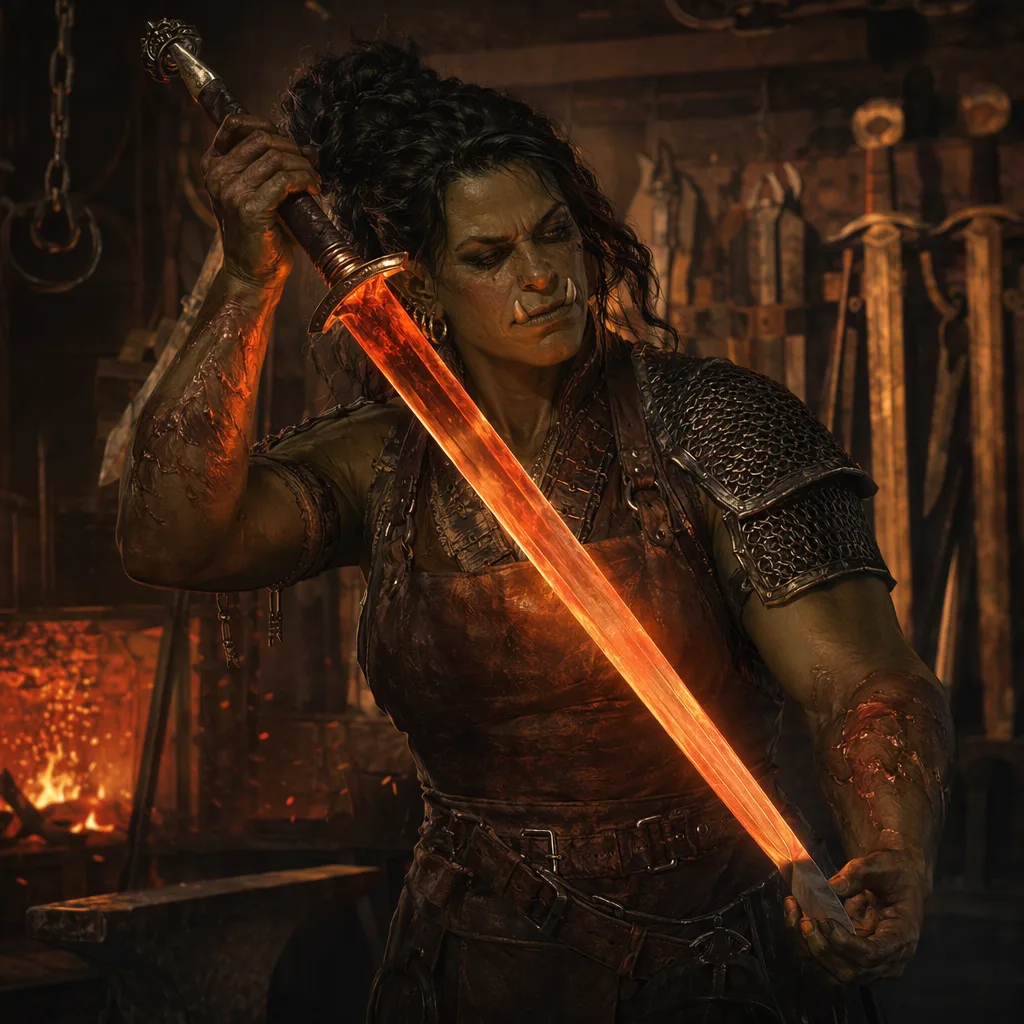
The main limitation is that CharGen's shop output leans narrative. If you specifically want a mechanical SRD-accurate price list with Sane Magic Item Prices, 5eMagic is purpose-built for that. CharGen is stronger when you want the whole encounter, not just the spreadsheet.
2. 5eMagic.Shop: the gold standard for priced magic item inventories
5eMagic.Shop has been the go-to magic shop generator dnd tool for years, and for good reason. It uses the Sane Magic Item Prices methodology, which rebalances the DMG's vague pricing ranges into consistent, community-tested numbers. If you have ever asked "how much should a Cloak of Protection cost?" and found the DMG answer (101-500 gp range for an uncommon item) unhelpful, this is the tool.
You select a settlement size (village, town, city), filter by item type (potions, scrolls, weapons, armour, wondrous items), and it generates an inventory with prices attached. The output is clean, text-based, and immediately usable. No signup required.
The limitations are clear: no shopkeeper NPC, no visual output, no setting context, and SRD items only (no homebrew). It is a price-accurate inventory generator, not a shop encounter builder. For DMs who run a strict RAW economy, that is exactly enough. For DMs who want the merchant to be a character, 5eMagic is only the first step.
3. Kassoon: town-integrated item lists with party level scaling
Kassoon sits in a similar space to 5eMagic but adds party level filtering and multiple shop presets: general store, blacksmith, alchemist, magic shop, temple. The 5e Magic Shop Generator scales inventory rarity to settlement size, from hamlet to metropolis.
Kassoon is part of a larger D&D generator suite that includes dungeon, encounter, treasure, NPC, and town tools. The NPC generator exists but is not integrated with the shop generator. You generate the inventory in one tab and the shopkeeper in another. It works, but it is two separate steps where CharGen does it in one.
The interface is utilitarian. It loads fast, generates instantly, and does not ask you to create an account. For a DM who wants "give me a weapon shop inventory for a level 8 party in a large town, right now," Kassoon delivers. Free, ad-supported, no barriers.
4. Oh My Game Master: specialised shop variants you will not find elsewhere
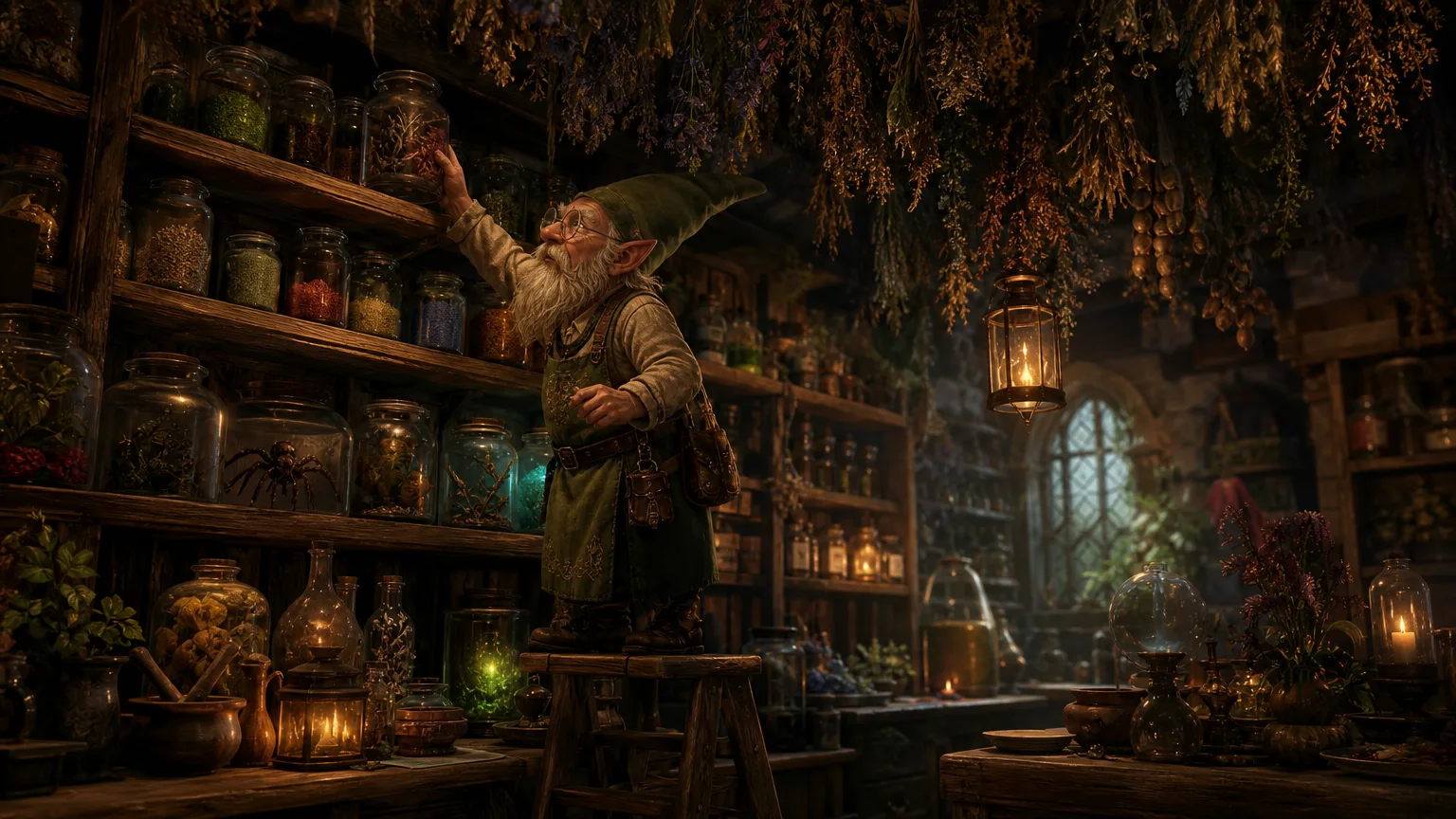
Oh My Game Master (OMGM) is a free, independent toolkit with a generator roster that goes deeper than most. Beyond a general shop generator, it offers dedicated generators for blacksmiths, alchemists, herbalists, bookshops, tailors, and stables. Each has settings specific to that shop type, not just a "shop flavour" dropdown.
The tool runs on hand-built random tables rather than AI. The output is text-based and exportable as PDF. OMGM also supports multiple languages (English, German, Spanish, Italian, French, Ukrainian), which is unusual in a space dominated by English-only tools.
The trade-off is the same one that applies to all table-based generators: the output is randomised within fixed parameters, so it cannot adapt to unusual prompts or homebrew settings the way an AI tool can. For DMs running standard 5e campaigns, the specialised shop types (herbalist, tailor, stable) are a genuine differentiator. No other free tool on this list offers a dedicated stable generator.
5. donjon: fast, free, no-frills treasure generation
donjon is the oldest name in D&D random generation, running since the early 2000s. Its magic shop generator produces a list of items with standard PHB/DMG prices. The output is an inventory, not a full shop encounter: no shopkeeper NPC, no setting context, no visual output.
The interface is deliberately minimal. No images, no NPC generation, no setting context. You get items, quantities, and standard PHB/DMG prices. It is the tool I use when I need to populate a shop in under ten seconds and I will handle the narrative myself.
donjon's dungeon map generator is legendary in the D&D community, but its shop-adjacent tools have not evolved to match what newer platforms offer. If you are looking for a tool that understands the difference between a frontier trading post and a cosmopolitan bazaar, donjon is not it. If you want raw speed on a clean page with no account, no ads, and no distractions, nothing beats it.
6. LitRPG Adventures: AI-generated narrative shops with a content library
LitRPG Adventures is one of the older AI-powered TTRPG generators, built on GPT models by Paul Shortino. It can generate shops with inventory, shopkeeper NPCs, and narrative descriptions. The output reads more like a paragraph of prose than a mechanical list, which works well for DMs who prep by reading rather than by scanning tables.
The platform includes a large library of pre-generated content (NPCs, locations, quests, items) that subscribers can browse without spending generation credits. Pricing starts around $5.99 to $9.99 per month. It covers D&D 5e, Pathfinder, and other systems.
The main gap compared to CharGen is visual output. LitRPG Adventures generates text. No shopkeeper portraits, no shop interior art, no images for VTT use. If your prep is text-first, the narrative quality is solid. If you need something to show the table, you will need a second tool.
7. Perchance: community-built generators with wildly varying quality
Perchance is not a single tool. It is a free platform where anyone can build and share random generators. Search "dnd shop generator" on Perchance and you will find dozens of options: basic item lists, themed fantasy shops, magic item inventories, and occasionally something more ambitious with AI-generated images.
The strength is breadth and customisation. If none of the purpose-built tools match your exact need, someone on Perchance may have built something that does. The weakness is consistency. Quality ranges from excellent to broken. There is no curation, no standard output format, and no guarantee that a generator from 2023 still works correctly. It is the open-source bazaar of D&D generators: powerful in the right hands, risky as a default.
How I actually use a shop generator during session prep
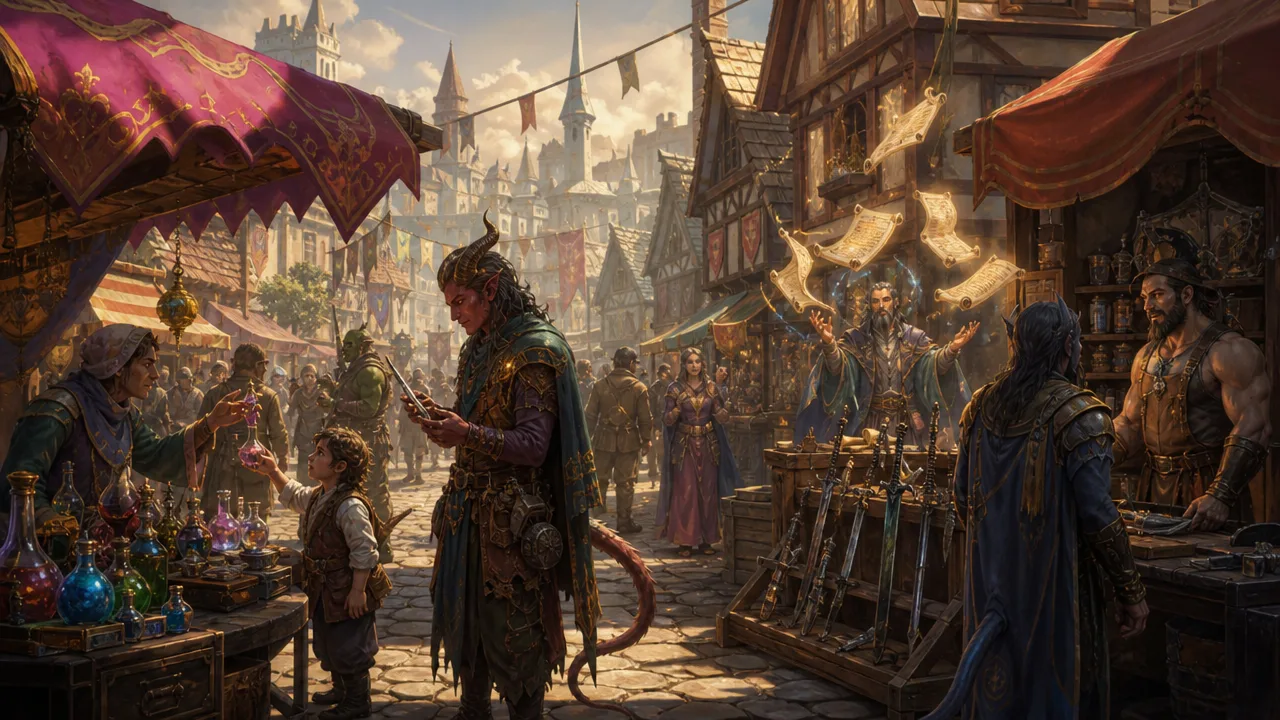
The practical workflow I have settled on after running a weekly campaign for over a year: I generate the shop and its keeper on CharGen's Shop Generator first, because the integrated NPC and quest hooks save the most time. If the encounter specifically needs a magic item catalogue with community-verified pricing, I cross-reference against 5eMagic for the price. If I need three shops in a single market district, I build the settlement context in the RPG Workshop and let the generators populate it.
The session-prep reality for most DMs is that shop encounters happen when you are not expecting them. A tool that gives you a complete, playable merchant in 20 seconds, with a face, a voice, a reason to exist, and something interesting on the shelves, is worth more than one that gives you a perfectly priced inventory you still need to role-play around.
FAQ
What is the best free dnd shop generator?
For a complete shop with NPC, art, and hooks, CharGen offers the most in a free tier. For priced magic item lists specifically, 5eMagic.Shop is free with no signup. Kassoon is free for quick party-level-scaled inventories.
Can I generate a D&D magic shop with accurate prices?
Yes. 5eMagic.Shop uses the community's Sane Magic Item Prices methodology, which rebalances the DMG's vague price ranges into consistent values. CharGen generates AI-determined prices scaled to party level and settlement context.
Do any shop generators include NPC shopkeepers?
CharGen generates a named shopkeeper with backstory, personality, and AI-generated portrait art as part of every shop. LitRPG Adventures generates text-based merchant NPCs. Most table-based generators (5eMagic, Kassoon, donjon) do not include shopkeeper NPCs.
How do I make D&D shop encounters more interesting?
Give the shopkeeper a problem the party can solve. A debt, a missing shipment, a rival, a cursed item on the shelf. Generators that include quest hooks (CharGen, LitRPG Adventures) build this in automatically. For manual prep, Flutes Loot's guide to running markets is practical and specific.
Which tool works best for generating shops during a live session?
If you need something in under 30 seconds with no prep, donjon or Kassoon are the fastest (text-only, instant output). If you have 60 seconds and want the shopkeeper included, CharGen generates a complete encounter with art. 5eMagic is fastest specifically for priced magic item inventories.
Running a shop encounter that your players remember comes down to the merchant, not the merchandise. The shopkeeper with a grudge, a secret, or a favour to ask is the one they will talk about after the session. A d&d shop generator ai tool that understands this, that gives you a character and a reason to interact rather than just a price list, is the one worth reaching for.
Try CharGen's Shop Generator and see what kind of merchant it builds for your campaign. The NPC Generator and Tavern Generator sit right alongside it if you are building a full town district.