Mark Bell
Mark Bell
At the table
Voice
A naturally deeper voice than Mary's, with a slight catch on certain consonants, as if he is still learning how much breath the larger chest requires. It carries the clipped care of someone used to speaking quietly around sleeping children, and occasionally a faint coastal rasp appears on words connected to water or the shore.
Careful English, with a measured, educated manner that becomes more local when he is tired or speaking to family. His phrasing is more composed than his circumstances suggest. He pauses before naming his past and dislikes being hurried into an explanation.
Speech patterns
How to play them
Begin with practical matters and speak to him as an adult. Do not insist that he is secretly Mary or demand a supernatural explanation. He responds to patience, clear boundaries, good tea, and visible concern for the children. Trudy is a safer intermediary than Simon or Malinda.
Goal
Keep the Bell children safe, establish a stable life as Mark, and learn why the heart's disappearance made the reflections more active.
Motivation
A quiet home, safety for his siblings, and the chance to choose his own clothes, work, and company without being treated as a deception.
Appearance
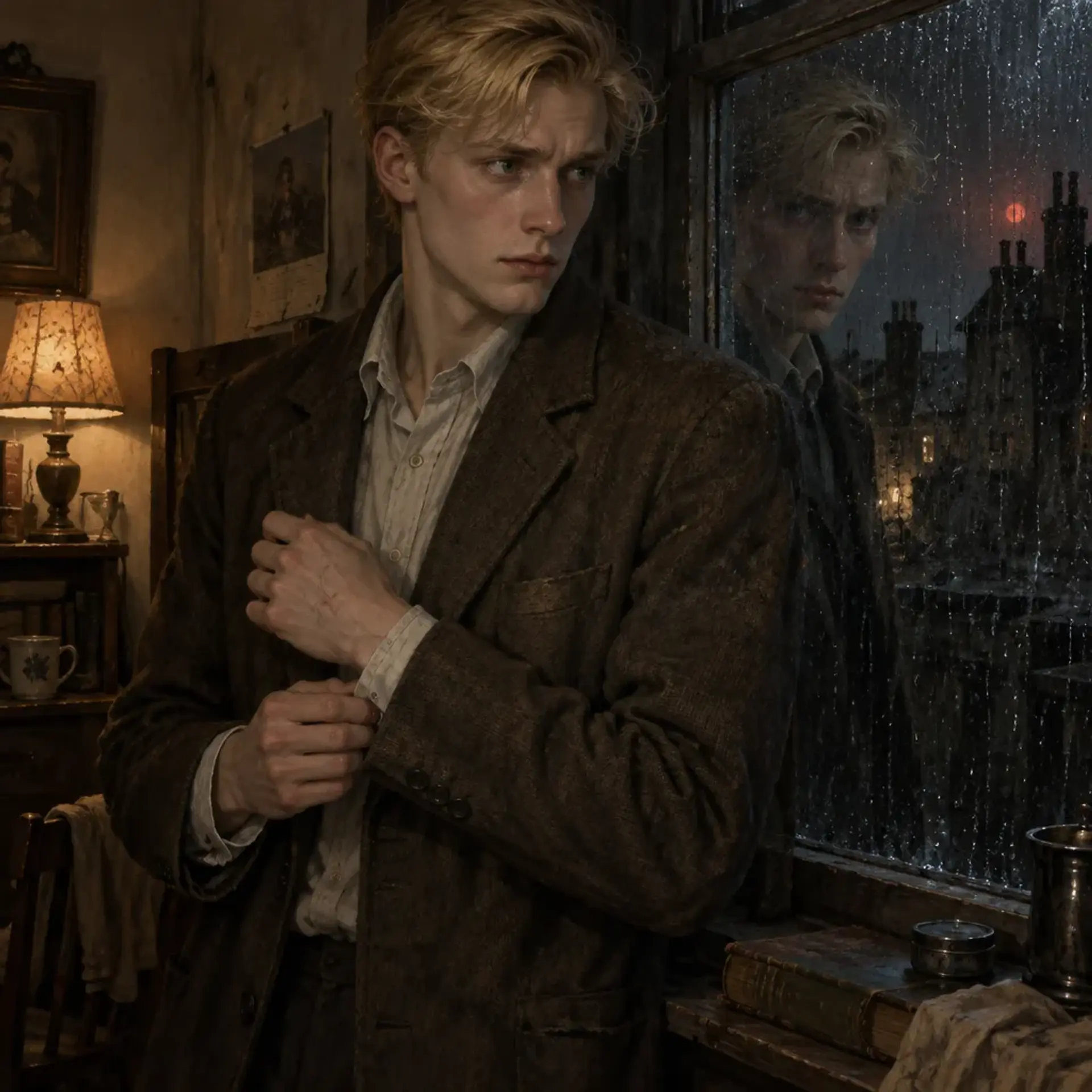
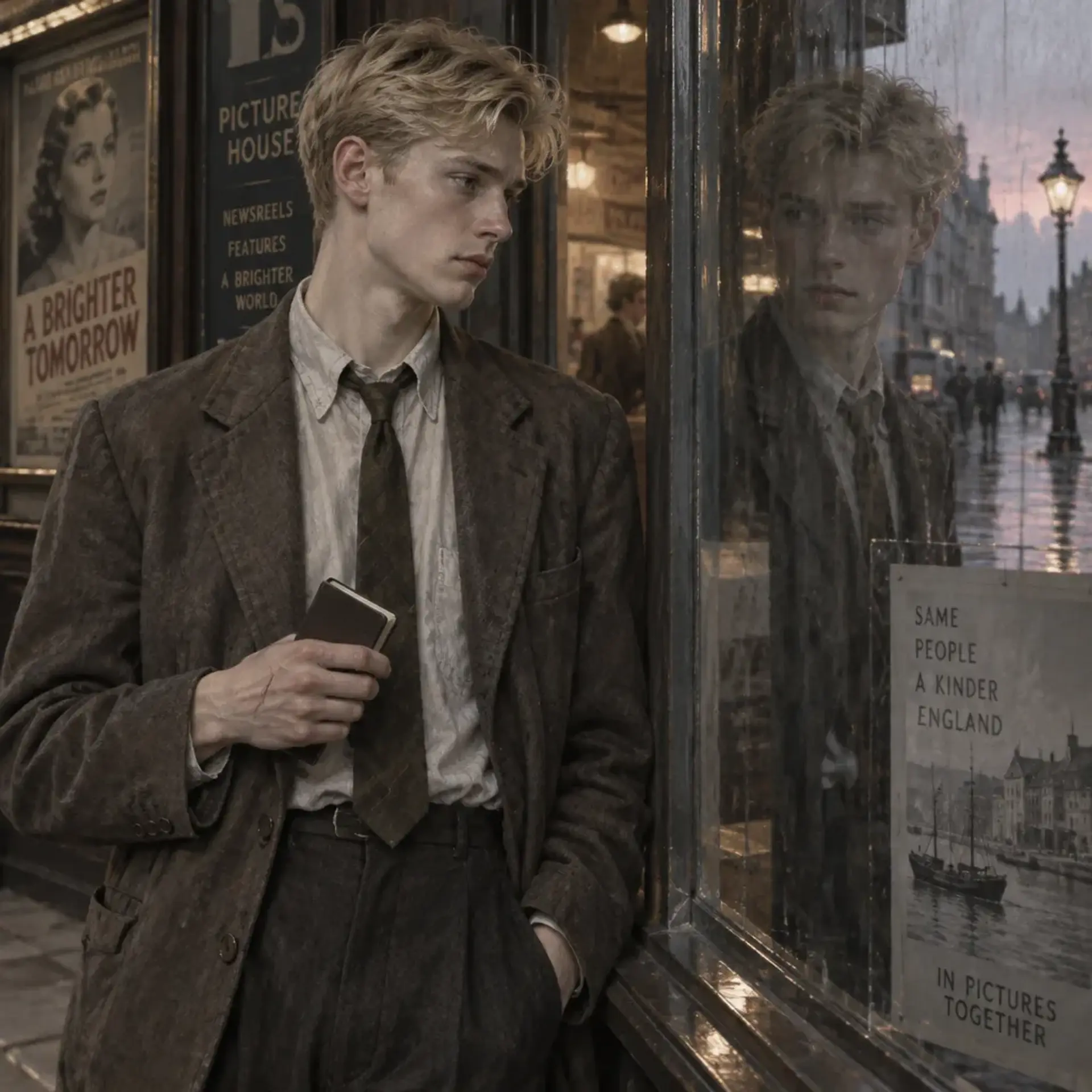
Mark is a tall young man with bright blond hair, malachite-green eyes, and a face that seems unusually composed until he forgets to arrange it. His skin has the pallor of someone who has spent too long indoors, with a faint, fine-grained quality like chalk rubbed smooth. He stands straighter than the cramped rooms of his childhood permit, and his movements combine Mary's careful economy with Kent's more assured stride. He looks at doorways, windows, and the people reflected in them before he looks directly at anyone. Within a minute of meeting him, people notice a curious smell of damp chalk, cold seawater, and tea leaves. He is faintly embarrassed by it and checks his cuffs as if the scent might be clinging to them. The surprising detail is his fussy domesticity: he notices crooked curtains and badly set tea before he notices a visitor's expensive watch.
Clothing
Clean but often ill-fitting postwar clothes, assembled from borrowed items and Trudy's gifts. He favors a pressed shirt, a decent jacket, and polished shoes, though the shoes are below his standards. Sudden changes once left him in clothes strained at the seams, so he keeps spare garments when he can.
Body language
Usually erect and precise, with hands held close to his sides. When uneasy, he studies glass or water rather than a person's face. Anger makes his shoulders settle and his gaze fix on hands, exits, and objects that could be used as weapons.
- Height
- Tall, approximately 185 cm
- Build
- Tall, lithe, and stronger than Mary had been, with a young man's frame that still carries a trace of habitual caution.
- Eyes
- Malachite green
- Hair
- Bright blond
- Skin
- Pale, with a faint chalk-dry cast
- Age
- 18
- Gender
- Male
- Size
- Medium
Distinguishing features
Personality
18 traits and drivesMark's temperament is a knot of tenderness and reserve. He inherited Mary's habit of noticing who has been left out, who has not eaten, and which child is pretending not to be frightened. That devotion is real, but it now shares space with Kent's fastidious standards and his desire to be treated as a man in his own right. He will make a birthday cake for Henry without being asked, then criticize the way Henry cuts it. He can be warm with the children and awkward with adults, especially when their sympathy feels like an attempt to restore the person they remember. He wants to appear respectable and high-class, though he understands little of the social machinery behind that wish. He presses a cheap jacket, minds his manners, and notices whether a room is orderly. These habits are partly pride and partly a shelter: a neat collar gives him something he can control. He is embarrassed by the flat, his borrowed shoes, and the smell of damp chalk that seems to follow him, but he does not look down on Trudy for her working-class background. He knows she has given him safety at personal cost and is scrupulously grateful, sometimes to the point of refusing help he needs. His reserve is not coldness. He prefers a quiet evening, the television, or the cinema projector to a crowd, but he watches people closely and remembers small kindnesses. He is shy with strangers and wants to be seen as composed. Under pressure, that composure can collapse into bluntness. When Simon hit him, Mark responded with startling violence, then immediately tried to save Simon. The two responses belong to the same person: protective, frightened, and ashamed of the force he can summon. He has complicated feelings about femininity. Kent's former preferences left him uncomfortable with dresses, domestic assumptions, and being treated as a woman. Mark now has Mary's memories and love for her family, but his identity is male and his desires are his own. He does not want to be mocked or pressed to explain his body. His interest in women is real but muted by exhaustion, grief, and the practical struggle to find a place to live. He wants closeness and also fears that wanting it will make him seem predatory or false. Mark's moods alter his attention. When calm, he is observant, mildly formal, and capable of dry humor. When worried, he fusses over tea or clothing and repeats household tasks. When embarrassed, he becomes stiff and overcorrects his manners. When frightened, he seeks an exit or a reflective surface. When someone threatens a child, he can become frighteningly decisive. Afterward he is often horrified by his own behavior and tends to repair the damage through practical acts rather than apologies alone. He is curious about modern life. Cars amaze him from a safe distance; he watches their polished surfaces and mechanisms, then startles when one passes close. Television fascinates him because it makes moving images available at home. He is most comfortable when he can be useful without being watched. He is not sure whether his memories are all his, but he does not treat that uncertainty as permission to abandon the people he loves.
- Alignment
- Protective and inwardly divided; his loyalties are personal rather than ideological.
Quirks
Habits
Traits · 5
Flaws · 4
Fears · 4
Wants and needs · 5
Combat
HP 6Avoids conflict and tries to protect children or escape. If cornered, he uses an improvised object decisively, then stops when the immediate danger ends. Iron, overwhelming numbers, or threats to his family can disrupt his judgment.
Mark Bell
Actions
Reactions
Services they sell
Rewards they can give
Equipment
- Borrowed jacket (clothing)Second-hand, carefully brushed jacket with sleeves slightly short.
- Pocket notebook (personal)A plain notebook containing work shifts, family reminders, and fragments of unfamiliar place-memory.
- Tea tin (domestic)A small, serviceable tea tin kept at the flat.
- Cotton handkerchief (personal)A handkerchief used for ordinary purposes and, once, to press against Simon's injury.
Possessions
Background
The heart arrived in the world as a bad bargain wrapped in newspaper. Bartholomew Golden, an amateur alchemist, had left it at Hush House as payment for admission: a small, crudely carved likeness of an anatomical heart, apparently cut from chalk cliff and crusted with barnacles and sea grass. He called it the Heart of England and claimed it could bring servants from the shadows of chalk and borderland. The house rejected the gift in its own fashion. It was thrown into the sea and eventually returned to shore, black ooze and salt water leaking from it, a red-pink glow seeming to stir beneath the stone. Golden was never permitted near Brancrug again. Abraham Groff found the object on a beach and took it home. It beat beneath his coat on the train. In Wiltshire, he showed it to neighbors, where it went inert, then revived when he brought it to the Hampshire shore and returned it to water. Abraham became attached, not out of greed so much as a growing belief that the thing disliked company. His house filled with footfalls, voices, and doors that moved without hands. At last he sold it to William Windon, a local boy of seventeen who had once seen it. William hid it in a log and struck it with a hammer. The heart stopped. It passed through Malinda Bell's hands and came to Mary on her eighteenth birthday, offered as a curious rock. Mary was grateful, but too busy to ask much of it. Mary Bell was the eldest of eight children in a Rochester household that looked comfortably middle class from the street and felt like a poorly managed institution indoors. Her father, Simon, took work far from home and returned with both money and complications. Her mother, Malinda, drank heavily and could be tender one hour and cruel the next. The children were Henry, Matilda, Chrissy, Olympia, Abigail, Jonas, Belladonna, and little Oswald. The names and paternity of some children were sources of unspoken resentments. Mary tried to keep the younger ones fed, washed, and out of the way while studying and taking part-time work. Matilda was her closest sibling; Mary was determined not to let her become an unpaid replacement for herself. Trudy, a short, wiry young woman with dirty-blond hair and hazel eyes, was Mary's friend. She called herself a rebel, dressed accordingly for the early Cold War years, and insisted that both of them ought to go to college. She often helped with the children. The heart's first change was private. It beat in time with Mary's pulse. When she looked in a mirror, she sometimes saw a handsome young man with short bright-blond hair, green eyes, and a taller frame. The image seemed to look away when caught. Mary called it a grotesque trick and kept going to work. Then came nights when she woke in that other body. The first time, she fled the house in terror, confused by unfamiliar limbs, a different voice, and the weight of clothes that did not fit. By dawn she had returned to herself. The escape was frightening, but it also offered a few hours away from the Bell household. She went to beaches, climbed trees, and explored abandoned buildings. She found the pub and, on one outing, encountered Henry. He watched the strange young man with suspicion, then recognized the way he held his shoulders and the particular patience he used when younger children were near. He did not expose Mary. He asked why she was out. The answer, “I needed to see somewhere that wasn't our kitchen,” was enough to make him look away. A journey home with Simon made the danger plain. Mary had gone out as Kent and was returning through Rochester when Simon arrived earlier than expected. Simon saw a tall blond young man near the station and demanded to know where Mary was. Kent, who had not yet formed a separate voice or will, tried to answer as Mary would. The mismatch only made Simon more alarmed. He searched the streets, while Mary, inside the borrowed body, tried to explain that she was his daughter. Simon eventually recognized her familiar turn of phrase and the way she worried about whether the younger children had eaten. He walked her home at a distance, confused and unsettled, pretending to passersby that they were acquaintances. He said nothing to Malinda that night. Mary resolved to be more careful, though the changes did not obey a schedule. The worst early outing involved Malinda. Mary was leaving the house as Kent when Malinda, drunk and unexpectedly alert, caught the movement at the back door. She called the young man a thief, then recognized the eyes and posture. She touched Kent's sleeve as if checking whether the body was real. Mary tried to explain. Malinda's fear came out as anger, and she demanded that “Mary” come back into the house. Kent was not yet a fully distinct personality, but the body recoiled from her touch and made for the door. Malinda clung to the coat. Mary froze, torn between shame, fear, and a desperate need to leave. The moment ended only when a child cried upstairs and Malinda turned toward the sound. Mary returned before dawn, unable to tell whether she had escaped or abandoned someone. The heart disappeared. No one saw where it went. Afterward, Kent became more present. Reflections showed him in windows, still water, and polished metal. He began to move his eyes, turn away from Mary, and form opinions. He was shy, status-conscious, and convinced that a proper coat could solve more problems than it could. He wanted neat clothes, tea made exactly to his preferences, television, and the moving pictures at the cinema. Cars fascinated him until they came too close, when their noise and speed made him flinch. He was a homebody who nonetheless began changing Mary's plans when he had a chance to go out. He disliked being left in Mary's body and wanted to court women; Mary did not share that wish. Neither could explain the difference cleanly. They experienced it as a tense arrangement of impulses, memories, and preferences, not as a tidy partnership. Trudy noticed the changes before Mary found a way to tell her. One afternoon she saw the blond young man in a shop window, then saw Mary standing where the reflection said he stood. Trudy did not scream. She asked if Mary was in danger. Mary answered yes, and then no, and then started crying. Trudy learned the truth in pieces. She kept it from the family and helped Mary find clothes that could be used during sudden changes. She also saw Kent emerge in daylight once, behind the glass of a bus shelter, looking at his own hands as if they had begun moving without permission. Trudy stood watch until Mary returned. Other people were looking for the blond young man. Their questions were too specific to be casual, and Kent recognized the danger before Mary did. A second stranger began appearing at night, coming from the sea: a woman with strawlike blond hair and eyes so dark they seemed almost black. She spoke of being Kent's sister and said she would bring the others. She did not seem to belong to the same searchers. Kent yearned after her even as Mary feared her. The woman eventually vanished into the waves, leaving him with an ache that neither could name. Henry, who had been watching closely, confronted Mary privately. He knew the reflected figure was not simply a disguise and warned her that people were asking after him. He stayed silent for the sake of the younger children. On May 30, four months into the changes, Mary lost her face. She had been in the kitchen, preparing breakfast while the younger children were still upstairs. In the mirror above the sink, the familiar image blurred, as if damp paper were peeling from a wall. Her features seemed to lift away. Beneath them was Kent's face, no longer a reflection. The change did not stop at the skin: the body itself settled into the taller young man's shape. Mary and Kent's memories and feelings tangled, then ceased to divide cleanly. The person left standing was Mark, though he could not yet settle on a name. He asked to be called Mark, Marven, or Marcus, then settled provisionally on Mark Bell. He had Mary's solemn devotion to the children and Kent's standards, preferences, and wish for privacy. The stronger urges to seize every outing for himself softened. He still wanted to be treated as a man, and he was increasingly at ease in the life that had formed around him. Mark came downstairs in ordinary morning clothes and began breakfast. He lifted Oswald into a chair, gentle but firm, and reached automatically for the tea tin. Simon came down to leave for work, stopped, and stared. He had not been told to expect this. He asked where Mary was. Mark answered, “Here,” then, after a pause, “I think.” Simon's pride in a normal household collided with fear for his daughter. He did not strike Mark or call him a monster. He asked the children to go into the other room and tried to speak to the person he knew as Mary. Malinda touched Mark gently, as if she could find her daughter beneath his skin. Mark held still, but could not promise her what she wanted. Henry watched from the stairs and said, with blunt teenage misery, “You still remember my birthday, don't you?” Mark did. That answer mattered more than any explanation. Simon arranged private consultations. Dr. Bronson, an English psychologist from London, began by treating the situation as a crisis of identity and family stress. In conversation he found that Mark's memories were neither a simple impersonation nor a neat account of possession. He listened closely, took careful notes, and later passed information to the Suppression Bureau. Dr. Maylor, a physician from East Anglia, was unnerved by the physical findings. Mark's body was anatomically male, with no female breasts and ordinary male genital anatomy, despite Mary's past life and memories. Maylor tried to remain professional, but became increasingly distressed by the impossible continuity between the two. He retired after the case and was coerced into giving information to the Bureau. Mark now has periodic check-ins with both doctors to establish his health and identity, though he distrusts the purpose of some questions. Henry's fifteenth birthday became the first deliberate act of Mark's new life. Simon and Malinda forgot the cake. Mark remembered the particular sort Henry liked, with a firm crust and too much icing, and made it while the house was quiet. He took Henry outside rather than make him perform gratitude in front of the family. They sat in a sheltered patch of yard, sharing slices from a plate. Henry complained about their parents, then about Mark, then admitted he had been frightened that Mary had died. Mark could not answer without making the truth more confusing. He said, “I am still the one who knows you hate raisins.” Henry laughed despite himself. He asked whether Mark had been in there all along. Mark said he did not know. They stayed outside until the tea went cold. Henry kept that conversation private, but afterward began treating Mark as a brother rather than an intruder. Two months of therapy and physical attempts to understand the change failed to reverse it. Malinda sought illegal, dubious explanations and drank more. She began calling Mark a changeling, a fae thing that had stolen her daughter. The accusation was cruel, but it brushed against a truth no one in the family could safely name. Simon was not a cruel man, nor a wise one. He believed he could restore normality by insisting on it. The growing strain ended in a fight. Malinda accused Mark of replacing Mary; Simon demanded he stop frightening the children. Mark tried to leave the room. Simon grabbed him and struck him hard across the head. Mark stumbled, blood running down his face. His posture changed. The reserved, well-mannered young man vanished for a moment, replaced by a hard, watchful stance. He seized the nearest household object and hit Simon with enough force to bring him down. Jonas and Oswald saw it. Mark shouted that his father would kill them, meaning the father associated with the heart and the dark inheritance he only half understood. Then he saw Simon on the floor and the children staring. The anger broke. He called an ambulance, pressed a cloth to Simon's injury, and stayed with him until help arrived. Simon survived. He was furious, frightened, and ashamed. He told Mark not to come back. Henry argued with him, saying Mark had called for help and had not attacked without cause. Malinda, sobbing and drunk, called Mark a thief again. Mark left with little more than the clothes he wore. Trudy took him to a small rented flat she shared through a precarious arrangement. He resisted at first, ashamed of being another burden, but accepted when she pointed out that he had nowhere else safe to sleep. The place smelled of damp plaster and old coal. Mark sleeps on the couch and is slowly clearing a small patch of space for his belongings. Trudy gave him socks, undergarments, and a pair of shoes. They were not up to his standards, but he thanked her and polished them anyway. She helps him find work suited to his new body, and he contributes to rent and food. He works shifts in a local picture-house, cleaning between screenings and assisting with deliveries. He likes the projector and the ordered ritual of opening and closing the cinema, though he calls the pay indecent. As roommates, they have learned to negotiate rather than pretend nothing happened. Trudy knocks before entering the washroom. Mark makes the tea, complains about her borrowed books, and leaves a fair share of rent on the table. Bathing is difficult because water reflects him too clearly. He paces the flat at night, sometimes for hours, and sleeps in restless fits, waking with his hands clenched as if he has been fighting in a dream. He sleeps without a shirt when the room is warm and leaves shaving razors out, which has caused arguments. Trudy asks him to put them away; he apologizes, then forgets again. Once he tested Malinda's theory about cold iron by touching an iron latch. The pain was searing and immediate, leaving a scar on his left hand. He does not repeat the experiment. Mark is not certain whether he is Mary, Kent, or someone formed between them. He has begun to answer to Mark Bell because the name lets him keep his family's surname without pretending to be unchanged. He wants the children safe, a decent coat, an honest wage, and a room where he can close the door. The strangers still search for the blond young man. The sea woman has not returned. In quiet moments, Mark finds himself longing for her and cannot tell whether the longing is his, Kent's, or both.
Role in the story
A young man caught between family, identity, and an uncanny history attached to Kent. He can become an ally, a vulnerable witness, or the focus of a search by people who understand the heart better than he does.
“He called it the Heart of England and claimed it could bring servants from the shadows of chalk and borderland.”
- Faction
- No known formal affiliation. The Suppression Bureau has received reports about him through Dr. Bronson and Dr. Maylor.
Known connections
Media
0 imagesNo images yet.
Turn Mark Bell into a sheet
A high-res, share-ready sheet you can post or print.