Goru
Goru
At the table
Voice
Their voice has the dry, steady rasp of someone accustomed to directing work over rain and river noise. It carries without force, with clean consonants and measured pauses. Irritation sharpens their precision, not their volume.
Oru speaks in a level, work-worn voice, shaped by years of calling instructions across rain, river noise, and creaking beams. Their consonants are clear and economical, and they leave pauses long enough for someone else to reconsider. When annoyed, they become more specific rather than louder, naming the exact amount of timber, food, or labor a boastful plan will waste.
Speech patterns
How to play them
Oru listens without hurrying people and asks what they are trying to protect before offering aid. They respond warmly to honest work and plainly stated needs, but challenge waste justified by status. They will accept a changed plan if it serves the living better than the old one.
Goal
Prevent the people of Gorsebank from spending their remaining sound timber on a vanity monument, while helping them build a safer river landing instead.
Motivation
To help people adapt without treating labor, materials, or one another as disposable.
Appearance
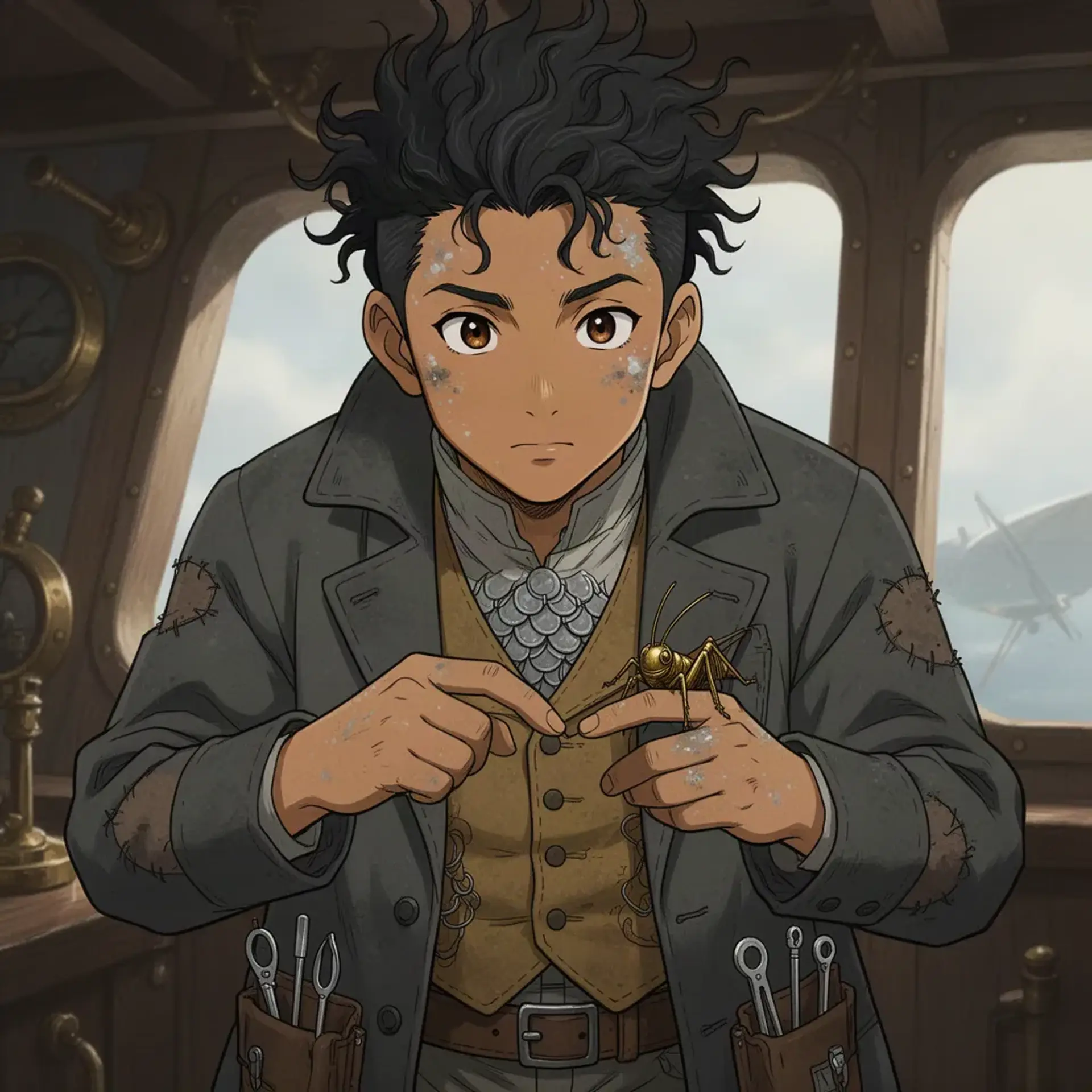
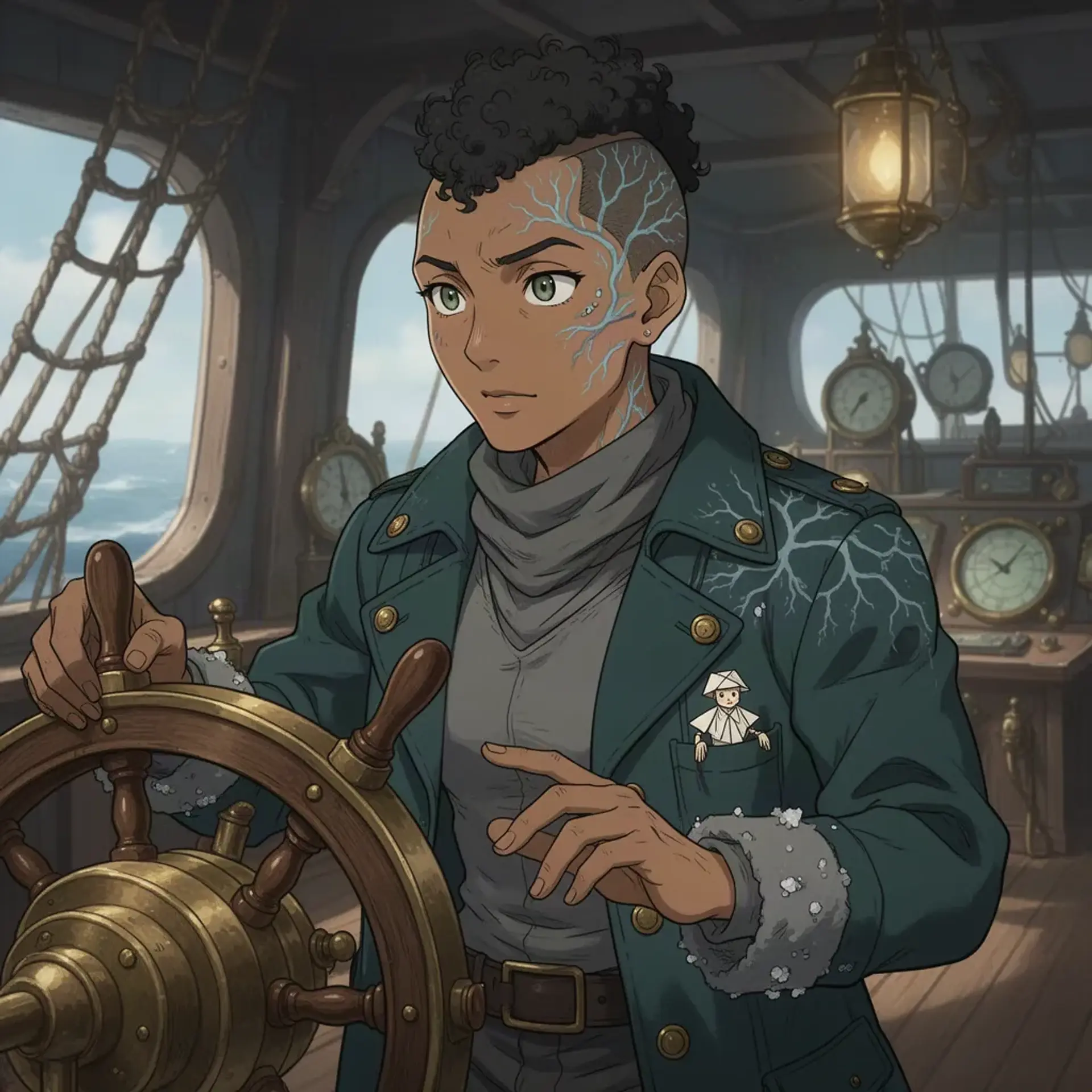
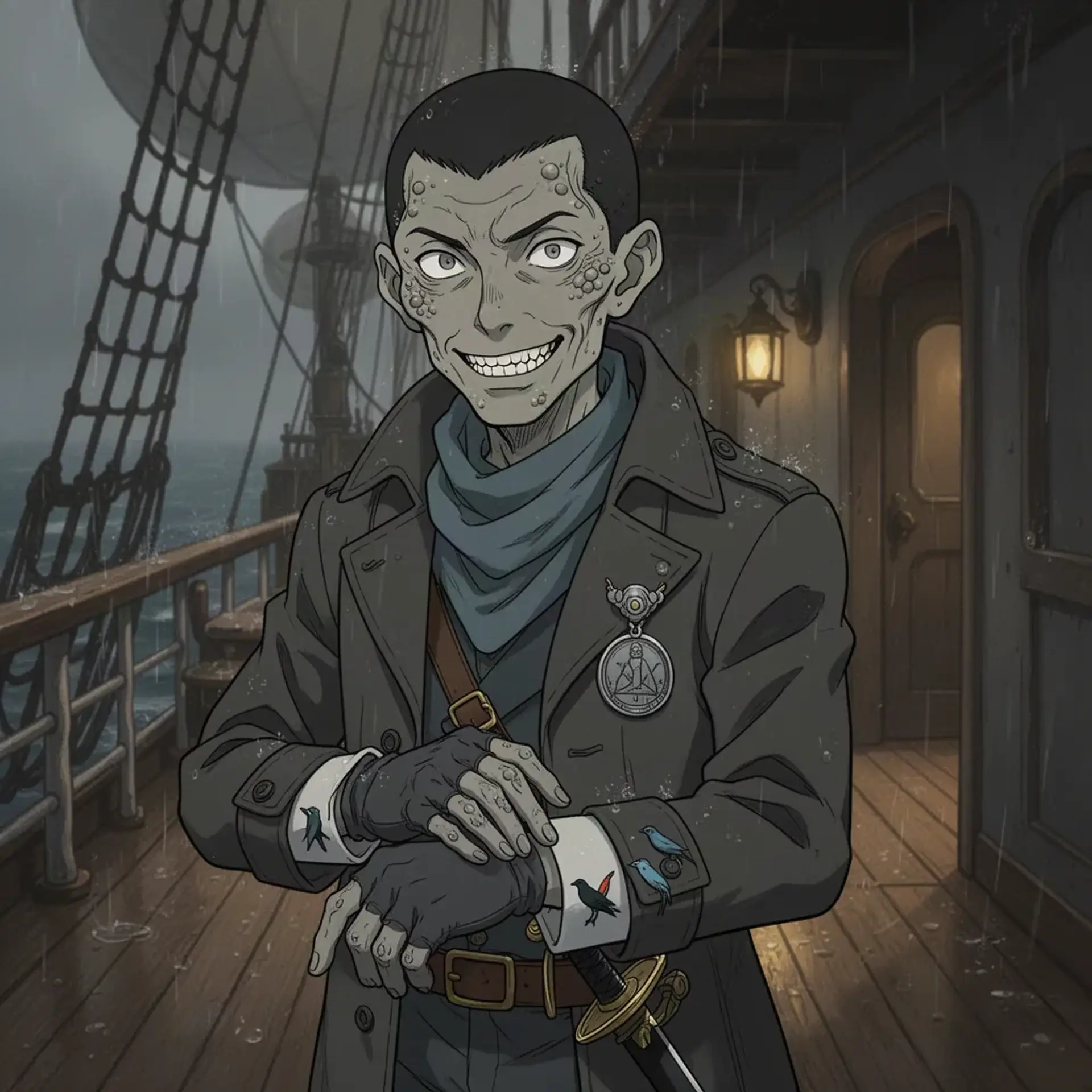
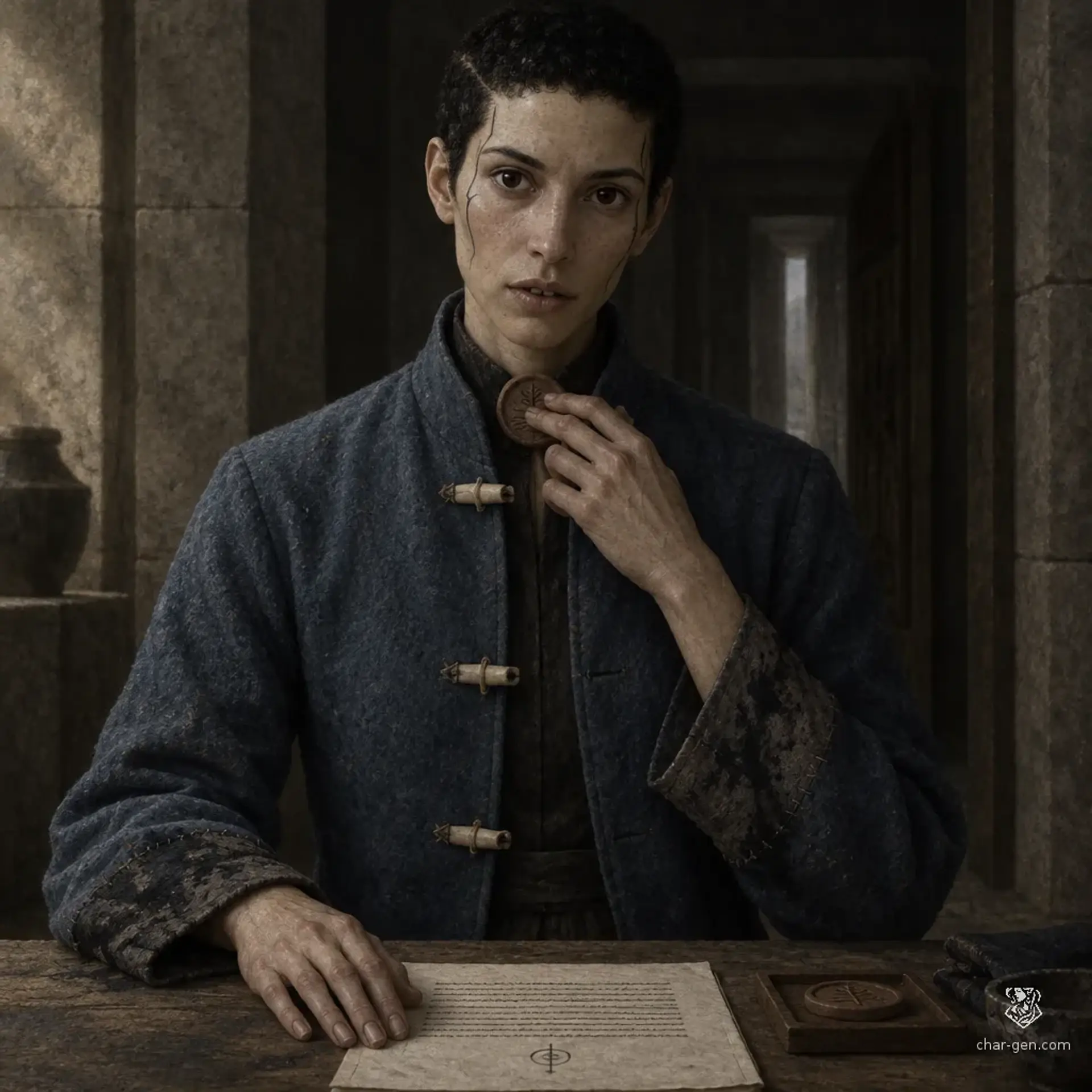
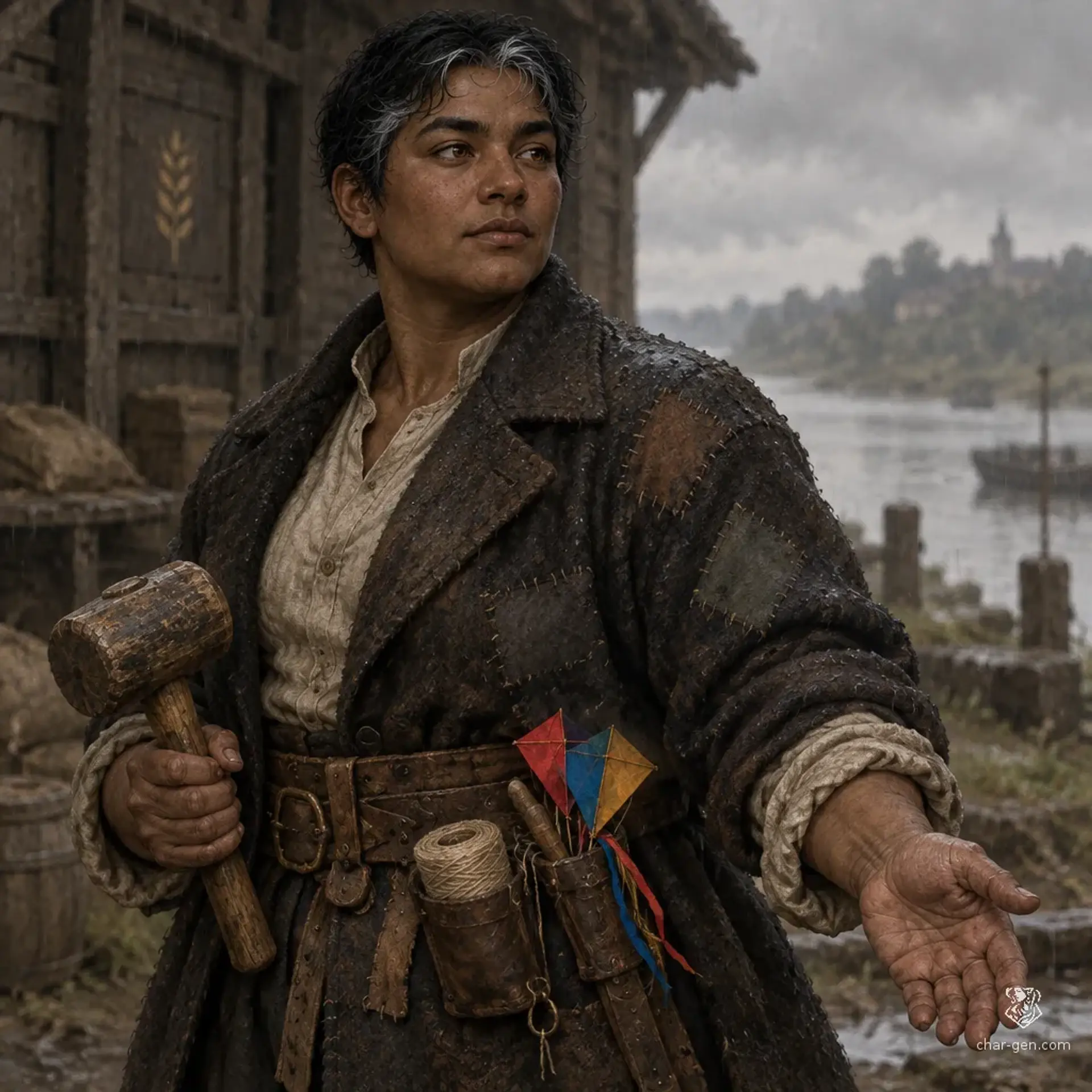
Oru looks like a broad-shouldered laborer who has just stepped in from the rain: compact, heavy through the torso, and planted as if the floor might need steadying. Their skin has the matte, fine-grained look of river clay drying in shade. Their hands draw the eye first: wide palms, blunt nails, and thick, ridged pads polished smooth by centuries of lifting, sorting, and mending. When they move, they make room for everyone else without seeming to notice how much space they occupy. The unexpected detail is a little bundle of bright paper kites tucked carefully into their work belt, each folded from scraps too small to be useful for anything else.
Clothing
A patched, rain-dark work coat of coarse wool over a plain linen shirt, a broad leather belt, and sturdy boots repaired with mismatched soles. Their cuffs are rolled unevenly. The belt holds a mallet, a spool of twine, and the tiny scrap-paper kites.
Body language
Oru stands with their feet slightly apart and their hands open at waist height, making no effort to shrink their broad frame. They angle their body to leave others an exit, though this can make a cramped room feel even smaller. Their hands move slowly and precisely, testing a surface or turning an object over before they commit to an answer.
- Height
- 6 feet 2 inches
- Build
- Broad, sturdy, and grounded, with the proportions of someone accustomed to carrying heavy loads.
- Eyes
- Dark brown, with a soft amber ring visible in strong light.
- Hair
- Black, cropped close and threaded with a few pale strands like dry grass.
- Skin
- Muted umber with a dry, fine-grained clay texture.
- Age
- Ageless; has kept a humanlike appearance for roughly four centuries.
- Gender
- Nonbinary; uses they/them pronouns.
- Size
- Medium
Distinguishing features
Personality
12 traits and drivesOru is quiet and observant, but not passive: they can wait through an awkward silence and then refuse a powerful person's demand without raising their voice. They accept that customs, buildings, and lives change, yet despise waste done for vanity. With frightened people they are steady and practical; with boastful leaders they become dryly exacting; alone, they are unexpectedly playful with their paper kites.
- Alignment
- Neutral
Quirks
Habits
Traits · 3
Flaws · 3
Fears · 3
Wants and needs · 3
Combat
AC 16 · HP 142 · 30 ft.Oru does not seek a fight. They place themselves between danger and bystanders, use Stay Useful to interrupt destructive tactics, and strike only to create room for people to withdraw. They do not pursue fleeing enemies unless those enemies threaten someone who cannot escape.
Goru
Actions
Reactions
Services they sell
Rewards they can give
Equipment
- Ashwood mallet (weapon, custom)A plain ashwood mallet that serves as Oru's divine focus and weapon. It is scuffed, repaired at the handle, and not enchanted as a separate magic item.
- Repair kit (tools)A spool of ordinary twine, several wedges, a small whetstone, and a wrapped bundle of mending needles.
- Scrap-paper kites (personal keepsake)Folded kites made from castoff paper, each repaired with a different scrap of cloth.
Possessions
Background
Before anyone called Oru divine, they were a mortal outsider who kept a flood-damaged granary running in a settlement built on a river's shifting edge. They learned to sort salvage by touch in the dark, and to ration without making the hungry feel watched. During one lean winter, the town's magistrate ordered a ceremonial storehouse burned to impress visiting nobles, though the grain inside could have fed the district. Oru refused to let the fire take it. They pulled sacks out until the roof fell, and were buried beneath its beams. The people they saved carried the grain through the winter and began leaving offerings of repaired tools and saved seed where Oru had fallen. Over generations, those offerings and the stubborn habit of remembering their choice made Oru a lesser deity of preservation, practical labor, and necessary change. Now they travel between settlements, trying to stop waste without freezing the world in place. They remain bound by affection to the descendants of those survivors, including Eira, a millwright who resents Oru's attention, and Iolo, a traveling storyteller who has made Oru's mortal death into a tidy legend. Oru is currently trying to keep a planned riverside monument from consuming the last usable timber in the district.
Role in the story
A quiet divine ally, moral counterweight, and source of practical aid whose opposition to waste can complicate flashy plans without making change itself taboo.
“They learned to sort salvage by touch in the dark, and to ration without making the hungry feel watched.”
- Faction
- No formal faction. Oru is honored by practical workers, seed keepers, and repairers, but avoids temples that demand costly displays.
Known connections
Connections
Mentioned in their text, not linked yet
- Eiraa millwright descended from the people Oru saved, thinks Oru's visits make every decision feel like a test.
- Ioloa traveling storyteller, tells a polished version of Oru's death and refuses to include the magistrate's name.
- The people of Gorsebanka riverside settlement named for the thorny scrub that keeps returning along its banks, leave repaired tools at an old granary foundation.
Species
Outsider
Media
0 imagesNo images yet.
Turn Goru into a sheet
A high-res, share-ready sheet you can post or print.