William Hirst
William Hirst
At the table
Voice
A young, unforced voice with a faint rasp from cold mornings and a habit of stopping mid-thought to search for the exact word. He does not project unless calling to animals across a field; then his voice carries cleanly over open ground.
William speaks in short, careful phrases, often beginning only after a long pause. He describes what he can see with striking precision but struggles to name feelings or explain intuition. Around trusted people, a dry, unexpected joke may slip out without changing his composed expression.
Speech patterns
How to play them
Give William time to answer and ask about concrete things he has noticed rather than demanding that he explain his feelings. He responds best to patient, practical company and earns trust when others take his observations seriously. Pressuring him about succession or his father's night behavior makes him clam up.
Goal
To earn enough trust to be treated as a capable heir and to find out what is calling beneath the hill without frightening his mother or provoking his father.
Motivation
William wants to be trusted as himself, not handled as a fragile child or measured as a possible heir. He also feels an unsettling pull toward the moor and the hidden thing beneath it.
Appearance
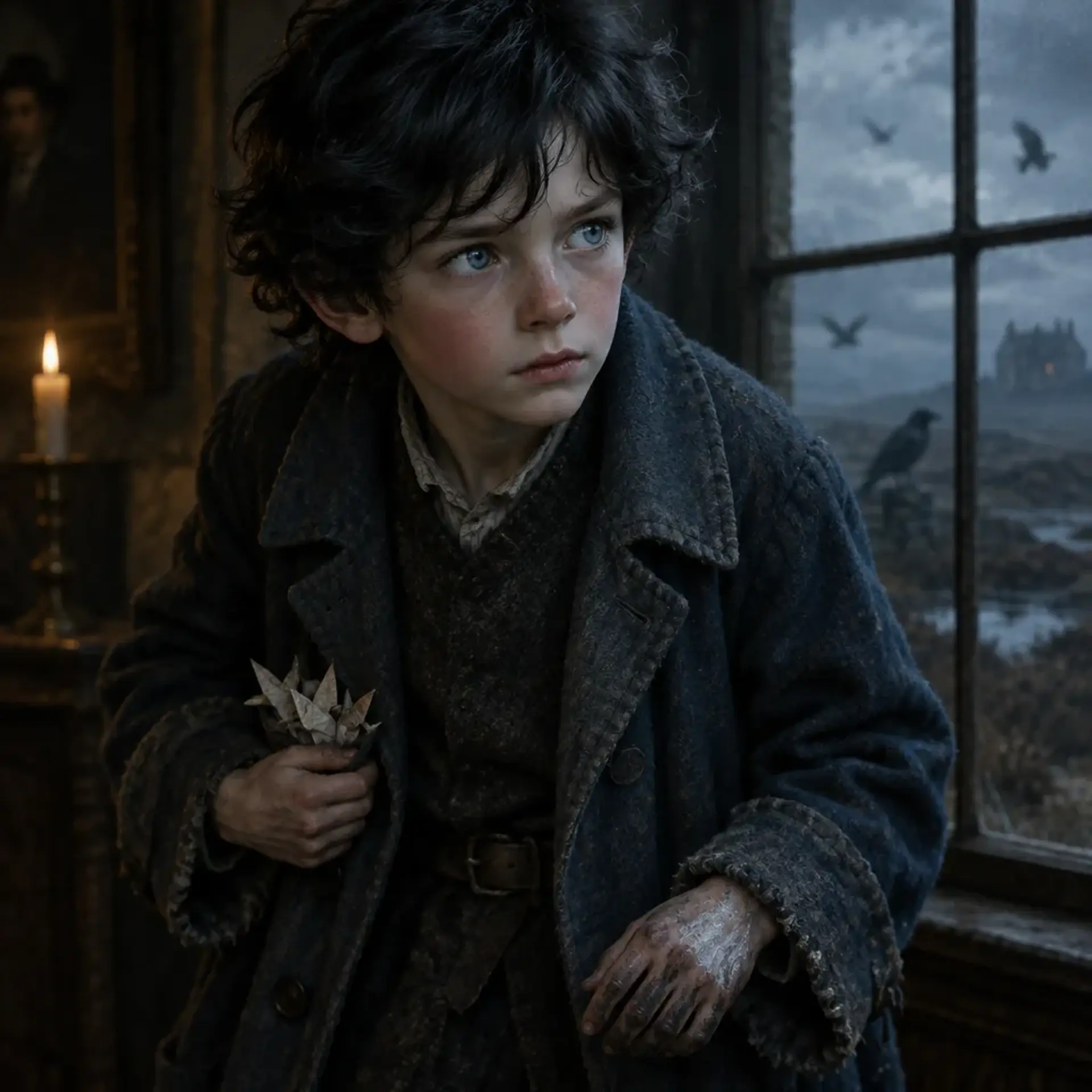
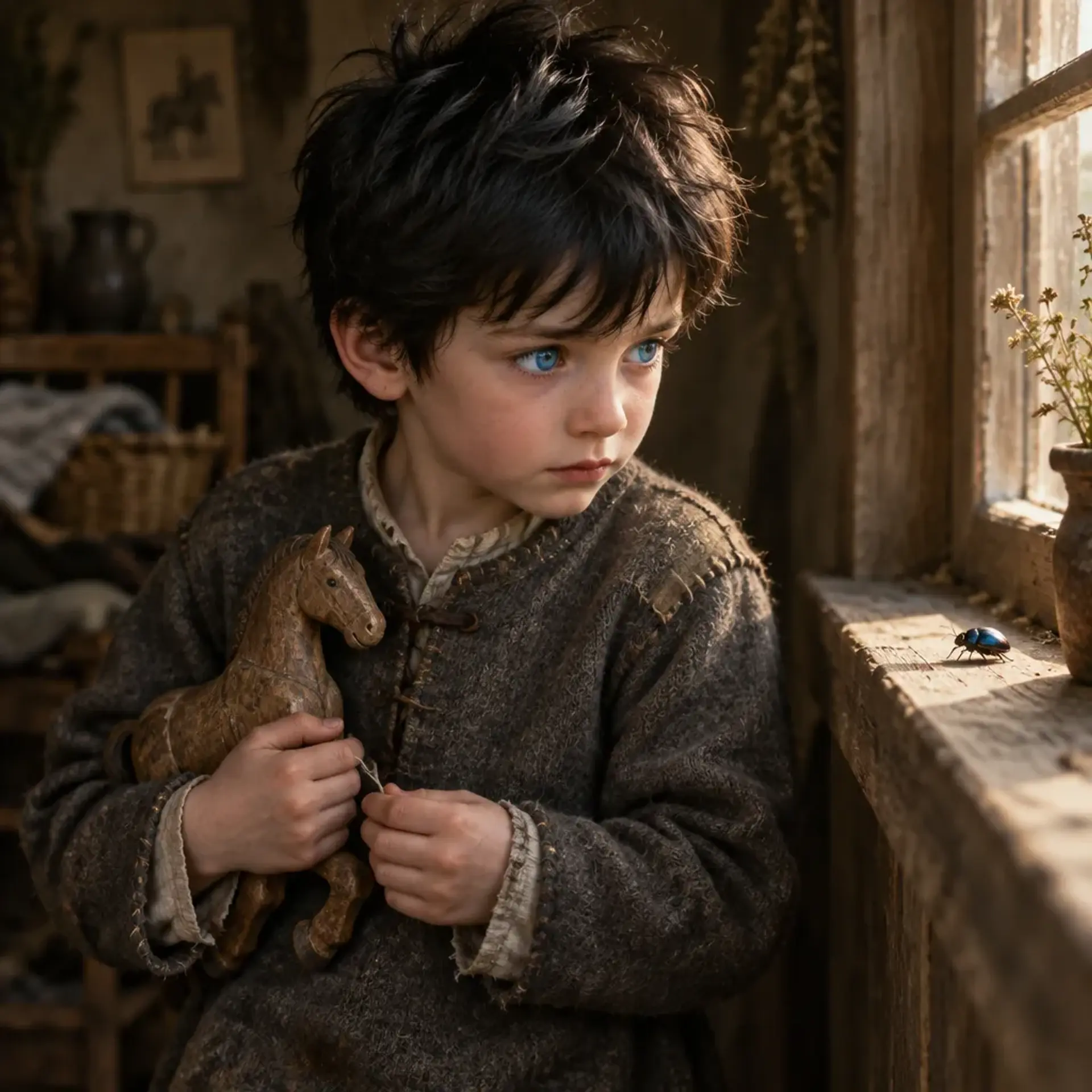
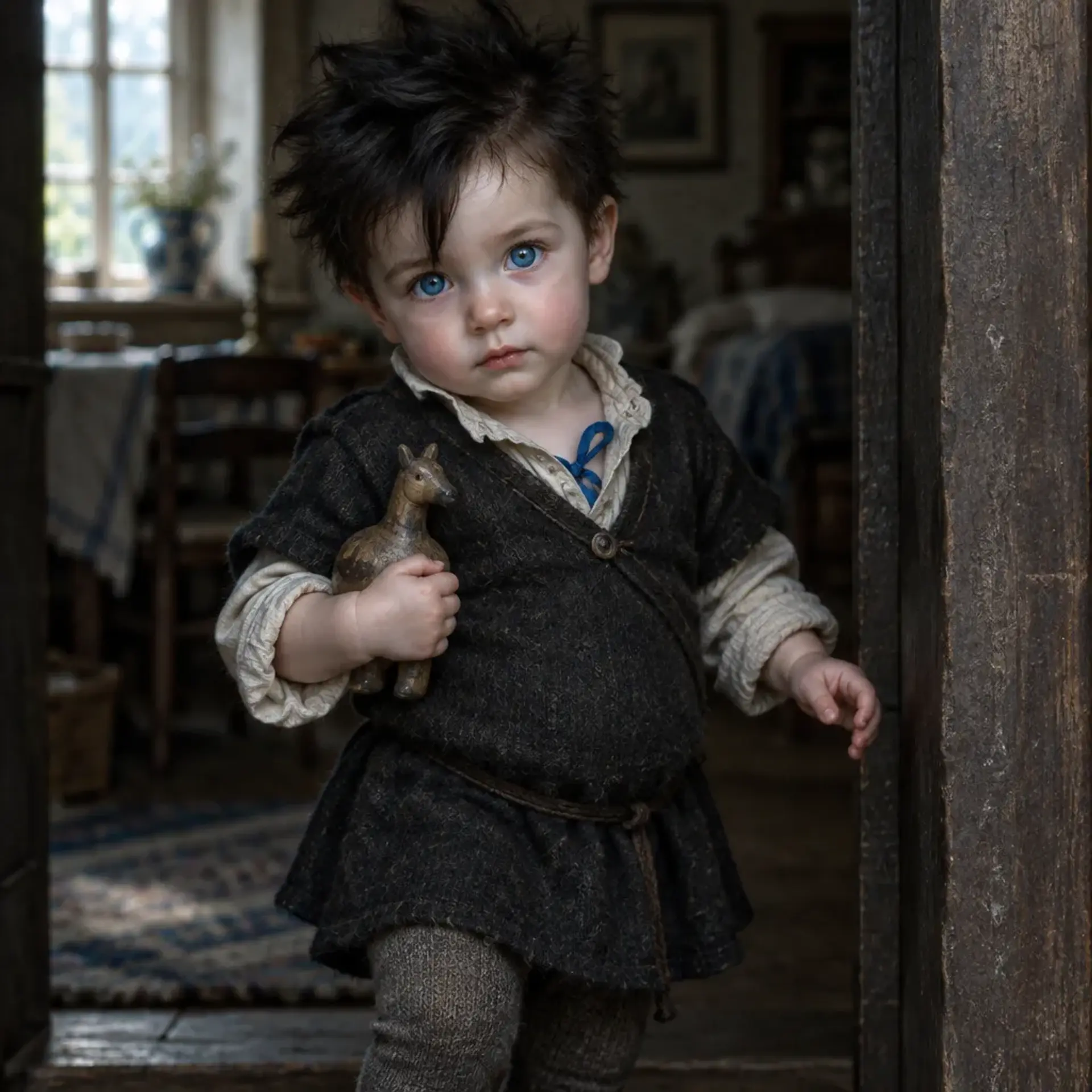
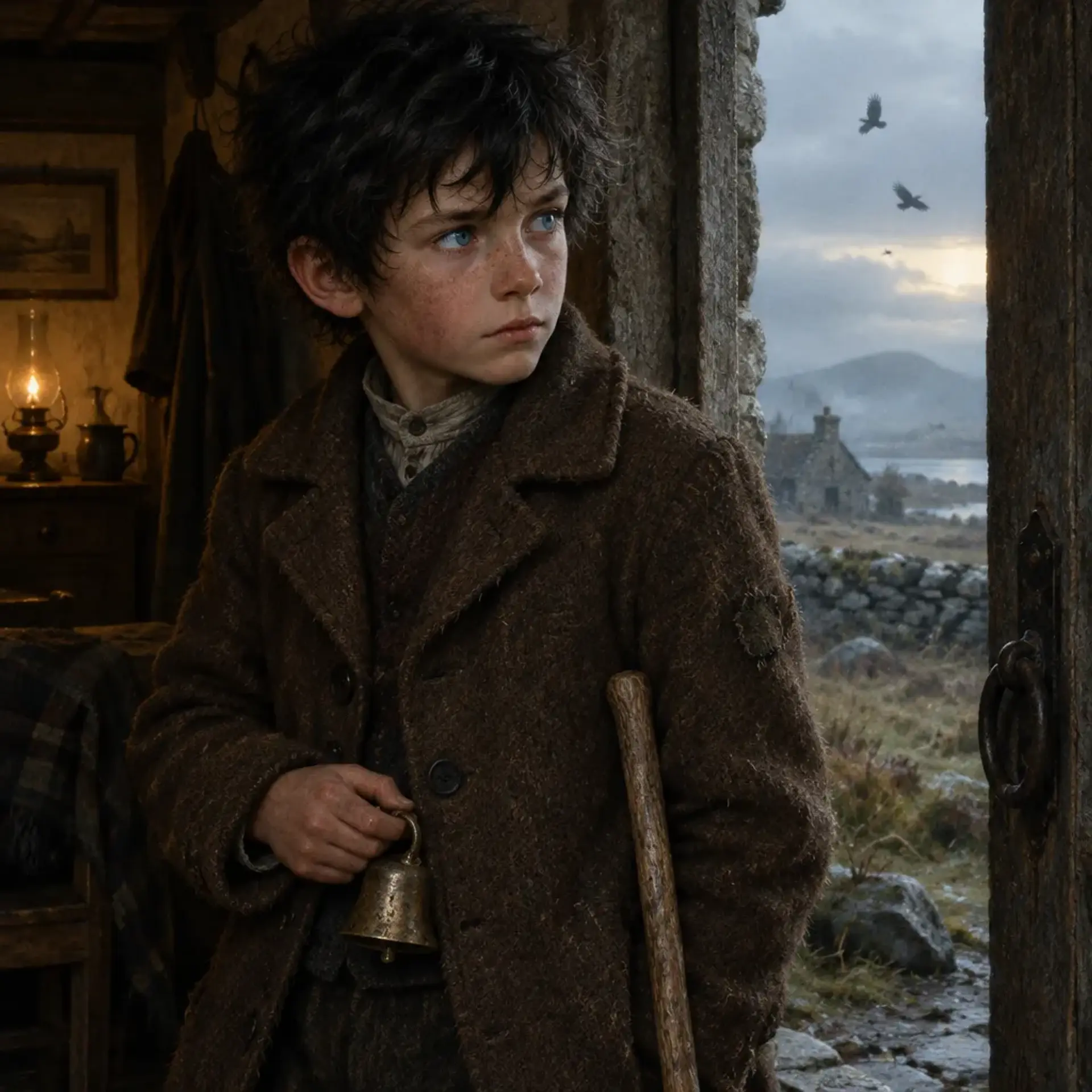
William is a slight, watchful child whose thick black hair sticks up in uneven tufts no matter how often it is combed. His startling, clear blue eyes catch lamplight sharply, giving his thoughtful face an intensity beyond his years. His skin is lightly weathered from days outside, and his boots are usually edged with dried peat. He walks carefully over uneven ground, placing each foot as if the earth has already told him where it will hold. He keeps an old brass sheep bell in one pocket and rubs its worn rim with his thumb when uneasy, an oddly fidgety habit for a child raised among formal family expectations.
Clothing
A well-mended brown wool coat, a high-necked shirt, sturdy breeches, and peat-stained boots. His clothes are respectable enough for the manor but show signs of regular use in the fields; his scarf is usually tucked away rather than worn properly.
Body language
He tends to stand slightly turned toward the nearest exit or window, shoulders tucked in when watched. Outdoors his posture opens and his gaze travels across the ground and horizon. When thinking, he rubs the rim of the sheep bell in his pocket and may stare at a person for several seconds before answering.
- Height
- 4 feet 6 inches
- Build
- Small and wiry for his age, with the sturdy legs of a child accustomed to walking across rough fields.
- Eyes
- Clear, startling blue
- Hair
- Thick black
- Skin
- Fair, lightly weathered by wind and outdoor work
- Age
- 10 years old
- Gender
- Male
- Size
- Small
Distinguishing features
Personality
15 traits and drivesWilliam is gentle with people who give him time, yet becomes stubborn when they mistake his silence for ignorance. He notices more than he can quickly explain, and he is both comforted by his mother's care and resentful of being sheltered by it. Around patient companions he can be quietly funny; under scrutiny he retreats behind stillness. Outdoors he is decisive, while in formal rooms he doubts every answer.
- Alignment
- Neutral Good
Quirks
Habits
Traits · 4
Flaws · 3
Fears · 4
Wants and needs · 4
Combat
AC 10 · HP 4 · 25 ft.William is not a trained combatant. He avoids direct confrontation, puts obstacles between himself and danger, and tries to lead others toward shelter or firm ground. If cornered, he swings his walking stick once to make room to flee. His keen observation may help the party spot tracks or hazards, but he should not be treated as a front-line combatant.
William Hirst
Actions
Reactions
Services they sell
Rewards they can give
Equipment
- Walking stick (tool)A plain ash walking stick, useful for balance on wet ground and only an emergency weapon.
- Old sheep bell (keepsake)A small brass bell with a dented lip and a strangely muted ring; William keeps it in his pocket and handles it when nervous.
- Moor notes (personal item)A folded scrap of paper marked with rough sketches of the spring, a ridge, and several raven sightings.
Possessions
Background
William Hirst was born after a punishing labor that left his mother Mary feverish and unable to hold him for long. His father Oswin, a commanding man who rarely showed uncertainty, cradled the newborn with such care that the household remembered it. William grew up reading his mother's concealed pain and his father's silences, while wishing to be trusted rather than protected. Lessons at the manor were difficult when answers had to come quickly, but out among the sheep he could spot a lame animal, a weak boundary, or a change in weather almost at once. One winter, he wandered far from the house and was found unharmed beside a spring, with ravens gathered all around him. He could not explain how he had reached it. The incident intensified family doubts about whether he could inherit the Hirst farm. His maternal uncles Edmund and Huge question his suitability, while Mary defends him and Oswin watches him with worried, guarded attention. Lately William wakes before dawn, convinced something beneath the hill is calling. He wants to investigate, but the family fears what he might find, and Oswin's own strange night wanderings make the silence between father and son more complicated.
Role in the story
A perceptive child caught between family expectations and an emerging supernatural mystery. William can offer clues about the moor, his father's unexplained nighttime behavior, and the presence beneath the hill, while the family dispute over succession provides a grounded source of conflict.
“His father Oswin, a commanding man who rarely showed uncertainty, cradled the newborn with such care that the household remembered it.”
- Faction
- The Hirst household and farm; no formal political or adventuring faction.
Known connections
Media
0 imagesNo images yet.
Turn William Hirst into a sheet
A high-res, share-ready sheet you can post or print.