William Hirst
William Hirst
At the table
Voice
A light, breathy voice with a faint rasp from cold mornings and too much time outdoors. His consonants come out carefully, as if each has to be set in place; when startled, he makes a small involuntary click in the back of his throat before speaking.
William speaks in short, carefully assembled phrases. He often pauses as though sorting sounds before words, then gives a precise answer. When excited about the moor, his sentences lengthen and tumble together; when embarrassed, he repeats the last word of a question before answering it.
Speech patterns
How to play them
Give William time to answer and speak to him directly rather than discussing him as if absent. He responds to patient questions, shared observation, and small practical kindnesses. Mockery about his development makes him withdraw; pressure may make him bolt toward the moor or cling to Mary.
Goal
To prove that being slow to learn other people's lessons does not mean he is useless, and to understand what calls to him from the moor.
Motivation
He wants his family to stop treating him like a problem to be solved. Beneath that wish is a growing, uncertain fascination with the moor and the possibility that its strange sounds understand him.
Appearance
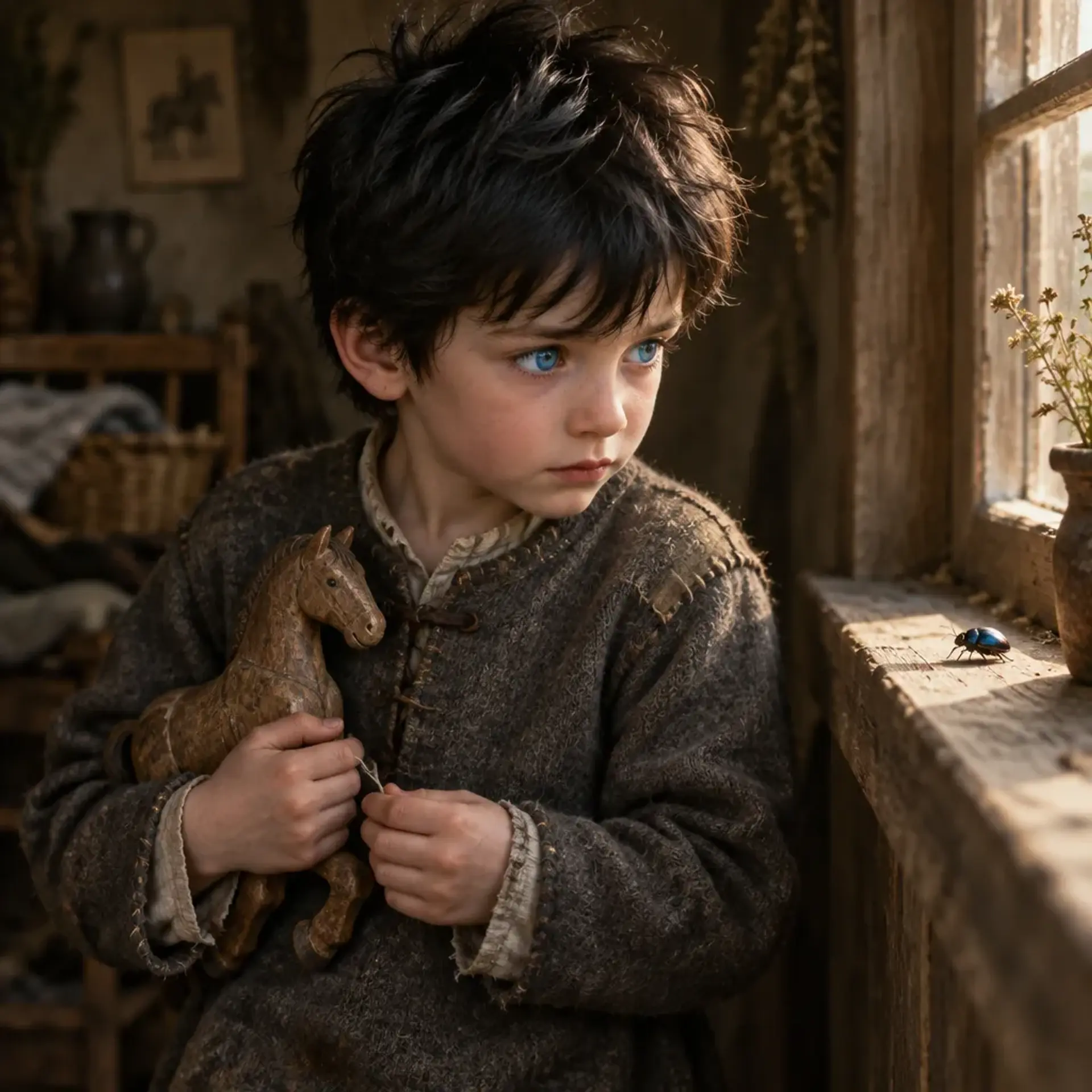
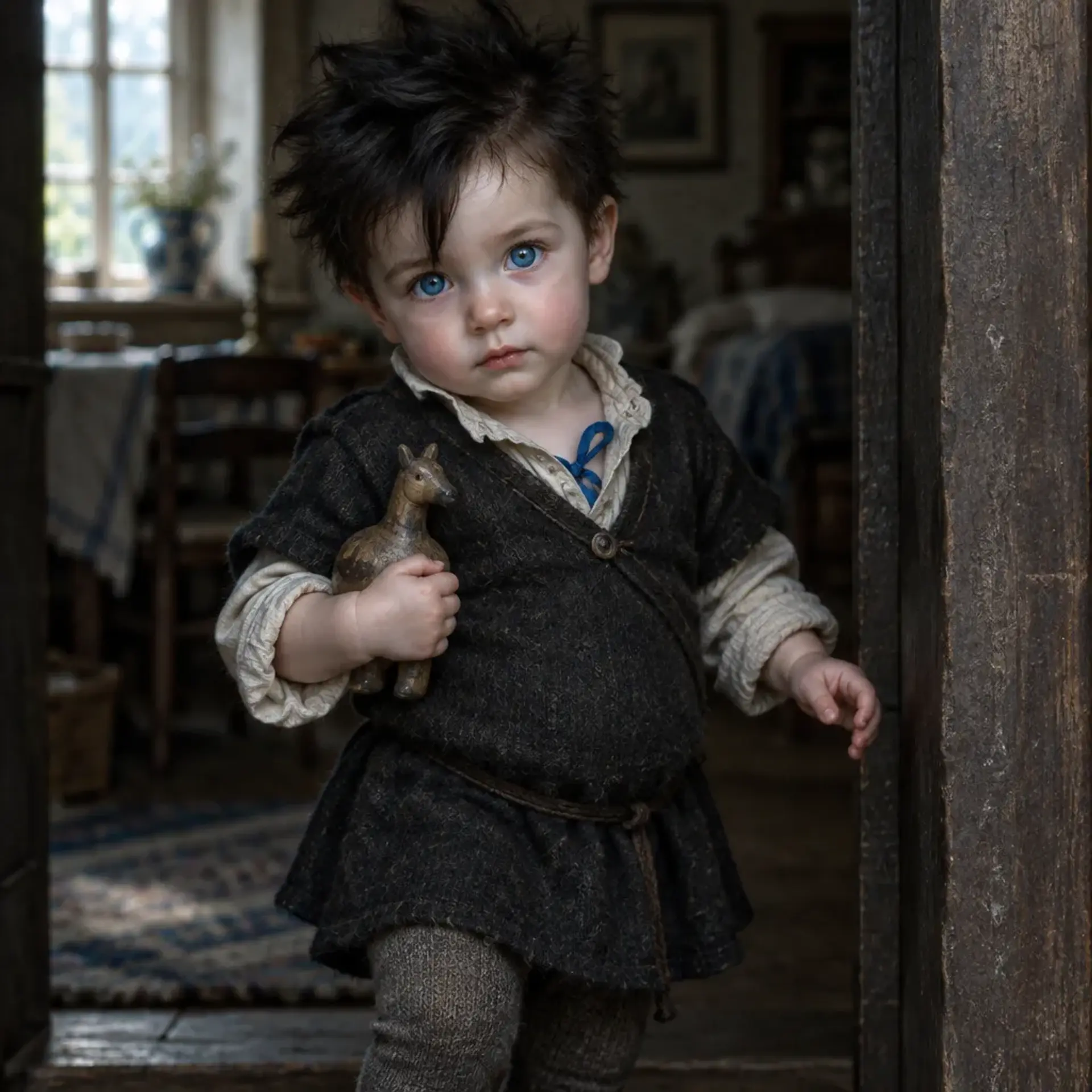
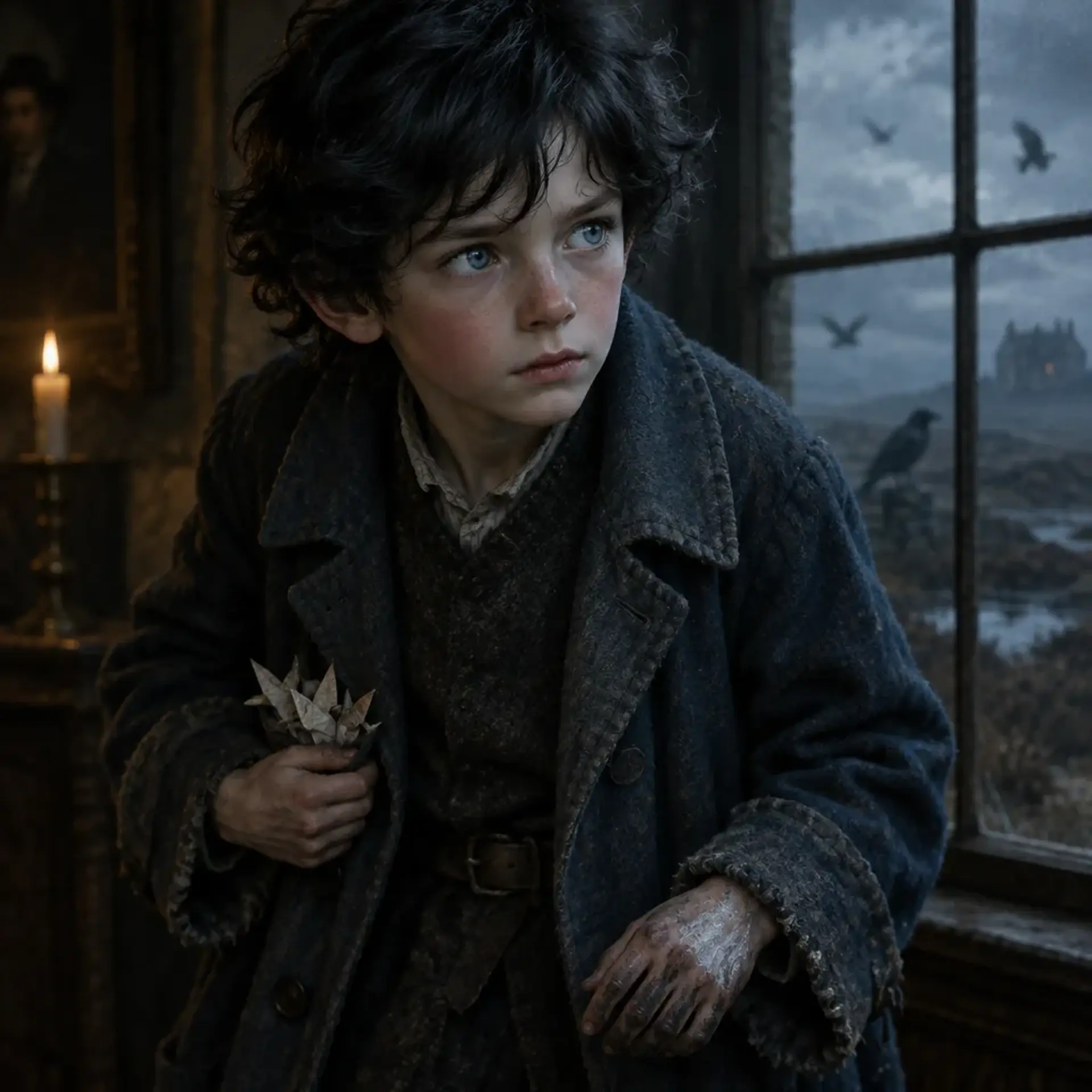
A very pale boy with a narrow, watchful face and black hair that grows in thick, uneven waves, refusing the neat part his nurse tries to give it. His skin has the almost translucent cast of someone raised indoors through long winters, but his cheeks redden quickly in the moor wind. He moves without the restless fidgeting adults expect: when waiting, he places his weight on the balls of his feet and tips his head as if measuring a sound beyond the room. His hands are often smudged with peat or chalk. The unexpected detail is that he keeps small, carefully folded paper birds in his pockets and gives them names.
Clothing
A dark wool tunic, a faded blue overcoat too large at the cuffs, wool hose, and sturdy boots usually marked with dried peat. His collar is often crooked because he dislikes having it fastened tightly.
Body language
He stands with his weight forward, as if prepared to follow a sound. In a crowded room he keeps close to a wall, tracing its seams with his gaze. When comfortable, he rocks subtly from heel to toe; when ashamed, he tucks his chin into his collar and presses one thumb against the folded paper birds in his pocket.
- Height
- 4 feet 2 inches
- Build
- Small and slight for his age, with narrow shoulders and a cautious, forward-leaning stance
- Eyes
- Burning, clear blue
- Hair
- Black
- Skin
- Very pale, with a cool, almost translucent cast and cheeks that redden sharply in cold wind
- Age
- 10 years
- Gender
- Boy
- Size
- Small
Distinguishing features
Personality
14 traits and drivesWilliam is observant but slow to put observations into words, and he can seem distant until something catches his interest. He wants his parents' approval yet resists being handled as a fragile possession. In calm company he is gentle and unexpectedly funny; under scrutiny he becomes stubbornly silent. Outdoors, where adults stop testing him, he grows curious and decisive.
- Alignment
- Neutral good, still a child learning what loyalty and fairness mean
Quirks
Habits
Traits · 4
Flaws · 3
Fears · 3
Wants and needs · 4
Combat
AC 10 · HP 4 · 25 feetWilliam avoids combat and tries to reach a trusted adult or a safe hiding place. If trapped, he throws a stone to create a distraction and runs. He has no formal training, armor, or magic.
William Hirst
Actions
Reactions
Services they sell
Rewards they can give
Equipment
- Oversized blue coat (clothing)A plain wool coat, generously cut so it can be passed down or altered as he grows.
- Folded paper birds (personal keepsake)A little bundle of paper birds made from scraps of household paper; no magical property is known.
- Spring stone (keepsake)A smooth grey pebble he found beside the spring during the winter outing.
Possessions
Background
William was born after a long, exhausting labor that left Mary Hirst feverish and Oswin Hirst silent with fear. When Oswin first held his son, he did so with a solemn care that the household remembered more clearly than any words. The infant's black hair and Oswin's bright, burning blue eyes became family talk before William could speak. As he grew, he learned words and lessons more slowly than other children, and the household's concern sharpened into arguments over whether he could one day inherit. His maternal uncles Edmund and Huge, along with his maternal grandparents, worry that the boy will be judged incapable; Mary tries to shield him from their scrutiny, while Oswin watches him for signs of what he calls 'moor-creature ways.' That phrase has hurt William even when he did not understand it. A formative change came during a winter outing when William wandered from the house and was found beside a spring, dry and uninjured, with a flock of ravens gathered around him. Since then, he has been drawn to the moor's sounds and patterns. Now the family faces pressure to name a suitable heir, while William has begun waking before dawn and insisting that something beneath the hill is calling through the ground.
Role in the story
A vulnerable young heir whose unusual development may be ordinary difference, family anxiety, or the first sign of a genuine connection to the moor. He can draw the party into a family succession dispute, a mystery beneath the hill, or a moral choice about protecting a child from adults who see inheritance before personhood.
“When Oswin first held his son, he did so with a solemn care that the household remembered more clearly than any words.”
- Faction
- The Hirst household and its family claim; no formal faction membership
Known connections
Media
0 imagesNo images yet.
Turn William Hirst into a sheet
A high-res, share-ready sheet you can post or print.