Mary
Mary
At the table
Voice
Her voice has the dry warmth of someone accustomed to talking over oven noise and crowded rooms, with a slight rasp from flour-dry air. She clips instructions into short phrases when working, but her speech loosens around children and old friends. The name Mary itself lands plainly and firmly, without ornament.
She speaks in plain, practical sentences shaped by years of serving customers and calming worried children. She often answers a personal question with a useful one. When she is trying to be brave, she becomes almost chatty; when memory catches her, she stops mid-sentence and resumes with a detail about the weather, food, or the next chore.
Speech patterns
How to play them
Begin with ordinary kindness and practical hospitality. Mary responds well to patience, especially if visitors show care for her son. Avoid cornering her or demanding details about the wedding night; a private, nonjudgmental conversation and evidence that Oswin is seeking help may earn a guarded confession.
Goal
Find a way to learn what happened on her wedding night and keep her son safe without destroying the family she still longs to have.
Motivation
Love for her son and a stubborn remnant of the tenderness she once felt for Oswin.
Appearance
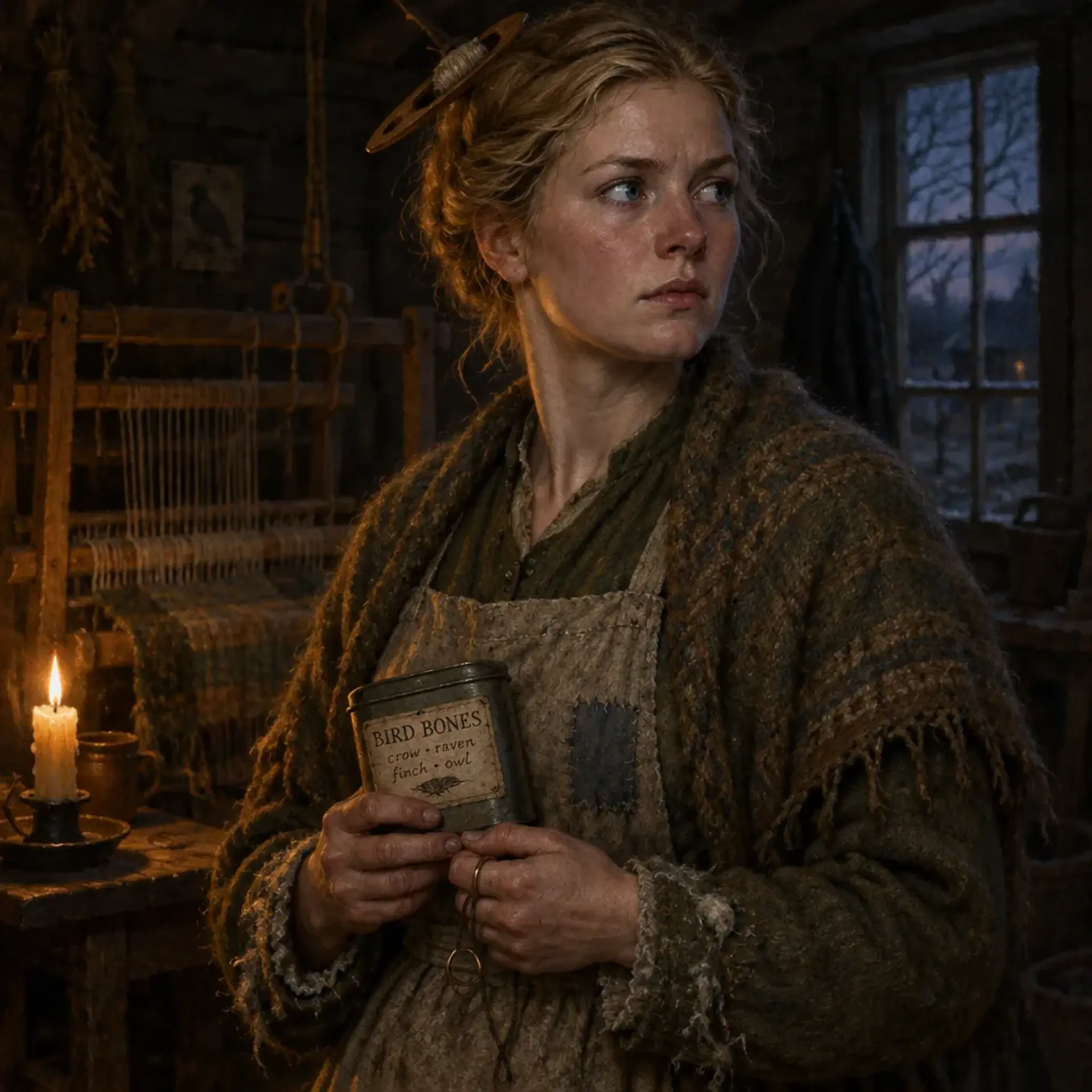
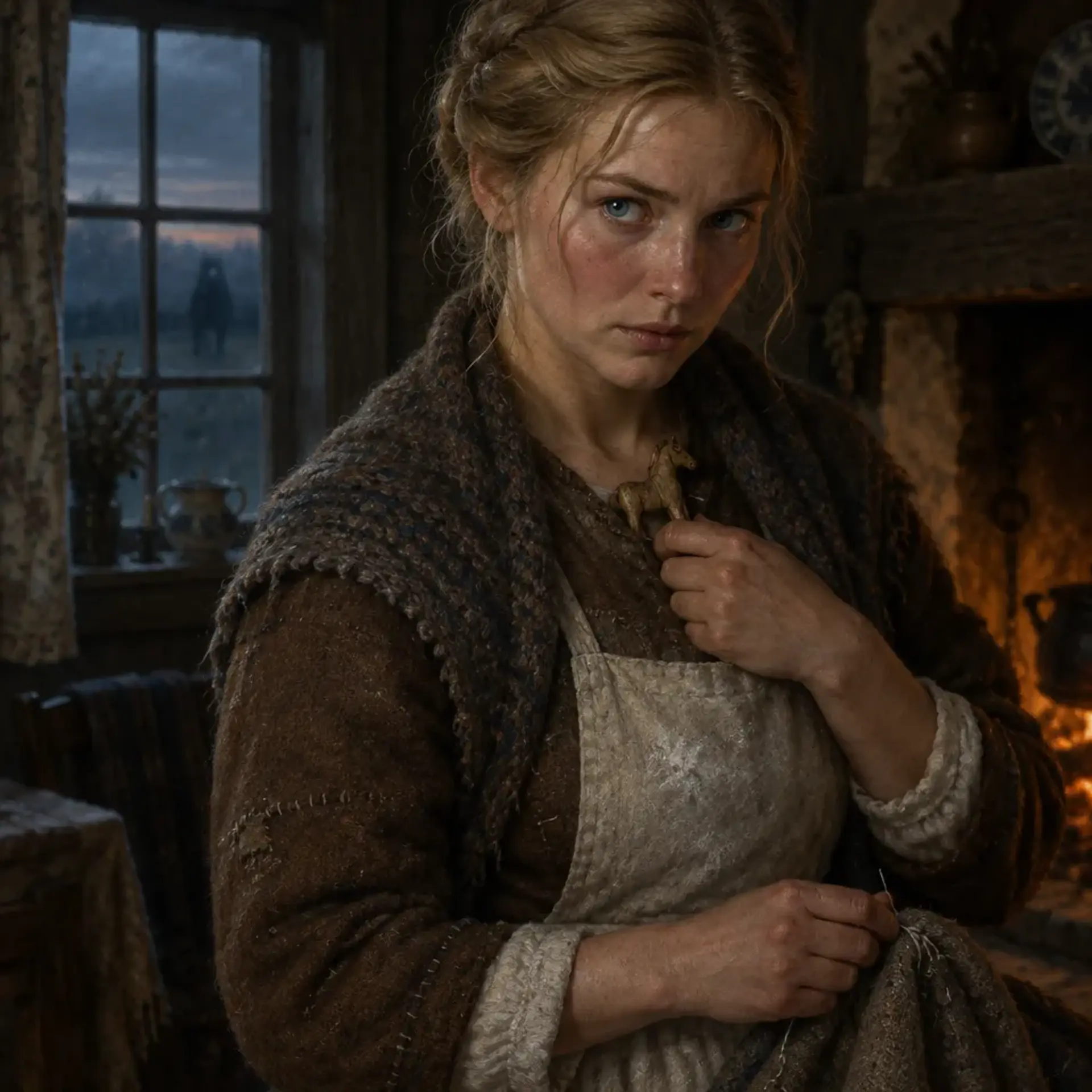
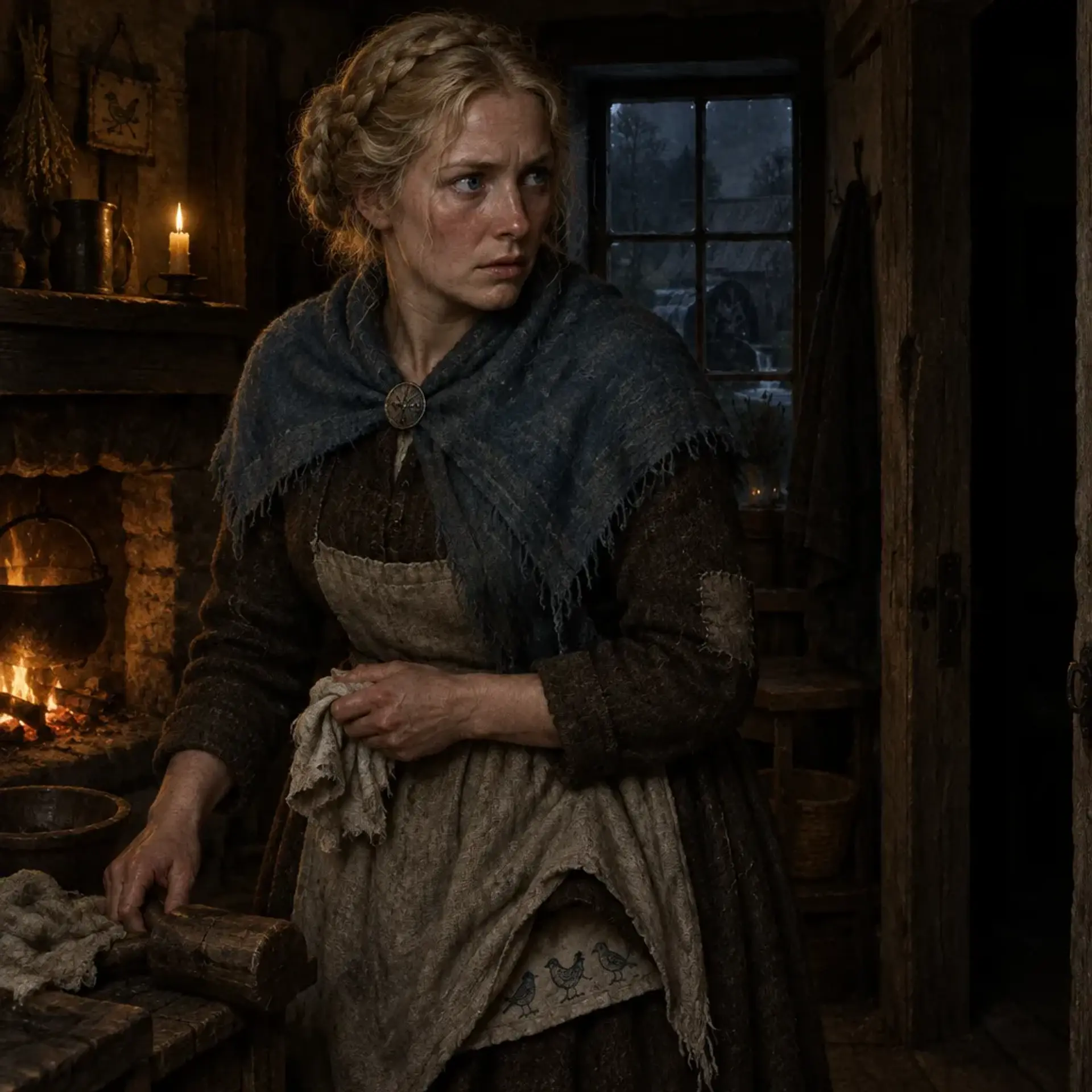
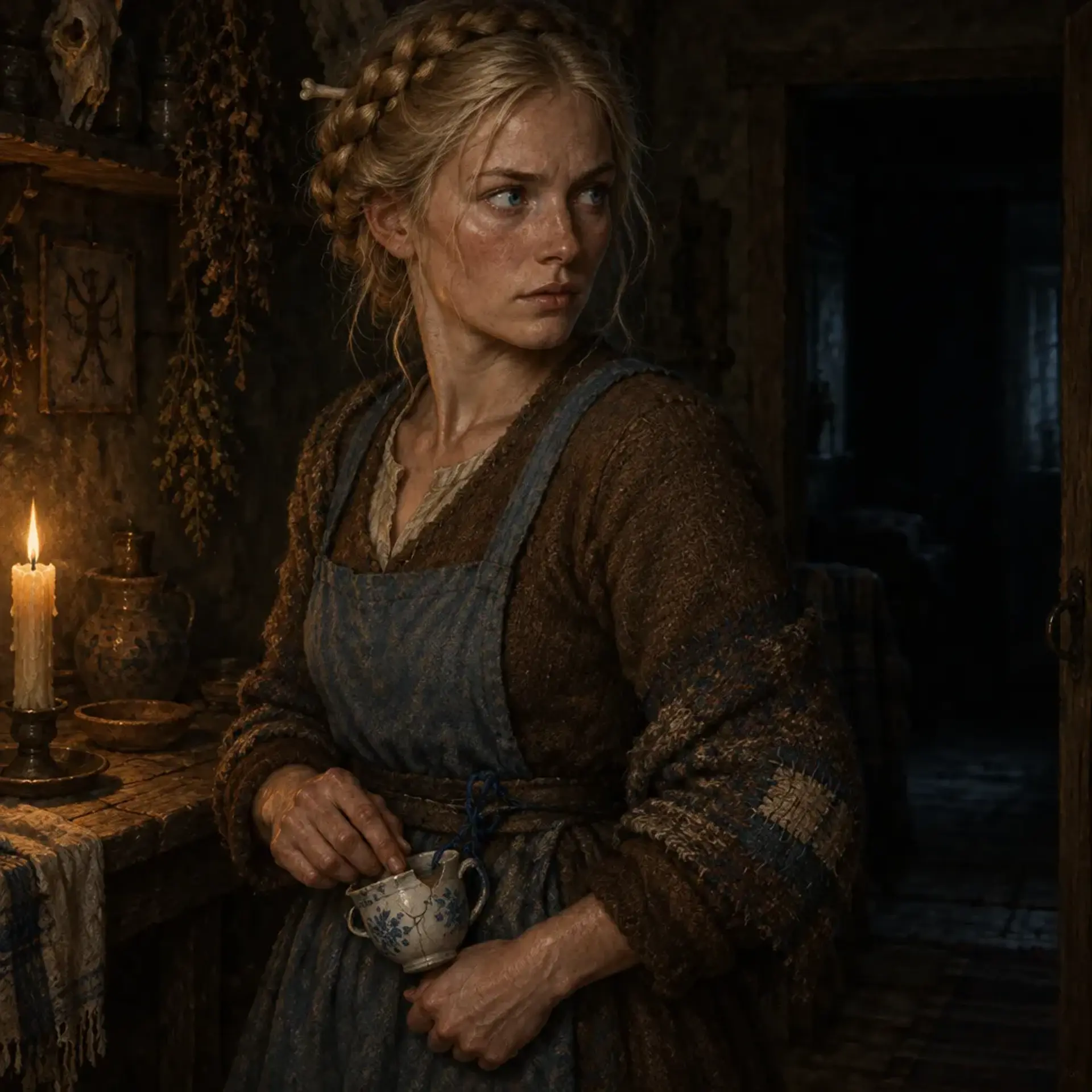
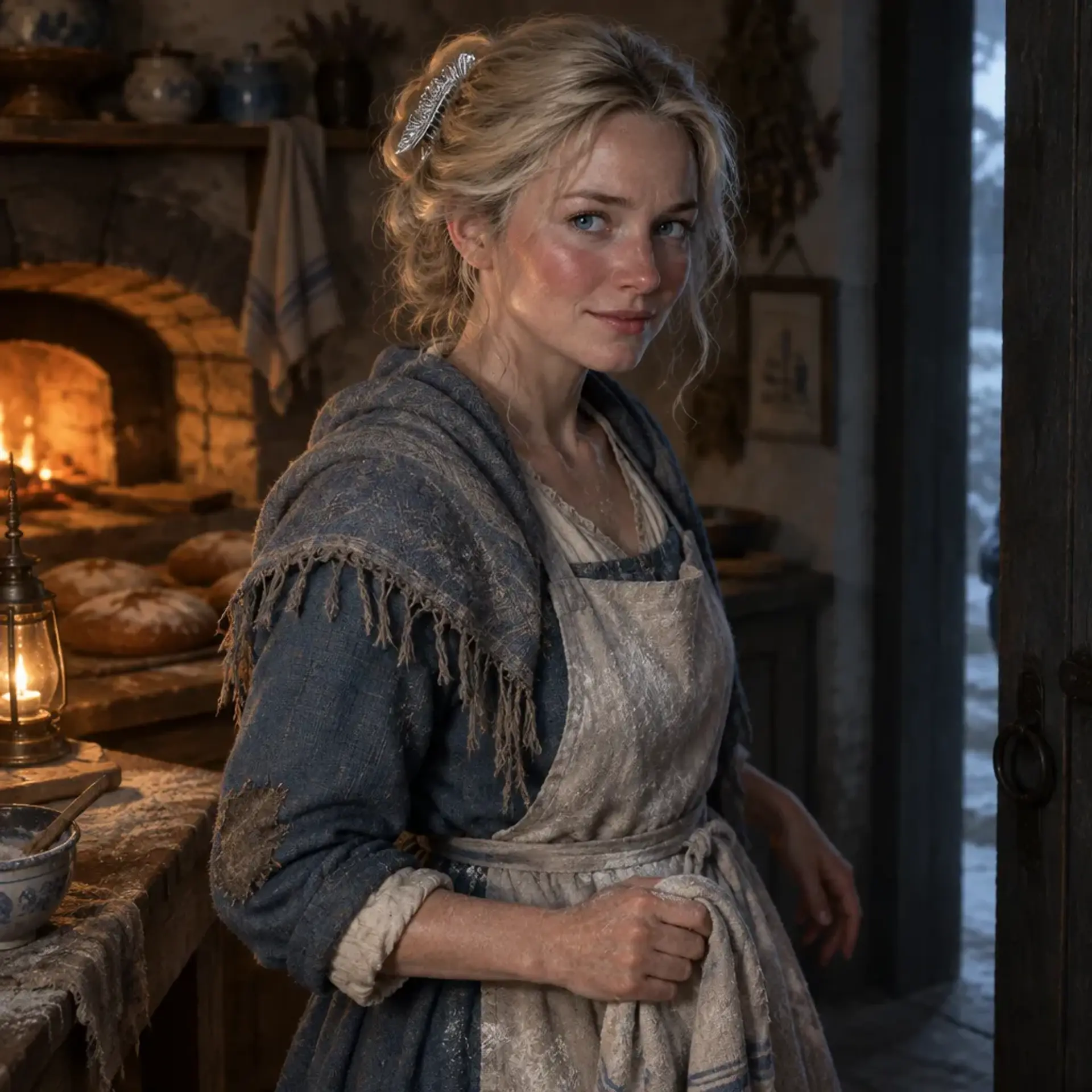
Mary is a fair-haired woman with clear blue eyes and a face made memorable less by beauty than by attention: in a room, her gaze checks the doors, the windows, and the hands of whoever is nearest her son before it settles on a face. Her pale hair is usually pinned up in a hurried coil, with wisps escaping around her temples. She moves with the careful economy of someone used to carrying a sleeping child and a full water pail at once. Her dresses are repeatedly let out at the waist and patched at the elbows, but she keeps one absurdly polished silver hair comb, a wedding gift she wears even while scrubbing pots. Her smile comes readily; the breath she takes before answering does not.
Clothing
A faded blue wool dress with careful patches at the elbows, a linen apron dusted with flour, and a shawl worn thin at the fringe. Her silver comb is polished brighter than anything else she owns.
Body language
Mary stands with her weight balanced as if ready to step toward her son or away from a sudden movement. She turns her left shoulder toward people she distrusts, keeps her hands occupied with a hem or dishcloth, and watches hands before faces. When an old tenderness catches her off guard, her mouth softens before her eyes do.
- Height
- 5 ft. 4 in.
- Build
- Compact and wiry from domestic work, with sturdy shoulders and a quick, efficient stride.
- Eyes
- Clear blue
- Hair
- Blond, usually pinned into a hurried coil
- Skin
- Fair, with a pink flush from the bakehouse heat
- Age
- Twenty-eight
- Gender
- Woman
- Size
- Medium
Distinguishing features
Personality
14 traits and drivesMary can be warmly generous, quick to offer a meal or mend a torn sleeve, yet she keeps a wary part of herself awake even among friends. She wants to believe Oswin can be the man she remembers, but she measures every kindness against the terror of that night. When calm, she is wry and observant; when frightened, she becomes brisk and controlling; when her son is threatened, she acts before she has time to doubt herself.
- Alignment
- Neutral good
Quirks
Habits
Traits · 3
Flaws · 3
Fears · 4
Wants and needs · 4
Combat
AC 10 · HP 4 · 30 ft.Mary is not a trained combatant. She tries to get her son behind cover, call for help, and escape. If trapped, she uses furniture, hearth dust, and the cleaver to create an opening, then runs rather than pursuing.
Mary
Actions
Reactions
Services they sell
Rewards they can give
Equipment
- Kitchen cleaver (weapon)A plain household cleaver kept in an apron loop; serviceable, not made for battle.
- Flour pouch (tool)A small pouch of flour and hearth ash, usually carried for baking and cleaning.
- Silver comb (keepsake)A polished silver comb given to her on her wedding day.
Possessions
Background
Mary grew up helping her mother run a roadside bakehouse, where she learned to judge weather by the smell of flour and to soothe strangers without trusting them. She married Oswin Hirst after a brisk, affectionate courtship, believing his awkwardness came from shyness and old grief. On their wedding night, something wearing Oswin's shape came to her in the dark. By dawn, Oswin was himself again, exhausted and terrified, and told her enough to convince her he had been changed by a curse, but not enough to explain what had happened. He begged her to keep the night secret. Mary did. Their young son was born months later, and Mary has never been able to shake the belief that the creature, not Oswin, fathered the boy. She loves the man she remembers from courtship and fears the beast she met in their bed, and the two feelings have become difficult to separate. She stays near Oswin's acquaintance, the apothecary Oswin Hirst trusts, hoping for a cure while quietly preparing an escape route. Their marriage is strained by what neither can say plainly, and Mary is running out of time before her son begins asking questions.
Role in the story
A frightened but loving witness to the mystery surrounding Oswin Hirst. Mary gives the story an intimate human cost and can become a source of testimony, an ally seeking a cure, or a desperate obstacle if she believes the party will endanger her child.
“She married Oswin Hirst after a brisk, affectionate courtship, believing his awkwardness came from shyness and old grief.”
- Faction
- No formal faction. Her loyalties are to her son and to the version of her marriage she still hopes might be saved.
Known connections
Media
0 imagesNo images yet.
Turn Mary into a sheet
A high-res, share-ready sheet you can post or print.