Marta Eichenwald
Marta Eichenwald
At the table
Voice
Her voice has a dry, breath-catching edge from the island's ash and the habit of speaking while doing physical work. It begins with a small intake through the nose, then comes out clear and measured, with the firm cadence of someone used to giving directions in a busy kitchen. Her voice is not grand or theatrical. When she is tired, the roughness becomes more noticeable; when she is frightened, she clips the ends of sentences and gives instructions rather than explanations. Anger makes her more explicit, not quieter: she names exactly what she thinks someone is about to do.
Marta speaks in compact, practical sentences shaped by household work and years of avoiding attention. She prefers exact observations to dramatic guesses. She often pauses at the start of a reply, takes a careful breath through her nose, and then answers directly. When tired, a faint rasp catches at the back of her throat, as if dust has settled there. She has a few island and family expressions, but does not dress ordinary thoughts in grand language. Under stress, she repeats a person's name to anchor the conversation and make sure they are listening.
Speech patterns
How to play them
Approach Marta with practical offers rather than demands for a revelation. Explain what you want to know and why. Give her time to assess you, and do not touch the eggs or her brother without permission. She responds well to honest help with food, shelter, or protection, but treats grand promises and eager fascination as warning signs. Respecting her uncertainty about the sire is essential.
Goal
Keep her three eggs safe, discover what can be known about their origin without surrendering them to anyone's control, and help her family survive the island's worsening food crisis.
Motivation
Marta wants to protect her eggs and family without becoming a public symbol, a breeding mystery, or a tool for people desperate to save the island. She wants evidence before belief, but her body and instincts are changing faster than anyone can explain.
Appearance
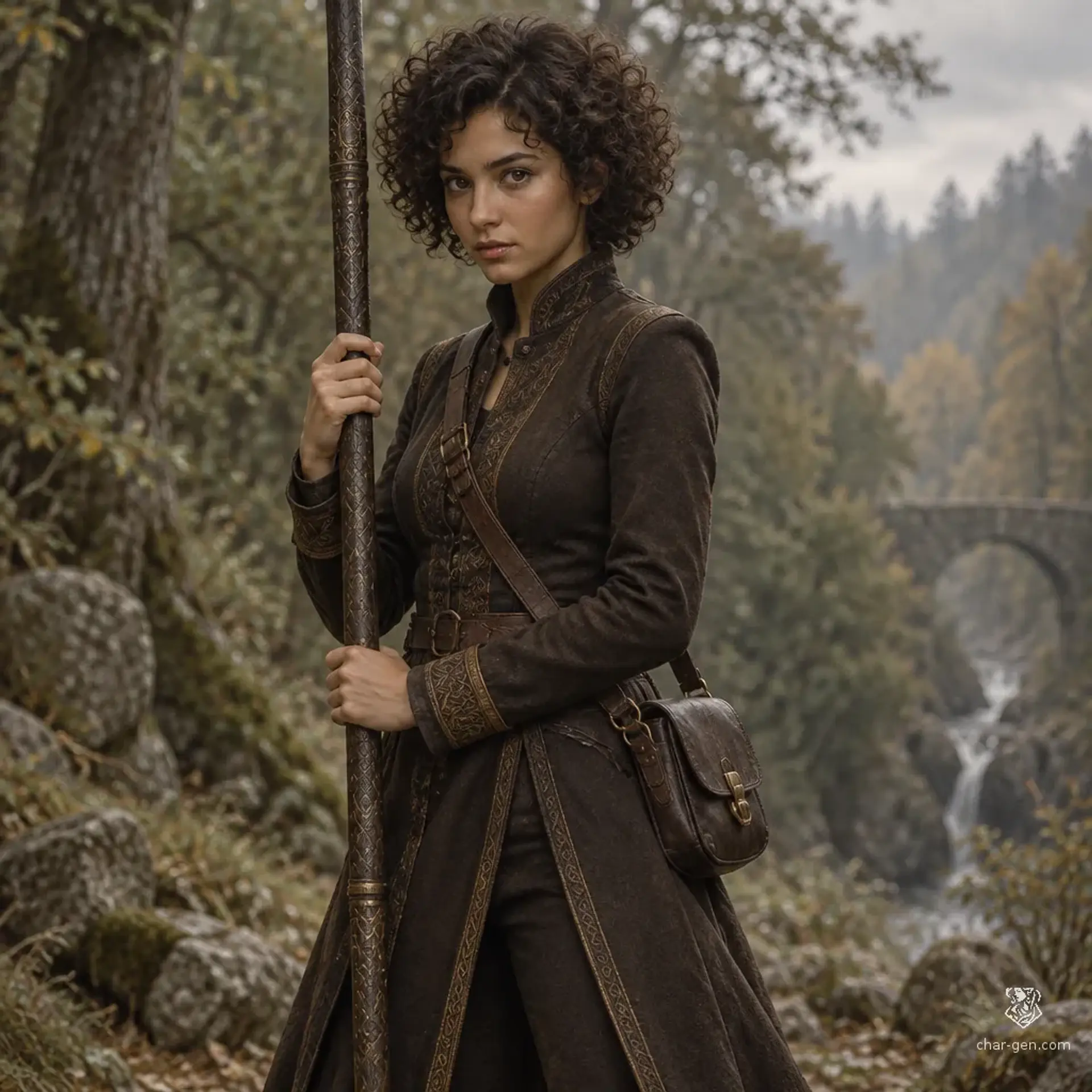
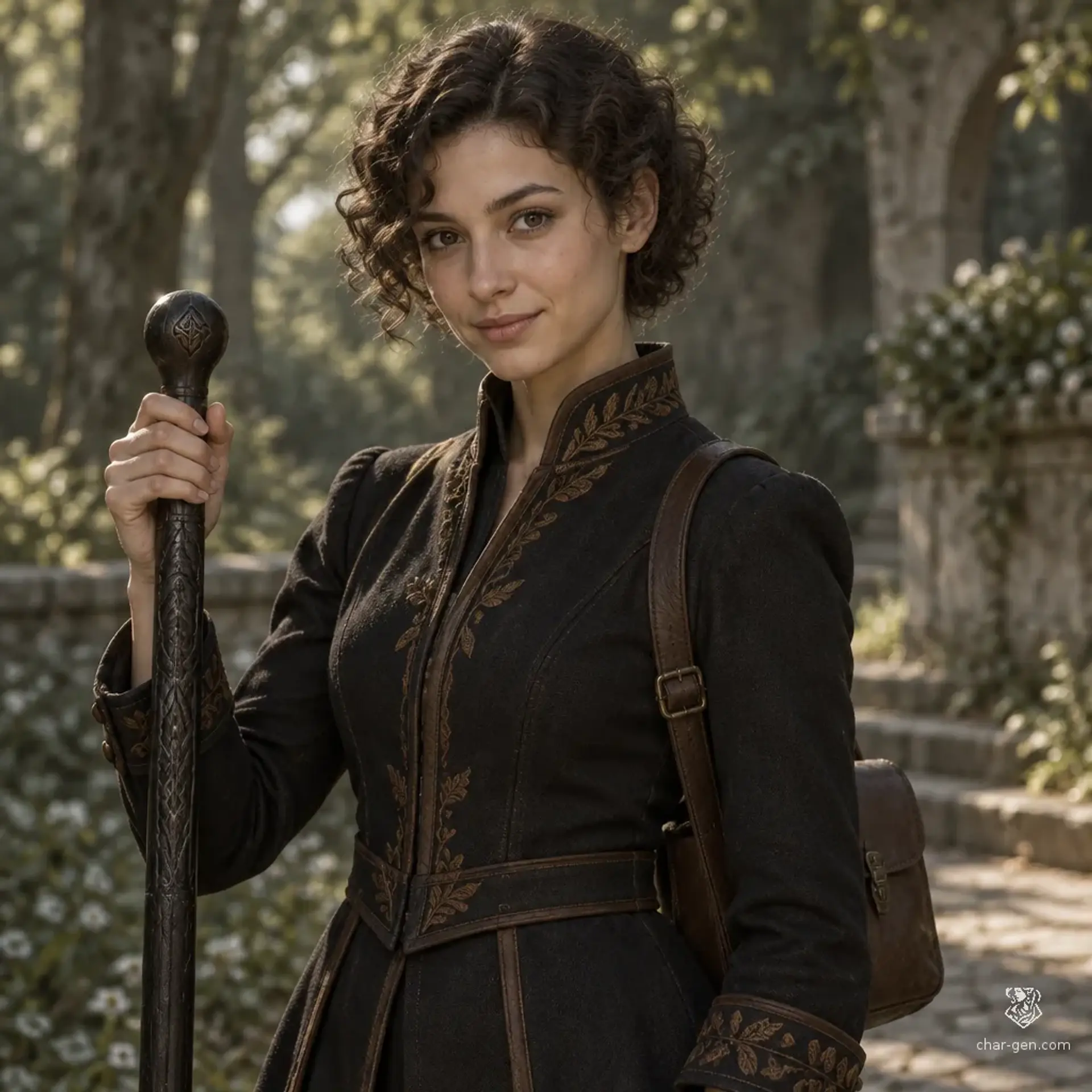
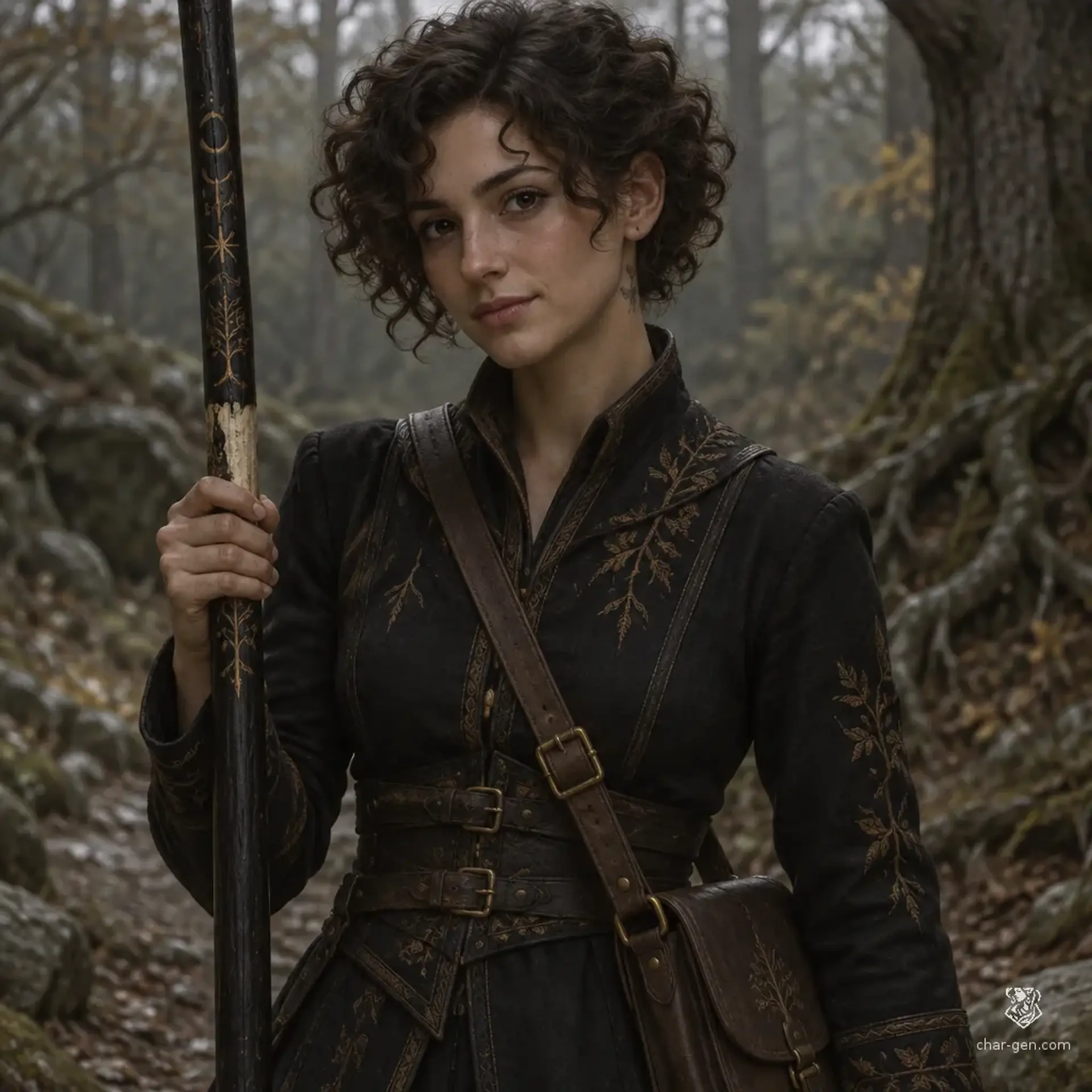
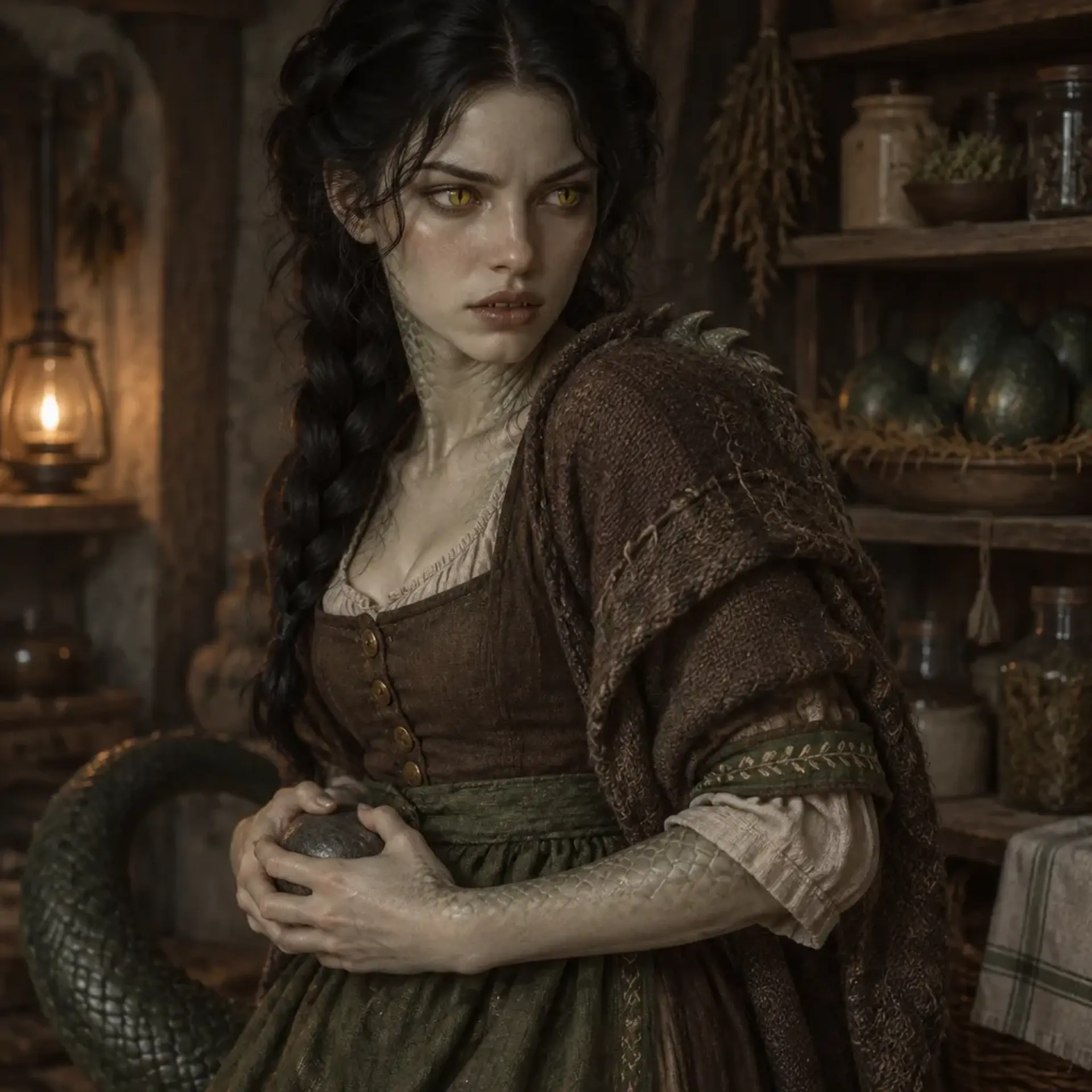
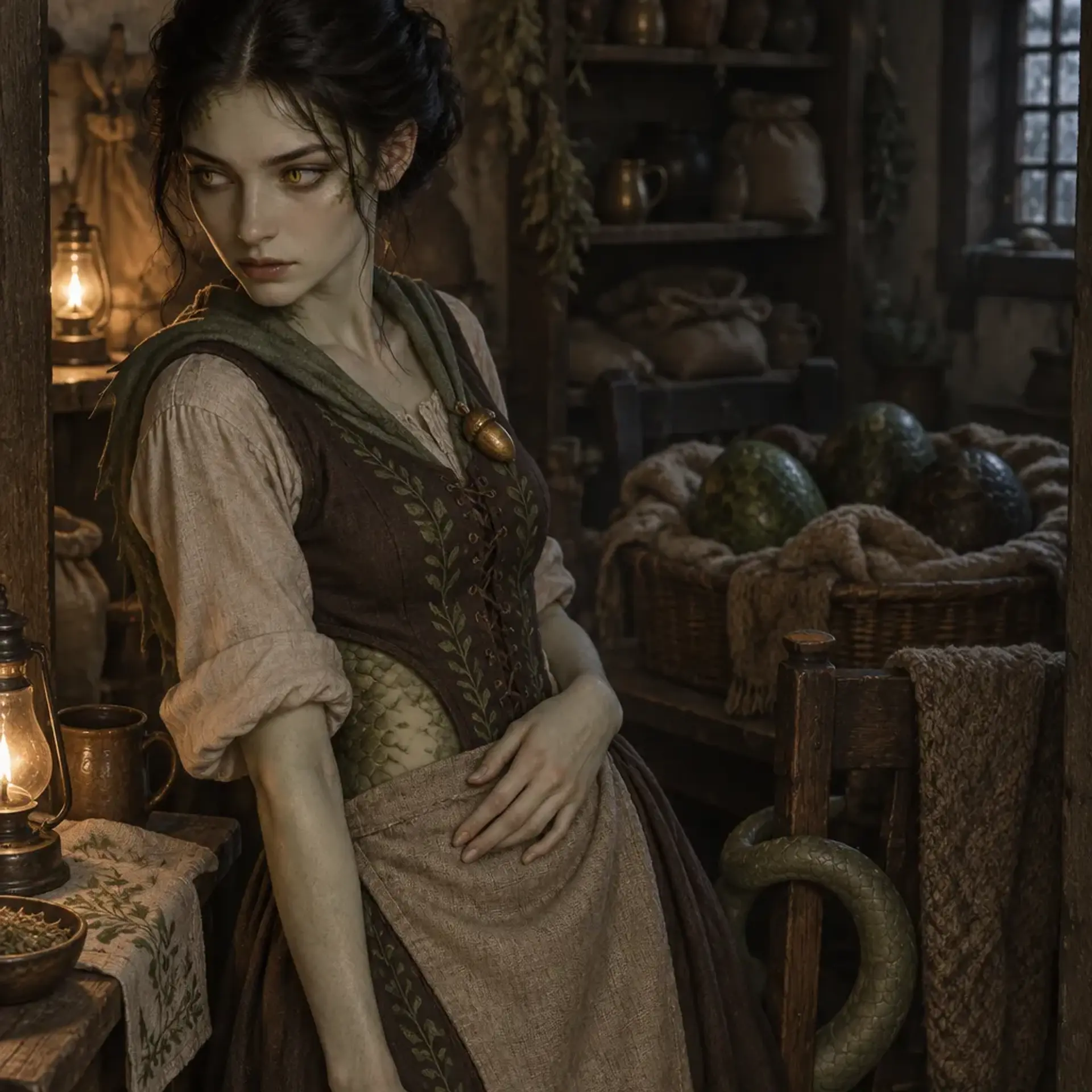
Marta was once the sort of young woman whose face could vanish into a village crowd; now her body seems to be remembering a shape older and more dangerous than her own. Her pale green-white skin has a cool, waxy cast, with thin plates of muted green scale beginning at her lower spine and running in broken, leaf-veined patches over her hips and ribs. Her black hair is thick, straight, and usually twisted into a practical knot, though loose strands cling to her temples when she is warm. Her yellow eyes have narrow black pupils that contract sharply in bright light. Her frame remains lithe, but her waist and hips have lengthened into a sinuous, serpentine line, and her gait has acquired a rolling, careful quality, as if she is learning how to distribute weight around a body that changes between one week and the next. A newly grown tail, still slender and awkward, curls around chair legs when she is anxious. Folded wing buds ridge her back beneath her clothes; they ache and twitch, but cannot lift or carry her. Her chest is sore and fuller as her body prepares for nursing, and she is private and unsettled about the change. What people least expect of a woman suddenly treated as a portent is that she keeps a tiny, meticulously tended herb garden and apologizes to each plant before pruning it. She leaves an impression of watchfulness held under exhausting restraint: a mother animal trying very hard to look like an ordinary neighbor.
Clothing
She favors practical German-style dresses: sturdy linen underdresses, fitted bodices with lacing that can be loosened as her shape changes, long skirts split discreetly for movement, and a wool apron with deep pockets. The colors are soot-brown, oat, and dull leaf green. Small flourishes include narrow embroidered borders of curling vines, a brass acorn clasp inherited from her mother, and a neatly folded kerchief. She has begun sewing hidden gussets into the backs of her dresses so the wing buds and tail do not chafe.
Body language
Marta waits with most of her weight on the balls of her feet, as if ready to turn sideways through a narrow gap. Her hands often rest over her abdomen or on the nearest solid surface. When the eggs are close, her tail curls around a chair leg or her own ankle. She angles her body between them and unfamiliar people without seeming to notice she is doing it. In a rare relaxed moment, she leans her shoulder against a doorframe and lets her jaw unclench.
- Height
- 5 feet 8 inches
- Build
- Lithe and increasingly serpentine, with a long, supple torso, subtly altered hips and legs, a growing tail, and wing buds that remain nonfunctional. Her body is changing rapidly and can ache or tire without warning.
- Eyes
- Draconic yellow with narrow black pupils
- Hair
- Black
- Skin
- Pale white with a cool greenish cast
- Age
- Young adult
- Gender
- Female
- Size
- Medium
Distinguishing features
Personality
18 traits and drivesMarta is practical, private, and more compassionate than she is comfortable admitting. Those qualities do not sit neatly together. She is capable of listening patiently to a frightened farmer, then refusing that same farmer any access to the eggs without apology. She dislikes being watched, but notices everything about the people watching her. She wants to be treated as an ordinary neighbor, yet she instinctively takes charge when someone is in danger. This can make her seem cold at the very moment she is trying hardest to care. Before the eggs, Marta's preferred way to handle a problem was to find the useful task hidden inside it. A sick child needed clean water; a torn dress needed a patch; a failed crop needed a different seed. She did not romanticize hardship. She believed most troubles were made smaller by work, patience, and not making a spectacle of oneself. She still believes this, but her new circumstances resist practical solutions. No amount of careful sewing explains why her hips are changing, why her tail curls around furniture, or why a stranger can feel an urge to guard eggs that are not theirs. She can be warm in ordinary settings. With children, she is patient and quietly funny. With her sisters, she remembers small details and can tease them with affectionate precision. With neighbors she trusts, she shares food without keeping score. Yet when the eggs enter a conversation, her warmth tightens into watchfulness. She asks what someone intends to do, who would be allowed to decide, and what happens if the answer is wrong. She is not suspicious because she assumes everyone is wicked. She is suspicious because the kindest people can still justify taking what they fear they cannot protect. Marta's instincts pull against her habits. She would like to sleep through the night, but wakes to check the eggs' warmth. She hates being the focus of a room, but becomes the first person to step forward when someone reaches toward them. She wants to trust her brother as an equal, yet finds herself checking his meals and temper like a parent. She dislikes dramatic language, but sometimes feels a forceful certainty that the eggs are hers to guard. That certainty frightens her as much as it steadies her. When calm, Marta is deliberate and observant. She asks specific questions, keeps track of who has offered help, and prefers to decide after a night's sleep. When embarrassed, she jokes dryly or returns to a chore. When frightened, she becomes economical with words and positions herself near an exit or between the threat and the eggs. When angry, she does not become soft-spoken or ceremonious. Her voice firms, her words grow plain, and she names the consequence she sees coming. If she feels cornered, she can be stubborn enough to refuse even a sensible compromise simply because the other person tried to force it. She dislikes people who confuse confidence with knowledge. Marta does not pretend to understand the eggs, and becomes impatient with anyone who calls them a blessing, curse, weapon, or promise as if the name settles anything. She is willing to hear theories, including frightening ones, when the speaker distinguishes evidence from guesswork. She is less willing to hear a theory presented as a reason to make her surrender her choices. Her private tenderness appears in practical gestures. She warms a bowl before offering food to someone sick. She folds her sisters' letters carefully and reads them more than once. She remembers which neighbor cannot tolerate smoke and which child is afraid of thunder. She does not often say, "I care about you." She will notice that you have not eaten and put bread in your hand. If someone thanks her effusively, she may look away and say it was nothing, even when it cost her sleep. Marta's worst tendency is to confuse secrecy with safety. She withholds clues about the sire, the dreams, and the shell fragment because she fears others will turn them into leverage. This is understandable, but it can leave allies acting without important information. She also takes too much responsibility for her brother. His instincts are his own, and she knows this in principle, but when he acts rashly she feels she has failed to guide him. She can become overprotective, especially when he is being watched by strangers. She is not eager for adventure, authority, or fame. If forced into a larger conflict, she will not lead with speeches. She will ask where the children are, how much food remains, and what must be moved before nightfall. Her courage is not a lack of fear. It is the repeated choice to remain present when every part of her wants to hide. In private, she longs for a quiet room, a garden untouched by ash, and one day in which her body does not surprise her. She does not know whether such a life can return, but she still hopes it can be made from pieces of the life she had.
- Alignment
- Neutral Good
Quirks
Habits
Traits · 4
Flaws · 4
Fears · 5
Wants and needs · 5
Combat
AC 10 · HP 9 · 30 ft.Marta avoids violence and has no formal combat training. She tries to put a wall, table, or trusted person between danger and the eggs, then calls for help or escapes with them. If cornered, she uses a kitchen knife or nearby tool to make space, not to pursue an opponent. Her protective instincts can make her take reckless risks if an egg or her brother is threatened.
Marta Eichenwald
Actions
Reactions
Services they sell
Rewards they can give
Equipment
- Kitchen knife (weapon, improvised)A small, serviceable knife used mainly for kitchen work. It is not a military weapon.
- Egg cloths (practical gear)A thick wool wrap and folded linen used to regulate the eggs' bedding and keep dust away.
- Herb pouch (supplies)A small hand-sewn pouch of dried herbs for nausea, sleep, and tending her garden. It is not a guaranteed medicine.
- Brass acorn clasp (personal keepsake)The brass acorn clasp on her dress, a keepsake from her mother.
Possessions
Background
Marta Eichenwald grew up in a family that valued being useful more than being remarkable. She is the third child of four, raised among the ordinary demands of a settlement that had been built by shipwreck survivors. Halfling families had crossed a dragon-haunted wilderness to reach what looked like a blessed island, then watched ash settle over their fields and sickness move through their stores. The island's promise was never simple. Its soil could be generous, but ashfall and recurring crop blight made every harvest a gamble. Marta learned early to stretch flour, mend hems, weed by hand, and take the smaller portion without announcing that she had done so. Her older sisters, both Low-blood, left home after marrying and now have families of their own. Marta loves them, but their households have made her feel like the dependable unmarried sister who can always be asked to carry a message, watch a child, or help with a leaking roof. She never thought this was a tragedy. Her preference was to be useful and forgettable. Her younger brother, High-blood like her, has never had that luxury. His adolescence brought restless appetites, volatile moods, and an unnerving tendency to watch a room as if every person in it were either prey, rival, or obstacle. Marta became practiced at translating his silences for their parents and making excuses when he startled neighbors. The first sign that something was wrong with Marta came four months before she laid the eggs. She began waking before dawn with a metallic taste in her mouth and a fierce need for sour, bitter food. The smell of smoke made her nauseous. Her appetite shifted unpredictably, and she became protective of a disused storehouse near the edge of the village without understanding why. Her sleep grew vivid and crowded: damp roots, green-black scales, something immense breathing beneath a canopy, and a presence that seemed to know her body better than she did. She dismissed these as stress, until her balance changed and her lower back began to ache. The changes were not like an ordinary illness or pregnancy. Her skin grew cooler, her pupils narrowed, and the first scales appeared beneath her clothes. Marta tried to conceal the changes. She feared that if she named them, she would give them power. Her brother noticed anyway. His own adolescent changes intensified in the same period: small wing buds rose under his shoulder blades, a tail began to lengthen, and his temper took on a calculating, territorial edge. His instincts resembled the stories people told about young male green dragons, though he is not a dragon and does not possess a dragon's powers. Marta's instincts were different. She began to count exits, measure the warmth of enclosed spaces, and assess everyone who approached the old storehouse as a possible threat to something she did not yet know existed. The four-month period ended in a hard, frightening night. Marta went into labor alone in the storehouse, having locked the door from the inside. Her mother found her at dawn, after hearing a chair scrape and then a sound like a wounded animal forcing itself not to cry out. Marta had laid three eggs. They were not identical. Each was about the size of a large melon, with a firm shell faintly dimpled like pebbled bark. One was dark olive with hair-thin black veins; one was pale green under a smoky, translucent sheen; the third was nearly black, though it showed green where lamplight passed through its shell. Their surfaces hold warmth unevenly, and each gives a faint, irregular vibration when Marta rests her hand nearby. They have not hatched. Nobody has established whether they are viable, magical, natural, or even truly dragon eggs. Marta's body continued to change after the laying. Her torso is more serpentine, her hips and legs are subtly reshaped, her tail is growing, and wing buds have become harder to hide. Her chest is tender and changing in preparation for motherhood, though she does not know whether that preparation will ever serve a purpose. She is often exhausted and sometimes wakes with her hands braced around the eggs before she remembers moving. The drive to nest is strong: she keeps their bedding dry, checks the room's temperature, and becomes distressed when strangers rearrange anything. She has not become docile. Her protection is fierce, suspicious, and sometimes unreasonable. Word spread before Marta could decide what to tell anyone. Some villagers called the eggs a blessing that might cure the blight. Others feared a green dragon's influence, or believed the eggs would attract one. A few High-blood strangers who have visited the island reacted before they knew the full story. One stiffened as if a scent had reached them; another lowered their head and edged nearer to the storehouse, then looked appalled at their own behavior. Their reactions vary, but the eggs seem to awaken a bodily recognition, an instinctive attention that can resemble deference, possessiveness, alarm, or longing. It is not proof of kinship or a command. Marta finds those reactions more frightening than the villagers' gossip, because they suggest the event has touched something shared among High-blood people. Her younger brother has become the person most affected after Marta herself. He circles the storehouse, keeps watch when she sleeps, and reacts with an abrupt, possessive hostility when anyone approaches the eggs without warning. His attention resembles a young male green dragon's courtship and territorial behavior, but he is still her brother, not their known sire. Marta's own feelings toward him have shifted. She finds herself checking whether he has eaten, correcting his reckless choices, and soothing him when the eggs unsettle him. The tenderness is real, but so is her fear that some instinct is making decisions for her. She is slowly becoming motherly toward him in ways that embarrass them both. Marta has three theories about the unknown sire, and is afraid to put any of them into words. One possibility is that the eggs were conceived through an unrecognized magical event. Another is deliberate interference by someone who wanted to create a portent or weapon. The last is that the identity is not a person at all, but some ancient, draconic influence tied to the island or to the High-blood inheritance. She has noticed small details that trouble her: the black-green sheen on the shells resembles the color in her dreams, and the nights before the laying carried a smell like crushed leaves after rain. She will not tell anyone these clues. To speak a theory aloud would make it easier for a faction to seize on it as fact. Her sisters have sent word and want Marta to come stay with them, away from the island's scrutiny. They disagree about whether the eggs should be hidden, studied, or surrendered to a trusted authority. Their concern is sincere, but each has children to protect, and Marta worries that her presence would bring danger to their doors. The island's farmers, meanwhile, are desperate. A local healer wants to examine the shells; a self-appointed speaker for the settlement insists that the eggs belong to the community because the community must bear the consequences. Marta has refused both demands without making an enemy of either side, a task that becomes harder every day. The crop failure remains an urgent problem. Ash still dulls the leaves, and an illness in the last stores has forced families to ration food. Some hope the eggs are an answer. Others think they are the reason the land is sick. Marta will not let hungry people treat the eggs as a cure, nor will she pretend their existence is unrelated to the danger gathering around them. Her immediate life is a series of small choices: whether to admit a visitor, whether to let her brother stand guard, whether to accept food from someone who expects a promise in return, and whether to trust her own body. Marta's formative experience was not the laying itself, but the morning after. A neighbor came to the storehouse carrying a basket of food and saw the eggs. For a moment, the neighbor's face softened with wonder. Then a traveling High-blood visitor entered, stopped dead, and reached toward the nearest egg with an expression Marta could not read. Her brother lunged between them. Marta discovered that she could make herself move despite pain and exhaustion, placing her body between the eggs and everyone else. She did not know whether she was protecting her children, a community's possible salvation, or evidence of a crime. She only knew that standing aside was no longer possible. Now Marta's life is divided between the ordinary person she still wants to be and the public symbol other people have begun inventing for her. She misses mending dresses, tending herbs, and walking to the well without being watched. She would like a clear answer about the sire, the eggs, and her changing body, but suspects that truth may be less comforting than uncertainty. She wants her siblings safe, the island fed, and the eggs protected without letting protection become possession. Above all, she wants to make her own choices before fear, hunger, or instinct makes them on her behalf.
Role in the story
A frightened but determined center of a community dispute. Marta can connect the party to the island's food crisis, High-blood instinctive responses, and the mystery of the three eggs. She is not a quest object or a passive vessel: her consent, family ties, and decisions should shape what happens next.
“She is the third child of four, raised among the ordinary demands of a settlement that had been built by shipwreck survivors.”
- Faction
- No formal faction. Her strongest ties are to her family and the island settlement, though the settlement's competing claims over the eggs threaten to pull her into public disputes.
Known connections
Media
0 imagesNo images yet.
Turn Marta Eichenwald into a sheet
A high-res, share-ready sheet you can post or print.