The Rot Before Solstice
The Rot Before Solstice
Read aloud
The kingdom's food is rotting in its own sealed granaries, and the Summer Solstice Festival is only days away. Chancellor Meret Vale offers a royal bounty to anyone who can find the cause and save enough food to feed the capital and its towns. “Find what is spoiling our harvest,” she says, “before hunger turns celebration into riot.”
Run the session
Cheat sheet
Objectives
- 1Trace the abnormal spoilage to its source.
- 2Discover how the contamination began and what it is doing.
- 3Stop the spread and preserve enough food for the kingdom.
- 4Prevent panic and secure public trust.Optional
The clock
The Summer Solstice Festival is six days away. At the end of each in-game day without containment, one additional major store or mill is contaminated. Use this as narrative pressure rather than a fixed mechanical penalty; the party can slow the spread by closing sluices, evacuating stores, or diverting clean water.
Scenes
- 0:00The Empty Ledger
- 1:00Water Carries the Rot
- 2:30The Reed Crown's Warning
- 3:45The Agronomist's Experiment
- 5:45The First Spring
- 8:15A Feast That Must Be Shared
Cast
- Chancellor Meret ValeQuestgiver
- Tamsin ReedAlly and witness
- Doctor Edrin SornAntagonist
- Nima of the Reed CrownWildcard
The hook
Set the scene
The party is summoned to the royal counting hall, where clerks have piled spoiled sacks beneath a map of the kingdom's food stores. Meret explains that the rot is appearing in distant storehouses too quickly to be ordinary spoilage. Tamsin Reed has arrived with a jar of pale mold scraped from a mill channel and insists the water is carrying it downstream.
How Chancellor Meret Vale asks
Chancellor Meret Vale calls the party to a private meeting at the royal counting hall.
She offers a substantial reward, access to storehouse records, and authority to inspect the mills and aqueducts. She asks the party to avoid publicly blaming any settlement or official until they have evidence.
Rumours
Scenes
about 9.5 hours0:00
60 min
Social and investigationThe table is here
1. The Empty Ledger
Royal counting hall and an adjacent inspection granary.
The party meets Meret, examines spoiled grain, hears Tamsin's observations, and learns that the festival deadline leaves little time for a slow inquiry. They can compare affected stores and establish the first link between spoilage and water.
NextTamsin offers to take the party to the flooded mill where she first saw the pale growth.
1:00
90 min
Exploration
2. Water Carries the Rot
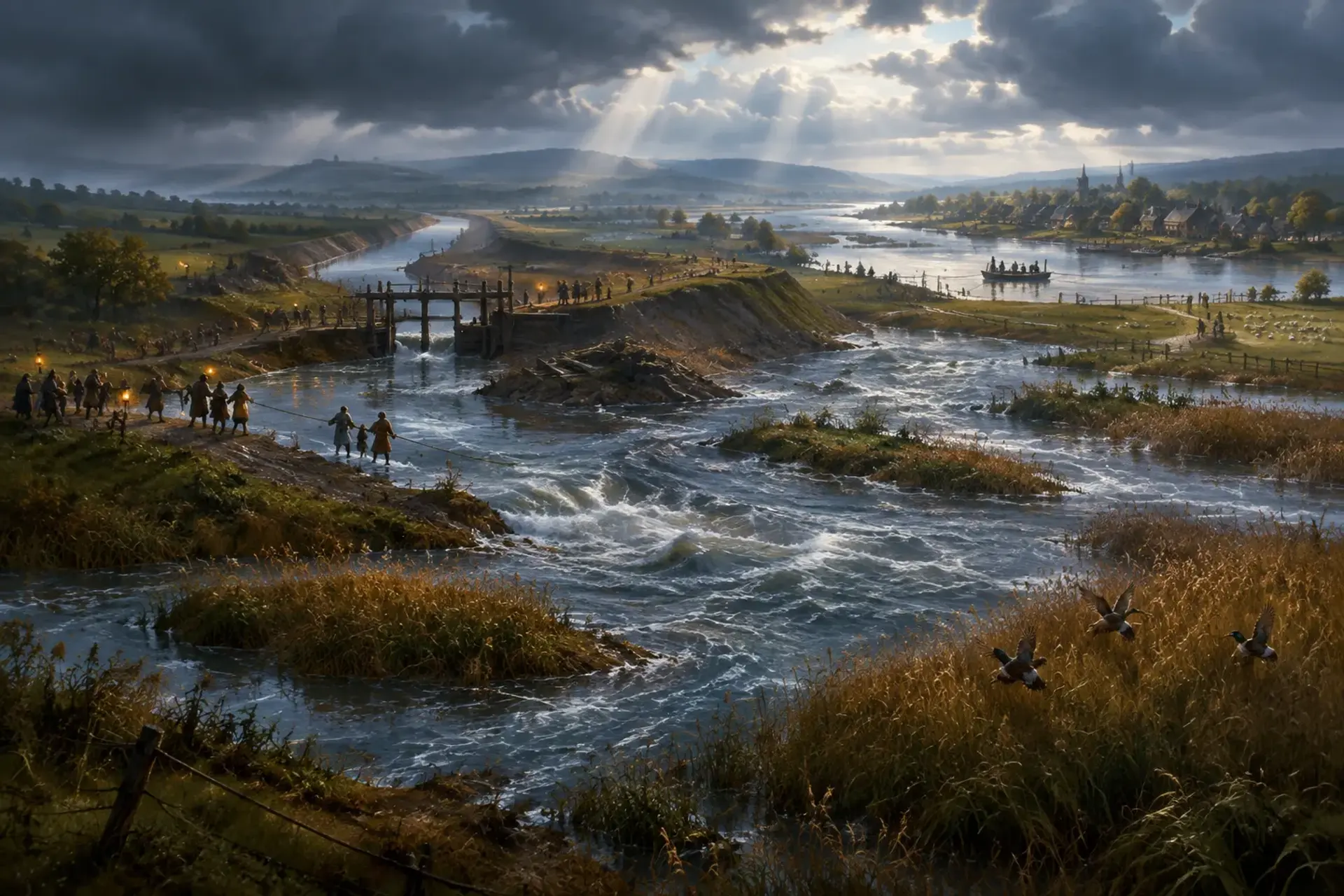
A riverside mill and its sluice channels, where clean water and contaminated water converge.
The party inspects the mill, questions its workers, and follows the contaminated channel. If the growth is disturbed, it lashes out; otherwise, the party can divert the water and evacuate workers before the hazard spreads.
The Flooded MillNextA channel map and a frightened worker's testimony point toward a disused aqueduct entrance upstream.
2:30
75 min
Exploration
3. The Reed Crown's Warning
A damp, overgrown aqueduct with broken walkways, stagnant pools, and ancient carvings.
The party navigates an abandoned section of aqueduct, finding signs of recent research and evidence that the mold is moving toward the spring. Nima appears and warns the party that the old stones are part of a bargain, then offers to guide them if they agree not to destroy the spring blindly.
NextNima reveals a concealed stair descending to Sorn's underground conservatory.
3:45
120 min
Social
4. The Agronomist's Experiment
A hidden research space beneath the aqueduct, cluttered with notes, cracked growing tanks, and pale roots.
The party confronts Sorn and his assistants, searches the research chambers, and learns what the experiment awakened. They can negotiate for a containment method, rescue the test subjects, or force their way to the spring.
The Conservatory BelowNextSorn's records identify the First Spring as the source and describe three possible ways to stop the spread.
5:45
150 min
Exploration
5. The First Spring
An underground spring chamber beneath the oldest irrigation works.
The party reaches the source, where they must interpret the old carvings and choose how to deal with the living growth. They can restore the seal and renew the pact, redirect the mold into a contained channel, or destroy the springstone. Violence may make the choice harder but is not required.
The First SpringNextWith the source stabilized or destroyed, the party returns to the capital to secure the remaining food and decide what to tell the public.
8:15
60 min
Social
6. A Feast That Must Be Shared
The public granary court on the eve of the Summer Solstice Festival.
The party presents its findings to Meret and the gathered settlement representatives. They must help decide how to distribute the surviving food, what happens to Sorn, and whether the spring's history should become public. Their choices determine whether the festival becomes a celebration of relief or a tense rationing ceremony.
NextClose with the festival's outcome, then use an open-ended hook to carry the consequences into the campaign.
Behind it
What people believe
A sudden, unnatural spoilage is destroying the kingdom's stored food.
The capital's granaries and several outlying settlements are affected, while the Summer Solstice Festival is approaching. The crown needs the source found, the spread stopped, and a safe plan made for feeding the kingdom.
Background
The kingdom of Valedorn has always relied on the Greenwake granaries, a network of royal storehouses filled after the spring harvest.
This year, sacks spoil within days, cellar preserves turn sour, and even sealed seed grain has developed a pale, branching mold. The Summer Solstice Festival is both a sacred celebration and the occasion when the crown distributes the remaining stores to the capital and its surrounding towns.
The stakes
If the party fails, the remaining food may be lost before the festival, bringing hunger, unrest, and political blame.
If they stop the immediate spread but mishandle the spring, the kingdom may lose its irrigation source and face famine in the next growing season.
Encounters
3The Flooded Mill
Combat or hazard
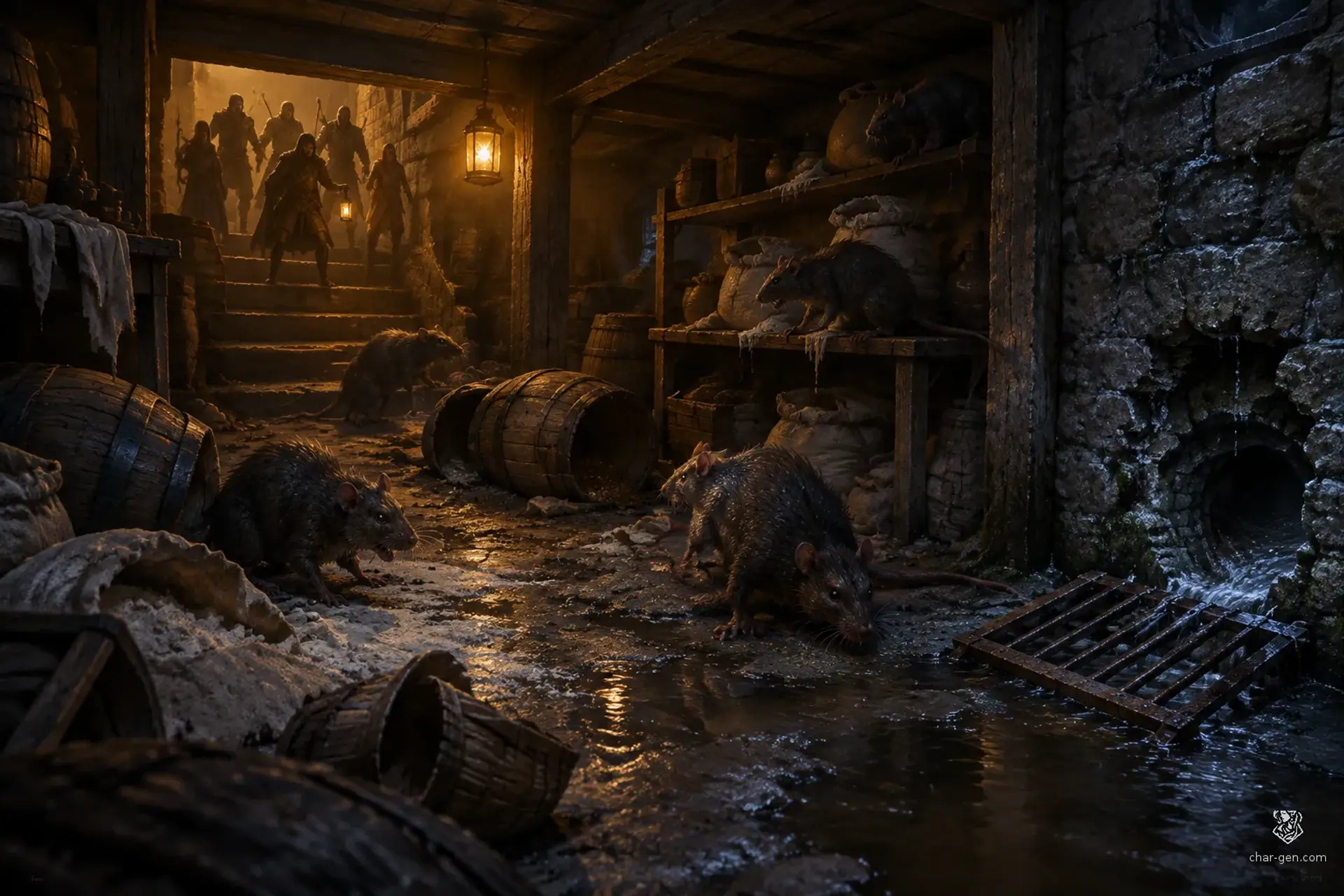
A watermill with slick stone floors, narrow catwalks, turning machinery, and a fast channel carrying mold-spotted water. Characters can use the sluice controls to change the water flow.
Foes
Moldbound Rootmass, a custom plant hazard that lashes out with rootlike tendrils
2 to 4 Twig Blights, adjusted to the party's strength
ComplicationThe workers are frightened, not loyal to the mold. A calm approach, a clear evacuation plan, or evidence that the growth is dangerous may prevent a fight.
ScalingFor a smaller or battered party, use one Twig Blight and have the Rootmass focus on blocking routes. For a stronger party, add two Twig Blights and let the Rootmass pull characters toward the contaminated water. The Rootmass is a custom encounter feature, not an official D&D 5E creature.
The Conservatory Below
Social or combat
A buried research conservatory beneath the old aqueduct, filled with glass growing chambers, root-choked passages, and narrow walkways over a shallow cistern.
Foes
Doctor Edrin Sorn, an alchemist and researcher using nonlethal defensive tools
2 custom Spore-Touched Test Subjects, people partially controlled by the growth
ComplicationSorn's assistants can be persuaded to surrender records or help contain the growth if the party offers protection from public retaliation. If threatened, they may destroy notes or release the test subjects.
ScalingFor a lower-threat resolution, make the confrontation social and use one Spore-Touched Test Subject as a rescue challenge rather than a combatant. For a more dangerous fight, add one test subject and make unstable glass tanks a terrain hazard. Spore-Touched Test Subjects are custom foes, not official D&D 5E creatures.
The First Spring
Exploration, social, or combat
An underground spring chamber with waist-deep water, raised stone platforms, ancient irrigation channels, and a cracked seal that can be repaired, redirected, or opened.
Foes
The Spring's Warden, a custom guardian formed from roots, stone, and water
Pale Mold Growths, custom environmental hazards
ComplicationThe spring responds to violence and careless excavation. Each round or major action spent damaging the chamber can cause a surge of water and spreading mold; careful negotiation or a deliberate offering can avert this.
ScalingFor a less combat-focused finale, the Warden can be calmed through evidence of the original pact and a suitable offering. If combat is needed, use the Warden as a single powerful opponent and keep the mold hazards stationary. These are custom features, not official D&D 5E creatures.
Cast
4Chancellor Meret Vale
QuestgiverQuestgiver; practical royal official coordinating food distribution.
WantsKeep the kingdom fed and prevent panic without sacrificing the towns that rely on the capital's reserves.
““I need answers before I need another ledger. If the people go hungry, the ledgers will not matter.””
Tamsin Reed
Ally and witness; a miller and waterkeeper who has tracked the spoiled grain.
WantsProve that the contamination is coming from the old irrigation works, whose maintenance she has been urging the crown to fund.
““The mold follows the water. I have watched it creep upstream, though I cannot explain how.””
Doctor Edrin Sorn
Antagonist; royal agronomist whose secret experiment caused the accelerating rot.
WantsProtect the research that she believes could end famine, even if revealing the truth brings punishment.
““I did not poison a kingdom. I tried to make one field feed a thousand.””
Nima of the Reed Crown
Wildcard; an enigmatic marsh-dweller who knows the irrigation network's older history.
WantsStop people from disturbing the buried source of the mold and honor an ancient pact between the valley's settlers and its spring.
““The old stones remember a bargain. Do not ask them to forget it twice.””
How it ends
Rewards
Items
A royal writ granting access to granaries, mills, and the aqueduct for the duration of the investigation
Three sealed travel rations from the crown's emergency reserve
Optional custom reward: a silver-and-glass seed vial containing a sample of hardy, noncontaminated grain, valuable to an agricultural scholar
On a win
The party identifies the spring as the source and halts the contamination before the Summer Solstice Festival.
Enough safe food is recovered or brought in to feed the capital and its towns, though the distribution plan and the fate of Sorn's research shape how the public remembers the crisis. If the party also resolves matters with Nima and the spring, the kingdom gains a lasting solution rather than a temporary reprieve.
What it leaves open
If it fails
- The party cannot identify the source of the spoilage in time.
- The party fails to trace the contamination before the festival. The clean reserve is distributed cautiously, leaving several outlying towns with reduced rations and creating a lasting grievance against the crown.
- The party defeats the visible mold but damages the old spring or aqueduct.
- The party destroys the growth without stabilizing the spring. The immediate threat recedes, but the kingdom loses its most reliable irrigation source and faces a poor next harvest.
- The party allows Sorn to leave or fails to recover his notes.
- Sorn escapes with the research records, or the records are destroyed. The food crisis may be contained, but the cause remains uncertain and the public may blame the wrong group.
- The party cannot secure enough safe food or a credible public plan before the festival.
- The festival becomes a flashpoint for unrest. Meret can maintain order only by diverting food from another settlement, creating a serious political cost.
Complications (d6)
- 1A sealed granary sack bursts during inspection, releasing a cloud of irritating spores. Anyone who handles the grain without protection begins coughing, making quiet conversation or careful work difficult until they wash and rest.
- 2A crowd of hungry residents blocks the party's route, demanding that the remaining clean grain be distributed immediately. Meret's officials will not release it without proof that it is safe.
- 3A sluice gate jams half-open, flooding a path and carrying contaminated water toward a clean storage cellar. The party must divert the flow or evacuate the grain before it is reached.
- 4A frightened storehouse clerk has hidden several sacks of apparently clean grain for their family. The concealment is discovered just as a public inspection begins.
- 5A small patch of pale mold releases spores that animate nearby roots and spoiled produce. The growth attacks anyone who approaches the contaminated channel.
- 6A sudden summer storm washes a fresh line of mold from the irrigation channel into the settlement's last working mill. The party must choose between protecting the mill machinery and rescuing the people trapped inside.
Media
0 imagesNo images yet.
Turn The Rot Before Solstice into a sheet
A high-res, share-ready sheet you can post or print.