
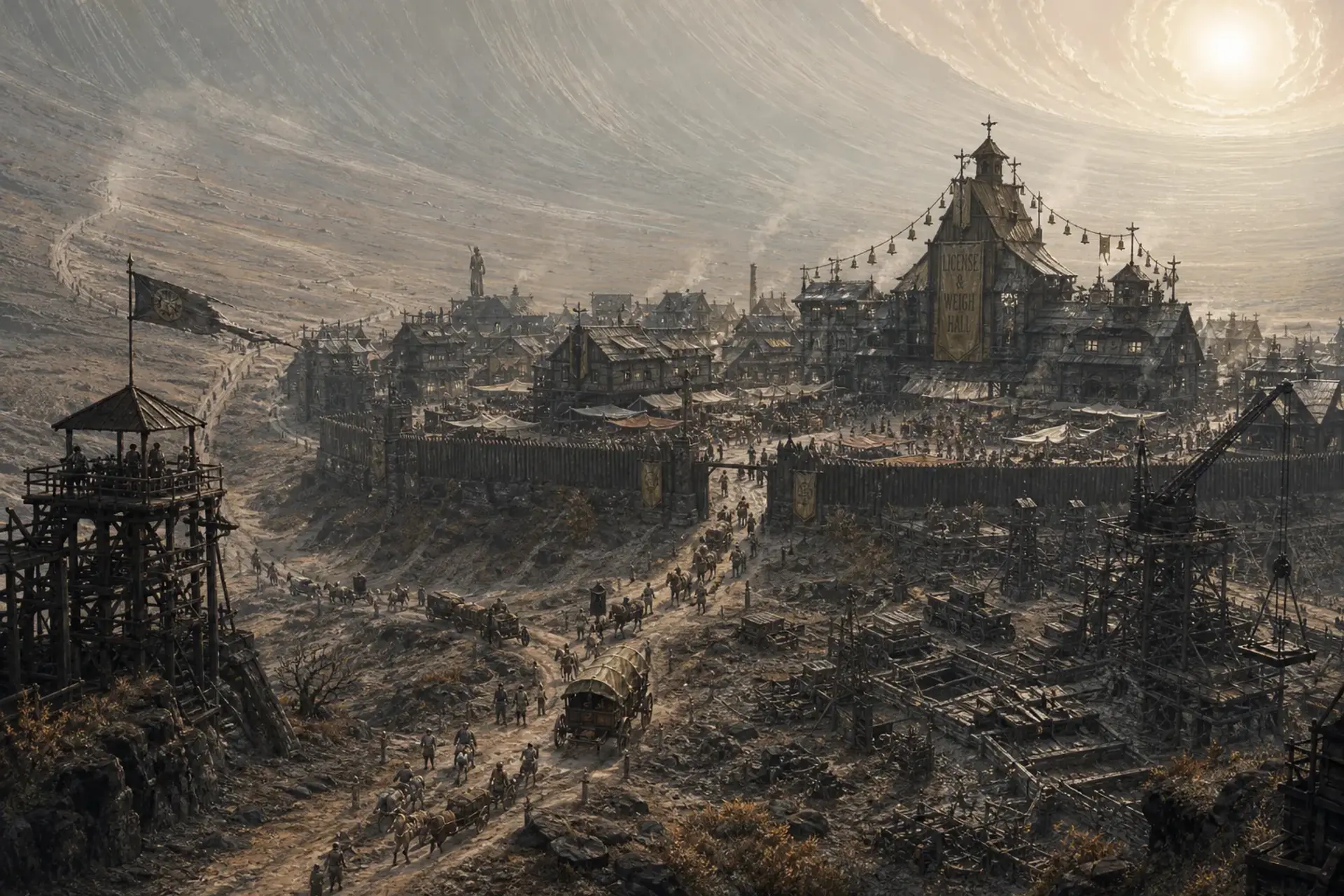
Sootmarket
Sootmarket is a trade town built where the Hushdown pilgrimage road meets the safer routes east. Its salvage yards sort broken tools, grave goods, and the wreckage of failed expeditions; its craft shops turn much of that material into useful equipment again. The town's licenses depend on testimony preserved in bells from dead pilgrims. Traders come for bargains, pilgrims' kin come for answers, and ambitious crews come hoping the dead will authorize what the living would refuse.
Sootmarket
- Population
- 1,700
- Rule
- Council Speaker Doran…
- Wealth
- Modest overall
- Defence
- Market Watch
Overview
Sootmarket is a trade town built where the Hushdown pilgrimage road meets the safer routes east. Its salvage yards sort broken tools, grave goods, and the wreckage of failed expeditions; its craft shops turn much of that material into useful equipment again. The town's licenses depend on testimony preserved in bells from dead pilgrims. Traders come for bargains, pilgrims' kin come for answers, and ambitious crews come hoping the dead will authorize what the living would refuse.
Atmosphere
Fine grey ash settles on every roof, sleeve, and uncovered cup. Sootmarket is busy from first light, but its bargaining has an odd second audience: sealed bells containing the last words of dead pilgrims hang above the licensing hall. Locals do not call this haunting. They call it procedure. Visitors who speak carelessly near the bells may find their words repeated in a hearing days later, attributed to the dead.
Culture
Local ancestor rites, Pilgrim traditions
Humans, Dwarves, Halflings
Economy
- Salvage exchange
- Metalworking and repair
- Pilgrim caravan services
- Soul-work and testimony recording
- Repaired climbing and camp equipment
- Reworked metal tools
- Salvaged relics and household goods
Grain, Lamp oil, Clean cloth, New iron stock
Geography
Ways in and out
Places to see
- The Hushdown RoadA stretch of ash-grey track west of town where abandoned pilgrim camps and wreck sites are visible on clear days. Crews mark safe approaches with strips of cloth, but the markers are frequently moved by wind or by people who want a rival crew to arrive late.
- The Grey CutA shallow ravine below the town's firm shelf. During dry weather, salvage crews use its lower path to move bulky goods without crossing the market. Locals say the ravine carries bell sounds farther than it should, and no one sleeps near its mouth after a hearing ends badly.
Power
3 factionsGovernment
Laws
Trouble
- Contradictory bell testimony has halted salvage work and risks a market confrontation.The Registry has suspended licenses for three crews after a bell gave contradictory testimony about the same wreck. Doran Bek has delayed a decision, leaving the crews idle and their creditors impatient. Ilyan Saro, who interprets the bells, insists the testimony is sound; Open Hands says the Registry is hiding a flaw in its records.Involves
Doran Bek, Ilyan Saro, Vesta Kelm
Factions
- Bell RegistryCivic officeThe Bell Registry maintains the sealed testimony and issues salvage licenses. Its clerks believe the dead should have standing in disputes, though only trained interpreters may present their words. The Registry wants its rulings recognized beyond Sootmarket, a goal that would make its decisions harder for living claimants to challenge.GoalsKeep the bell testimony authoritative and extend its licensing rules to the Hushdown road.Allies
Market Watch
RivalsOpen Hands
- Open HandsMutual aid associationOpen Hands is a loose association of craftspeople, kin of pilgrims, and independent salvagers. They argue that a dead person's last words should not grant an office control over every object found nearby. Their members want public access to the bells and a way to appeal a license ruling without paying Registry fees.GoalsMake salvage rulings appealable by living claimants and open the bell records to public inspection.Allies
Salvage crews
RivalsBell Registry
- AshwrightsCraft guildThe Ashwrights are the town's repair guild, with members who sort and rework the goods brought back from the Hushdown. They depend on the Registry's steady flow of licensed salvage, but dislike its delays. The guild wants exclusive rights to inspect disputed metal before it is assigned, putting it at odds with Open Hands, which demands public inspection.GoalsClaim first inspection of disputed salvage and preserve the licensed trade that feeds their workshops.Allies
Bell Registry
RivalsOpen Hands
Defences
- A timber palisade around the central market and licensing hall
- A stone gate facing the Hushdown road
- Raised watch platforms overlooking the salvage yards
Law and order
People and places
9 entriesCouncil memberNara Vek Human Woman
Nara Vek is a council member who tracks the cost of every delay in the salvage trade. She wants the Registry to issue temporary licenses while disputed testimony is reviewed, but fears a ruling that lets crews strip a site before families can make a claim. She taps her slate with a chipped stylus and writes down the names of anyone who interrupts her.
Organizer and former salvage runnerPelin Uru Halfling Woman
Pelin Uru is a former salvage runner who now organizes families and small crews shut out by Registry rulings. She wants the bell records opened to anyone with a claim, but fears that a public reading will reveal her own family profited from disputed goods. She keeps a stub of charcoal behind one ear and marks every petition with a thumbprint.
Master craftworkerSada Orbel Dwarf Woman
Sada Orbel runs the Ashwrights' work crews and can identify a repaired tool by the sound it makes on a bench. She wants first inspection rights for disputed metal, but fears the guild will be blamed if a soul-work taint passes through her hands. She carries a wooden mallet with a cracked handle and refuses to replace it until it breaks in use.
Repair shopHook and Rivet Kept by Tovan Vek
A narrow workshop that sells and repairs hand tools, climbing hooks, and buckles salvaged from the pilgrimage road. The owner checks every piece for cracks before naming a price. Customers often bring in damaged gear after a hearing, hoping to avoid explaining how they got it.
Travel suppliesCord and Lamp Kept by Zori
A crowded counter for lamps, cord, packs, and the small necessities crews forget until they are already on the road. Goods are sorted by how they failed: snapped, burned, corroded, or simply lost. The shopkeeper keeps a careful list of customers headed west and sends word to their families if they do not return by their promised date.
TavernThe Sooted Ladle Kept by Batu
A low-ceilinged common room where crews gather to compare routes and families sit near the door to watch for returning travelers. The owner serves meals on plain boards and keeps the west-facing windows shuttered during hearings, because people have been known to shout claims through the glass. No one is asked how they paid if they leave a message for a missing relative.
TavernThe Cartwright's Cup Kept by Megi
A quieter room with benches built from old packing crates and a short menu designed for people leaving before dawn. The tavern is known for keeping its doors open during late hearings, when a ruling can send a crew west or ruin its season. Arguments are allowed, but anyone who brings a sealed bell into the room is asked to leave it outside.
Civic hallBell Hall Run by Ilyan Saro
The town's licensing hearings take place here, beneath the sealed testimony bells. Applicants wait in a soot-streaked gallery where every bench is marked with the name of a crew that once argued its case. The Registry records each ruling on paper, but many residents believe the bells remember more than the clerks choose to write down.
Salvage yardClaim Yard Run by Vesta Kelm
The public weighing yard is a broad, ash-covered enclosure of scales, lockable cages, and covered tables. Licensed crews lay out their finds here before a Registry clerk assigns a claim number. Buyers are permitted to inspect goods but not touch them until the ruling is posted, a rule that produces plenty of whispered arguments and very careful staring.
Events
Lately
- A bell issued two different claims for a single cache of pilgrim tools.Three salvage crews have been suspended, and work in the northern yards has nearly stopped.
- The Ashwrights refused a shipment of recovered iron.Tool prices have risen, and rumors of soul-work contamination are spreading through the market.
Calendar
- First thawThe ClaimingSalvage licenses are renewed after the winter roads open. Applicants state what they plan to recover, and the bell-keepers consult the testimony of dead pilgrims whose claims touch the same ground.The twist · GM only
- Midsummer, seventh dayThe Ash FairCraftworkers set out their best repairs and tools for a public appraisal. The day draws buyers from the frontier and families who want proof that a pilgrim's last possessions reached home.The twist · GM only
History
Sootmarket grew from a repair stop on a dangerous pilgrimage road into a salvage exchange. Its unusual legal custom began as a response to grave robbing, but the system now gives bell interpreters and council clerks unusual power over who may recover goods and who may sell them. The official story presents the bells as a gift to the bereaved. The town's oldest workers remember that licenses and fees came first.
- FoundingThe First Repair YardA handful of repairers settled beside the pilgrimage road to mend gear and trade recovered tools. Their yard became a regular stop because the firm shelf above the ravine stayed passable when nearby tracks flooded.
- Early townThe Bell CompactAfter a crew stripped a pilgrim camp and sold its belongings, families demanded a way to distinguish abandoned goods from stolen keepsakes. The first testimony bell was sealed in a public hearing, and its ruling ended the dispute.
- Registry yearsThe Ledger DisputeThe official account says the Registry formed after the compact to protect pilgrims' property. Older repairers say the council had already begun licensing salvage crews, and the bell was introduced to legitimize those fees. The original ledger is missing.
Secrets
2 secrets · 3 rumours- Secret 1 · GM only
- Secret 2 · GM only
Rumours
Plot hooks
2- 1The Claim That ChangedA small crew asks the party to witness a hearing after a bell contradicts the license that sent them to a wreck. They claim the Registry is suppressing the true testimony. The complication is that the dead pilgrim's family is still alive, and its members disagree about whether the goods should be returned or sold to pay old debts.
Investigation and social conflict · Starts with Vesta Kelm · Reward: A share of the crew's lawful salvage and a favor from the Claim Yard
- 2The First LedgerPelin Uru asks the party to escort her to a sealed record cache outside town, where she believes the original Bell Compact ledger was hidden. The complication is that the cache is in a pilgrimage camp where soul-work has recently gone wrong; retrieving the ledger may expose the party to a dangerous spirit and reveal that the compact never gave the bells the authority the Registry claims.
Expedition and legal intrigue · Starts with Pelin Uru · Reward: A public debt of gratitude from Open Hands and evidence that can alter salvage law
Media
0 imagesNo images yet.
Turn Sootmarket into a sheet
A high-res, share-ready sheet you can post or print.