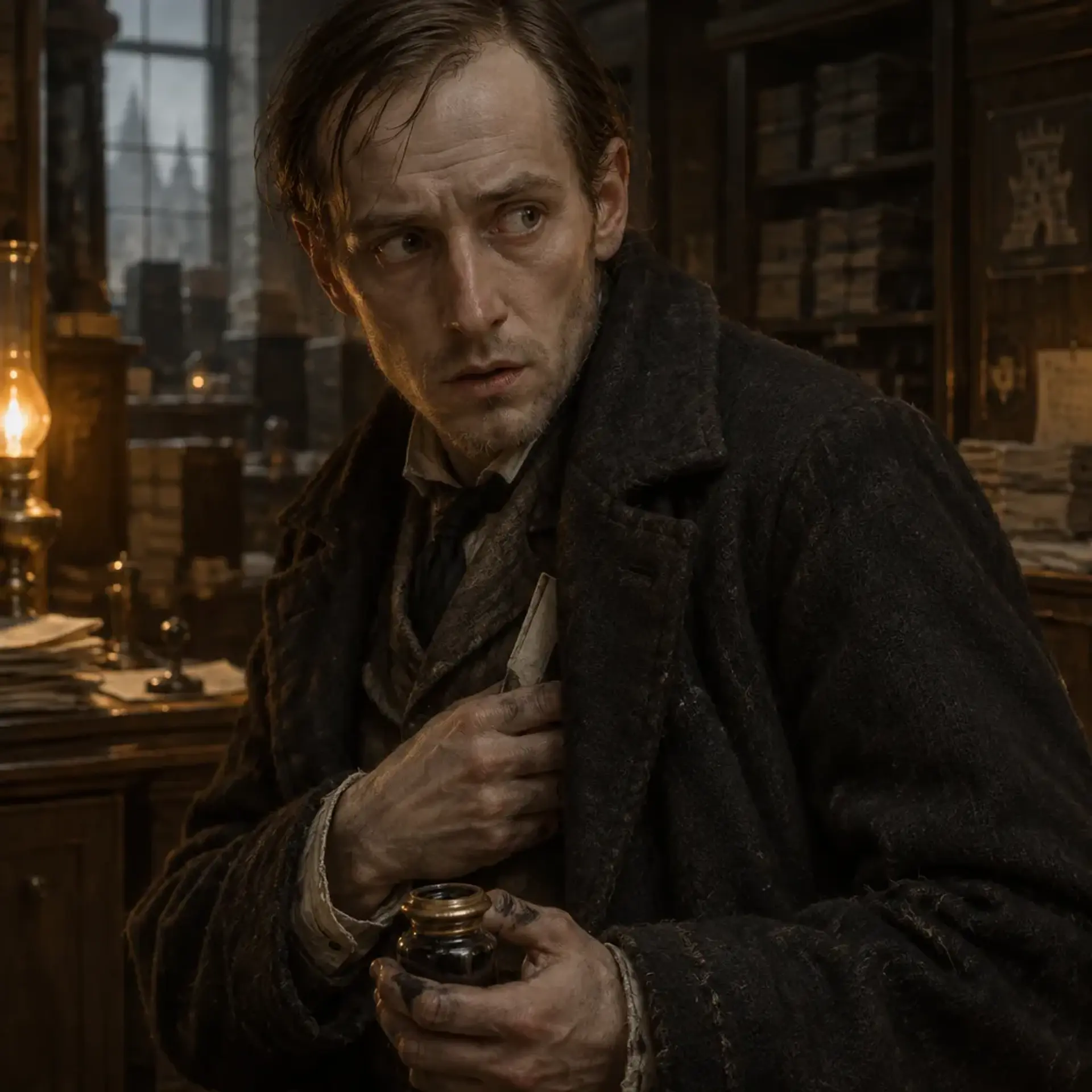
William Windon
William Windon
At the table
“s comments are appraising but not openly flirtatious: “She listens as though she expects you to improve,”
Voice
William sounds as though he has spent years speaking over wind and garden work: clear, slightly dry, and occasionally rough at the edges. He draws breath through his nose before a difficult answer, a tiny pause that can feel like hesitation. When the reflection uses his voice, the physical sound remains William's, but the pacing changes. The words are more deliberate, with a dry, older cadence and a confidence that does not belong to the young gardener.
William's voice is a clear, slightly breath-worn young man's voice, roughened by work outdoors and recently by illness. He often takes a small nasal breath before speaking, especially near glass. His sentences are direct and practical, with careful pauses when he is uncertain. The reflection uses the same throat and mouth but sounds older in its habits: its consonants land firmly, its phrasing is measured, and its dry jokes arrive as if they were conclusions rather than attempts to amuse.
Speech patterns
How to play them
Approach William with patience and speak to him directly, not to the reflection. Ask what he remembers and what he needs before demanding proof. He is more willing to talk while tending plants or discussing practical work. Do not surprise him with mirrors or polished objects. If the reflection speaks, address William by name and give him time to regain control. The hitPoints value of 0 is a storage placeholder, not a canonical statistic or a claim that William is dead.
Goal
Find the missing Heart of England and learn whether Abraham Gorff can explain what it has done to him, without letting the reflection endanger his family or Adaline.
Motivation
To recover control of his body and identity while preserving the family and relationships that make him want to remain himself.
Appearance
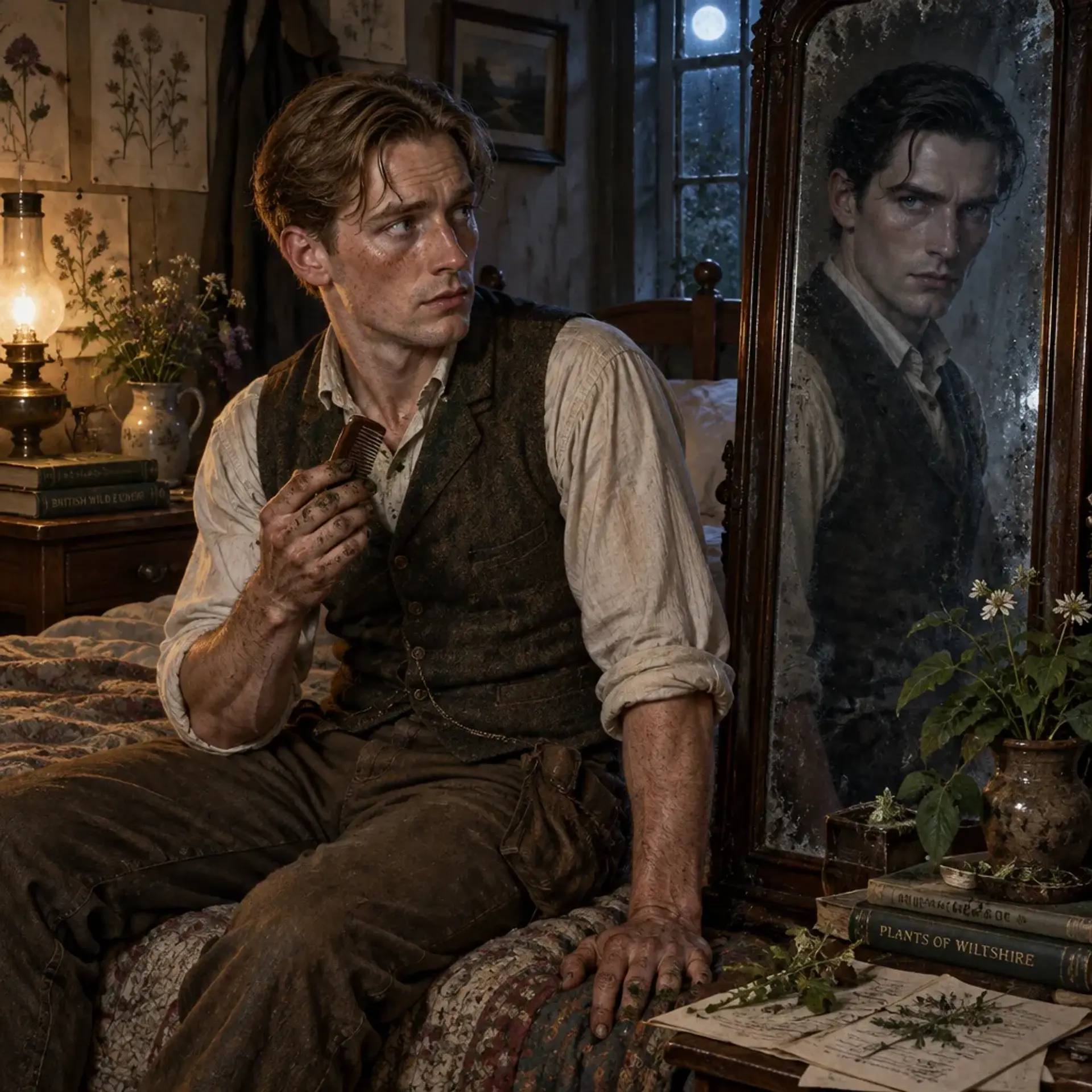
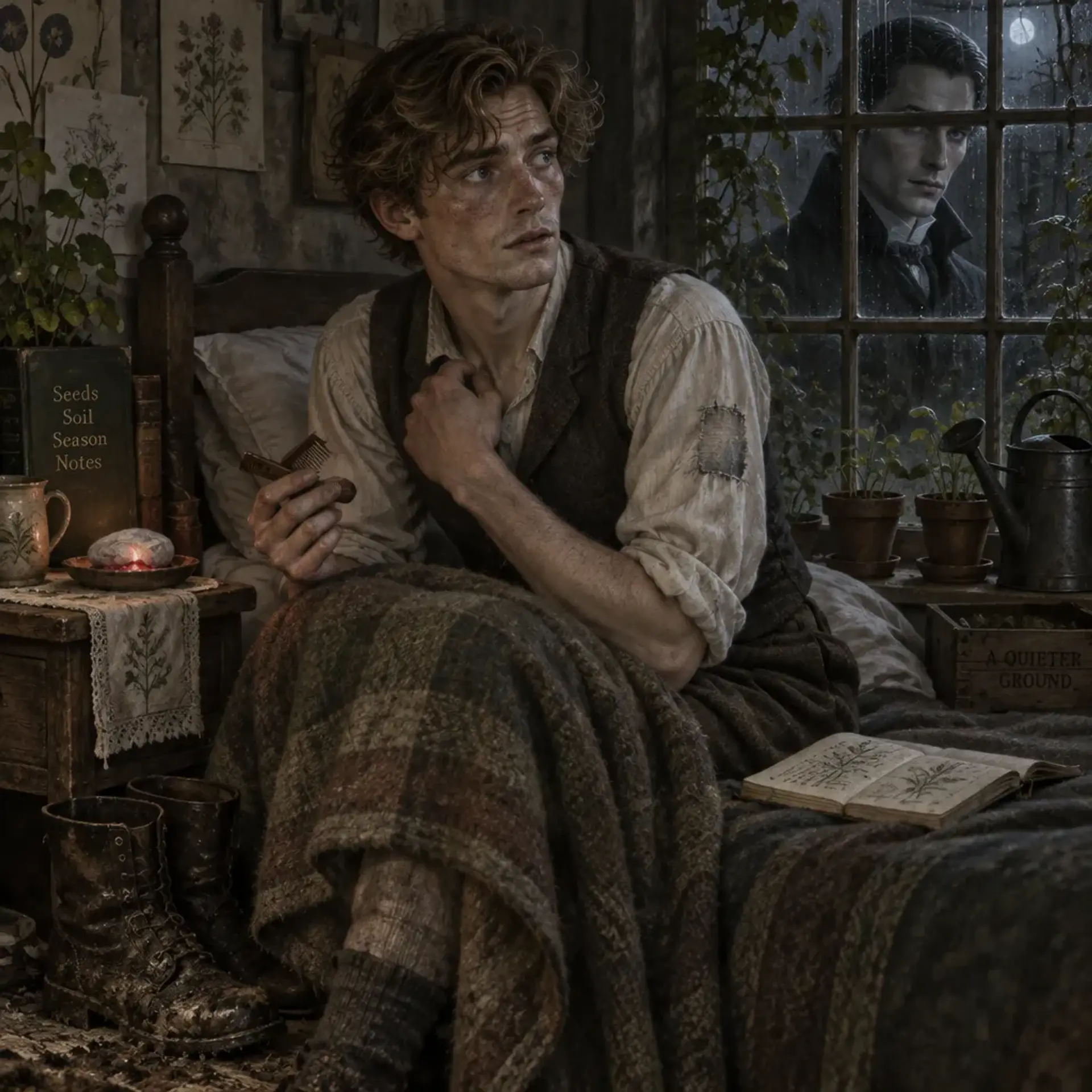
William has a country gardener's practical sturdiness, but bed rest has left him pale and a little hollow around the mouth. His dark-blond hair grows in unruly waves unless he has just combed it, and his blue eyes keep darting to windows, polished kettle sides, and dark panes. Brown freckles are scattered over his nose and cheeks. He holds his shoulders carefully, as if listening for a beat inside his chest. Within a minute of meeting him, people notice his odd grooming ritual: before he uses a mirror, he pauses, takes a small breath through his nose, and waits for the image to settle. His hands smell faintly of crushed stems and damp earth even after washing. He is usually remembered for looking past people toward their reflections.
Clothing
Plain work clothes suited to estate gardening: a clean but repeatedly mended shirt, waistcoat when weather allows, sturdy trousers, and boots usually stained with soil. While ill, he wears a loose shirt and a blanket over his knees. He tries to dress carefully when Adaline visits, despite the reflection's commentary.
Body language
He keeps his hands occupied with blanket edges, a comb, or a small pot of seedlings. When someone mentions the heart, his fingers go to the center of his chest. He angles himself away from windows without seeming to notice he is doing it. If the reflection takes over, his posture becomes unnaturally upright and his chin lifts as though he expects the room to defer to him.
- Height
- About 5 feet 9 inches
- Build
- Lean, wiry, and shaped by outdoor work, though recent bed rest has weakened him.
- Eyes
- Blue
- Hair
- Dark blond
- Skin
- Fair, with scattered brown freckles
- Age
- Young adult, about 19
- Gender
- Male
- Size
- Medium
Distinguishing features
Personality
17 traits and drivesWilliam is observant and kind in practical ways, but embarrassment makes him evasive. He will quietly bring someone a cup of tea or mend a plant stake rather than offer a grand reassurance. He is curious enough to study the heart's effects and frightened enough to cover every mirror afterward. Around his friends he tries to be wry and ordinary; with his family he becomes careful, especially when the reflection is near. He is proud of his competence in the garden, yet hates needing care during bed rest. The reflection draws out a sharper, more composed manner that can feel like confidence until it turns cruel. William sometimes envies that poise, then despises himself for envying it.
- Alignment
- Not applicable as a Secret Histories rules statistic; temperamentally dutiful, curious, and increasingly divided against himself.
Quirks
Habits
Traits · 4
Flaws · 4
Fears · 4
Wants and needs · 5
Combat
HP 0Avoids violence. William is recovering from a cardiac episode and is not a combatant. He seeks an exit, calls for help, or tries to put furniture or distance between himself and danger. The reflection's interruptions are unpredictable and should not be treated as a dependable advantage. No canonical Secret Histories combat statistics are supplied here.
William Windon
Actions
Reactions
Services they sell
Rewards they can give
Equipment
- Pocket comb (personal item)A plain pocket comb with one tooth polished nearly smooth from habitual use.
- Garden notebook (personal item)A small notebook in which he records plant observations, dates, and questions about the heart's appearances.
- Pots of cuttings (gardening)A few seedlings and cuttings kept close to his bed during recovery.
Possessions
Background
William Windon was born in Wiltshire to a family that had lived in the county for generations. His father, Hector, is a historian who collects dates, parish records, and old arguments; his mother Clare keeps the household steady through work rather than speeches. William grew up among practical people who treated weather as more dependable than promises. He took to gardens early. A seedling's slow, legible progress comforted him, and he learned to recognize a plant's trouble by its leaves before anyone else noticed. He now works as a gardener on a local estate and is training, as best he can, to become a botanist. The strange object entered his life through Abraham Gorff, a London amateur arcanist. Abraham had visited the Hush House and left behind what he called the Heart of England: a supposedly fossilized living heart forged of heart and scale, wrapped in newspaper as payment for entry. He was never allowed near Brancrug again. The object looked like a lump of Dover cliff chalk carved into the rough shape of a human heart. Barnacles and strands of sea grass clung to it. It had been cast into the sea and returned to shore, slick with brine and black ooze, with an inexplicable red-pink hue showing through the stone. Abraham took the heart home to Wiltshire. At first it seemed dead. When he showed it to neighbors, it went cold and inert in their presence; when alone, it sometimes beat. He eventually carried it to a Hampshire shore. Water brought the pink color back. Abraham became convinced it was special and belonged with him, not out of simple greed but because he believed the object disliked company. His house grew haunted by voices, moving doors, and footsteps on empty stairs. Terrified and exhausted, he sold it to William, one of the young people who had seen it during its apparent periods of death. Abraham later moved to Canada, leaving William with no easy way to ask what he had done. William was proud of the curious stone until he began to feel its beat in his own chest. After a spell of tasting salt, blood, and soil in his mouth, he tried to break it with a hammer. The blow seemed to send pain into his own body. He fell, groaning and spitting blood, and saw a brief twitch of living muscle inside the stone before his own body gave out. Clare found him; his heart had stopped. He awoke alive, but the experience made the heart impossible to treat as a harmless curiosity. Days later, William hid it in a hollow log. He returned to find it cold, clean, and apparently untouched, despite the hammer blow. Its disappearance from the log was the beginning of a different terror. In mirrors, William started seeing a young man who was not him: long-faced, handsome by an old-fashioned English standard, with carefully combed dark hair, moonlit-blue eyes, and a stern expression. At first the reflection merely failed to copy him properly. It turned its head a fraction too late, or seemed to look at a different corner of the room. William tried to ignore it. He could not stop checking. One night, during his usual bedtime grooming, the image held still while William moved. It looked at his hair, then at him, and spoke with his own mouth: “Well, it’s not often you use that one.” The voice sounded older than William, with the assurance of someone accustomed to being obeyed. Even the reflection seemed surprised to have spoken. After that, it began making remarks about William's clothes and combing, sometimes before he had finished dressing. It could be dryly funny, cutting, and disconcertingly interested in ordinary domestic matters. It has mentioned that it has siblings and a father, but describes them as if they were weather, shorelines, or sensations rather than living relatives. William cannot tell whether these are memories, metaphors, or lies. The disturbances became harder to dismiss. William would pass a window and see the stranger's face where his should be. Objects in his room moved during the night. He once dreamed he was the reflection, looking out through glass at his own life as if it belonged to somebody else. He is currently on bed rest after the heart stoppage, which leaves him with too much time to listen and too many polished surfaces to avoid. He is searching for the heart and for Abraham, having learned that Abraham went to Canada. He wants answers, but fears what finding either one might make of him. William's family has not been spared. His father Hector can be condescending about rural people, and once made a dismissive remark about country folk. The reflection, speaking through William, replied with a cutting comment about Hector. William was blamed and got into trouble. The exchange wounded him because Hector's arrogance was real, but the words were not wholly his. His sister Elizabeth has begun pestering him about a boy she likes, attractive things, and proper manners. The reflection calls her “interesting” with a deliberateness that makes William uneasy. It watches her too closely in mirrors, offers sly observations about her taste, and occasionally comments on her questions as though assessing a specimen. William tries to shut it down, especially when Elizabeth is present, but he cannot always tell whether his mouth is his own. The reflection's worst public lapse came when a neighbor's child accidentally ran into William with a toy wagon and made a girl cry while apologizing. The reflection used a slur against the Welsh neighbor's child. William will not repeat the word. The neighbor heard enough to understand, and William had to muck out the neighbor's stables as a consequence. He was ashamed, angry, and frightened by how easily the reflection had borrowed his voice. He worries that people will judge him rightly for words he did not choose, and that explaining the truth will make him sound unwell. His friends Tommy DeHare, John Mollask, and Ryan O'Leary came to visit him at the house while he was recovering. William hoped their company would make the rooms feel ordinary again. Instead, the reflection noticed them. In a dark window it watched the three boys enter before William had turned toward the door. It spoke through William at an awkward moment, greeting them with a composure and old-fashioned phrasing that did not belong to him. Tommy laughed at first, thinking William was performing. John went quiet when the reflection's eyes tracked him independently of William's face. Ryan tried to test it by moving behind William while watching the glass. The reflection kept looking at Ryan. It then made a pointed remark about the boys' manners and William's disheveled appearance, as if they were guests at a house it owned. William tried to apologize and leave the room, but his body stalled for a heartbeat while the image finished speaking. The visit ended with his friends unsettled. They have not abandoned him, but they now watch his face when they talk, and William hates that they have reason to. Adaline, William's girlfriend, has auburn hair and soft brown eyes. The reflection noticed her immediately. It has called her “pleasing to the eye” with a dispassionate precision that made William flush, then made a second comment about how carefully she listens when he speaks. William cannot decide whether the reflection is teasing him, studying her, or claiming some kind of interest. When Adaline visits, he avoids mirrors and asks her to sit where the windows are curtained. The reflection sometimes turns its attention toward her anyway. It has criticized William's attempts to dress neatly for her, then offered unsolicited advice about his collar and hair. William resents that it can see her through his eyes and fears it may someday speak to her without his consent. Adaline has seen enough of his distress to know that something is wrong, though William has not found a way to tell her the whole truth. The recent full-moon night brought the most frightening change yet. William was in front of the bedroom mirror, pale from bed rest, expecting the stern stranger. Instead, the glass showed William's own face. His freckles were where they belonged. His dark-blond hair sat in its familiar untidy wave. The eyes were his. He stood motionless, unable to accept the relief, then lifted a hand. The reflection lifted its hand with him. He leaned closer, searching for the familiar wrongness in the timing, and for a few breaths found none. He whispered his own name. The image's lips shaped it exactly. Then William felt his face. Not the glass, not a cold surface, but the skin and bone of his own cheeks beneath his fingers. The sensation was so immediate and intimate that he recoiled. The face in the mirror recoiled too, but a fraction late. Its eyes seemed tired, frightened, and unmistakably his. For one brief moment, William thought he had been given himself back. Then a red-pink glimmer appeared deep behind the reflected throat, like the heart's color beneath the stone. His pulse stumbled. The reflected William placed a hand over his chest. William's own hand had not moved. The glass cleared. His own image returned to perfect imitation, and the stranger was gone. William cannot tell whether the old face was a visit, a warning, a trick, or a genuine return. He has not told Clare the full details because he does not want her to hear that his heart may still be involved. He has not told Adaline because he fears the reflection will use the confession as an invitation. He wants to find the heart before it decides what his body is for.
Role in the story
A vulnerable witness and potential ally whose body has become the meeting place of a missing occult object and an unknown presence. William can lead the characters toward Abraham Gorff, the Hush House, or the mystery of the returned heart, while forcing them to reckon with how they treat a frightened person whose actions may not all be his own.
“William grew up among practical people who treated weather as more dependable than promises.”
Known connections
Media
0 imagesNo images yet.
Turn William Windon into a sheet
A high-res, share-ready sheet you can post or print.