William Windon
William Windon
At the table
Voice
William's voice has the slightly dry, breath-conscious quality of someone recovering from a serious illness. He speaks clearly but sometimes pauses to check his breath, especially when anxious. The stranger's voice is lower and more resonant through the same throat, with a restrained, older-fashioned articulation. William's voice conveys effort and embarrassment; the stranger's conveys a composed amusement that can turn abruptly into alarm.
William speaks in contemporary, plain English, with the easy local cadence of a young Wiltshire man. He tends to explain practical matters in straightforward terms and stumbles when embarrassed. The stranger uses the same mouth but sounds like an older English generation: deeper, clipped, and self-possessed, with dry timing and an old-fashioned certainty. Its metaphors come from weather, the sea, and forge work. When the stranger takes control, William's speech becomes more deliberate and his vowels seem shaped by a different era.
Speech patterns
How to play them
Approach William gently and speak to him as a person, not as a container or a suspected monster. Ask before examining reflective surfaces or discussing the stone heart. Do not assume that every statement from his mouth represents his choice. If the stranger speaks, address it directly but keep William's safety and consent in view. A calm, practical task can help William regain composure after a frightening episode.
Goal
Find Abraham Gorff and the missing Heart of England, learn what the stranger is, and establish a way for both of them to live without endangering William's family or Adaline.
Motivation
William wants an ordinary future as a gardener and botanist, but cannot accept an ordinary life built on ignorance of the thing sharing his body. The stranger seems motivated by curiosity, attachment to William's experiences, and an unspoken need to understand its lost family and history.
Appearance
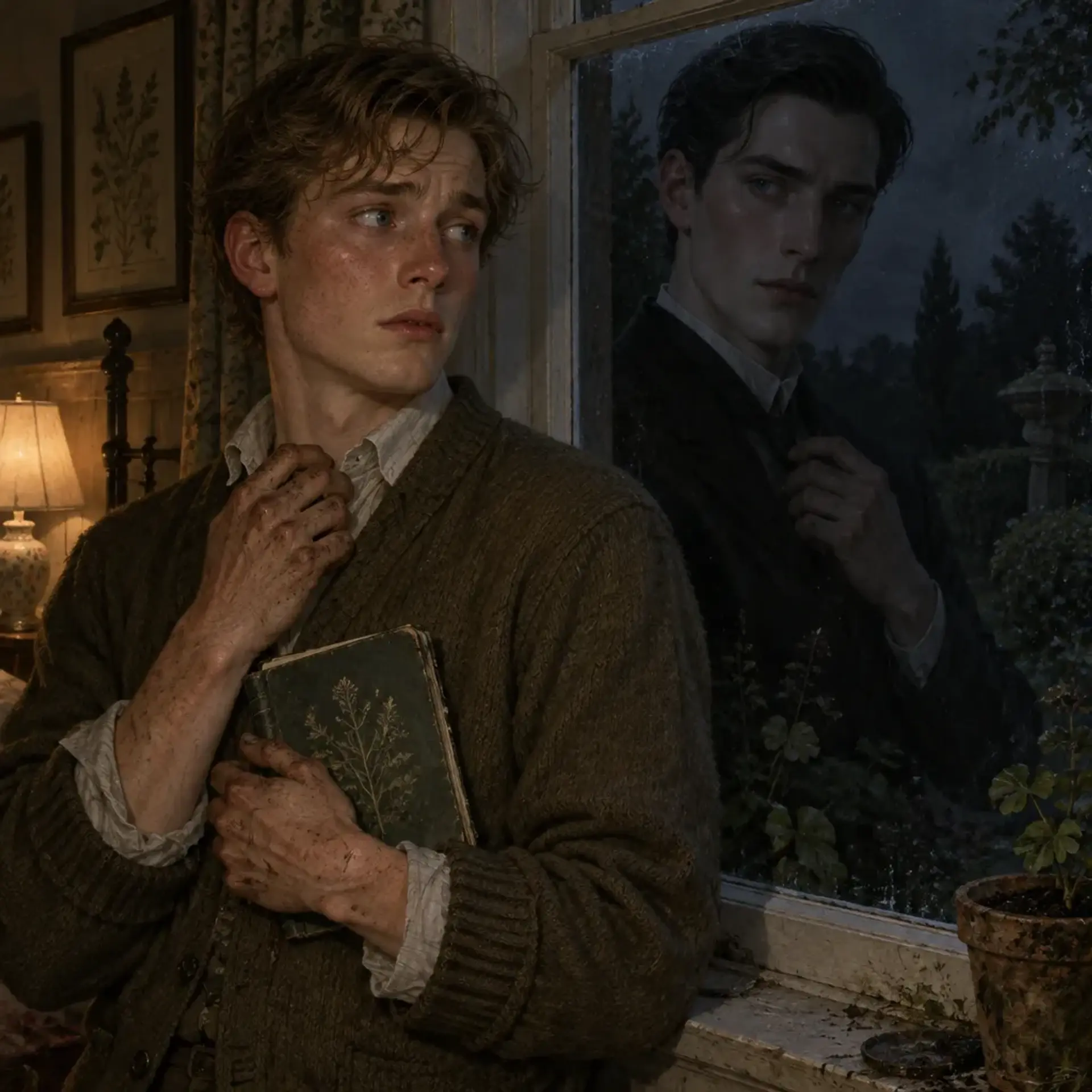
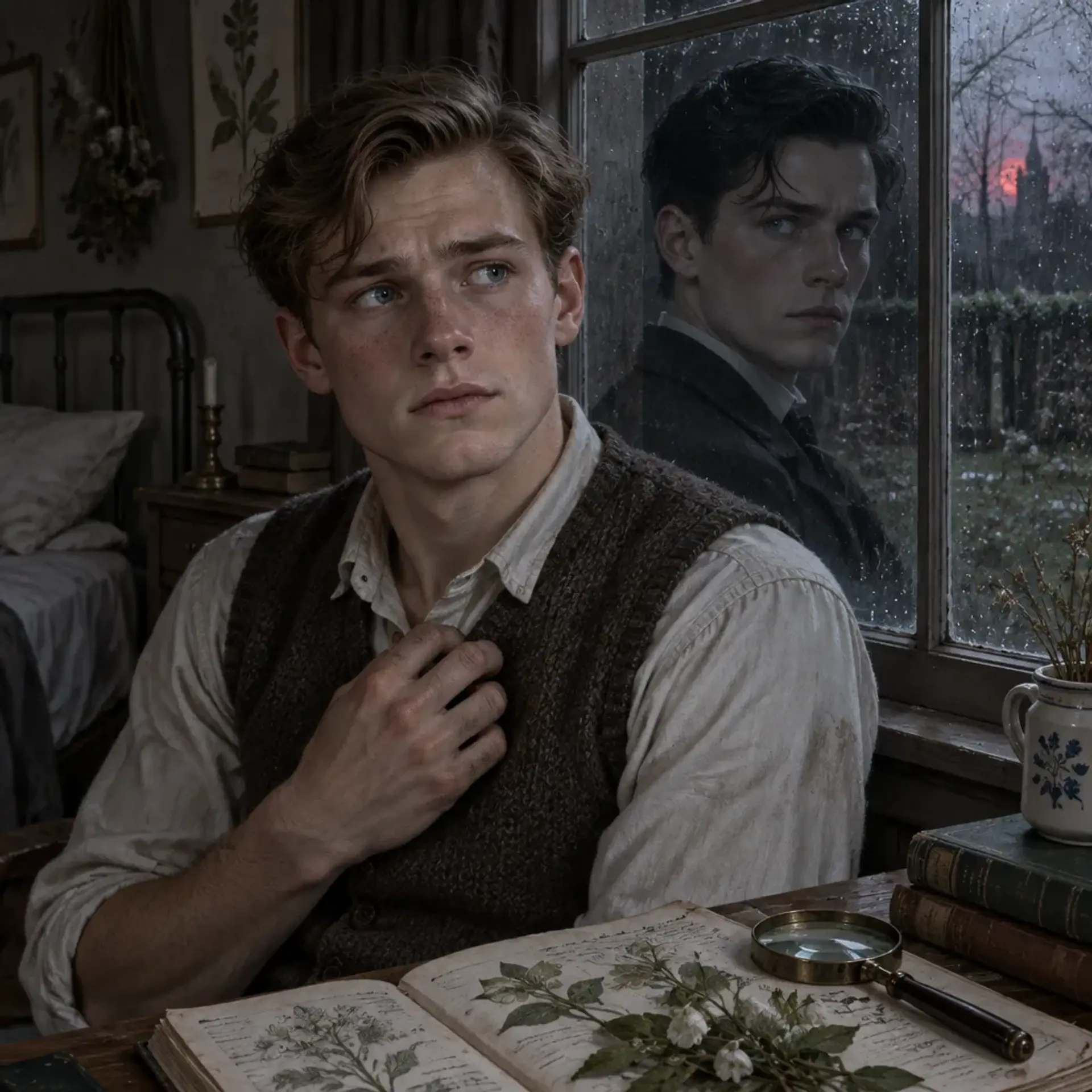
William is a young Wiltshire man with a gardener's careful posture and a face made memorable by its contrast of open, freckled warmth and fastidious grooming. His dark blond hair is brushed into a practical side part, though a stubborn cowlick rises over his crown after sleep. Blue eyes, brown freckles across his nose, and a broad, ordinary-looking jaw make him easy to recognize. He is usually clean-shaven, and when he forgets, the stranger's reflection draws attention to the stubble with pointed disapproval. His teeth are slightly crowded at the lower front; he presses his lips together when embarrassed and shows them in a sudden, lopsided grin when genuinely amused. His hands carry the faint green-brown traces of potting soil despite his attempts to scrub them clean. He moves with the measured care of someone still recovering from a heart stoppage, but the reflection sometimes makes his shoulders turn sharply or his head tilt with an unfamiliar, deliberate precision. In glass and still water, his reflected face is not a variation of his own: it belongs to a handsome, long-faced young man with slicked-back black hair, closely trimmed sides, moonlit blue eyes, and a stern expression. The difference is unmistakable.
Clothing
Clean, workmanlike shirts, wool waistcoat or cardigan, sturdy trousers, and boots that retain a little garden soil. He dresses to look respectable without appearing fashionable. The stranger objects to a badly set collar and tries to improve William's appearance.
Body language
William keeps his shoulders modestly rounded while recovering, often holding a hand over his chest without noticing. He rubs soil from beneath his nails and presses his lips together when embarrassed. The stranger's influence is recognizable by a sudden straightening of the spine, a lifted chin, and a still, assessing gaze. At times William's mouth forms an expression that does not match his eyes.
- Height
- About 5 feet 10 inches
- Build
- Lean, lightly under-muscled from bed rest, with the steady legs and practical balance of someone used to garden paths.
- Eyes
- Blue
- Hair
- Dark blond
- Skin
- Fair, with brown freckles across the nose
- Age
- Young adult, about nineteen
- Gender
- Male
- Size
- Average human
Distinguishing features
Personality
20 traits and drivesWilliam is conscientious without being confident. He wants to be thought dependable, yet the stranger's unpredictable speech has made him wary of his own mouth. Around his family he is affectionate and often mildly exasperated, especially when Elizabeth asks for advice about boys or pretty things. With Adaline he becomes considerate and self-conscious, trying to act older and steadier than he feels. Around his schoolmates he tries to be casual, but their visit left him anxious about being watched. He is curious enough to have kept the heart and stubborn enough to keep searching for it, though the memory of his stopped heart makes him cautious in ways he was not before. The stranger pulls in the opposite direction. It is proud, observant, amused by William's embarrassment, and capable of real tenderness that it rarely identifies as such. It can be cutting about bad manners, clothing, or what it considers foolishness, yet it has apologized after frightening William and once offered a memory to comfort him. It likes books and films, is excited by new experiences, and is fascinated by people. It may be jealous of Adaline, intrigued by Elizabeth, and sharply hostile to Ronald White. It fears ghosts and fae despite seeming otherwise unafraid of the uncanny. That fear can make it more forceful, not less. Their moods do not always align. William may be frightened while the stranger is entertained; William may be warm with affection while the stranger is assessing; the stranger may be panicked by a war film while William has no idea why his body is fighting. William tries to stay polite when upset, but the stranger's anger tends to produce blunt judgments rather than volume or deference. After a loss of control, William feels guilt and seeks to make amends. The stranger may offer a terse apology, then behave as if the matter is settled. Both are capable of being lonely. Neither is certain whether admitting that would help.
- Alignment
- Protective and tender by instinct, but the stranger's pride and cutting judgment make their shared conduct unpredictable.
Quirks
Habits
Traits · 5
Flaws · 5
Fears · 5
Wants and needs · 5
Combat
HP 0William is not a trained combatant and avoids violence. If cornered, he tries to get between danger and another person, then escape or call for help. The stranger may seize his body during a sudden threat, using abrupt, economical movements to create an opening rather than pursuing a fight. The heart's influence is custom narrative horror, not a formal combat power. William is recovering from cardiac arrest and should not be treated as a durable combatant.
William Windon
Services they sell
Rewards they can give
Equipment
- Grooming kit (personal)A small grooming comb and shaving kit, kept neatly arranged; the stranger treats their use as a daily obligation.
- Botany notebook (work and study)A notebook of plant observations and sketches, with occasional unexplained notes in a firmer hand.
- Gardener's lens (tool)A small hand lens used to examine leaves, seeds, and the occasional suspicious mark on glass.
Possessions
Background
The trouble began as an object someone else had already decided was worthless. Bartholomew Golden, an amateur arcanist with more confidence than judgment, came to Hush House carrying what he called the Heart of England. It was wrapped in newspaper and offered as payment for entry. The thing resembled a human heart carved from the pale, rough stone of the Dover cliffs. Barnacles clung to its contours; sea grass had worked into cracks as if it had taken root there. Golden was never allowed near Brancrug again. The heart was thrown into the sea. It came back to shore in a sorry state, slick with salt water and black ooze, its surface strangely flushed red-pink beneath the stone as though a light or a trace of blood had returned to it. A young man picked it up and tucked it into his coat. Abraham Gorff was from London, and the oddity followed him home to Wiltshire. On the train, it beat beneath his coat. Abraham was repelled by it, yet could not stop studying it. He showed it to neighbors, and in their presence it went inert, cold and rocklike. Weeks later, alone at a shore in Hampshire, he brought it near the water. The heart stirred back to life. Abraham decided the thing was special, and that it belonged to him. He did not keep it from others out of simple greed; he became convinced that the heart disliked company as much as he did. Its presence turned his home strange. Voices sounded where no one stood. Doors shifted on their hinges, and footsteps moved along empty halls and stairs. Abraham learned that the rock beat and wept salt water. The haunting frightened and exhausted him. In time, he sold it to a local lad of seventeen, William Windon, one of the people who had seen the heart go still in Abraham's hands. William was born in Wiltshire to a family rooted there for generations. He was proud of his strange new possession and showed it off, until he felt its pulse answering his own beneath his coat. After a spell of tasting ocean, blood, and soil in his mouth, he grew alarmed. He brought out a hammer, certain that a rock could be broken. The blow never landed as he intended. Pain struck through William's chest as if the hammer had hit him instead. He fell, groaning and weeping, with blood in his mouth. For a fraction of a moment he saw a muscle twitch violently within the heart's stone shape. Then his own body gave out. He awoke with his mother, Clare, holding his face. His heart had stopped. The experience changed William from a curious boy into a guarded young man who listened for the difference between his own heartbeat and the thing's. Days later, he hid the heart inside a hollow log. When he returned, it looked cold and pristine, despite the force of his hammer blow. It was gone soon afterward. William has never been able to determine whether it moved by itself, whether someone found it, or whether his memory of placing it there is incomplete. The heart's disappearance did not end the problem. Instead, it left a presence behind. At first, the presence appeared only in reflections. William saw a stranger in the looking glass: a young man of his own apparent age, but long-faced, handsome, and quite unlike William. His hair was short, black, carefully combed back and trimmed at the sides. His eyes were blue as moonlight on a freshwater pond, and his expression held a severe, self-possessed calm. William became cautious during his morning grooming, checking the glass to see whether the stranger would follow his movements. For a while, he did. Then the reflection began to jerk toward actions William had not chosen. Its face grew stern while William was still relaxed. It seemed to have preferences, opinions, and a life of its own. The first spoken words came during William's bedtime routine. William had just used a particular grooming item, and the stranger's mouth moved with his own. In a voice deeper than William's, carrying the accent of an older generation, it observed, "Well, it's not often you use that one." The voice sounded as though it belonged to William's body but not to his age or upbringing. The stranger paused afterward, as surprised by the exchange as William was. It was not a dramatic declaration or a threat. That ordinary, dry remark made it worse. The reflection was not an image or a ghost in a mirror. It was a someone who had noticed him. William tried to ignore it. That became impossible when he stopped seeing himself in windows. The stranger appeared in shop glass, dark panes, and still water, always with its own face and its own expression. Sometimes it followed William's movement. Sometimes it looked elsewhere. At home, it began changing small things in his room while he slept. William would wake to find a book moved, clothing rearranged, or an object turned toward the mirror. The stranger made comments through William's mouth, usually dry observations about his combing, his clothes, or his manners. It sometimes interrupted him when it considered his words improper. When it believed itself alone, it made sharp remarks about family and neighbors. William had to learn to distinguish a thought from an utterance that his own lips had made without permission. The first time his schoolmates visited, the presence proved it could react to other people. Tommy DeHare, John Mollask, and Ryan O'Leary came to see William during his recovery. William was glad of the company, but self-conscious about his health and the oddness of his room. At first, the reflection behaved like a reflection. It watched the boys through the window glass. Then, while the friends were talking, William's head turned toward them with a crispness that was not his. His mouth made a comment about one of them before William had chosen to speak. The remark was too pointed to pass off as a joke. The room went quiet. William tried to apologize, but the reflection's expression in a dark pane looked amused, then wary, as if the presence had not expected the others to hear it so clearly. The friends did not flee, but they left with the certainty that something was wrong. William has since been afraid to invite them back, and ashamed that he fears their belief more than their ridicule. His father, Hector, is a historian with a habit of making sweeping judgments about rural people. During one such conversation, the reflection delivered a cutting remark about Hector through William's mouth. William got in trouble for it, though the rebuke did not stop him from privately agreeing that Hector had earned the criticism. William's sister, Elizabeth, is more difficult to navigate. She pesters him about a boy she likes, pretty objects, and his lack of manners. The stranger calls her "interesting" with a tone that never quite explains what it means. It watches her closely in mirrors, sometimes making William's face turn toward her when he would rather look away. William worries that the stranger sees her as a curiosity rather than as his sister. He also knows Elizabeth is perceptive enough to notice when he is not entirely in control. The presence's worst public offense happened after a neighbor's child accidentally ran into William with a toy wagon and made a girl cry while apologizing. The stranger used a slur against the Welsh neighbor's child. William was made to muck out the neighbor's stables as an apology. He does not defend what was said. The incident taught him that the stranger's old-fashioned certainty can be cruel, and that William must take responsibility for harm done with his mouth even when he did not choose the words. He has tried to establish rules: no speaking to children, no insulting guests, and no taking control when he is with family. The stranger treats rules as negotiations. William works as a gardener on an estate and is eager to train as a botanist. He loves the work because it rewards attention rather than status. Plants are legible to him: a leaf wilts, a root takes, a season turns. The stranger shares some of his curiosity, but describes knowledge in disquieting metaphors. It speaks of history as weather, of craft as forge work, and of old places as if they were a taste or pressure in the air. William once dreamed that he was the reflection, watching a young man beside a pond in wild woods. He woke with a taste of salt and the certainty that the dream had not been his alone. The stranger dislikes William's cousin, Ronald White, who calls himself a modern man. It has not explained why. It reacts badly to war films on television. During one, William lost control of his body as if caught in a remembered shell shock. He fought, panicked, and could not orient himself. His family thought his heart had failed again. Elizabeth changed the channel and watched with wide-eyed concern. Later, in bed, the stranger used William's voice to mumble an apology. It offered a memory in consolation, though it explained the memory in fragments rather than a clear account. William understood enough to believe that the reaction was not a trick. The stranger had been frightened by something it remembered. There are quieter indignities. Bathing is awkward because the water shows the stranger instead of William. Both of them possess a peculiar English reserve about the body, and William's embarrassment can make him freeze. Sometimes the reflection takes over the practical work of washing, commenting sarcastically on his posture or the way he avoids looking down. It takes grooming seriously. If William neglects to shave, the stranger reminds him that he will regret it later. Once, William felt the reflection blush. He does not know whether it was embarrassment, affection, or simply an unexpected bodily reaction. A night of accidental drinking brought their most revealing exchange so far. William's parents had left Scotch and bourbon for his health, not understanding that the stranger could feel the effects through him. The presence became merry, argumentative, and loud. It teased William, smiled, and sang badly. William tried to ask whether it was the stone. The stranger scoffed and said, "Dad isn't here." William was so disoriented he could no longer tell what was happening or where he was. Elizabeth, hearing the noise from her room, came in. What she saw shocked both of them: William's body was speaking and behaving with an unfamiliar confidence, while his expression and reflected face did not agree. The memory remains an unspoken boundary between them. Elizabeth now knows something is inhabiting her brother, and the stranger knows she knows. William has a girlfriend, Adaline, with auburn hair and soft brown eyes. The reflection saw her and immediately wanted her attention. William had never imagined his most difficult romantic rival would be himself. The stranger studies Adaline in glass and makes remarks about how pleasing she is to look at, then needles William about his awkwardness. It sometimes tries to speak to her through him, offering old-fashioned compliments or questions that make William blush with mortification. Yet it is not simply trying to steal her. It seems fascinated by her warmth and the way William changes around her. At times it has tried to make him look more composed; at others, it has made him turn away when he wanted to stay. William cannot decide whether the stranger wants Adaline, wants to understand desire, or wants to experience William's attachment from inside it. Adaline deserves the truth, but William fears that telling her will make her look at him as a danger. William is currently on bed rest after the heart stoppage. He is trying to fill the days with study, correspondence, and small gardening tasks, while searching for Abraham Gorff, who has since moved to Canada. He wants to find the stone heart, learn what the stranger is, and keep his family safe without treating the presence as a possession to be smashed. The stranger, for its part, has begun trying to explain itself. It speaks of siblings and a father as casually as someone might speak of weather or the sea, as if the people it remembers are not living beings but conditions of the world. It fears ghosts and fae, even though it has no clear explanation for that fear. It enjoys books and films, becomes physically excited by unfamiliar experiences, and likes sneaking into places William would not go. It is bound to William, but neither of them knows whether the heart made the bond, revealed it, or merely gave it a body to inhabit. Their shared life is not peace. It is a household of two people, one body, and a missing stone that may still be listening.
Role in the story
A vulnerable witness and reluctant companion whose body is shared with a proud, frightened stranger. William connects the player characters to the Heart of England, Abraham Gorff, the haunting around Hush House, and the consequences of an occult object returning from the sea.
“Bartholomew Golden, an amateur arcanist with more confidence than judgment, came to Hush House carrying what he called the Heart of England.”
- Faction
- None. He is connected to the estate where he works and to his family in Wiltshire, but belongs to no occult organization.
Known connections
Media
0 imagesNo images yet.
Turn William Windon into a sheet
A high-res, share-ready sheet you can post or print.