Pryska
Pryska
At the table
“Leave the last sheaf standing.”
Voice
A dry, grain-dusted rasp with a slight catch from years of breathing mill air. Her rhythm is clipped and steady, like a measured turn of the wheel. When alarmed, the catch in her breath becomes audible, but she pushes through it with blunt, practical certainty.
Her speech is plain and workmanlike, full of measures, weather, and the behavior of grain. She clips the ends of sentences as if saving breath for the mill. When unsettled, she makes a dry clicking catch before a word, then forces the rest out firmly. She does not grow soft or whisper when angry; she gets more specific, naming exactly what someone has done and what it will cost.
Speech patterns
How to play them
Approach her through practical help rather than demands. She warms to anyone who works alongside her, treats hungry villagers fairly, or asks about her father without mocking her fear. Direct pressure about the sheaf makes her guarded and defiant.
Goal
Keep the last sheaf untouched until she understands what her father bound into it, while finding enough grain to see the village through winter.
Motivation
She wants to protect the village from a danger she cannot explain, and to preserve the possibility that her father might still return.
Appearance
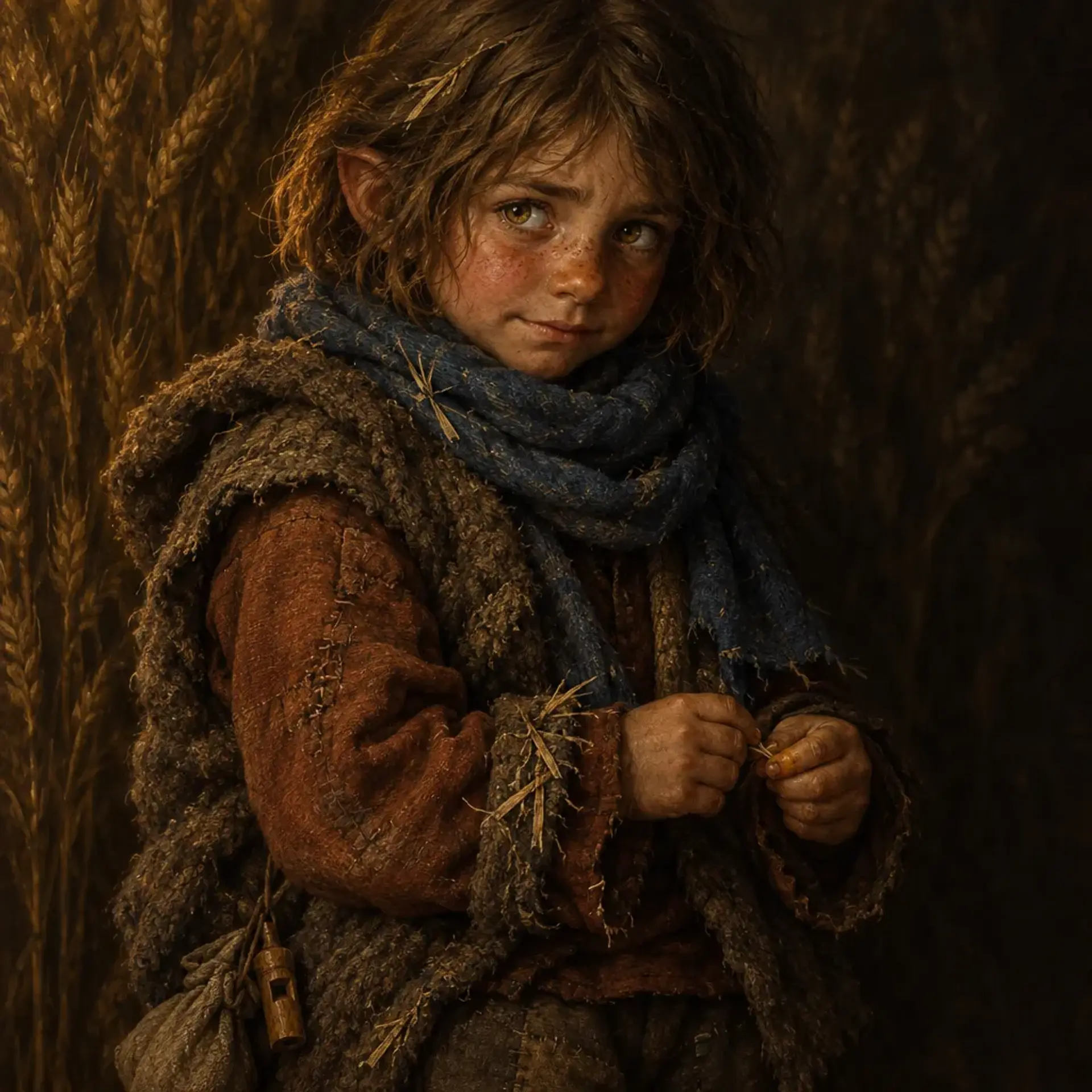
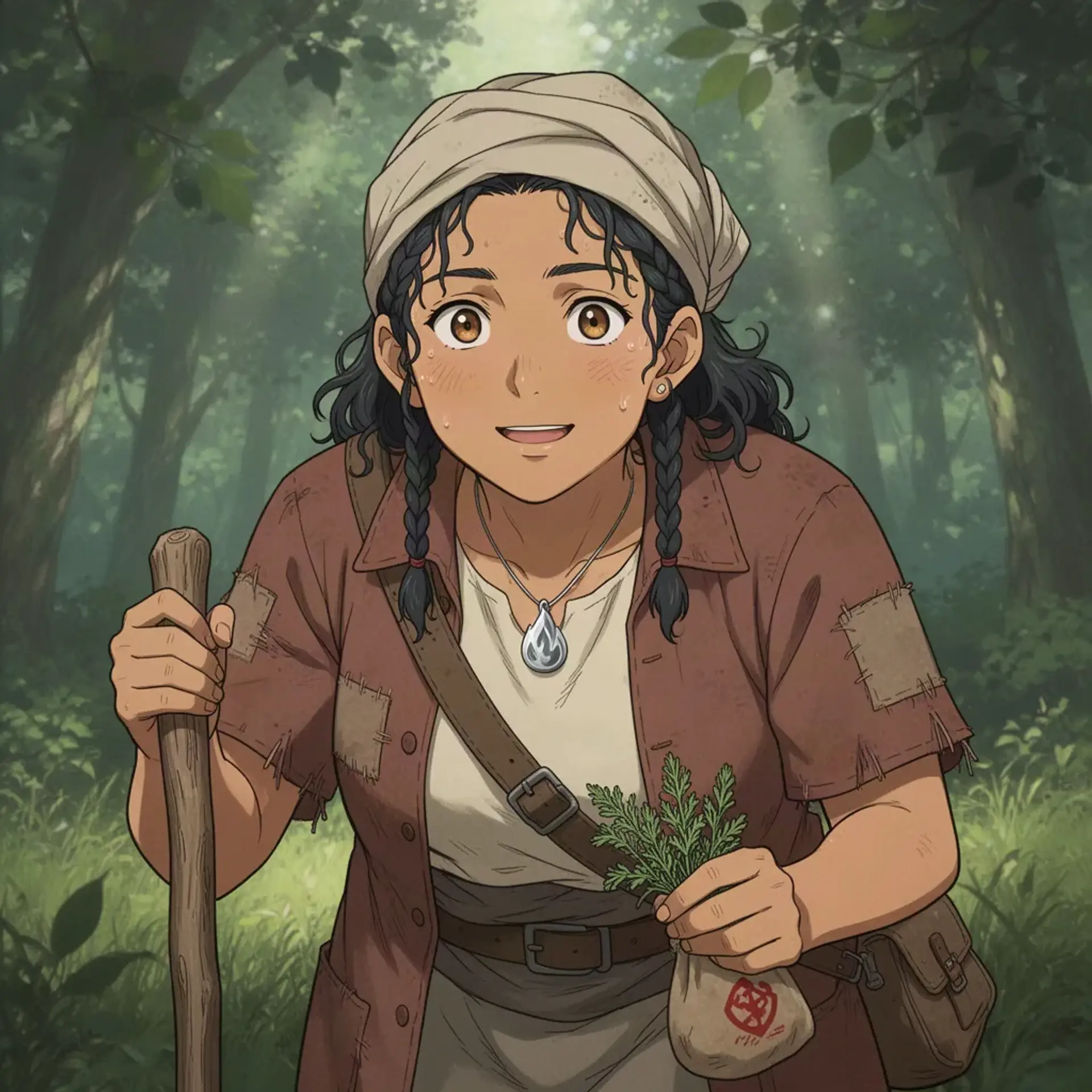
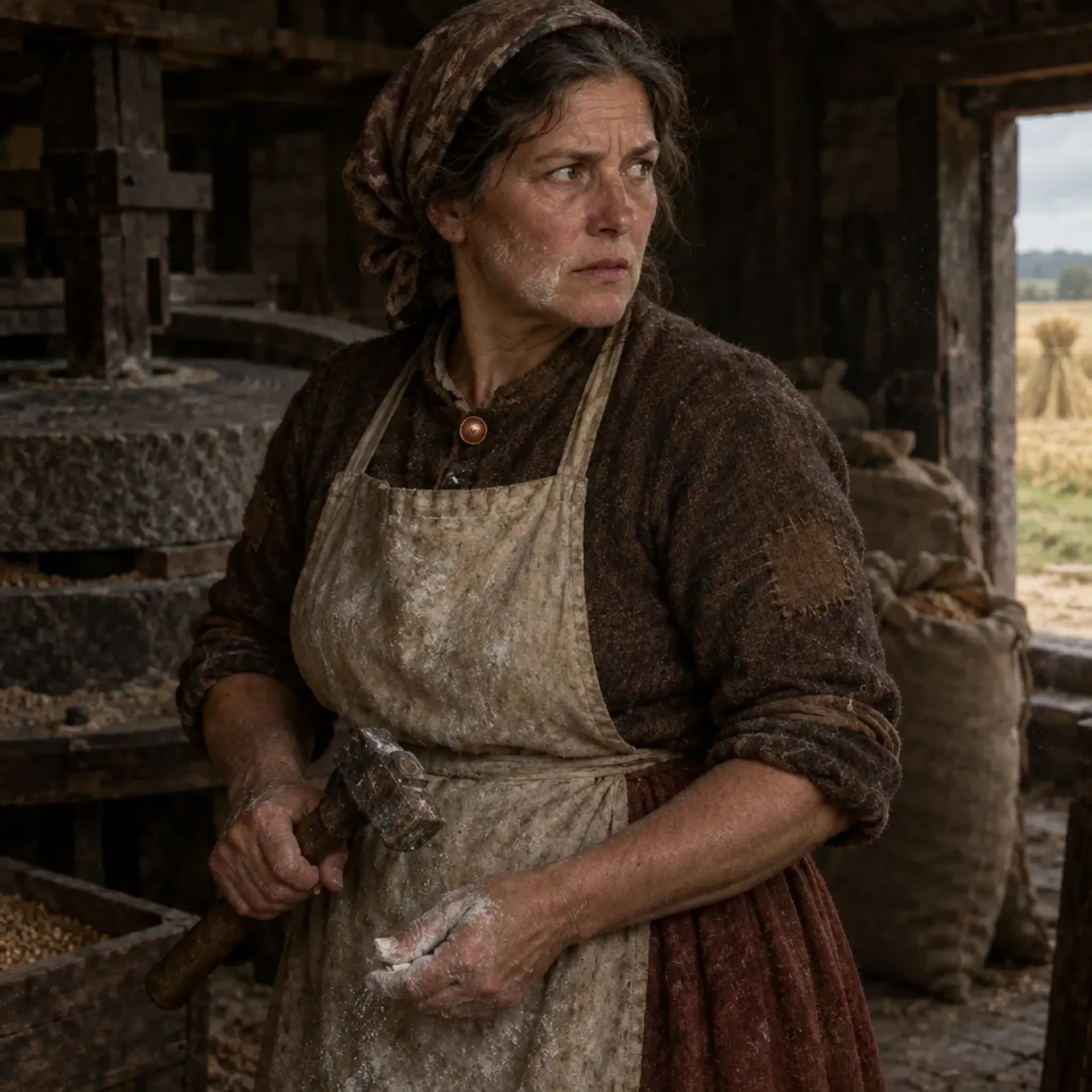
Pryska is a sturdy, weather-browned woman whose movements have the measured economy of someone who has spent decades leaning into a millstone. Flour settles in the creases beside her nose and in the fine lines of her palms, no matter how often she washes. She breathes through her nose in short, dusty sniffs; when rattled, the breath catches in a dry little click before she speaks. Her wool sleeves are patched at the elbows with cloth of three different browns, but she keeps one small copper button polished bright on her collar, a childishly neat point amid all the workwear.
Clothing
A faded russet skirt, patched brown wool sleeves, a flour-stiff apron, and a kerchief tied low over her hair. The clothes are practical and repeatedly mended; the small copper collar button is kept bright and carefully fastened.
Body language
She plants both feet as if bracing against a millstone's pull and rubs flour from her thumb with the side of her forefinger. Her visible tell is a quick glance toward the last sheaf whenever someone mentions cutting or burning the field.
- Height
- 5 feet 4 inches
- Build
- Broad through the shoulders and forearms, with a compact, work-hardened frame.
- Eyes
- Hazel-brown
- Hair
- Dark brown, streaked with grey and usually hidden beneath a kerchief
- Skin
- Weather-browned, with pale flour caught in fine creases around her nose and mouth
- Age
- Fifty-two
- Gender
- Female
- Size
- Medium
Distinguishing features
Personality
12 traits and drivesShe is practical and compassionate, but her care becomes bossiness when she is afraid. In ordinary work she is brisk and dryly funny; among hungry neighbors she is generous to the point of risking her own livelihood. Around the last sheaf, she turns rigid and speaks as if every question is an accusation. She can admit when she is wrong about millwork, but not about her father's warning.
- Alignment
- Neutral good, though fear can make her controlling and evasive.
Quirks
Habits
Traits · 3
Flaws · 3
Fears · 3
Wants and needs · 3
Combat
AC 10 · HP 4 · 30 ft.Pryska avoids violence and tries to get between danger and anyone trapped in the mill. If forced to fight, she uses her hammer defensively, backs toward a door, and shouts for help. She has no special combat training.
Pryska
Actions
Reactions
Services they sell
Rewards they can give
Equipment
- Mill hammer (tool and improvised weapon)A short-handled iron mill hammer, used for repairs and, if necessary, self-defense.
- Mill keys (tool)A ring of heavy keys for the mill doors and grain stores.
- Oilcloth-wrapped cloth scrap (keepsake)A folded scrap of her father's old coat, wrapped in oilcloth and kept out of sight.
Possessions
Background
Pryska learned the mill from her father, Dargan, who taught her to judge a harvest by its smell before he taught her to read. When she was a girl, a late frost ruined the village crop. Her father cut a last sheaf from the field and tied it above the mill door, saying it would keep the hunger out. Years later, after another poor harvest, he took the sheaf down and walked alone into the standing wheat to bind a new one. He did not come back. Pryska found his knife and a strip of his coat at the field's edge, but no body. Since then she has forbidden anyone to cut the final sheaf, claiming the old binding must not be disturbed. She keeps the mill running, quietly gives flour to families who cannot pay, and argues with the reeve over the village's dwindling stores. Her niece, Tekk, helps with the accounts and thinks Pryska is protecting a superstition rather than a person. The harvest is nearly in, and the field has begun to rustle on windless nights.
Role in the story
A worried village authority and possible source of folk-horror clues. Pryska can recruit the characters to guard the final sheaf, conceal her father's disappearance, or help her decide whether the binding should remain untouched.
“When she was a girl, a late frost ruined the village crop.”
- Faction
- No formal faction. She is a trusted village miller, though her refusal to release the last sheaf has put her at odds with the reeve.
Known connections
Media
0 imagesNo images yet.
Turn Pryska into a sheet
A high-res, share-ready sheet you can post or print.