William Windon
William Windon
At the table
Voice
William's voice is naturally clear but often cautious, shaped by conversations with estate workers and long hours outdoors. Wilt sounds as though the same throat has remembered an older man: deeper, edged with dry breath, and carrying a heavier Wiltshire accent. When William is cold or frightened, his breath catches. Wilt's voice instead becomes precise and directive, as if every word has been chosen to keep something from hearing the next.
William speaks in an ordinary, warm Wiltshire voice, with a gardener's practical vocabulary and a slight hesitation when discussing his health. Wilt speaks through the same mouth in a deeper, older-sounding voice with a distinct Wiltshire accent when stressed. His phrasing is clipped, dry, and often startlingly archaic. He does not become quiet or polite when angry; anger makes him more direct and more likely to interrupt.
Speech patterns
How to play them
Treat William as a frightened but capable young man, not as a puzzle or a vessel. Offer practical help, keep his confidence, and ask before approaching mirrors, the study, or the bricked cellar. Wilt responds better to direct questions than to pity, but he will evade anything that could help his sister find him. Neither should be promised safety the speaker cannot provide.
Goal
Find the heart-stone or a reliable account of its origin, learn who Wilt and the coastal siblings are, and keep his family safe without surrendering either his own life or Wilt to Hector's occult circle.
Motivation
William wants a life in botany and the trust of his family. Wilt wants to survive, understand his lost family, explore the modern world, and claim closeness with Adaline. Their needs overlap when the household is threatened and collide whenever Wilt takes control.
Appearance
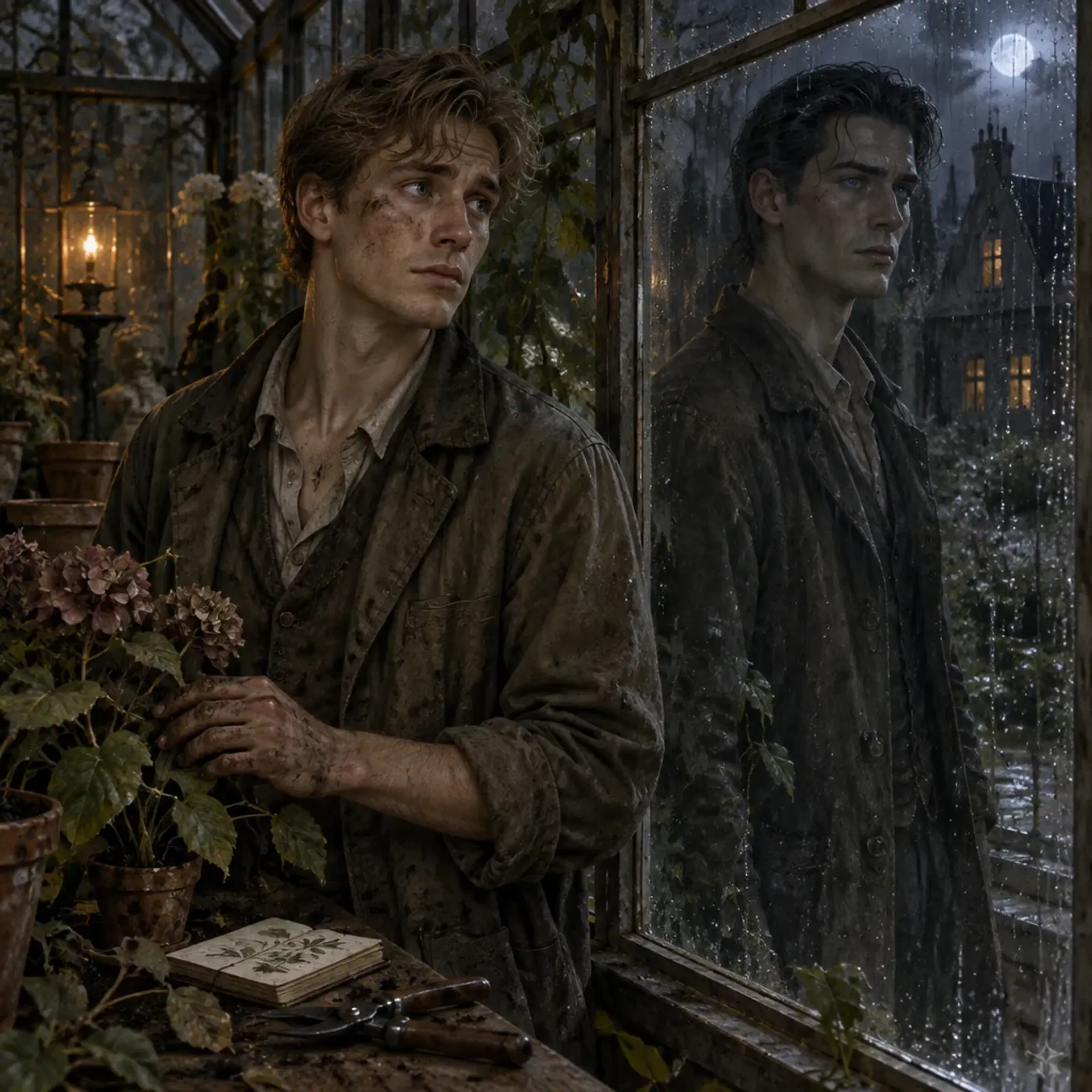
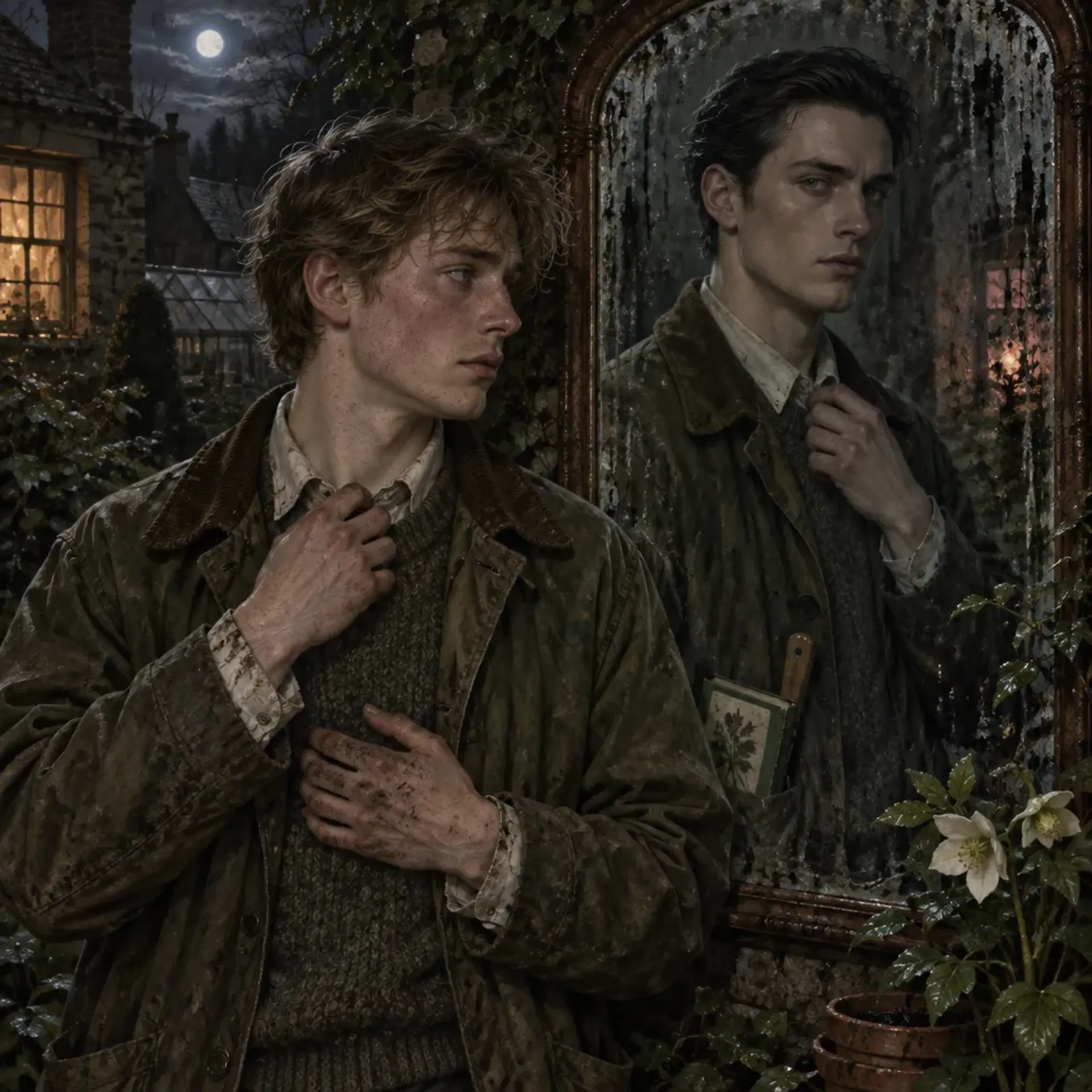
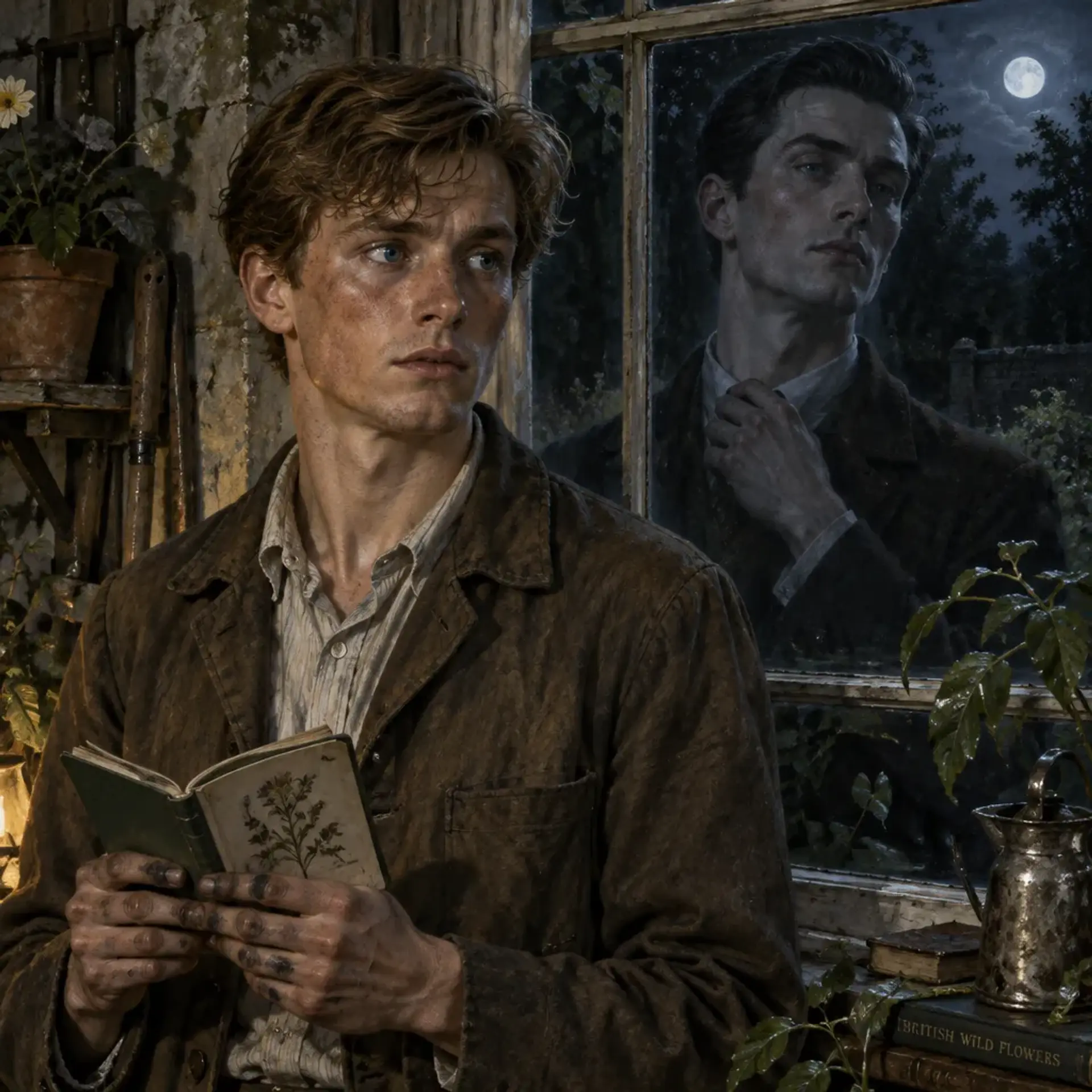
William is an average-height young Englishman of the Cold War era, with a gardener's alert, practical bearing and a softness in his face that makes his unease visible. His brown-speckled skin, blue eyes, and dark blond hair are familiar to everyone who knows him. He tends to stand with his weight carefully balanced, as though mindful of the heart that once stopped; when waiting, he occupies as little space as he can. Wilt's reflection is unmistakably not his: an eighteen-year-old with a longer face, neatly slicked-back black hair trimmed at the sides, moonlit-blue eyes, and an aloof, handsome composure. Wilt stands taller and uses space as if it belongs to him, shoulders squared and weight settled on one hip. He always appears in William's clothes, though their fit seems subtly wrong. The unexpected detail: William's hands, despite his outdoor work, are often ink-smudged from botanical notes and occult papers, while Wilt's borrowed movements are fastidious enough to straighten a collar before doing anything else. People remember the sensation that the reflection noticed them first.
Clothing
Ordinary Cold War-era working clothes, usually practical trousers, shirt, and gardening layers suited to estate work. Wilt reflects whatever William is wearing, though he carries it with an old-fashioned neatness and insists on a well-kept collar.
Body language
William tries not to take up space and stands cautiously, his weight balanced as if he is still unsure his heart can be trusted. Wilt's posture is taller and proprietary: shoulders level, chin composed, weight resting on one hip. When frightened, William checks exits; Wilt goes still and listens as though the house were a shoreline.
- Height
- Average height for a young man of Cold War-era England; Wilt appears taller when physically embodied.
- Build
- Average, lightly built, with the practical stamina of a young gardener. Wilt appears taller and more self-possessed when in control.
- Eyes
- Blue; Wilt's reflected eyes are a colder blue, like moonlight over a freshwater pond.
- Hair
- Dark blond for William; neatly slicked-back black for Wilt's reflected face.
- Skin
- Brown-speckled complexion.
- Age
- Eighteen in appearance; William is a young adult.
- Gender
- Male
- Size
- Human-sized; Wilt appears taller than William when embodied.
Distinguishing features
Personality
22 traits and drivesWilliam is gentle without being passive: he dislikes humiliating people, but will hold his ground when someone is in danger. He is curious and studious, yet resents being treated as a child or a case history. In the garden he is patient and almost cheerful; around Hector he becomes guarded, trying to be the son his father wants while quietly rejecting that measure of worth. Fear makes him observant and secretive rather than helpless. Wilt pulls against him: fastidious where William is untidy, blunt where William is tactful, fascinated by modern machines yet bound to obscure old customs. Wilt can be funny, even companionable, after a drink or a long walk, but his affection does not make his possessiveness harmless. He may protect William from the coastal voices while denying William control of his own body. Each can be tender in one moment and infuriating in the next. William is embarrassed by Wilt's interest in Adaline; Wilt considers the embarrassment an invitation to provoke him. Both are frightened of being abandoned, but neither likes admitting it.
- Alignment
- Not applicable as a Secret Histories rules statistic. William is compassionate and conscientious; Wilt is protective, possessive, and capable of cruelty.
Quirks
Habits
Traits · 6
Flaws · 5
Fears · 5
Wants and needs · 6
Combat
HP 0This is not a combat-trained character. William avoids fights and tries to protect bystanders or escape. If Wilt takes control, he uses surprise, household objects, and the confusion of his changed face to create an opening. Resolve all action using the actual rules of the campaign; no Secret Histories combat statistics are asserted here.
William Windon
Actions
Reactions
Services they sell
Rewards they can give
Equipment
- Gardening tools (work equipment)Used for pruning and estate gardening; not presented as a combat weapon.
- Notebook and collected plant notes (personal)A place for botanical notes and, when William can safely reach them, clues about Hector's private studies.
- Under-bed cache (concealed household items)Household supplies and hidden objects Wilt has accumulated. The contents may include sweets, tinned fish, tobacco, or a dangerous misplaced knife.
Possessions
Background
The thing now called Wilt began, as far as anyone alive knows, with a stone that nobody understood. Amateur alchemist Bartholomew Golden once left a supposed fossilized living heart at Hush House as payment for entry. Wrapped in newspaper, it looked like a lump of Dover chalk carved into a human heart, with barnacles and sea grass clinging to its miserable shape. Golden claimed it was the Heart of England, able to bring servants from man's shadow out of chalk cliffs and borderlands. He was never permitted near Brancrug again. No living person knows the stone's name or purpose; the name and claim were Golden's, and Golden is long dead. The heart was thrown into the sea. It returned to shore, salt-weeping and black with ooze, its chalk skin faintly red-pink beneath the surface as if blood or a light had returned to it. Abraham Groff, a young man from London, found it and carried it home to Wiltshire. At first it seemed inert. It revived when he took it to a Hampshire shore and dropped it in water, glowing the color of fresh flesh under stone. Abraham kept it from visitors, not from greed but because it seemed to dislike company. In time his house filled with footsteps, voices, and doors moving without hands. Terrified, he sold it to William Windon, then seventeen, one of the local lads who had seen it before it went cold. Abraham later moved to Canada. William admired the queer object until he felt its beat answer his own. He tasted salt, blood, and soil; frightened, he brought a hammer down on the heart. The blow did not break the stone. Pain struck his chest instead. He collapsed, groaning in a voice that was not his, and his own heart stopped. His mother, Clare, brought him round. William abandoned the heart in a hollow log. Days later it was pristine, as if the hammer had never touched it. The reflection started as an irritation. In mirrors, William saw a stern, long-faced young man with short, practical black hair and blue eyes, a stranger wearing William's clothes. It copied him at first, then lagged, jerked, and chose its own gestures. During William's bedtime routine it finally spoke through his mouth: 'Well, it's not often you use that one.' The accent belonged to an older generation, and the voice was deeper than William's. It commented on his grooming, clothes, manners, and family. It sometimes stopped him from saying what it considered improper. It made cutting remarks, including an ugly slur about a Welsh neighbor's child who had accidentally struck William with a toy wagon. The child had been crying and apologizing. William had to muck out the neighbor's stables as a consequence. The reflection's wit did not excuse its harm. William is a gardener on an estate and hopes to train as a botanist. Before his illness he was warm, studious, and more sensitive than his father thought useful. His father, Hector, is a historian, a liberal man impatient with the rigid customs of the old upper classes, and a member of an occult circle he has kept from his family. Hector is the son of a fierce Second World War veteran known as Bobby. He resents the inherited habits of that world and is quick to dismiss the war's darker national actions, but he also wants William to become an intellectual in his own image. He was proud of William's studies until William's interest in plants and his strange behavior seemed, to him, like wasted promise. The reflection once insulted Hector after Hector mocked country people. William got in trouble for the remark, and Hector's disappointment sharpened into suspicion. Clare is steady and warm. She schedules outings with William and gardens beside him, reading from a book or the Bible while he works, then making tea and snacks. Wilt does not insult her. He sometimes answers her passages with scripture William does not know. Elizabeth, William's sister, is curious and mischievous. She has learned that changing the phrasing of a question can make William's manner shift, and she has called the condition 'brain damage,' half teasing and half frightened. She spies on him less from amusement now than concern. Her boyfriend, Romy Brock, is an artist who plays rock and roll on guitar; he remains blissfully unaware of the danger. William's school friends Tommy DeHare, John Mollask, and Ryan O'Leary have also seen hints that the reflection can react to people and speak through William. William's girlfriend, Adaline, has auburn hair and soft brown eyes. Wilt is not shy about wanting her. He calls her interesting, watches her through William's eyes, and treats William's affection as a contest he expects to win. William's cousin Ronald White, who calls himself a modern man, irritates Wilt intensely. The reflection's tastes are peculiar and vivid: it loves television, books, cars, and electronic devices; it is fascinated by work in the garden and the town; it enjoys exploring places where it should not go. It dislikes certain war films. When one played on television, William lost control of his body and fought, screamed, and cursed as if trapped in a remembered battle. His family thought his heart had failed again. Hector had to restrain him. After William regained control, Hector looked at him differently. Later Wilt offered an apology and a fragment of memory in explanation, though its account felt less like a human recollection than weather passing over a field. The heart has been absent since William left it in the log. He has searched for it and for Abraham, learning that Abraham went to Canada, but has found neither. The reflection grows more independent. It steals cigarettes, cigars, sweets, cheese, tinned fish, food, and occasionally a knife, hiding them in William's room. Once it hid a bottle of apple juice that was actually alcohol. A night of accidental drinking became a rare, ridiculous reprieve: Wilt teased, argued, sang, smiled, and yelled as if they were in a pub together. It even took off William's shirt in an act of rebellion, though they agreed the trousers would be too much. Asked if it was the stone, Wilt scoffed, 'Dad isn't here.' Clare found the empty bottle the next morning. Hector first shouted, then abruptly quieted and offered William chores. The offer was kinder than his anger, but William could not tell whether it was care or an attempt to keep him watched. Five months have passed since William recovered enough to return to estate work. Stable routines, gardens, and wandering the woods have mellowed Wilt without making him safe. Bathing is awkward: water shows the stranger, and both have an English prudishness about it. If William is too embarrassed to wash properly, Wilt may take the lead and make sarcastic remarks about his body. Wilt treats shaving and grooming seriously and reminds William when he neglects them. Once William felt Wilt blush. Tea has become its own contest of manners, with Wilt enforcing old customs that irritate Hector. Hector, meanwhile, is increasingly suspicious. He notices William speaking to mirrors, missing household objects, shifts of accent, and unexplained knowledge. He has begun watching his son as a historian watches an artifact, with care that is real but not comforting. William fears Hector may discover the occult papers in his study, and that the secret circle might recognize Wilt before William understands him. Then came the moonlit night. William woke cold, not simply chilled but shivering from a deep, wet cold that seemed to come from inside his bones. He could not move. Wilt had taken his body and held his mouth shut. The room was dim with moonlight. Beyond the wall, or perhaps beyond the house itself, voices moved through the dark. Wilt said, quietly, 'My siblings are outside. They're looking for me. Go back to bed.' William tried to ask what he meant. Wilt sealed his mouth. Through the walls came scraps of sound, a voice calling something like '...is... Wilt...' The words were not quite human speech, but William recognized his name in them. He fought. Wilt rolled his body off the bed. William struck the floor without a proper thud, and they crawled beneath the bed, cramped among dust and the smell of old wood. Wilt strained to keep quiet. William forced out, 'The bloody hell, your siblings?' Then he heard the words in his own mind, and with them a thick Wiltshire accent that was not his. He had not meant to speak that way. Wilt answered, 'She is trying to draw me out. The more I speak, the more chance she'll find me. Quiet down. We will talk in the morning.' William heard the sound of his own deeper voice and felt his face change beneath his hand. The skin felt like someone else's: Wilt's long face, not his own. He would have screamed, but Wilt clamped his mouth shut again. William could hear the sister outside, searching, while moonlight shifted across the floor and shadows grew and faded. Wilt did not fight him. That restraint frightened William almost as much as the voices. They waited under the bed for what felt like hours. William could not tell when the voices moved away, or when exhaustion took him. At some point the adrenaline drained out of him and he slept. He woke on the floor beneath the bed, cold and cramped, and pushed himself into the room. He went straight to the bathroom mirror. The stranger was still there, dressed in William's sleepwear, face composed. William put a hand to his own face and felt his own features again. Wilt said, 'See, you're fine now,' and gave him an oddly plaintive gesture. It was not quite an apology. Their argument in the morning circled around why Wilt had hidden them, how much he had known, and why he called the voices siblings. Wilt did not want to make the situation worse. William did not want to accept that restraint as trust. William went outside. The ground smelled of salt water, damp grass, and black ooze. The scent ran against the ordinary Wiltshire night, as if a tidal shore had pressed its face to the house. Wilt wanted to hide. William made himself look around. The moon picked out wet blades of grass and the ordinary outlines of hedges, but the smell seemed to cling to cracks, drains, and the lower walls. The house has places where that night might have found a way in: an old study window hidden behind a bookcase, damaged and supposedly sealed by Hector, and a bricked cellar that was already closed when Hector bought the home. Sometimes a breeze comes through those places carrying salt, blood, or meadow scent. William now avoids windows and keeps doors shut, including the bedroom window on the second floor. It is harder to sleep when something outside seems able to wake Wilt into tangibility. The one voice William has confirmed is female. Wilt calls her his sister. Asked how many siblings he has, he answered only, 'More.' She has returned at night, and the family home has become a place William must defend while pretending nothing is wrong. When the sister wakes Wilt, William sometimes loses his face and becomes Wilt physically. He has to haunt his own home in Wilt's face: slipping through the halls, avoiding his family, checking doors, and trying to keep the presence outside from reaching the study window or the bricked cellar. He fears that if Hector sees him in Wilt's body, the historian will investigate with the very occult knowledge that could expose them both. He also fears that if he stays hidden, his family will mistake the haunting for his illness and leave him alone with it. Elizabeth has heard William talking to himself and quietly watches him, alert to the possibility that there is someone else answering. Hector is noticing too much. He is increasingly suspicious of William, but guilt makes his suspicions uneven: he cannot tell whether he has failed his son, whether William hates him as Hector hated Bobby, or whether something truly unnatural is in the house. The two of them are silently trying to keep the doors closed, each withholding the reason. William's life is therefore not a simple possession story. He works, studies plants, loves Adaline, and tries to be a brother and son while sharing his body with someone whose history predates his own and whose desires do not fit neatly into human terms. Wilt loves the television and the taste of alcohol, can be funny, fastidious, and strangely tender, and has nevertheless stolen a knife and used William's body without permission. The heart may be lost, but its effects have not ended. William needs to find it, learn what Wilt is, and keep his family safe without handing his father's secret circle a reason to take control. Wilt wants to remain, wants to know what became of his family, and wants Adaline. Neither has yet admitted what they would sacrifice to get what they want.
Role in the story
A vulnerable ally and mystery at the center of an occult domestic haunting. William and Wilt are both people with conflicting aims, not a conventional monster and host. Their family home is becoming a threshold watched by unknown coastal relations.
“Amateur alchemist Bartholomew Golden once left a supposed fossilized living heart at Hush House as payment for entry.”
- Faction
- No confirmed formal affiliation. Hector secretly belongs to an occult circle, but William does not know its identity or standing. Wilt's possible family are coastal presences, not a known organization.
Known connections
Media
0 imagesNo images yet.
Turn William Windon into a sheet
A high-res, share-ready sheet you can post or print.